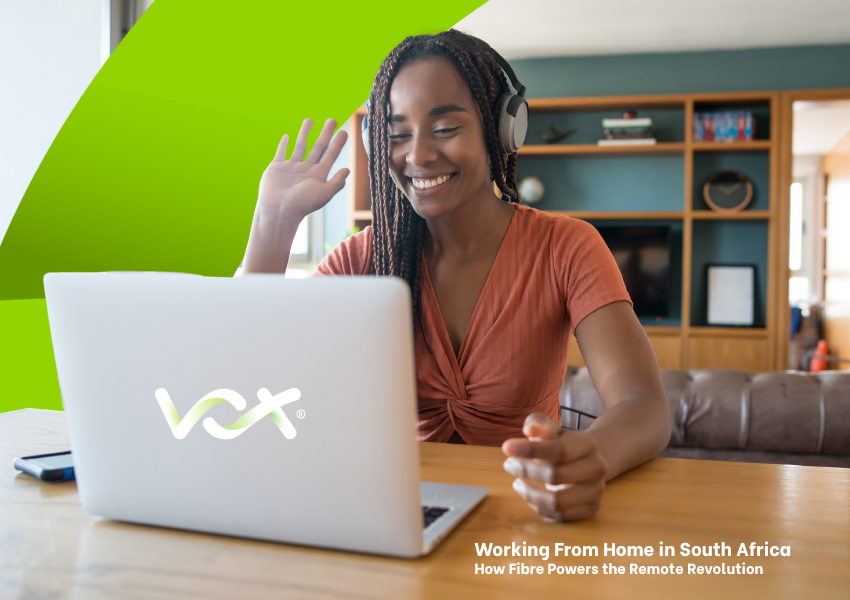
There was a time when “working from home” in South Africa sounded like code for “answering emails while sitting in traffic at the school pickup zone.”
Now? It’s become normal life.
Kitchen tables have turned into office desks. Spare rooms have become meeting rooms. Parents are juggling spreadsheets and snack requests simultaneously. Somewhere in South Africa right now, someone is on a serious business call while a pressure cooker whistles in the background and a dog loses its mind at the gate.
Remote work is no longer some temporary trend. For many South Africans, it’s simply how work gets done.
And behind this entire shift sits one thing quietly carrying the load: reliable Fibre internet.
Because the reality is simple. Working from home sounds great until your connection starts behaving like it’s loading the internet through carrier pigeons.
South Africans Aren’t Just Working From Home Anymore. They’re Living Online.

The modern home has changed completely.
At any given moment, one person is in a Zoom meeting, another is streaming Netflix, someone else is gaming online, and a child is trying to upload homework that was definitely not left until the last minute.
The home internet connection has become the centre of daily life. It’s no longer a “nice-to-have.” It’s infrastructure.
When your connection struggles, everything struggles with it.
Meetings freeze. Calls drop. Uploads fail. Deadlines become stressful. Productivity disappears faster than electricity during load shedding.
That’s why Fibre has become such a major part of remote work in South Africa. It gives households the speed and stability needed to handle modern life without everyone fighting for bandwidth like it’s the last trolley at Checkers on month-end.
The Office Has Changed Forever

One of the biggest shifts in South African work culture is that companies have realised people don’t always need to sit in an office to be productive.
For many employees, remote work has created better flexibility, less commuting, and more control over their schedules.
No traffic.
No fuel costs.
No waking up at ridiculous hours just to sit behind a taxi with one brake light on the N1.
That extra time matters.
People are using those saved commuting hours for family, exercise, side hustles, studies, or simply getting more work done without arriving at the office already emotionally exhausted.
But none of this works without a stable internet connection.
The moment your Fibre becomes unreliable, remote work quickly turns into a full-time customer support battle with your router.
Video Calls Have Become the New Boardroom
Whether you love them or hate them, video meetings are now part of everyday life.
Teams collaborate online. Interviews happen online. Training happens online. Entire businesses operate through video conferencing platforms.
And nothing exposes a weak internet connection faster than a work call.
Everyone knows the signs:
- Frozen faces
- Robotic voices
- “Sorry, can you repeat that?”
- Someone pretending they heard the question while panicking internally
- The classic “Your internet is unstable” warning appearing at the worst possible moment
Reliable Fibre helps keep meetings smooth and professional without the stress of constant buffering or connection drops.
Because nobody wants to explain to a client that the presentation disappeared because someone in the house started downloading a series in 4K.
Load Shedding Changed the Conversation
South Africans have become experts at adapting to problems.
We own backup batteries, inverters, UPS devices, rechargeable lights, gas stoves, and enough extension cords to power a small nation.
Remote workers have had to become even more prepared.
When power cuts hit, people still need to attend meetings, respond to clients, upload work, and stay connected.
A good Fibre setup paired with backup power has become essential for many households. It’s no longer only about entertainment or convenience. For many people, internet access directly affects their income.
When your connection stays stable during load shedding, work can continue with minimal disruption.
And honestly, there’s something deeply satisfying about staying online while the rest of the neighbourhood collectively walks outside to investigate who still has power.
Fibre Helps Small Businesses Grow From Anywhere
Remote work hasn’t only changed corporate jobs. It’s also transformed small businesses and entrepreneurs across South Africa.
People are running online stores, consulting businesses, digital agencies, tutoring services, and freelance operations directly from home.
A reliable Fibre connection allows business owners to:
- Communicate with customers
- Process online orders
- Upload content
- Attend virtual meetings
- Manage cloud systems
- Run marketing campaigns
- Handle remote teams
In many ways, Fibre has helped level the playing field.
You no longer need a massive office space to build something successful. Sometimes all you need is a laptop, a decent workspace, coffee strong enough to restart your soul, and internet that doesn’t collapse every time it rains.
The Future of Work in South Africa Is Flexible
Remote work is not disappearing.
Some companies are fully remote. Others use hybrid models. Many employees now expect flexibility as part of modern working life.
That means internet quality matters more than ever.
A stable Fibre connection doesn’t just support entertainment anymore. It supports careers, businesses, education, communication, and daily life itself.
Because in today’s world, buffering during a movie is annoying.
Buffering during a client presentation is career-threatening.
Final Thoughts
Working from home has reshaped how South Africans live and work. What started as a necessity for many people has evolved into a long-term lifestyle shift.
And through all of it, Fibre has become one of the most important tools keeping households productive, connected, and functional.
From video calls and cloud systems to online businesses and remote collaboration, reliable internet is powering the modern South African home in ways few people imagined a decade ago.
The future of work may be flexible, digital, and constantly evolving.
But one thing is certain: nobody wants to hear “Can you hear me now?” ever again.
About Author