Today, we talk Starlink.
It’s the buzzword of the Nation now that Eskom is behaving. To the average person, it sounds like something Darth Vader would use to destroy the Galaxy (which, depending on who you ask, isn’t that far from the truth anyway). To the rest of us, it was the promise of a future filled with better Connectivity in South Africa. A(nother) South African bringing it home, so to speak. The biggest innovation by one of our own since Chris Barnard, Tyler, Amapiano and the new strain of Covid (yes, we’re aware that one of those is not like the others).
You’d think, with Elon being from Pretoria, we’d have a Plug (pun intended) straight to the top. South Africa is all about connections, right? However, unlike Dricus, this Boet isn’t bringing it home – guess it’s true what they say about the ones who move abroad (sorry, Trevor).
They say Hulle Weet Nie Wat Ons Weet Nie, and right now ons weet dat Starlink nie meer in SA is nie.
But what does the Starlink shutdown in South Africa actually mean for us long-suffering South Africans? Is it the death of satellite connectivity, the beginning of shattered dreams, and ten steps backwards for our Internet landscape?
Today, we’ll unpack it – and the answers may actually surprise you.
What’s Really Going On With Starlink South Africa?
Here’s the simple version:
On the Consumer side of life, Starlink (Elon Musk’s satellite internet service) has officially been pulled out of South Africa.
Now, before you blame the ANC, Bheki Cele, and Andre De Ruyter, the reasoning behind this is (for once) not purely down to us. You see, Starlink operates on a strictly direct-to-market business model – they do not, and will not, operate through a reseller or service provider (such as yours truly).
This is fine if you’re in the land of ‘freedom’, but in South Africa, we have our own set of laws and regulations (who knew?).
You’d never guess it based on a trip to Small Street, but one can’t just set up a business and operate in SA. There are licenses, regulations, and policies to adhere to – and Starlink would need ICASA licensing, comply with BEE requirements, be VAT compliant, pay for permissions, and meet all certification statuses.
In a nutshell, there’s no way for Starlink to meet the very strict criteria set out by ICASA, meaning we’re officially at an impasse. And although a workaround would be to partner with a local reseller which has the necessary permissions, doing so contradicts their business model – so for now, it’s bye-bye Elon and team.
But What About the People Who Already Use Starlink in SA?
Good question. How did they even set it up?
Ah, you see, South Africans are elite-level loopholers – which is why maak ’n plan is an official local proverb.
Many of our forward-thinking enthusiasts, seeking early access to Starlink satellite internet, were able to set up their devices on Starlink Roaming Agreements. This allowed them to enjoy all the benefits of super-fast LEO satellite connectivity and feel very advanced/smug in the process.
The problem, however, is that a roaming product needs a base to set up and occasionally return to. So while users can jump from points B to C for a finite amount of time, they do eventually have to head on “home” – which can get tricky when “home” is not legally allowed to be the country you reside in.
In short: users who set up their Starlink accounts using USA-tethered networks can temporarily enjoy the benefits, but unless they feel like making regular trips past Homeland Security, it doesn’t make sense as a permanent solution.
What Does Starlink’s Exit Mean for SA Connectivity?
Are we back to the Stone Age of Internet and Dial-Up?
The short answer is yes, but also no. Bear with us.
It’s important to remember that Starlink is a Satellite Internet product – meaning your Fibre, LTE, and even Copper cables wouldn’t be affected anyway. For most, it’s service (or non-service if you’re with our competitors) as per normal. This primarily impacts the satellite internet market in South Africa.
While Starlink would have been a great avenue for future growth, it doesn’t technically set us back connectivity-wise as it was never formally launched.
Still, its absence does affect:
-
Future investment potential
-
Market innovation in Satellite Internet
-
Our ability to use cutting-edge LEO technology
The reality is:
-
Our GEO satellite networks will continue as they always have.
-
Due to Starlink refusing partnerships, the economic benefit to SA wasn’t going to be significant anyway.
However… the gap in technology is real.
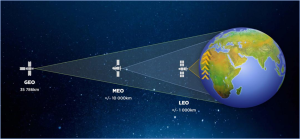
The Starlink Satellite services fall within the Leo Sphere above (which explains why you can see them from the ground) – meaning less distance for your Data to travel and faster speeds. Vox, and any other consumer Satellite supplier, fall within the GEO space, meaning a distance of up to 70 000km before you have Internet (with landing stations also falling in Europe) – resulting occasional delays and, naturally, slower Internet.
The reality is that our current GEO Services, whilst perfectly serviceable under controlled conditions, are not wholly suited to meet the next generation of consumer demands. As the market shifts towards a Cloud-heavy landscape, it requires higher upload/download speeds, more bandwidth, and an increased amount of pressure on service/Satellite providers.
It’s not all doom-and-gloom, however – because the sky certainly isn’t falling.
There are workarounds to manage your usage and ensure smooth, speedy, and streamlined Satellite services. When done correctly, our existing geo-infrastructure is perfectly serviceable, and your service provider should be more than able to guide you through this process.
This is where Vox comes in.
Many customers across the nation do require Satellite Connectivity. In a landscape with so many remotely situated users, a lack of infrastructure, and often limited access to conventional forms of Internet, Satellite is an easy-to-access alternative.
Yes, it’s true, Starlink would have been the ideal solution, as they’re the benchmark in every metric from speed to security, reliability and beyond. However, our local service providers are no slackers either – and they also leverage off an advanced understanding of our landscape, know our unique South African needs, and offer all the support, insight, and guidance relevant to our environment.
You’ll also save a pretty packet on startup costs, skip the huge equipment/import fees, and enjoy easy cancellation, quick support, and speedy response times.
Imagine being a Starlink “user” and now facing a mountain of redundant equipment – good luck trying to return (or get refunded) from halfway across the pond. Local ISP’s (such as Vox) mean peace of mind – and we’re here to help.
By signing up for Vox Satellite, we’ll fill the void left by Starlink for good. We’re here, we’re on the ground, we’re approachable, and we’re willing to service our users in even the most remote areas from as little as R760PM*.
And, if all of that wasn’t enough to bring it home, always remember another famous South African proverb (no, it’s not “our system is offline”).
Local is Lekker.
And that’s a fact proudly endorsed by Vox.
What Does Starlink’s Exit Mean for SA Connectivity?
Are we back to the Stone Age of Internet and Dial-Up?
The short answer is yes, but also no. Bear with us.
It’s important to remember that Starlink is a Satellite Internet product – meaning your Fibre, LTE, and even Copper cables wouldn’t be affected anyway. For most, it’s service (or non-service if you’re with our competitors) as per normal. This primarily impacts the satellite internet market in South Africa.
While Starlink would have been a great avenue for future growth, it doesn’t technically set us back connectivity-wise as it was never formally launched.
Still, its absence does affect:
- Future investment potential
- Market innovation in Satellite Internet
- Our ability to use cutting-edge LEO technology
The reality is:
- Our GEO satellite networks will continue as they always have.
- Due to Starlink refusing partnerships, the economic benefit to SA wasn’t going to be significant anyway.
However… the gap in technology is real.
About Author