Can Minecraft Help to ‘Craft’ Budding Engineers, Architects and Designers?

Online gaming – it’s categorically bad for your kids, right? Or is it…? 

So there you are – having yet another argument with your six-year-old about video games. The last half-an-hour has seen whining, snot-en-trane and threats about who has control over the controller – and that’s just the adults.

portrait little girl upset because game resized | Vox | Can Minecraft Help to ‘Craft’ Budding Engineers, Architects and Designers?

Your youngster, meantime, is on the brink of a meltdown rivalling the tantrums you last saw during the Terrible Two’s period. Wasn’t parenting supposed to get easier when they were out of nappies and actually sleeping through the night?

You know you have to win this battle because ‘The School Said That Screen Time Must Be Limited to Maximum One Hour Per Day’ in the last newsletter – or something deeply unrealistic like that; but anyway Junior is definitely well over that limit on average every day… And resorting to bribery is going to prove difficult because screentime normally *is* the prize at the end of the bribery equation.

If only there was a game that wasn’t so bad…


Everything In Moderation?

Most parents today have wrestled at some time or another with how to manage their children’s daily online screen time, starting with movies and shows, and graduating to online gaming. ‘How much is too much?’ is an ongoing question.

The bad news is that, in excess, online games CAN be bad for your kids. This happens when your children, both younger and older, become too fond of gaming to the detriment of – or even the exclusion of – other ways to occupy themselves in real life. (This, of course, goes for adults as well.) Even the World Health Organization (WHO) has developed a description of ‘gaming disorder’ as an addictive behaviour.

But the good news is that, properly managed, the opposite can also be true, and playing video games can actually be beneficial in some ways for your kids. Here, you can read how a mom of nine sets out some suggested do’s and don’ts around video games and your children.

From a Vox perspective, we wanted to be more specific, so in this article we look at whether playing Minecraft could actually encourage your youngsters in such career path options as architects, engineers and interior designers – never mind graphic designers and software animation.

It seems there just might be a video game that’s actually good for your kids – in moderation, of course.


How Minecraft Works
Wiles Minecraft 11 1020x638 1 | Vox | Can Minecraft Help to ‘Craft’ Budding Engineers, Architects and Designers?

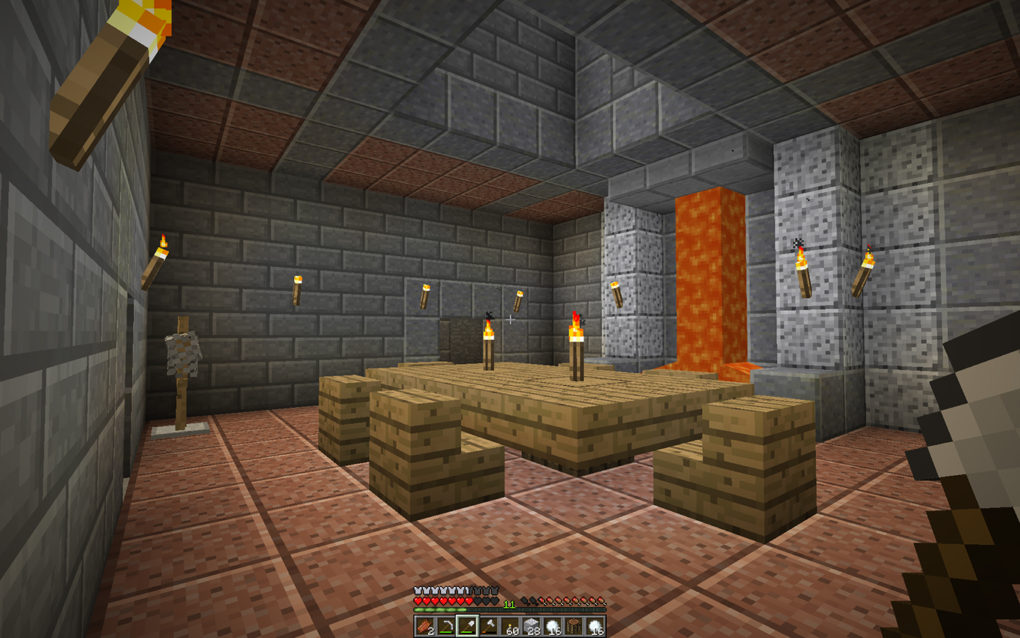
It’s a game where the players can build things with blocks or resources – think Lego, only online, with almost unlimited possibilities – and you work your way up through basic resources to more complex ones. You can choose to work in either a creative mode – where you build virtual structures and worlds – or a survival mode, where you must harvest the materials and try to stay alive without dying. Because of the visual style of the graphics – the little block-like people in motion are really quite funny! – it never really looks very violent (even if someone gets terminated).

imrs | Vox | Can Minecraft Help to ‘Craft’ Budding Engineers, Architects and Designers?

A description from Minecraft itself is as follows: “Minecraft is a game made up of blocks, creatures, and community. You can survive the night or build a work of art – the choice is all yours.

“…Minecraft has no set goal and can be played however you’d like! This is why it’s sometimes called a ‘sandbox game’ – there are lots of things for you to do, and lots of ways that you can play. If you like being creative, then you can use the blocks to build things from your imagination. If you’re feeling brave, you can explore the world and face daring challenges.”

The ‘mining’ part of Minecraft means removing or taking away, while the ‘crafting’ refers to creating by using materials within the online world. You can progress in the game by scavenging or ‘mining’ blocks of various materials such as stone, wood, iron, gold, emeralds and a whole lot more (if only it was as easy to get precious metals and jewels in the real world!). These are used as the basis for creations, or combined to create more advanced materials, tools and objects.

Players can design houses, cities, and even machines, and so the requisite problem-solving skills include learning how to plan, adapt and experiment. We shared a link earlier to an article giving tips on managing kids and video games in general – here’s another useful parental resource about Minecraft itself.


Besides Creativity, What Else Does Minecraft Encourage?

2829340 6515276496 maxre | Vox | Can Minecraft Help to ‘Craft’ Budding Engineers, Architects and Designers?

Wall-E in Minecraft [courtesy: https://www.gamespot.com/gallery/17-amazing-minecraft-creations-that-will-blow-your/2900-84/#13]


According to many educators and child development experts, playing Minecraft can be great for children, if used responsibly. Playing Minecraft supports a range of skills, including:

  • Creativity: Players design houses, cities and even machines, and you can work in a free-form design that just keeps growing, or strictly according to design parameters.
  • Problem-solving: Players learn to plan, adapt and experiment.
  • Teamwork: Being in a multiplayer game encourages collaboration and communication.
  • Computational thinking: By designing and building complex structures and automated systems, players develop their computational thinking skills, learning to break down problems into smaller steps and devising logical solutions.


Having been released in November 2011 (the earliest version was released for PC players in May 2009 and was called Cave Game), Minecraft was bought by Microsoft in November 2014 (for a staggering amount of money!).

Microsoft then wasted no time in releasing Minecraft Education in November 2016, a special version of Minecraft created specifically for use in schools, with extra tools and features that allow teachers to harness the fun and creativity of Minecraft to teach everything from reading to chemistry to coding.

Can Minecraft Encourage Career Choices?

Besides the creation and use of Minecraft Education in schools, there are other ways in which Minecraft can help children with learning in a more focused way.

In mid-2024, an event in the United Kingdom showcased the use of Minecraft to explore careers in aerospace, during the annual Farnborough International Airshow of that year. The event, Pioneers of Tomorrow, is a dedicated STEM-focused (Science, Technology, Engineering and Mathematics) event designed to inspire and engage the next generation of aerospace leaders.

During Pioneers of Tomorrow in July 2024, over 300 children played the Skills Miner aerospace game. As they proceeded through each game level, students explored core STEM principles and gained insight into engineering careers by experiencing the different roles from designers to coders, and maintenance engineers to aerodynamicists and stress engineers.

Analysis revealed that playing the game improved participants’ understanding of engineering concepts and left a lasting positive impression, encouraging many to consider a future career in the field:

  • 91 percent of participants said they had gained new insights into engineering; and
  • 87% expressed increased interest in pursuing a career in engineering.

 

fallingwater | Vox | Can Minecraft Help to ‘Craft’ Budding Engineers, Architects and Designers?

Anecdotal evidence is also available for people who say they’ve chosen their career because of a love of playing Minecraft as a child. One such person is Arihant Bhattacharjee, a student in Year 11 at The British School of Beijing, Shunyi – China. He told his story of how he was inspired to become an architect during a Ted Talk entitled ‘From Blocks to Bricks’ – you can listen to his story here. On the design side of life, Lucas Pion believes that playing Minecraft inspired him to become a designer.

While some people don’t agree that Minecraft is necessarily going to lead to a career in architecture and similar design- or building-related careers, others have strongly positive views. James Delaney, who studied architecture at Cambridge University in the UK, says: “Whilst the architects of today grew up playing with LEGO, I have no doubt the next generation will have played Minecraft. People have to stop thinking of it as a game. It’s a CAD tool, and as such it is the most widely used one in the world. We’re looking forward to bridging the gaps between design and reality.”

And then there was the release earlier this year of ‘A Minecraft Movie’, starring Jason Momoa, Jennifer Coolidge and Jack Black. According to a Google Trends analysis, there was a nearly 200% (194.1%) surge in interest around building, design and architecture careers among younger generations, with searches for ‘builders’ alone almost tripling following the premiere of the movie. (We’re not so sure about how many people searched for ‘pink fringed leather jacket’ after the movie’s release but that’s a different conversation.)

MV5BNjgxMWQ3ZTgtMDJhZi00N2ZkLWI5MTUtOTZjZThiMDM2ZmM1XkEyXkFqcGc@. V1 FMjpg UX1800 1024x576 1 | Vox | Can Minecraft Help to ‘Craft’ Budding Engineers, Architects and Designers?

While the jury is out for some, for others the message is very clear: Minecraft can inspire people to pursue careers in architecture, design, and engineering. The game’s creative environment definitely encourages players to experiment with building, spatial reasoning and problem-solving, and these are all fundamental aspects of these professions. It can also act as a stepping stone to more advanced design tools and concepts.

And so back to your kids and the ongoing debate in your home about online gaming time.

Perhaps good advice would be to follow a similar attitude to car pioneer Henry Ford, in the early days of car production lines, when he said: “You can have it in any colour as long as it’s black.”

Ok then.

“Kids, you can play any video game you like, as long as it’s Minecraft.”

Because it’s actually good for you… Have fun!

[Editor’s note: Of course, good gaming requires a fast Internet connection, and Vox is always available to help with your connectivity!]


 

contentname Thumbnail 0 | Vox | Can Minecraft Help to ‘Craft’ Budding Engineers, Architects and Designers?

Who You Gonna Call?

People of Vox: Spotlight on Greg Gyngell


If there’s something strange

In your neighbourhood

Who you gonna call?

Greg Gyngell!

If there’s something weird

And it don’t look good

Who you gonna call?

Greg Gyngell!

Ghostbusters | Vox | Who You Gonna Call?

Right, well with apologies to the Ghost Busters franchise (do you have an ear-worm now?), it’s time for another peek into the life and times of another of our green-blooded Voxies. In this episode, we shine the spotlight on a man who is normally the MC within the training environment, and so he’s actually used to turning the spotlight on everyone else…but he agreed to be interviewed without too much of a fuss.

And a good thing too, because he’s got some really interesting stories to tell!

“I’m Greg and I look after the Training Department,” says Vox’s well-known and well-loved Soft Skills Trainer. “I’ve been at Vox for about 13 years now and together with my team, I do anything and everything that is related to training, including some video production work.

“I’m always available to do anything else that might be asked of me, and wherever I can assist, I’m happy to step in. No day is ever the same, and that’s exactly how I like it!”

Greg leads a team of four Trainers across the country and reports directly to Head of Human Resources, Pam McLeod. Let’s take a look at how he champions the cause of training throughout the company – another great example of how life and a career at Vox never has to be linear.

Greg Plett nu resized | Vox | Who You Gonna Call?

Starting Out in Film and Entertainment

“When I left school I had only two real passions,” explains Greg. “I wanted to be a pilot – I was one of those kids who built little aeroplanes and hung them off the ceiling – and in my teenage years I got very involved in movies.

“Flight school was unfortunately just too expensive, so when I realised that flying wasn’t a career option, I went into the local film industry. I was involved in making some incredible movies in South Africa and was able to meet some amazing people.

Greg learned his craft from the ground up and thoroughly enjoyed being in the movie world, but it wasn’t to be forever.

bestfilmjob | Vox | Who You Gonna Call?

He clarifies: “The industry in South Africa went through a phase in which international big budget films were being shot here, but the production houses were bringing over their own crews. I went freelance for a while but realised quite quickly that it was unfortunately time to leave the movie industry in the quest simply to earn a living.

“I also dabbled in radio, and DJ-ing at clubs, both of which were obviously great fun. Eventually I landed up at a large cellular company and became entrenched in the mobile phone arena. After some time with this enterprise, my intuitive knowledge and understanding of gadgets and technology, together with my ability to explain things and talk to people, collided in a fortuitous manner and I ended up in my first training position with them, where I stayed for quite some time – over a decade, in fact.”

The end result was a man who understood the value of entertainment, technology and training, as well as being flexible in his outlook on life – not to mention the importance of having fun! The stage was set for Greg to come to Vox.


‘You’d better call…’

We can thank a retrenchment exercise that took place at his previous employer for Greg’s eventual arrival at Vox. He explains: “In the wake of being unfortunately retrenched, one of my former work colleagues phoned me and told me that that @lantic – one of the businesses that was later to be merged into the group of companies under the Vox umbrella – was planning to set up a training department, and they were interested in talking to me. And so I had an interview and was offered a six-month contract.”

At that stage, Greg and his wife Claire were actually planning to emigrate to New Zealand, but in the light of this new development, they decided to stay for a while longer.

Greg continues: “At the end of the six months, I was then offered a permanent position, because my previous background in the film industry, and how I could use it within the training division to create videos when required, was seen to be advantageous. My technical outlook, combined with my training soft skills plus the film experience, all merged neatly into a new position within Vox. And so the rest, as they say, is history!

“I like to tell people that my love for Vox as a company meant that, even though we’d been accepted into New Zealand, we stayed in South Africa and have never looked back since. Everything came together at the right time and I’ve now been at Vox for about 13 years. My passion is training, but at Vox, as I mentioned, I’m able to look after a number of other things as well.”


A Strong Team of Trainers

As far as the Vox Training is concerned, Greg coordinates with his four Trainers every day. “We all work remotely,” he explains. ”Alex McDonald is the Systems Trainer and looks after all systems-related training, including for our partners, while Victor Kemp is in charge of our Technical Training, including our Mikrotik router training; our e-learning system and ‘Friday Bytes Live’. Our other two team members are Ryan Varga, our Sales Trainer, who also takes care of our leadership and mentoring system; and Craig Jewell, who looks after Soft Skills, presenting courses that include themes around customer service, time management and adaptability.”

“One of the Training Department’s innovative initiatives is the ‘Friday Bytes Live’, when Voxies come together every Friday morning to hear and learn about different areas of the company using a fun, interactive quiz approach. Victor runs with this every week, and we have prizes up for grabs to incentivise everyone further.”

Friday Bytes | Vox | Who You Gonna Call?

Greg clarifies that the Training department is in charge of the general training needs of around two and a half thousand people, as well as the monthly Induction training for all new Vox employees.

“I’m the main person at the helm of the induction training,” he says, “and here I run training over a few days at the beginning of every month, when every department in the company sends a representative to introduce the different aspects of Vox to all our new employees. Induction training takes place in person at our Johannesburg head office, and we also facilitate online participation.

“One of the primary elements of Induction is simply chatting! I’m like the MC, if you like, and I try to make new people feel comfortable while I also liaise with the presenters. I’ve always been a big fan of comedy, and so we inject humour into these training days as much as possible. Another large element of Induction training – besides putting the programme together in advance and running with the required logistics – is to keep the sessions on track from a time perspective.”

head 1556568 1280 resized | Vox | Who You Gonna Call?

It’s certainly a mixed bag, bringing a significant variety to Greg’s working days and weeks, which he appreciates. Over and above that, he says: “Another thing that I really enjoy about my job is that, while training is my first love, I am also able to get involved in so many other different things.

“For example, I’ve been able to assist with elements of our recruitment system as well as working on study skills. And funny enough, I love doing the mandatory stuff – the admin challenges that most other people dislike. For example, I really enjoy organising and setting up the meetings required to kickstart a training session.”


‘If there’s something weird…’

Greg Background 2 resized | Vox | Who You Gonna Call?
Greg’s home office reflects his creative approach to life and training


To balance out his day-to-day organisational requirements, Greg’s creative side once again comes to the fore with his off-duty interests. A speed freak, he doesn’t own a car but instead rides a motor bike, and is also a huge Formula 1 fan, as seen in his office space, where the roof is painted with black and white checkered squares to look like an F1 flag – something that any Voxie who’s ever been on a Teams call with him will recognise instantly!

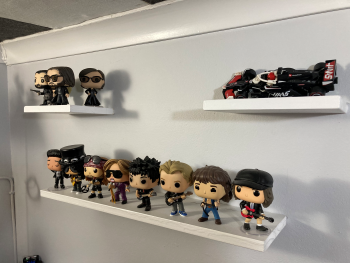
Staying in Greg’s home office, there are shelves filled with Lego versions of Formula 1 cars and drivers, as well as Funko Pop and Skylander collectable figurines, reflecting his taste in music, movies (think James Bond and The Matrix!) and video games. Other interests and hobbies include sports shooting, cooking and coffee – Greg intends to roast significant quantities of his own coffee beans in the future. As a self-confessed coffee snob, he limits himself to just two coffee cups per day, which is just enough to help him keep up with his busy pet Border Collies (just one more daily cup of coffee wouldn’t be fair on the dog…).

Add in his wife of 20 years, Claire, and his two teenage children, and it’s a busy and enjoyable life, he says gratefully.

Gyngell Family nu resized | Vox | Who You Gonna Call?

“For me, there is always something different to do at work. I’ve been exposed to working on new projects because of my line manager, Pam, as well as our CEO, Jacques du Toit – something that I appreciate enormously, and which speaks to the organisation’s culture of being innovative and flexible.

“This, I think, is what sets Vox apart from the other ISPs, together with the passion and heart for the business that our senior executives always display. There is a significant number of people within the company ‘who live and breathe green’, and I am passionately one of them,” he concludes.

And anyone who has a training need of any kind within Vox knows exactly who to call – Greg Gyngell!


Baby, It’s Cold Outside!

So snuggle up at home with your Vox Connectivity, and let the weather do its thing without you…

Winter in South Africa has officially arrived around the country (and if you don’t believe me, just ask our Vox Weather meteorologists). Or to put it another way: “Eish guys, it’s freezing!”

It’s raining, it’s pouring, it’s snowing, it’s windy and it’s just plain ‘NO MORE SUNNY SOUTH AFRICA!’ right now, almost everywhere.

So what’s a person to do in the quest to stay warm and dry and happy?

Here at Vox, we have some ideas.

girl 4449101 1280 resized | Vox | Baby, It’s Cold Outside!


Don’t Worry…

  • Grab your warm clothes and layer up against the weather. Beanies / scarves / gloves / rain jackets / warm socks, anyone? And as for leg warmers, let’s just call them retro cool; I mean, they can’t be a fashion faux pas any more when Shein and Temu are both bringing them back…
  • Grab a blanket! Grab two! Or a ‘shoulder blanket’, aka a shawl.
  • Close the doors, windows, curtains and blinds when the sun’s gone down. Conversely, open those curtains to catch some winter rays on sunny days when you wake up, to let any outside heat stream into your home and slowly warm it up. It’s a simple practice that doesn’t cost anything but it can make a difference.
  • Put on the heater or light the fire – but safely, please! – and never leave an open flame or fireplace unattended. If you have small children, be aware of any hazards to their safety.
  • Speaking of retro items, remember hot water bottles? The trick, apparently, is to avoid completely filling your bottle – instead, leave a little room for the hot air to expand so it doesn’t get a pressure build-up and burst. And cover your bottle with a towel if it didn’t come with a cover, to help keep the heat in and also not burn your skin.
  • And then there’s the non-water bottle – wheat bags that go into the microwave – which are also great for sprains or sore muscles as well as staying warmer. If you don’t have a wheat bag, you could make something similar by filling an old sock with rice, tying the opening closed, and heating up in the microwave for a short while. (Safety note: you probably shouldn’t do this in an air fryer 😊.)
  • Finally, warm your insides with a nice hot beverage. What’s your preference: coffee, hot chocolate, tea, Rooibos or herbal tea? And of course, wrapping your cold fingers around the hot mug helps as well.

hands 1283917 1280 resized | Vox | Baby, It’s Cold Outside!


… Be Happy

Right, now that we’ve sorted out some tips for keeping warm, let’s look at the positive side of the dropping thermometer, because cold weather is just made for home entertainment!  And when all your connectivity options are covered by Vox, home entertainment is a breeze for the whole family.

Why not settle into a cold weather weekend of online-enhanced fun – here are some of your options to consider:

  • Streaming entertainment: Netflix, Showmax, Disney+, Amazon Prime Video, and Apple TV+ are all available locally – just grab the popcorn and chocolate (and blanket) and get comfy.
  • For local content, we’ve got SABC+ especially for news hounds, eVOD with soapies galore, and Afriforum TV for Afrikaans series, podcasts, radio, reality shows and kids content.
  • For sports options, there’s DSTV Stream and F1TV Pro, as well as Tennis TV Premium for live grand slam tournaments (hey there, Wimbledon season!).
  • And don’t forget about your fix of YouTube, for the young and the young at heart.


gaming 4970616 1280 resized | Vox | Baby, It’s Cold Outside!

Then there’s online gaming, of course, beloved by millions today around the world. Whether it’s World of Warcraft, Fortnite, Apex Legends, PUBG, Minecraft and so much more, there’s something for everyone, whether you’re a veteran or a curious newcomer, under 10 or a life-long teenager. You just need a keen imagination, fast fingers and faster connectivity. At Vox, we can’t do anything about your manual dexterity, but we can surely take care of your Internet speed!

AdobeStock 525963789 resized | Vox | Baby, It’s Cold Outside!

Away from gaming, you might also want to stay in touch with friends and family with a long-overdue chat via WhatsApp or Vobi, and for those more introspective moments, the readers among us will reach out for a good book. Of course, you can always do it the old-fashioned paper-based way, but online books are also widely available – and often for far less cost.

And finally, let’s not forget about a fix of celebrity gossip – which high-profile million-dollar wedding is taking place for the international glitterati set? Who’s wearing what and who’s cosying up to who? (Looking at you here, Orlando Bloom!)

So really – who wants to leave home when “Baby, it’s cold outside!”

With Vox, the great news is that you don’t have to.

Enjoy!


PS: Just for an added bonus, here’s a link to a revamped version of the classic song, performed by John Legend and Kelly Clarkson (click on the image).

snowfall 5952528 1280 resized | Vox | Baby, It’s Cold Outside!

On the Couch or in a Different Country: Unlocking the Future of Work

Companies can at last dip their toes into a truly global talent pool without necessarily having to ask a potential new employee to change cities or countries.


While the office premises will always be a feature of working life for most companies, it seems now that the future of work has arrived and is with us today. Work is no longer something that can only – or mostly – take place in a traditional office space.

Advancements in technology, combined with more flexible attitudes, mean that remote and hybrid work models are being offered by many more organisations today, giving employees greater independence and control over their work environments.

And as with most things in life, these new parameters bring their own sets of challenges and advantages.


On the Positive Side

Remote and hybrid work models allow organisations to tap into a significantly broader talent pool. When remote and / or hybrid arrangements are put on the table, companies can employ people who live a significant distance away from the office – even in another part of the country or the world.

This type of flexible employer/employee relationship was much scarcer in the past, and arguably even impossible for most companies.

So you want to employ an expert in their field who lives in the UK, or the UAE, or even Upington, but your head office is in Sandton? No problem – the time zones here are all similar, so it’s all Under Control. Remote working means it’s possible to hire in the person you really want to strengthen your team.

Looking at people in the US and Australia – Down Under – is of course a different story when it comes to time zones, but depending on the type of work required, tapping into a truly global office is no longer impossible – it just takes organisational skills and a flexible outlook.

Companies can at last dip their toes into a truly global talent pool without necessarily having to ask a potential new employee to change cities or countries.

From the employees’ perspective, they can avoid arduous daily commutes to and from work, and gain back more quality time for their personal lives, as well as working in a more flexible home space than occurs in your average office (the couch springs to mind).

And for the employer, once again, happy employees tend to be more productive employees who are more inclined to stay with a company that is more flexible – so this means less employee turnover.

There are many ways in which these positives feed into a virtuous cycle: employees who are happy because they have a flexible work arrangement tend to work harder and are more productive. This in turn pleases the employer, who is then more inclined to continue with flexible arrangements. On the surface, it seems like a great recipe for success.


Disadvantages to Remote or Hybrid Work

However, there are also challenges to contend with. Communication and collaboration can become more complex in remote and hybrid settings, especially when team members are scattered across different locations and time zones.

In addition, building and maintaining a solid company culture in a virtual environment can be difficult without regular face-to-face interaction.

It also needs to be noted that not everyone wants to work from home, at least all the time: some employees may struggle with feelings of isolation, which can actually lower their levels of engagement and productivity. Alternatively, there might be too many distractions at home preventing them from doing their best work (other people, a noisy environment outside the home, easy access to their favourite shows – there’s the couch again…).

In South Africa, of course, we also have regular load shedding to contend with, which can add in further permutations around working from home for employees – not everyone can afford a UPS to keep their devices switched on and connected when the power goes off.


Being Proactive

To thrive in this new reality, organisations are well-advised to prioritise their employees’ work experience. This has always been common sense for any company that wants to avoid a high staff turnover, but as the UK and the US found out after Covid during the ‘Great Resignation’ period, many employees got used to working from home, and then voted with their boots when they were given ultimatums to return to the office.

As noted in this online HR article: ‘The pandemic changed many people’s expectations of work – and many were prepared to quit if their employer wasn’t ready to meet those expectations.’

In South Africa, of course, we have different scenarios playing out, including the ever-present threat of load shedding as well as high unemployment rates, and so perhaps we didn’t experience the Great Resignation quite as much as in other parts of the globe. By and large, we could assume that the so-called Great Resignation in South Africa is ‘ring-fenced in the professional and specialist roles that are scarce skills in the market’.

But it still provides food for thought: namely, that keeping your employees happy – or at least showing that you are trying to listen to their concerns – can help to keep your staff numbers stable. This would involve trying to address the specific needs and preferences of remote and hybrid workers, while also ensuring that they feel valued and connected to the organisation’s mission and culture. A proactive approach to communication, performance assessment and technology is vital.

From a technology perspective, Vox can help with your connectivity and power requirements, through our vast range of solutions including fibre, voice, failover and UPS offerings.

As the future of work continues to evolve in the present, Long Live Working From The Couch.

At least sometimes.

Buck Up and Call More for Less With Vobi

If you want to call more for less without sacrificing call quality, Vobi from Vox is built for you. Perfect for small businesses and teams that need reliable, affordable voice services, Vobi offers flexible calling options, easy setup and 24/7 support — so you can keep customers connected and costs under control.

Why choose Vobi? Call more for less, simply

Vobi makes saving on voice calls simple. Instead of expensive legacy phone lines, it uses modern VoIP technology to deliver local and international calling at lower rates. That means you can increase call volumes, maintain great call quality and reduce your monthly spend — perfect for sales teams, support centres and busy small businesses.

Main benefits at a glance

  • Lower call costs: Reduce per-minute charges so you can call more for less.
  • Scalable: Add more users, numbers or features as your business grows.
  • Reliable support: Vox offers local support to keep your service running.
  • Flexible plans: Choose bundles or pay-as-you-go options to suit usage.
  • Easy number management: Port existing numbers or set up new business lines.

Features that help you call more for less

  • Cloud-based calling: No bulky PBX hardware; use desk phones, softphones or mobile apps.
  • Call bundles and rate plans: Pick the plan that matches your call patterns and minimise excess costs.
  • Call routing and voicemail: Improve customer experience with intelligent routing and professional greetings.
  • Mobile and remote-ready: Staff can use Vobi from anywhere, keeping teams connected without extra costs.
  • Centralised billing: One bill for voice and other Vox services simplifies administration.

How Vobi helps South African small business owners

For SMEs, every rand matters. Vobi lets you reduce voice spend while adding modern features that support productivity and customer service. Sales teams can make more outreach calls without hiking the bill. Support teams keep response times fast with efficient routing. And managers get clear usage visibility to control costs and optimise plans.

Getting started

  1. Check your needs — estimate expected call minutes and whether you need local, national or international calling.
  2. Choose a plan — pick a bundle or pay-as-you-go option that fits your usage.
  3. Port or add numbers — keep your existing business numbers or get new ones.
  4. Set up devices — use compatible desk phones, a softphone app, or mobile integration.
  5. Go live — Vox support will assist with configuration and user onboarding.

Tips to call more for less

  • Review your call patterns quarterly and move to a plan that matches usage.
  • Combine voice with other Vox services (internet or cloud) for consolidated billing.
  • Use business hours routing and voicemail to reduce unnecessary call handling costs.
  • Train staff on softphone apps to avoid roaming or high mobile charges.

Call more for less without compromise

Vobi from Vox gives you modern voice tools that cut costs and boost productivity. Whether you’re running a one-person operation or managing a team, Vobi helps you make more calls for less money — with the reliability and support you’d expect from a local provider.

Important tech talk

When you sign up with Vobi:

  • You’ll be able to make and receive high quality Voice and video calls over Fibre Wi-Fi, LTE and 5G and Wireless on the Vox network.
  • You’ll get your own Vobi number through your new SIP account (which stands for Session Initiation Protocol calling). This means that you will have a different number when you make Vobi calls via your existing mobile phone (so one mobile phone with two numbers on it).
    • This SIP number will be an 087 number.
    • If you prefer, you can request a geographically-located number, for example one that begins with 010 if you’re in Johannesburg – it’s your choice. Please note that there is an additional charge for this option.
  • Alternatively, you have the option to move (‘port’) your existing number to Vox, which you can use on the Vobi app.
  • Enjoy low call rates across all networks in South Africa, or call from wherever you are in the world without the use of high cost roaming charges.
  • A note about RICA: This is the South African legislation that governs the interception or monitoring of paper-based and electronic communications. Its purpose is to protect the security and privacy of South Africans. So when you are setting up your account, you will have to submit some documentation to validate your ID.

Frequently Asked Questions

  1. What is Vobi and how does it help my business?
    Vobi is Vox’s VoIP calling solution that delivers cost-effective voice calling, flexible plans and cloud-based features so users can call more for less and scale as needed.
  2. Can I keep my current phone numbers with Vobi?
    Yes — in most cases you can port existing numbers to Vobi so customers can continue to reach you on familiar lines.
  3. Does Vobi work for remote or hybrid teams?
    Absolutely. Vobi supports softphones and mobile integration, so users can make and receive business calls from anywhere with an Internet connection.
  4. How do I choose the right Vobi plan?
    Estimate your monthly call minutes and mix (local vs international). Compare that with available bundles or pay-as-you-go rates, then pick the plan that best reduces per-minute costs while covering your usual usage.
  5. Is support available if I need help?
    Vox offers 24/7 support to help with setup, number porting and ongoing service issues so your calling stays uninterrupted.

Back-up…or Back Out? How to Maximise your Home-Grown Glamping Experience

So there you are.

It’s a late summer evening and the power is out (loadshedding). You’re starting to think that you might as well re-name your home after that Northern Cape mining town, Hotazel, because you aren’t playing in the solar leagues yet, and with the El Niño heatwave phenomenon having kicked in again, it sure feels hot as H even though the sun has moved well below the horizon.

Today, for some added interest, the water is off too (apparently it’s also loadshedding-related, according to the latest X communication from the municipal authorities).

But never mind! You are peacefully glamping in your own home, and right now you are beyond caring – at least for today – that you and the neighbours have once again been ex-communicated from the municipal services that all y’all do actually pay for.

Glamping at Home
Cooking via camping gas stove under the stars – check.
Selection of wine and beers – check.

Finish the potjie, pour a second glass of something, fire up the jenny and sit down in front of something good on Netflix – check.
With the candles flickering everywhere it’s actually quite romantic… and if the potjie’s good enough, your partner-in-wine might even be in the mood later…?

Home-grown glamping plus Netflix and Chill sorted – check!

…You Always Think It Will Happen to Someone Else
And then it happens.

They say that bad things come in three, and it seems that ‘they’ are right, because now the Wi-Fi is also down – and for this one, there is no back-up plan right now.

So there goes glamping – well, at least the really fun part. Because without the Netflix, your partner-in-wine is far less likely to be in the mood later for the Chill part of the evening.

And that’s potentially another form of ex communication.

The Need for Failover Connectivity Solutions
On a more serious note, this imaginary (or is it?) scenario reminds us that access to the internet today – just like the ongoing availability of electricity and clean water – is an essential need in a modern society.

When there’s no connectivity, it’s not just about Netflix going down (annoying as that might be at the end of a long day).
Internet connectivity underpins everything in our digital age, and plays a vital role in our economy – from businesses keeping their systems live and responsive, to households that need to support work-from-home and remote schooling, to mines working in remote areas.

The internet makes it possible for us to access information and communicate from anywhere in the world – even underground in dangerous mining situations. Wi-Fi, in turn, allows us to connect our devices to the Internet.

A Wi-Fi connection can come from Fibre, LTE, wireless or a satellite connection.

‘Back Out’ Needs Back-Up – LTE Supports Fibre
Fixed-line Fibre is an internet connection built on a network of fibre-optic cables that send data at -quite literally – the speed of light, using light pulses sent through thin strands of flexible glass. Fibre represents the pinnacle of fast internet options, and this speed is why we refer to fixed-line Fibre as being the ‘gold in the ground’ – because it’s usually laid in the earth (technical note: it can also be placed under water and above ground, depending on the terrain and the requirement).

While it’s generally extremely reliable, things can go wrong on the Fibre network from time to time – for example, municipal employees working on a nearby water pipe could dig through the in-ground Fibre line connecting your area, or vandals and criminals could damage the infrastructure. And so, to stay connected, first prize is for Fibre users to have a failover option for those times when the Fibre line goes down, and one of these options is LTE.

It will give you back-up instead of having your internet ‘back out’.

How Can Vox LTE Work For You?
LTE stands for Long Term Evolution and is sometimes referred to as 4G LTE. It’s a wireless internet solution that uses radio waves to transmit data between a router and a cell tower, enabling mobile devices to connect to these networks.

Vox offers LTE failover solutions to our Fibre-to-the-home (FTTH) clients. (Another technical note: households that have wireless Internet connections also have access to the failover solution.)

V055.1.3 VoxBlog LTE 05April2024 | Vox | Back-up…or Back Out? How to Maximise your Home-Grown Glamping Experience

Get reliable Internet backup with Vox LTE Failover and switch from Home Fibre to Fixed LTE-A during outages to stay connected. Plans start at R260pm (which includes a R35 access fee, R85 router rental and R140 for 25/25GB).

FTTH customers do a self-install, after which you can sit back and enjoy the internet, because if your Fibre line goes down, your service will automatically and seamlessly switch to LTE until the Fibre is up and running again.

LTE will work for the type of internet speeds most people need, but wouldn’t be responsive enough if you’re a competitive gamer. It is also not able to support an SME or enterprise where internet voice is critical to your business – but, even then, it’s still smart to have an LTE failover option for basic connectivity for core functions.

And best of all, this back-up solution can make ex-communication a thing of the past: no more need to look up the X-factor; guaranteed Netflix and Chill, even in load-shedding.
In conclusion?

Home-grown glamping sorted on every single front possible – check, check, check!

Wednesday Series of the Week: The Truth about the Harry Quebert Affair.

If you’re looking for an addictive and murky crime series with questionable characters, look no further than The Truth about the Harry Quebert Affair.

Lead character, Harry Quebert (Patrick Dempsey), is a renowned literary professor and famous author. New kid on the block and Quebert’s protégé, Marcus Goldman, has writer’s block and spends his days dodging agents requesting a follow-up to his first mega hit.

Things quickly take a turn for the worst when Quebert is arrested for the murder of fifteen-year-old Nola Kellergan, who disappeared in the 70s. Marcus, along with Sgt. Perry Gahalowood, delve deep into the lives of Maine’s townsfolk to discover what really happened in the summer of 1975.

Season 1, Episode 1 leaves watchers asking: “Did Quebert do it?”

As the show continues, the relationship between Quebert and Kellergan begins to unfold and may leave you feeling rather uncomfortable to say the least. The relationship is explored in a way we don’t usually see on screen. When we witness their first interaction, the mutual attraction is obvious. Is it wrong? Yes, but the producers handle it well and it is not used merely as a shock tactic.

Absolutely engrossing culminating in an unpredicted ending.

The Truth about the Harry Quebert Affair contains multiple twists and never fails to keep you guessing. The show is a genuine whodunnit. However, in my opinion, the ending fell a little short, but the suspense felt throughout the series is definitely worth the watch!

Stream season 1 of The Truth about the Harry Quebert Affair now. Available exclusively on Showmax.

“Absolutely engrossing culminating in an unpredicted ending.” – Diana Martins Prenner, Marketing Manager: PR, Events and Sponsorship.

Check out the trailer below:

Wednesday Series of the Week: Umbrella Academy

One day in 1989, 43 infants are inexplicably born to random, unconnected women who showed no signs of pregnancy the day before. Seven are adopted by billionaire industrialist Sir Reginald Hargreeves, the creator of the Umbrella Academy who prepares his “children” to save the world.

In their teenage years, the family fractures and the team disbands. Fast forward to the present day, when the six surviving members of the clan reunite upon the news of Hargreeves’ passing.

…a refreshing take on the superhero genre…

They work together to solve a mystery surrounding their father’s death, but divergent personalities and abilities again pull the estranged family apart, and a global apocalypse is another imminent threat. The series is based on a collection of comics and graphic novels created and written by My Chemical Romance lead singer Gerard Way.

Umbrella Academy not only looks, feels and sounds different but the production itself is gorgeous and evokes another world while keeping us firmly planted in this one. Yes, it has its flaws and excesses, but the series nonetheless lands in the sweet spot between comedy and drama. Some might say the plot and script are cliched but so what? It’s still a blast to watch, and the actors add further appeal of the show.

Umbrella Academy is a refreshing take on the superhero genre with unique tastes and lovable characters who are all too-real in their struggles with their past, emotional trauma and internal conflicts. We can’t wait for season 2!

Don’t just take our word for it, you too can watch Umbrella Academy, now streaming on Netflix.

Have a look at the Umbrella Academy trailer below.

Wednesday Series of the Week: When They See Us

When They See Us is a must-watch limited series on Netflix. The show is based on the true story of five young teens who were accused and convicted of assaulting and raping a jogger in Central Park, New York in 1989.

The emotional impact of When They See Us cannot be understated

Labelled the Central Park Five, the quintet maintained they were innocent throughout the trial and even after they were convicted. The family of the Central Park Five spent years fighting their convictions in the hope of exonerating the five teens. In a rather cinematic twist the real assailant comes forward 17 years later and confesses to the crime that the five teens are accused of.

The series spans a quarter of a century from when the teens are first questioned about the incident in the spring of 1989, going through their exoneration in 2002 and ultimately the settlement reached with the city of New York in 2014.

When They See Us is directed and co-written by Oscar Nominee and Emmy Award Winner, Ava DuVernay. The four episodes are packed with a range of emotions that leave the viewer not only angered by the injustice that is thrown upon the teens, but joyful when they are exonerated.

The story is unbelievable, and the performance of the actors draw out your emotions, passion and anger. Shedding at least two tears is guaranteed!

When They See Us is not just a story that highlights racial profiling and the flaws within the American justice system. It’s a story of five young teens who were deprived of their childhood, their dreams and hopes, and of their family, just because of the colour of their skin. The emotional impact of When They See Us cannot be understated.

Stream When They See Us on Netflix and don’t miss the companion special titled: Oprah Winfrey Presents When They See Us Now, featuring interviews with the cast and the exonerated five. This is also available on Netflix.

Check out the trailer below:


Wednesday Series of the Week: YOU

One of this season’s best binge-able series is rather thrilling yet pleasingly entertaining.

What would you do for love? How far are you willing to go? “YOU” answers those questions and more!

Starring Penn Badgley, “YOU” is a 21st century love story that asks, “What would you do for love?” When a brilliant bookstore manager crosses paths with an aspiring writer, his answer becomes clear: anything.

Joe’s sardonic narration along with his display of a rare eagerness is great to watch

And by anything we mean anything. The lengths Penn Badgley goes to get a girl to fall in love with him is both extremely unrealistic and realistic.

Using the Internet and social media as his tools to gather the most intimate of details and get close to her, a charming and awkward crush quickly becomes obsession as he quietly and strategically removes every obstacle – and person – in his way.

The series also stars Elizabeth Lail, Luca Padovan, Zach Cherry, and Shay Mitchell, with a special guest appearance by John Stamos,

Season 1 of “YOU” is currently streaming on Netflix and season 2 is in the works, and we can’t be happier. So many unanswered questions need to be answered!

This is what our Voxies thought of “YOU”:

A compulsively watchable show, Joe’s sardonic narration along with his display of a rare eagerness is great to watch. I can’t wait for season 2. Nathan Goodall – Vox Desktop Support Technician

Check out the trailer below: