From Good to Great: Making the Most of Your M365

Empowering you and your family across multiple devices


“There is no reason anyone would want a computer in their home.” – Ken Olsen, founder of Digital Equipment Corporation, 1977

This sentence definitely goes down in history as one of those things people deeply regret saying later. And while it’s easy to predict things in retrospect – ‘Hindsight is 20/20 vision’, as the saying goes – it seems incredible to think that people once lived in a world without access to personal laptops and smartphones in their lives, which have now become such an integral part of our home functioning for work, homework, financial planning and operating, entertainment and simply staying in touch.

The installation of Microsoft 365 (‘M365’) onto your devices will upgrade this even further – this brilliant software can maximise your devices and create truly next-level experiences.

Let’s look at how you can go from good to great with Microsoft 365.


Always Better with M365

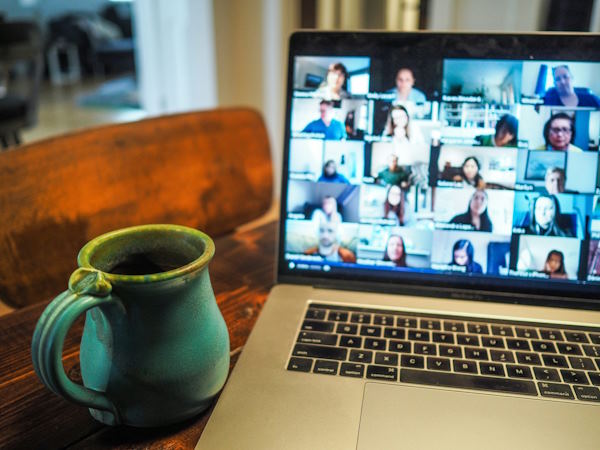
monique carrati ONn4OfAnxZY unsplash | Vox | From Good to Great: Making the Most of Your M365

“Life is like a box of chocolates. You never know what you’re gonna get.” —Forrest Gump

But the great thing about Microsoft 365 is that you know exactly what you’re going to get (and it’s always a sweet deal). With Vox and Microsoft 365 for personal use, you can communicate, write, edit, do complex maths-based planning, share ideas, create presentations, and generally stay productive from anywhere, at any time.

Microsoft 365 Personal (for one individual) or Family (up to six people) will empower you and the rest of your family to stay productive from anywhere, at any time, across multiple devices. The subscription comes with 1TB of secure cloud storage space, advanced security features and innovative apps, all in one plan.


Features and Benefits

Some of the features and benefits include the following:

  • Microsoft 365 works on PC, Mac, iPhone, iPad, and Android phones and tablets.
  • Applications like Word, Excel, PowerPoint, and OneNote come with offline access and features that make your life easier.
  • Microsoft Defender provides advanced security for your personal data and devices.
  • Outlook gives you advert-free secure email.
  • Microsoft Editor provides advanced spelling, grammar and writing assistance.
  • Clipchamp video editor’s robust tools, including premium filters and effects, lets you create and edit videos easily, while AI-powered tools give you next-level productivity options.
  • Stay in touch with 60 minutes of Skype calling per month.
  • Create and manage databases for big or small projects with Access (PC only).
  • When you’re stuck, Microsoft 365 Family and Personal Subscribers have access to ongoing 24/7 technical support, via chat or email, with Microsoft-trained experts.


Making Your M365 Experience Better

Enable your life with M365’s multiple tools. Here are some tips to make your M365 experience even better.

brooke cagle g1Kr4Ozfoac unsplash | Vox | From Good to Great: Making the Most of Your M365

  • Organise Notes with OneNote: Microsoft’s OneNote is an app used for storing information and taking notes. OneNote notebooks allow you to store links, save photos and drawings and write with a stylus, keeping research notes in one convenient spot.
  • Recall Sent Messages: The next time you mistakenly click ‘send’ on an Outlook email, it’s possible that you can still recall an unread sent message. (Please note: Message recall is only available if both you and the recipient have a Microsoft 365 or Microsoft Exchange email account within the same organisation. You cannot cancel an email sent through Outlook on the web, and you are not able to recall a message that’s already been read.)
  • Use Keyboard Shortcuts: Microsoft offers dozen of keyboard shortcuts in Windowsto make your life easier. It’s useful to remember a few that work for you the best.  For a fun example, hold down Shift + [colon] plus [closing bracket on the zero key] and you get a smiley face. 😊
  • Don’t Recreate, Restore: Who hasn’t had the awful experience of working for hours on a document, only to accidentally delete it? Microsoft Office 365 enables you to restore your last saved copy (and a number of previous copies). View and restore files in SharePoint or OneDrive by clicking File > Infoand selecting View. You can see previous versions and restore prior content, and  while it might not take you back to exactly where you left off, you can still get back a lot of your hard work and then carry on.


With Microsoft 365, you get smart assistance features that help you create amazing content fast on any device. Imagine living in a world without access to Microsoft 365… No thanks!

Click here to find out more about how Vox can help you with Microsoft 365 for home use.

“Greatness is a lot of small things done well.” – Eric Thomas (American motivational speaker and author)


Don’t Sleep on Data Backup and Recovery

Even Presidents Can Be Hacked

Data is the life blood of all organisations, and any loss of data can have serious implications for a business. The sudden loss of sensitive financial records or confidential information would be devastating to a company, with potential consequences including operational disruption, financial loss and reputational damage, as well as emotional distress to its customers.

Data loss can occur in many different ways. A hardware failure, a power outage, a natural disaster, or a cyber attack could all result in the loss of critical business data. Without a data backup plan, your organisation could be at risk of losing everything.

This means it’s essential to have proactive cybersecurity in place, as well as steps to control data backup and recovery, to protect an organisation’s digital assets. Having a reliable and redundant backup solution can assist companies to recover from incidents such as ransomware or hardware failure.

cyber 1654709 1920 | Vox | Don’t Sleep on Data Backup and Recovery


Three, Two, One: Go! For Data Backup

Data backup is a proactive measure that involves creating duplicate copies of critical data to guard against potential loss. These copies act as insurance against unforeseen events like hardware failures, accidental deletions and even cyberattacks.

Establishing a reliable backup strategy is like giving yourself a digital safety net to protect against risks – or an insurance policy, to put it another way.

Effectively implementing data backup and cybersecurity requires a strategic approach. Establishing a solid data backup plan involves adhering to the 3-2-1 backup rule, which has been used for many years and is supported by solution providers, businesses and even governments.

The 3-2-1 backup rule outlines that three backups must be kept, two of which should be on two different media (usually disk and tape), while one copy must be outside the primary data centre. This approach ensures protection against various scenarios, from hardware failures to natural disasters.

SA President Not Immune from Ransomware Attacks

South African government institutions have been battered by ransomware gangs over the last year.

The Development Bank of Southern Africa was targeted by a ransomware attack in June 2024, with servers, logfiles and documents stolen. In September this year, South Africa’s defence department was hacked by a gang that also allegedly leaked the personal phone number and email of President Cyril Ramaphosa, as well as a portion of the 1.6 terabytes of data stolen from the country’s defence systems.

The country’s International Trade Administration Commission also said it was hit with ransomware in early 2024. More recently, in June, the National Health Laboratory Service (NHLS) was targeted by a ransomware attack in which hackers deleted sections of their system, including backup servers, which meant that they were required to rebuild many of the affected parts. The attack took place at a time when Mpox outbreaks in the country were of concern.

These statistics show that data loss is a severe problem that can have a significant impact on an organisation, causing financial and reputational damage.

cyber 4444450 1920 | Vox | Don’t Sleep on Data Backup and Recovery 

Protect Your Data with Vox

At Vox, we understand the critical importance of keeping your data safe with a backup and recovery plan. As a Veeam Gold Partner, we offer your business the opportunity to create a copy of your data through our Backup as a Service, which uses the 3-2-1 rule.

As a trusted leader in the data protection space, Veeam provides backup, recovery and replication for critical workloads, like VMware, AWS, Microsoft Azure, SQL Server, Oracle, Windows, Linux and NAS, across physical, virtual and cloud platforms, in a single offering.

With the Vox 3-2-1 Backup solution, we provide an onsite data store for fast local restores, and replicates the data to our Cloud repository in case of major onsite disaster. It supports onsite virtual or physical servers as well as Windows and Linux desktops.


AdobeStock 572971403 | Vox | Don’t Sleep on Data Backup and Recovery

We offer a number of benefits:

  • A fully managed solution with proactive monitoring to ensure data isn’t lost
  • Ongoing integrity testing ensures that data is not corrupt and that backups can be recovered
  • The option to quickly restore to Vox Cloud so that users can continue to work.

Companies implementing a backup strategy often only keep data on-site, believing this to be infallible. However, a ransomware attack or critical hardware failure, in most instances, renders the data unrecoverable. With our Vox solution, you can protect against this risk by adding an additional layer of redundancy, as follows:

  • 3 copies of your data: This is the primary copy of the data you are using as well as two backups.
  • Saved on 2 different mediums: In addition to your primary copy, an onsite NAS device stores your backups, enabling quick restore functionality to reduce downtime.
  • 1 copy offsite in the Vox Cloud: Using Veeam’s Cloud connect, a backup copy is stored and maintained in the Vox Cloud.


The urgency to backup data lies in the potential devastation that is caused by data loss. You don’t want your organisation to become another statistic – or another bad news story in the headlines.


Has Modern Internet Usage Made Us More Vulnerable?

Imagine a world in which people are completely reliant on a Super-Machine for all their needs…


Living in self-contained areas, they have little social contact, but are content because they’re sheltered and warm, with access to food, communication and entertainment – all enabled by the Machine. But one day the Machine goes down, and society crashes into a new reality. Does it sound… plausible? This is actually the plot of a science-fiction book written by EM Forster, called ‘The Machine Stops’.

In the real world, when people ‘sheltered in place’ during the Covid-19 pandemic, South Africans embraced online communication, shopping, banking, remote working and entertainment like never before – and when the pandemic eased, many people didn’t particularly want to go back ‘outside’ in quite the same way.

christin hume hBuwVLcYTnA unsplash | Vox | Has Modern Internet Usage Made Us More Vulnerable?


So even though we aren’t living in the sci-fi world of ‘the Machine’, the question is: How reliant are people today on the Internet? And has modern Internet usage made us more vulnerable to previously unimagined threats? The answers might be a bit shocking.


The Power’s Out

Let’s start with one of the basics: electricity. In South Africa, we’re used to power outages. Over time, we’ve come up with multiple solutions to deal with challenges like no heating or lights, cooking on gas instead of electricity, and having the Wi-Fi go down. But that was all because of Eskom’s troubles, which (whisper so as not to jinx things) might be on the mend at last?

Much more alarmingly, there are places in the world where the power can be taken out by acts of war, because the rise of technology means infrastructure is now linked to the online world. This brings improved functionality to critical national infrastructure sites around the world, but also new vulnerabilities – including electricity grids.

digital 4683519 1920 Infrastructure threat | Vox | Has Modern Internet Usage Made Us More Vulnerable?

For example, Ukraine has experienced documented cases of cyber attacks on its power grid that have been attributed to its Russian enemies, in addition to actual physical attacks via traditional weapons of war.

The reality is that the Internet is now so intricately involved with our critical infrastructure that power outages – which can be life threatening in some situations – can be caused by online activity as well as physical damage. So yes – modern Internet usage has definitely made us more valuable to this particular threat.


The Internet of Threats

On a smaller scale than targeting national infrastructure, there are other ways in which the Internet can cause us to be vulnerable in our daily lives.

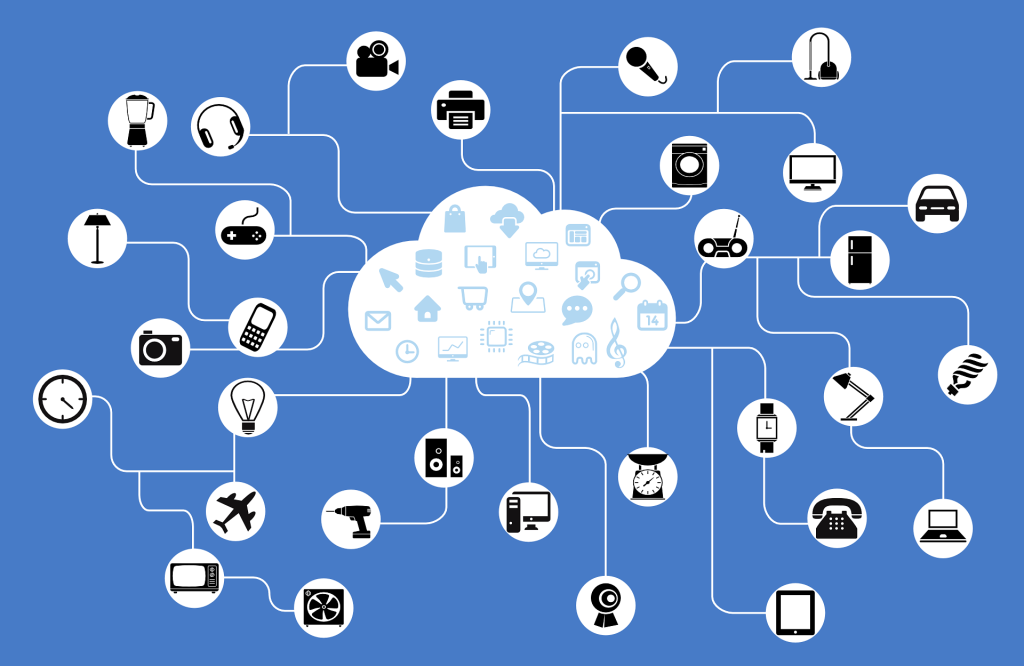
We’re used to connecting different devices to the Internet, including industrial sensors and CCTV cameras, as well as home devices such as security cameras (again), Internet routers, smart utility meters, connected TVs, and monitors for our small children’s bedrooms. Together, they form part of the Internet of Things (IoT), geared to make life easier.

network 782707 1920 | Vox | Has Modern Internet Usage Made Us More Vulnerable?

However, many of these devices are set up with a default password already installed -that is something as basic as ‘Password’ – with the onus on the owner or installer of the IoT device to change it once in use. But frequently, the password isn’t changed – and in addition, there are lists of widely available (if you know where to look) IoT device passwords available on the Internet for threat actors to access quite easily.

The danger of IoT devices being hacked includes strangers spying on your home and frightening your kids through the baby monitor (yes, this really has been done), as well as, at a more industrial level, being turned into ‘zombie bots’. The so-called zombies become part of a botnet – a network of private computers or IoT devices infected with malicious software, and controlled as a group (without the individual owners’ knowledge) to carry out cyber crimes.

In late May 2024, the US Federal Bureau of Investigation (FBI) carried out an operation to take down what was thought to have been the world’s biggest-ever botnet, made up of millions of computers, in nearly 200 countries, that had been infected with malware. Selling access to this network enabled serious crimes around the globe, including financial fraud, identity theft and bomb threats.

ai generated 8362805 1920 Pete Linforth | Vox | Has Modern Internet Usage Made Us More Vulnerable?

It sounds like something from the movies, but unfortunately it’s not – it’s a reality today of modern Internet usage. So how do people and countries protect themselves from such possible cyber threats?


Protecting Your Data and Yourself

There’s obviously not a great deal that individuals can do to protect national infrastructure – that’s up to the sovereign nations concerned. As far as IoT devices are concerned, hopefully manufacturers, service providers and security experts are becoming more invested in developing effective strategies to improve their security – but it’s imperative that the consumer also shares the responsibility.

Here are some tips to make yourself less vulnerable to Internet threats:

  • For any device in your home: change the default password to something stronger.
  • Ensure that you have a strong Wi-Fi password for your home network.
  • Install all updates from the manufacturer to ensure you have the latest security patches.
  • Install, and then continue to update, anti-virus and malware software on your computers.

We are definitely more connected today than ever before – even if not actually within an all-powerful Machine – but at the same time, we have also become more vulnerable to threats from the Internet. Terrorists and criminals have shown their ability – and unfortunately their willingness – to use technology to harm countries, organisations and individuals. The reality is that no one is immune.

Here at Vox, we understand the vulnerability that comes with modern Internet usage. The only way to stop cyber criminals from making use of ‘the Machine’ in ways that unleash harm is to be constantly more aware and proactive.


android 7711290 1920 | Vox | Has Modern Internet Usage Made Us More Vulnerable?