The good news is out – the Vox Rewards programme for our loyal clients has been officially launched! As household budgets continue to take strain for millions of South Africans, we’ve designed our Vox Rewards programme – available since the 17th of November – to help our customers with a variety of ways to get through the month.
We’re proud that our loyalty programme sets us apart from our competitors by offering extra value to our clients, through the provision of carefully chosen lifestyle benefits. By signing up with Vox Rewards, customers are given access to thousands of Rands in monthly savings, through discounts and coupons from some of South Africa’s favourite brands.
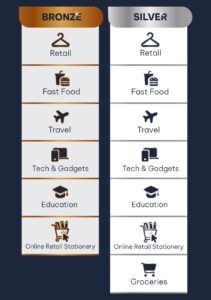
Vox customers, both new and existing, will be rewarded with retail choices, fast food options, travel discounts, reduced prices on tech and gadgets, access to lower costs for online education options, online retail and stationery purchases, and up to R1,250 in grocery rewards every month (Silver Tier only).
Simply by signing up with Vox Rewards, Vox customers get help with their budgeting and planning, across a number of different categories.
Calling all fashionistas: Update your wardrobe with up to 10% off retail gift cards from Edgars, Legit, Style and Beaver Canoe OR get 10% off online purchases at BRANDZ.
Enjoy takeaways: Treat your tastebuds with discount coupons from KFC, Steers, Debonairs Pizza and Hungry Lion.
Enjoy travel deals: With partners including FlySafair, Citiliner, Intercape and Luxliner.
Tech and gadgets: Keep up to date with Dress Your Tech, and enjoy up to 25% off (minimum spend of R500 online), as well as up to 8% off ASUS.
Online learning: Empower yourself through access to online learning through IT Upskill.
Online Stationery: Enjoy 10% off all your online stationery purchases at Statesman Stationery.
Groceries (Silver Tier only): Save up to R1,250 on groceries every month by using your Shoprite & Checkers coupons.
As you can see, the Vox Rewards are designed to help our customers with financial assistance in a holistic way.
Why not register today to start enjoying the benefits available to you through Vox Rewards? Visit our website at https://benefits.voxrewards.co.za – the process of signing up and participating in the programme is simple!
We look forward to signing up our new and existing customers and helping you to put real cash value back into your wallet.
Frequently Asked Questions
What is the Vox Rewards programme?
Vox Rewards is a loyalty programme for qualifying Vox customers that provides discounts, coupons and monthly savings across retail, food, travel, tech, online learning and groceries.
When did Vox Rewards launch?
Vox Rewards officially launched on 17 November 2025.
How much can I save on groceries?
Silver Tier members can save up to R1,250 per month using Shoprite & Checkers grocery coupons.
Which partners and discounts are included?
Partners include Edgars, Legit, BRANDZ, KFC, Steers, Debonairs, FlySafair, Dress Your Tech, ASUS, IT Upskill and Statesman Stationery, among others.
William Shakespeare once said, “what’s in a Frenzy?”
(Spoiler – he didn’t. But, then again, we hardly know what he’s saying most of the time anyway.)
Question, though – what IS in a frenzy?
Is it the frenzied breakdown when you told your boss you completed a presentation (you didn’t) and they ask for a copy (which you don’t have) and you’re trying to ChatGPT your way to success? Or is it that random Teams request from the CEO with no context (and the three days of nail biting preceding it)? Or is it being late, not connecting to a meeting, rushing for a deadline or just streaming your favourite season finale when, BOOM, Murphy invokes his Law and you meet the dreaded cry of dead Wi-Fi?
Actually; it’s none of the above. At least not today. So let’s step back from the fearmongering for a second.
You see, at Vox, Fibre Frenzy isn’t Fibre Inducing Frenzy situations – but rather getting caught up in a promo so crazy, it can’t be anything BUT a Frenzy.
What You Get with Vox Fibre Frenzy
Let’s break it down:
With the Vox Fibre Frenzy, you enjoy:
High-Speed, Uncapped Fibre (because who has time for loading screens?
Prices dropped to as little as R400pm* (previously? It was R490)
Free installation? You got it (another saving. May as well be a superhero).
Month-to-month options available.
Smart support – so you’re never left wanting when your router gives you the stink eye.
How it Works (Three Easy Steps)
Pick your FNO (Fibre Network Operator) — check which networks cover your area.
Choose your line speed — from everyday browsing to heavy streaming and gaming.
Sign up, wait for installation, and get connected.
The catch? There is none – just solid internet and a good deal.
What hiccoughs can I expect?
Other than the risk of struggling to keep up with your line speed (it can be THAT fast if you want it to), the promo is FNO/Line Speed Dependent (in non-tech terms: depends on which Fibre Network Operator is available in your area). Oh, and of course, Ts & Cs Apply (don’t they always?).
Naturally, it’s a limited time offer – so make fast (unlike your old ADSL line). That being said, if your area is covered and you’ve even given a spare thought to upgrading your line, now’s your time to shine.
Who Is This For?
If you work from home, binge-watch without shame, run a small business, game competitively, or simply refuse to watch a single spinning wheel, then this is for you. Vox Fibre Frenzy fits households and businesses wanting fast, flexible Fibre internet that South Africa trusts.
The long and short…
We live in a world where even buffering can feel like a personal attack. Whether working, playing, gaming, binge-watching, side hustling or juggling a house full of Internet demon-kids, you never DON’T need fast and stable Internet.
And with the price of everything (except, strangely, the Rand) going up lately, these huge savings aren’t just nice – they’re necessary.
And did we mention free installation? We meant it.
So, why sign with Vox?
Every ISP promises you Fibre. One step further – they all promise the same keywords (super-fast, reliable, uncapped, blah blah blah). Vox, however, actually delivers it (plus adds world class support and a multitude of option add-ons – think failovers, voice, and more). Plus, our team won’t ghost you once your Router is plugged in.
One could even say that the Frenzy isn’t just about the price – but rather about finally having Internet that’s *worth it*.
Call us Greta Thunberg, because we’re right royal philanthropists.
Our Fibre Frenzy Promo is one of those sweet, unscripted moments where everything just feels right. It’s cheaper. It’s faster. It has all the support you could need. And it’s just so worth it. Remember, though, this deal isn’t here forever. It’s a promo. And, as promos do, it will end. Probably right as you decide to sign up – so maybe try not losing out instead?
Check availability and sign up at vox.co.za — or call our Fibre Specialists on 087 805 5050 for personalised help.
Peace.
Quick FAQ Is the R400pm price available everywhere?
No, the offer hinges on FNO-dependent availability, meaning that pricing and package options depend on FNO coverage in your area. Use our availability check.
Can I add failover or voice later?
Yes, failover and voice add‑ons are available so you can scale your service as needed.
Are there contracts?
We offer month‑to‑month options. Specific terms vary by package, so please read the Ts & Cs.
So snuggle up at home with your Vox Connectivity, and let the weather do its thing without you…
Winter in South Africa has officially arrived around the country (and if you don’t believe me, just ask our Vox Weather meteorologists). Or to put it another way: “Eish guys, it’s freezing!”
It’s raining, it’s pouring, it’s snowing, it’s windy and it’s just plain ‘NO MORE SUNNY SOUTH AFRICA!’ right now, almost everywhere.
So what’s a person to do in the quest to stay warm and dry and happy?
Here at Vox, we have some ideas.
Don’t Worry…
Grab your warm clothes and layer up against the weather. Beanies / scarves / gloves / rain jackets / warm socks, anyone? And as for leg warmers, let’s just call them retro cool; I mean, they can’t be a fashion faux pas any more when Shein and Temu are both bringing them back…
Grab a blanket! Grab two! Or a ‘shoulder blanket’, aka a shawl.
Close the doors, windows, curtains and blinds when the sun’s gone down. Conversely, open those curtains to catch some winter rays on sunny days when you wake up, to let any outside heat stream into your home and slowly warm it up. It’s a simple practice that doesn’t cost anything but it can make a difference.
Put on the heater or light the fire – but safely, please! – and never leave an open flame or fireplace unattended. If you have small children, be aware of any hazards to their safety.
Speaking of retro items, remember hot water bottles? The trick, apparently, is to avoid completely filling your bottle – instead, leave a little room for the hot air to expand so it doesn’t get a pressure build-up and burst. And cover your bottle with a towel if it didn’t come with a cover, to help keep the heat in and also not burn your skin.
And then there’s the non-water bottle – wheat bags that go into the microwave – which are also great for sprains or sore muscles as well as staying warmer. If you don’t have a wheat bag, you could make something similar by filling an old sock with rice, tying the opening closed, and heating up in the microwave for a short while. (Safety note: you probably shouldn’t do this in an air fryer 😊.)
Finally, warm your insides with a nice hot beverage. What’s your preference: coffee, hot chocolate, tea, Rooibos or herbal tea? And of course, wrapping your cold fingers around the hot mug helps as well.
… Be Happy
Right, now that we’ve sorted out some tips for keeping warm, let’s look at the positive side of the dropping thermometer, because cold weather is just made for home entertainment! And when all your connectivity options are covered by Vox, home entertainment is a breeze for the whole family.
Why not settle into a cold weather weekend of online-enhanced fun – here are some of your options to consider:
Streaming entertainment: Netflix, Showmax, Disney+, Amazon Prime Video, and Apple TV+ are all available locally – just grab the popcorn and chocolate (and blanket) and get comfy.
For local content, we’ve got SABC+ especially for news hounds, eVOD with soapies galore, and Afriforum TV for Afrikaans series, podcasts, radio, reality shows and kids content.
For sports options, there’s DSTV Stream and F1TV Pro, as well as Tennis TV Premium for live grand slam tournaments (hey there, Wimbledon season!).
And don’t forget about your fix of YouTube, for the young and the young at heart.
Then there’s online gaming, of course, beloved by millions today around the world. Whether it’s World of Warcraft, Fortnite, Apex Legends, PUBG, Minecraft and so much more, there’s something for everyone, whether you’re a veteran or a curious newcomer, under 10 or a life-long teenager. You just need a keen imagination, fast fingers and faster connectivity. At Vox, we can’t do anything about your manual dexterity, but we can surely take care of your Internet speed!
Away from gaming, you might also want to stay in touch with friends and family with a long-overdue chat via WhatsApp or Vobi, and for those more introspective moments, the readers among us will reach out for a good book. Of course, you can always do it the old-fashioned paper-based way, but online books are also widely available – and often for far less cost.
And finally, let’s not forget about a fix of celebrity gossip – which high-profile million-dollar wedding is taking place for the international glitterati set? Who’s wearing what and who’s cosying up to who? (Looking at you here, Orlando Bloom!)
So really – who wants to leave home when “Baby, it’s cold outside!”
With Vox, the great news is that you don’t have to.
Enjoy!
PS: Just for an added bonus, here’s a link to a revamped version of the classic song, performed by John Legend and Kelly Clarkson (click on the image).
At Vox, we value, support and actively engage people with the levels of expertise that we require to keep us moving forward as a company. In this edition of ‘Meet our Experts’, we find out more about Regional Sales Manager Adriaan Buitendag, who manages to combine Monsters and mincing machines into his daily motivation to his team members.
After a solid five years at Vox, Regional Sales Manager Adriaan Buitendag is taking on a new and exciting challenge with a move from Polokwane in Limpopo to Gauteng, embracing increased responsibilities and the excitement of a big, bustling city. It’s not necessarily going to be a ‘monstrously’ difficult challenge – anyone who knows Adriaan will know why that’s funny! – but it’s definitely a significant step forward.
Says Adriaan: “I’ve lived most of my life in Polokwane, but I have stayed in Joburg previously, for about a year when I was younger. I’m looking forward to the opportunity to explore many new places, at the same time as tackling new responsibilities and a wider range of tasks within my day-to-day working environment.”
There are ways in which the change of pace will be challenging in these still-early days, but this is a man who thrives on challenges.
[You could, in fact, call him the Chuck Norris of sales…]
We delve into the story of another everyday Vox hero, who in his career so far has (both officially and unofficially) embraced ‘Rookie of the Year’ more than once, and risen quickly and efficiently into a leadership role.
How Life at Vox Began
Adriaan – who also has an enthusiastic and successful entrepreneurship history – had been running his own business when he applied to Vox, being appointed in March 2020. Of course, this was just a few months before South Africa went into the Covid lockdown.
“Like everyone else,” he muses, “I remember that first ‘My fellow South Africans…’ speech, which suddenly turned our whole worlds upside down. But starting at Vox during the first month of lockdown turned out fine for me. At that time in Polokwane, there was just one residential area that was about to go live with Fibre, with about 500 homes. When we went into lockdown, I asked my reporting manager, who at the time was JP du Plessis, what he expected from me, and he said: ‘Well, just sell as much as you can.’
“I took my phone and started phoning through my contacts – pitching Fibre to the Home to them – and I think within the first month of sales, I did 100 quotes, with 39 accepted orders and 28 approved, to a total of R23,000 worth of sales, which placed me into third position in the country.”
[Again, see the notes about ‘the Chuck Norris of Sales’ and ‘Rookie of the Year’]
Vox CEO Jacques du Toit was overheard saying that, in 25 years in the telecommunications industry, he ‘had never seen anything like it’.
“And you know,” continues Adriaan, “hearing those supportive words just affirmed that what I was doing was the correct way of doing things. And I’ve never stopped doing it that way since.”
Here, we could define ‘that way’ as driving sales with energy, warmth, honesty and attention to detail, all wrapped together in a tasty dollop of fun and excitement – it wouldn’t be too long before Adriaan’s special blend of out-of-the-box thinking, with both his internal incentivising and external sales campaigns, would come to the fore.
Driving the Daily Moments
Adriaan clarifies that Limpopo and Mpumalanga, his previous ‘stomping grounds’, together contain some 7.2 percent of the country’s Fibre network for Vox salespeople in these two provinces to sell on. “In contrast, Gauteng has about 44 percent of the country’s network,” he clarifies, “so I believe that the addition of Gauteng into my portfolio is definitely a great opportunity for me to show what I can do!”
Perhaps as a reaction to starting at Vox during Covid, Adriaan is a fan of working at the office rather than from home. He explains: “As soon as I get into the car and start driving to work in the morning, my mind starts switching on in terms of what tasks I must complete for the day, what we should do as a team, and the discussions I need to have – essentially, what tasks and challenges do I need to drive that day? By the time I get to the office I’m in work mode.”
As for the transition between Polokwane and Gauteng, Adriaan clarifies: “A current focus for me is to increase efficiencies, and I’m satisfied that we’re making good progress. In other ways, though, there are many similarities in my role within the two different places, including communicating with my team to see how they’re tracking towards their numbers and sharing the strategies that we’re implementing, as well as liaising with senior management, to ensure that my team is empowered with the correct tools and so forth, to continue driving the business forward.
“Essentially, when I compare my working life in Polokwane to Gauteng, it remains community-focused – there are still communities everywhere, but in Joburg and Pretoria, it’s just a larger variety. At heart, it remains all about people, both with colleagues as well as our clients.”
Bringing the Monsters with the ‘Gees’!
When Adriaan headed up the Polokwane branch, it was – and still is – famous for having Monsters everywhere – the energy drinks, that is – because, says Adriaan, ‘Our blood is green!’
Well, watch out Joburg, because the Monsters have come with him: “They’re standing in boxes and boxes here on the floor!” he says enthusiastically. “I did stick them up against the wall initially, but I’ve now got a new plan: I would like to find someone who can cut, mould and shape these tins into a symbolic sculpture that depicts what we stand for here at Vox – something that represents life or growth, perhaps, to attract and inspire our salespeople.”
[It seems like Adriaan might also be the Chuck Norris of recycling…?]
He is also famous for his trophies, which he made himself: “I created two impala heads for my ‘Top Salesperson’ and ‘Best Customer Retention’ awards. And I have another trophy here designed like a mince meat grinder, which symbolically talks to the sales process….”
[Wait, what?]
“…as follows: your top funnel, where the meat goes in, represents your sales prospects; the lever that you turn to kickstart the process is your closing of the sale; and in the front end, where the mince comes out in its final form, you have your commission! All the processes work in turn with each other to represent the complete sales process.”
It’s a great conceptual idea, and it isn’t all that Adriaan has up his sleeve in terms of his creativity and ingenuity – he’s looking forward to unfolding more initiatives over the next few months in Gauteng. For now, the photos tell more of the story.
“I enjoyed creating a competitive yet positive and family-orientated mindset within my branch in Polokwane, which was also replicated in the Mpumalanga branch, and yes, I hope to install the same, in the coming months, in Gauteng as well,” says Adriaan.
A True Survivor
Despite all the fun elements that Adriaan brings into his work, it hasn’t been a sunny journey all the way through – he’s had to overcome some real challenges in his life, including two retrenchments in one year (“That was one of my lowest ever points,” he notes) as well as being involved in a very serious car accident, which at the time affected both his health as well as his job security. How, then, does he remain so unswervingly optimistic, and continue persevering with such unwavering determination?
“I think,” he says, “that much of my inspiration comes from my late father, who was a police officer for 26 years, as well as my late grandfather, who was a pastor for 28 years. I have tremendous respect for them and for the life lessons that they taught me, including dedication, perseverance and being disciplined.”
Adding to their excellent example, Adriaan also learned some great life lessons during his school years through his karate training, when he became a three-times national colours recipient.
“I believe that in life, some of its punches will hit you and others will miss,” he says, “but are you going to stand still and just allow the punches to land on you? No! You have to remain strong in bobbing and weaving, to successfully duck as many of them as you can – and then, of course, when the punches do land, you just have to get back up on your feet.”
Inspiration from the Top
Pointing out that the telecommunications industry is dependent on adapting to new challenges and ideas, Adriaan appreciates the energy that is always apparent within Vox. “My inspiration comes from the top down,” he says, “through our CEO, Jacques du Toit and national sales manager, Johan Pitzer, and their drive and passion always energises me.
“I see how, within our company, there’s a shared awareness of challenges that need to be overcome and results that need to be achieved, and the encouragement to do this is always positive, forward-thinking and motivational, which I love. I also highly appreciate having the freedom to be an out-of-the-box thinker.”
As for moving forward, Adriaan says it’s critical to share knowledge and expertise. “From my experience, we always need to adapt and innovate,” he says, “and I’ve found that people as individuals are often afraid of teaching others, or imparting their knowledge to someone else – perhaps they’re afraid that they’ll then be challenged later. My idea, though, is that it’s better to share our knowledge, and in this way continue to encourage and challeng each other as we keep moving forward.
“People need to bring others into the fold of a culture that we’re trying to achieve, and in this way, this is already bringing us all a step closer to shared success. After all, a candle that lights another candle doesn’t lose any of its flame,” concludes Adriaan.
Tips to make sure you’re getting what you signed up for
Picture the scene. It’s early afternoon and your small one is streaming HD videos in one room, your teenager is on a video call in their bedroom, and mom and dad are both working from home, simultaneously accessing the Internet via different laptops, in two other corners of the house. Best of all, thanks to your Fibre to the Home (FTTH) Internet connection, there’s no buffering or lagging in sight.
How to make the most of your Vox connectivity line
Looking back, it’s quite surprising to think that even 15 years ago, this wasn’t a common scenario – for starters, YouTube was only started in 2005, and Netflix Streaming in January 2007. As for widespread Fibre connectivity in South Africa, it was still just a twinkle in somebody’s eye, because the first subsea Fibre cable to reach South Africa went live only in 2009. Today, Internet access has become one of the most important areas of our lives.
Internet connectivity opens us up to an incredible world of information, entertainment and opportunity, and nobody wants a slow or buffering connection, while price and value-conscious consumers are justifiably concerned about getting true value from their purchases. But what happens when you’ve paid for a decent Internet package, but it doesn’t seem to be working quite as well as you expected? When the Modern Family-inspired Internet scenario sketched out above starts stuttering and freezing?
Because even with a Fibre Internet connection – generally regarded as the crème de la crème of Internet connectivity – several factors can still reduce the performance of your Fibre to the Home (FTTH) Internet speed and reliability.
This article looks at how you can make the most of your Vox FTTH Connectivity line when certain challenges rear their heads.
Wi-Fi: Enabling Wireless Connectivity from Your Fibre Optic Line
Good Internet connectivity depends on many factors, including your Internet Service Provider (ISP) first and foremost, as well as the speed of your chosen Internet package; whether your devices are modern or no longer that new; and Wi-Fi options and challenges.
The job of a Wi-Fi router is to ‘convert’ the data packets carried within light pulses through Fibre Optic cables laid in your neighbourhood, into the Wi-Fi radio wave signal inside your home.
This then enables your family’s digital devices – laptops, tablets, smartphones and smart TVs – to link into the Internet, creating a wireless Internet connection for your home (cable-free Internet, in other words).
Wi-Fi functionality is integral to the performance of your Fibre-based Internet line.
Improving Your Wireless Signal
If your internet connectivity line doesn’t seem to be giving you the results you were expecting, or if you’re experiencing Wi-Fi dead zones in your home (caused by the distance of your device from the wireless router, thick walls or electrical interference), there are a few things you can do to improve your Wi-Fi network, as follows:
Router position: Choose a central location in your home, and raise the router off the floor. Also, don’t place the Wi-Fi router inside a cupboard or desk. Sometimes just raising the router a little higher up from the floor for better signal distribution will increase its range and speed. Make sure your router is away from other electronic and electrical equipment, metal objects and solid brick or concrete walls.
Router speed: Your router should handle a speed rated the same or higher than your chosen Internet package. And so, if your Fibre Internet is 500Mbps, your router should be able to offer speeds at least this fast.
Number of devices: All Wi-Fi equipment supplied by Vox is strong enough to cover an estimated 100 square metres, depending on what material your walls are made of. Vox recommends adding an additional device for every 50 to 100 square metres extra.
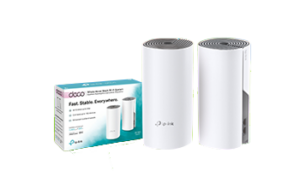
How many mesh units can I have in my home? The Vox two-pack can connect up to 100 devices and you can include up to eight units in your home if more coverage is needed. A Vox Wi-Fi Home Mesh network can handle a mix of IoT products, smart TVs, smartphones, tablets and other electronic devices, such as wireless printers.
Other devices can interfere with your Wi-Fi connection, including microwave ovens, cordless phones, Bluetooth products, baby monitors, alarms, cameras and other wireless LANs. To prevent this, position the Wi-Fi router or mesh extender as far away as possible from microwave ovens, Bluetooth devices, and 2.4 GHz cordless phones.
App-Enabled: If you want to check your Wi-Fi range, there are apps available for Apple and Android smartphones, for example ‘Sweetspot’ for Apple and ‘WiFi analyzer’ for Android.
Not Just the Wi-Fi to Consider
A Wi-Fi router is not the only critical component that enhances your user experience.
Wired after all: As outlined above, a Wi-Fi Home Mesh network can provide incredibly strong Internet connectivity, but there are still times when an Ethernet cable might be the best solution – for example, if you have very thick walls, or for plugging into an HD television or gaming setup, where the speed needs to stay high and the connectivity lag-free. Look at buying an Ethernet cable that is rated for ‘Cat 5e’ or ‘Cat 6’.
Great Internet, old device = problem: You won’t get the maximum range and performance from a newer wireless router unless your devices also use the same Wi-Fi standard. An old laptop is unlikely to have ‘ac’ or ‘n’ Wi-Fi access, so check the specifications to see which wireless standard it is using. If you don’t want to buy a new laptop straight away, you can buy a wireless adapter that plugs into a USB port on your laptop.
The Magic of Blazing Fast Internet
When you signed up for your FTTH Internet connection, you chose an option for yourself and your family that is fast, reliable and future-proof, and ready to deliver you the best possible Internet experience. Considering its scope and importance, maximising your internet connectivity line is critically important.
The good news is that you can optimise your home Wi-Fi experience with the right choice of routers, extenders and mesh options.
Your Vox Home Fibre line is future‑proof and capable of delivering outstanding home Internet, but a few simple tweaks to router placement, device choices and using mesh or Ethernet where needed will ensure the whole family gets the experience you expected.
If you need help optimising your home Wi‑Fi or want to add Vox Wi‑Fi Home Mesh, simply visit vox.co.za, sign up with Vox, or contact Vox Support on 087 805 0530.
With Vox Fibre to the Home, you are enabled by great Internet access. Welcome to a world of online opportunities.
Frequently Asked Questions
How can I tell if the issue is my Vox Fibre line or my home Wi‑Fi?
Run a speed test directly from a device connected by Ethernet to your router. If wired speeds match your plan, the issue is likely Wi‑Fi or device related.
How many Vox mesh units do I need?
A Vox two‑pack covers many typical homes and supports up to 100 devices. You can add up to eight units for larger homes or difficult layouts.
Where should I place my router for best coverage?
Position the router centrally, elevated and away from thick walls, metal objects and kitchen appliances. Avoid cupboards or behind large furniture.
Will a mesh system reduce my Internet speed?
A well-configured mesh keeps speeds high across the home. For best performance, place mesh units strategically and use wired backhaul where possible.
Do I need a new router if I upgrade my Vox Fibre package?
Your router should support the speed of your new package. If it’s rated lower than your plan, consider upgrading to a higher‑spec router or Vox Wi‑Fi Home Mesh.
Can old devices cause slow Wi‑Fi for the whole house?
Older devices can occupy airtime and reduce performance for others. Where possible, update device Wi‑Fi adapters or move bandwidth‑heavy tasks to wired connections.
Is Ethernet worth the hassle for a smart TV or console?
Yes. Ethernet (Cat 5e/Cat 6) offers the most reliable, low‑latency connection and is ideal for HD streaming and competitive gaming.
How do I contact Vox Support for help?
Visit vox.co.za for product info and self-service tools, or call Consumer Support on 087 805 0530 for assistance.
Getting the right fit for your household’s size, usage habits and budget
There’s an age-old fairytale for children called ‘Goldilocks and the Three Bears’. If you think about it from a South African perspective, it’s really a tale of a home invasion – a minor and harmless one at least. One takeaway from the folk tale (besides ‘Don’t enter people’s homes when they aren’t there!’) is apparently that Goldilocks is looking for her fit in life.
Image courtesy www.kids-pages.com
Here at Vox, we obviously don’t condone home invasions of any sort, but we do endorse finding the right fit. As one of South Africa’s leading Internet Service Providers (ISPs), we understand that your online experience should allow everyone in your home to enjoy seamless connectivity for all their devices and activities. We also know that choosing the right Internet plan for your household doesn’t have to be an impossible fairytale either.
At Vox, we’ve got multiple Connectivity plans for you to choose from, but it’s important to understand some key points to make an informed decision.
So here’s a guide on selecting the best Vox Internet plan based on the size of your household, the usage habits of everyone who lives there, and your budget – because just like Goldilocks (but not in a creepy way) we understand the importance of getting it ‘just right’.
Assess Your Household’s Internet Usage
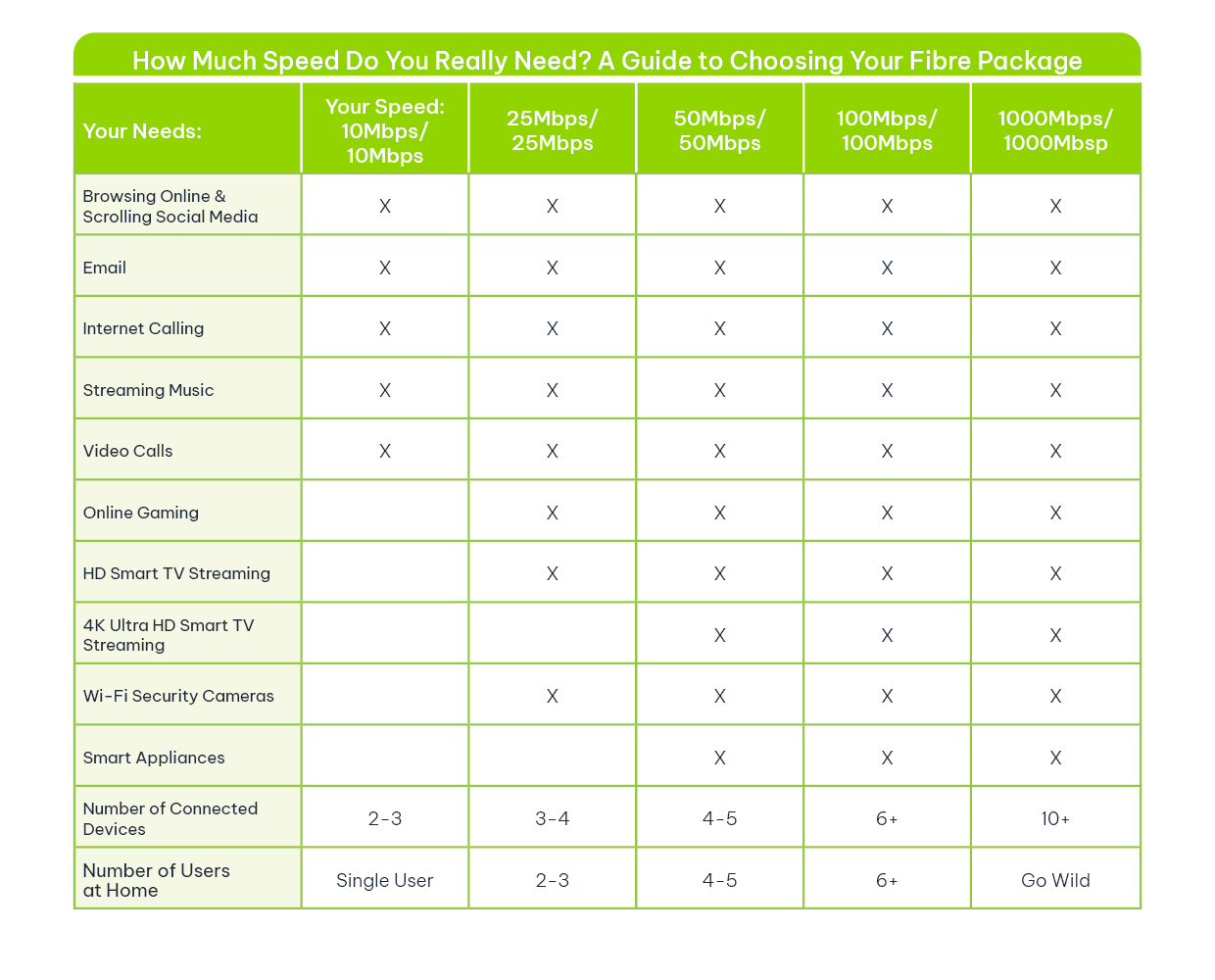
Start by assessing your household’s Internet usage patterns. How many Internet users do you have at home and what do they do online? For example, do your family members regularly spend time streaming entertainment, gaming or in online video meetings? How many devices could potentially be connected simultaneously at any given moment? Thinking about these factors will help you to determine the required speed and data allowances of your Internet plan.
Internet speed is typically measured in megabits per second (Mbps) for downloads and uploads. So: how many teenagers – or almost teenagers – are living in your house, and are any of them currently planning a career in gaming or becoming a YouTuber? You’ll want to choose higher speeds if anyone in your home is regularly involved in bandwidth-intensive activities like online gaming or HD streaming.
The table below offers some useful guidelines.
choose internet plan South Africa
Select Your Internet Plan for Seamless Connectivity
When you’re choosing a household Internet plan, you want one that offers sufficient speed to support your family’s online activities without experiencing slowdowns or buffering.
Compare pricing structures among our different Internet offerings to find a plan that fits your budget and your speed requirements, as well as whether your Internet data usage will be capped or uncapped. At any given moment, you’ll find a promotional offer available and a variety of options across all our different Connectivity options (which are outlined in the next section).
Evaluate your household’s typical data consumption and choose a plan with sufficient data allowances to avoid throttling of your Internet speeds. Throttling occurs if you use more than a certain, pre-determined (as outlined within your contract) ‘fair’ amount of data in a given timeframe.
If your Internet usage is ‘throttled’, your line speed is slowed down during peak times to give other users fair access to the network. In simple terms, being throttled means that your upload and download speeds will be significantly reduced at certain times, until the new month begins and the ‘reset button’ takes you back to your contractual speeds. If you find that your home’s Internet connection is being regularly throttled, perhaps you need to upgrade to a package with higher speeds.
Types of Internet Connections
You can find out what types of Vox Internet connections are availably simply by going to the Vox home page and typing in your address. All the options available to you in your area will then be shown.
These could include the following: Fibre to the Home, which provides blazing-fast Connectivity by using light pulses to transmit data packets through Fibre Optic cables; LTE and 5G, which work via the same wireless cellular technology that powers your mobile phone network; and Satellite, presenting your eye in the sky when other options aren’t available.
Each type of Internet connectivity for home usage has unique characteristics:
Fibre to the Home: Enjoy super-fast, reliable Internet with Vox’s Fibre to the Home packages, with speeds that range from 4Mbps to a whopping 1Gbps.
Satellite: When your area’s access to FTTH, LTE and 5G connectivity is limited, Vox offers Satellite Internet, independent of cabling, across the country. It isn’t as fast as the other options, but it’s reliable and available across South Africa.
Choose the Right Internet Plan Today
Selecting the right Internet plan makes sure that everyone in your home can stay connected and productive, for communication, remote work and online learning, banking, shopping and entertainment.
At Vox, we know that, just like the Three Bears in the age-old fairytale, everyone’s needs are different. Why not contact us today for expert advice on how to choose the right Internet plan for your home and your family? We’ll help you make the right choice: not too big, not too small, but just right.
Frequently Asked Questions
Is fibre always better than 5G or satellite? Fibre typically offers the most reliable speeds and lowest latency. 5G/LTE can deliver fibre-like speeds and fast installation in many areas. Satellite is best where terrestrial services aren’t available.
What does ‘uncapped’ mean and is it worth it? Uncapped means you don’t have a fixed data limit for normal use; check for any fair-usage policy. Uncapped plans are valuable for heavy households whose members frequently stream, game or work from home.
Why does my internet speed slow down at certain times? That’s usually due to throttling under a fair-use arrangement or network contention during peak hours. Upgrading to a higher-tier or uncapped plan can help.
Can I mix connections (fibre with LTE backup)? Yes. Vox and many ISPs offer redundant setups (fibre primary with LTE failover), which is useful for critical remote work or businesses operating from home.
How many Mbps do I need for remote work and video conferencing? For reliable video calls, aim for at least 10–25Mbps per active remote worker, with good upload speeds to avoid degraded video quality.
How do I check which Vox options are available at my address? Use the Vox availability checker on vox.co.za and enter your address to view Fibre, LTE/5G and Satellite options and the recommended plans for your area.
It’s weekend at last – but Internet access has slowed to a crawl…
Picture the scene, in this non-Vox household. (You’ll see why that’s important later in the story.)
Dad’s watching the Premier League on a streaming service; Mom’s chatting online to her friend overseas; Teenager is doing the initial download of a long-awaited new game, and Tween is on YouTube. Everyone is happy – and then the dreaded buffering starts. Everyone is instantly much less happy, and more bandwidth is clearly required.
“But wait!” says a lone voice, “we upgraded to a new home Internet plan last week and our new download speed is supposed to be blazing fast – so why is it not working?!!!”
The answer could lie with the router.
New Plan, Old Router?
Wi-Fi, as an enabler, carries most of the Internet traffic in a connected home. Your Wi-Fi router converts the Internet data received via the Fibre Optic cables in your neighbourhood into radio signals, to create your home Wi-Fi network and provide all the devices on it with Internet access, using built-in antennas.
If you have a Fibre to the Home (FTTH) Internet plan that supports a download speed of say 25Mbps, an older router (and fewer users) is unlikely to cause a bottleneck in your connections.
However, if you then upgrade to a new 300Mbps plan (because of Teenagers / Tweens / the Premier League), but your previous router supports only 25Mbps wired, your Wi-Fi won’t be able to live up to the connectivity promise if your Internet Service Provider (ISP) doesn’t supply you with a newer model.
Connect With Vox
Vox connects you to the Internet and thereafter continues to manage your connection. When you sign up with Vox, we will furnish you with a suitable free-to-use Wi-Fi router based on your chosen package. We don’t charge a delivery fee for the router, or even a monthly fee for its usage – this is included as part of your bundle.
As a premium ISP, Vox ensures that, for standard installations, your Vox free-to-use Wi-Fi router is installed by a dedicated Vox engineer. Alternatively, our Self-Install process allows you to install your free-to-use Wi-Fi router, by following an easy step-by-step guide.
Fun fact: Different Wi-Fi devices work according to varying frequency bands. Older routers work on the 2.4 Ghz frequency, while newer phones and laptops use the more stable 5Ghz range. A dual-band device that supports both frequencies is ideal.
Not all routers over a few years old are necessarily bad, but if you’ve upgraded your Internet plan or added more devices to your network, an older router might have a harder time juggling the extra work than a newer model.
Signs that you might need a Wi-Fi router upgrade include the following: slow speeds; a weak connection; malfunctioning equipment; incompatibility with new devices and even overheating.
Fun Fact: Old smartphones, tablets, and other devices can slow also down your Internet access, even if you have a new, fast router and an upgraded Internet plan.
At Home with Vox
The moral of the story is that new tech needs to meet its match – in other words, more new tech.
As outlined, older routers and network equipment can affect the household’s Wi-Fi speeds, especially when there are multiple users. We believe the issue of having the wrong Wi-Fi router for an upgraded Internet plan with Vox is highly unlikely, because we take care of that level of detail, and the responsibility, for you.
For Customer Service and General Queries, our Vox teams are on hand from 08:00 to 17:00, Monday through Friday, and from 08:00 to 14:00 on Saturdays and non-religious public holidays. You can reach us at help@voxtelecom.co.za or call 087 805 0530.
With Vox, upgrading your FTTH Internet usage plan is a straightforward process, and our Technical Support team is always able and willing to help you. We have a Wi-Fi solution for every need.
Sign up with our Fibre to the Home offerings and say goodbye to buffering and hello to hassle-free, connected weekends – for the whole family.
“No, but you are welcome to access my Wi-Fi – let me give you the password.”
The Internet and Wi-Fi are not the same. Nobody owns the global Internet, but people pay for their connectivity and Wi-Fi services (to the home or office) to access the Internet. Knowing the difference makes for clearer understanding and communication.
And just as it’s the nature of water to flow freely through a well-built system, so does information on the internet when it’s enabled by the correct infrastructure. Wi-Fi enables us to access this information without having to plug in our devices through a cable – let’s take a look.
The Internet of Possibilities
Back in its earliest days, people had to plug their devices into an ethernet cable (or before that, an ADSL connection, which was essentially a Telkom landline) to connect to the Internet.
That’s why people talked about ‘Being online’ – because you were ON the internet, but only because you were connected to a LINE (i.e. the cable).
Today, most people connect to the Internet in their homes (or at their office premises) through a wireless connection, in other words through Wi-Fi access. It’s a huge step up from having to have your device constantly plugged in to remain connected.
So how does Wi-Fi access enable wireless connectivity?
From Fibre Outside to Wireless Inside
Your home Wi-Fi network begins with Fibre Optic cables that are laid outside your property within the neighbourhood by the fibre network operators (FNOs). Through these Fibre Optic cables, Internet data is transmitted at the speed of light.
When you sign up for a Wi-Fi service, an internet service provider (ISP) – like Vox – then takes over. The ISP links the FNO Fibre box outside your property boundary with a separate (shorter) Fibre Optic cable to an optical network terminal (ONT) inside your home.
The ONT is linked with one last short cable into your Wi-Fi router, which then ‘converts’ Internet data received via the Fibre optics into radio signals, to create your home Wi-Fi network.
And voila! You and your devices have access to wireless Internet access in your home.
Internet Like Water
Much like water, the Internet, with its constant access to information and services, has become fundamental to modern life today. So you could also think of the process like this:
Firstly, the Internet is the water that is constantly flowing.
The Fibre cables are your hosepipe – the actual infrastructure that carries the Internet to you.
Your Wi-Fi router is the primary sprinkler that makes the Internet easily accessible. Wi-Fi lets you access the Internet without having to literally plug in your device.
Finally, mesh units or access points placed strategically within your home further sprinkle your Wi-Fi everywhere it’s needed, allowing for the freest possible flow of the Internet and the information it allows us to share.
From the way we communicate and work, to how we shop, bank and entertain ourselves, the Internet has revolutionised multiple aspects of our lives.
Is that all? The importance of offering ‘more’ in a saturated environment
Today’s world is defined by Connectivity in ways that seemed unimaginable when the clock first ticked over into the current millennium. Whether it’s WhatsApp, X, LinkedIn, Pinterest, Facebook, Snapchat or TikTok, people love being connected, and online is here to stay.
Here at Vox, Connectivity lies at the heart of everything we do.
As a leading South African Internet Service Provider (ISP), we are all about connection, communication and conversation – but we also know that we’re not alone. The local telecoms landscape has more than 20 ISPs in operation – you could call it a saturated market.
And so Vox goes above and beyond to offer our customers more than the competition – you definitely won’t hear the phrase: ‘Is that all?’ about any of our offerings! At the heart of our multiple solutions is the goal of being able to offer every South African access to affordable high-speed broadband.
Let’s take a look at how we can get our customers connected.
Dealing With Market Saturation
In addition to high-speed broadband, Vox provides many excellent value-adds. As well as lightning-fast Internet, we offer Wi-Fi solutions to keep you connected; cost-effective and quality Voice over Internet Protocol (VoIP) offerings; energy back-up products for power outages; and even cell boosters to enhance your mobile phone experience – no more ‘dead’ zones in the house!
You can look to Vox for the following:
Our connectivity solutions begin with Vox Fibre, which comes with value-added extras upon sign-up, like free installation and a free-to-use router.
When Fibre is unavailable, other options are provided:
Vox Wireless presents high-speed, fixed Microwave Data Connectivity that uses the most innovative microwave technology on the market. It comes with free installation, meaning more money to invest in your business.
Consumers and businesses also have the option of choosing Fixed LTE, 5G, and satellite, depending on factors such as their needs and budget, and geographic location.
To ensure that our customers get the most out of their Internet solution, we supply best-of-breed Wi-Fi devices, which allow you to maximise your Wi-Fi experience. We also offer managed Wi-Fi network solutions, which enable remote software, firmware updates and reduced technician callouts with remote troubleshooting and fault remediation. Additionally, our expert advice is always available to enhance your overall network experience.
We also provide excellent access to power solutions for those times when the power goes down, to keep your Wi-Fi running even in an energy outage.
Vox’s shared Mobile Data offering is an ideal mobile wireless solution for a family with multiple SIM-enabled devices, to keep everyone connected while maintaining control over your mobile data bill using our simple online portal.
What Sets Our Connectivity Options Apart?
Vox offers our clients high network availability and an extensive national footprint, as follows:
We have a huge range of subscription and pricing solutions, and our sales agents will help you choose the best package for your needs, rather than upselling you on the most expensive.
Vox subscribers, both consumers and businesses, have the option of adding backup Internet solutions to their Fibre packages (like LTE or Wireless) to ensure they stay online all the time.
Our Proactive Network Monitoring offers safer, more secure Internet access and lower latency.
A 24/7/365 in-house Service Centre is available for troubleshooting and incident response for all our customers, across any product.
As far as Voice offerings are concerned, we believe that we’re the number 1 VoIP provider in the country.
Individual consumers and SMEs can make use of our Vobi softphone application, which is unique to Vox, and allows customers to make and receive high quality Voice and Video calls over Wi-Fi, 3G, 4G-LTE and 5G on the Vox network.
Organisations can make use of our Titanium partnership (the highest status possible) with global cloud PBX leader 3CX, to experience a comprehensive communication platform that includes Live Chat, WhatsApp, Facebook, SMS and Video Conferencing.
Vox teams are situated in multiple locations across the country, supported by our extensive footprint of over 1 000 business partners to ensure that our customers receive fast, efficient service wherever they are, whenever needed.
Value-Added Service Offerings
We take full responsibility for all our technical implementations and systems, from concept to installation.
The Service Centre also continuously monitors all of Vox’s networks and infrastructure, to ensure that quality of service is always maintained.
Specialist product managers are assigned to oversee each portfolio, for continuous research and development to ensure each product is always of the highest standard.
An extensive team of account managers and technical engineers offers convenient customer service and solution implementation.
If you’ve decided to upscale your business with better Connectivity, don’t stop there! Vox can also organise a customised domain and email address for you, to turbocharge your professionalism, as well as taking care of your email archiving needs with the most comprehensive and hassle-free cloud email and compliancy solution on the market.
Expertise, innovation and superior quality products are at the heart of Vox. Ultimately, we have everything required to meet our customers’ needs at every stage of their journey – both now, and in the future – and that’s how we keep South Africans staying connected together.
Fibre optic Internet uses light through glass Fibres to deliver far higher speeds and steadier performance than copper ADSL, making it ideal for streaming, gaming, remote work and business continuity.
Why would you NOT want to make use of the speed of light?
Because let’s face it: nothing in the current known universe is faster.
The DC Universe aside, the speed of light is an amazing thing. According to Einstein’s theory of relativity, it’s the fastest speed in the universe: 300,000 kilometres per second in optimal circumstances.
It’s even more amazing to think it can be used to power our Internet usage.
But this only happens if your Internet service provider is using Fibre Optic cables. If your service provider is still using copper lines as the (much) older technology, Internet at the speed of light is completely out of the question.
How Fast Do You Want to Go?
Internet speed means the speed at which information or Data travels from the web to your connected device. It’s calculated in megabits per second (Mbps) and the downloading speed (getting information from the Internet to your device) is often higher than the uploading speed (the other way around – sending information from your device to the Internet).
In the old days, our Internet connections were only able to run on ADSL (Asymmetric Digital Subscriber Line). ADSL uses telephone lines (Telkom lines) to transmit Data along copper cables from your nearest telephone exchange to your home or office. These are frequently unreliable and heavily shared among users – which slows down the possible speed of your connection.
Two factors slow down ADSL speed significantly:
Distance:The further away you are from the exchange, the greater the distance the Data has to travel, and the slower your Internet.
Traffic:When copper cables experience more traffic, the wires heat up and the connection slows.
It’s a bit like driving on the highway: when you’re the only driver on the road, you can reach a very satisfying speed, but when it gets crowded, traffic slows down. ADSL can provide average speeds of approximately 4Mbps.
In contrast, Fibre Optic technology transmits Data as light impulses along flexible glass Fibres, enabling users to achieve speeds that are about 500 to 1,000 times faster than your average ADSL line. So how does the marvellous invention of Fibre Optic cables use this speed for Internet services?
Fun fact: The first actual Fibre Optic cable was invented in 1952 by UK-based Indian-American physicist, Narinder Singh Kapany, who was a pioneer in the field of Fibre Optics and popularised the term.
Harnessing the Speed of Light for Communications
Fibre to the Home (FTTH) and Fibre to the Business (FTTB) services use Optical Fibre to deliver high-speed Internet directly to individual buildings. These Fibre Optic cables, composed of strands of glass, transmit Data using light pulses. Users can achieve incredible speeds of up to 1,000Mbps.
Some of the benefits of Fibre Optics include the following:
High speed: Starting with the most obvious point, Fibre Optics brings you the best available speed within the current Internet landscape.
Reliability: Lots of ‘hiccups’ take place during transmission in a copper cable Internet, all the time. With Fibre Optic Internet, a smooth and constant flow of Data means this no longer happens.
Fun fact: This is important for gamers, where a small blip at the wrong moment can lose the game.
No difference between upload and download speeds: Depending on your needs, you can choose an Internet package that gives you symmetrical speeds for both downloading and uploading. With ADSL copper cables, this isn’t possible (it’s in the name, after all: Asymmetric Digital Subscriber Line).
Connecting multiple devices: The steady signal, with more bandwidth, means you can connect with multiple tablets, laptops, smart TVs and phones at once. Even with different people streaming music and video simultaneously, Fibre Optics can handle the load.
Safety and security: Unlike copper wires, Fibre Optic cables have no second-hand value for criminals, which means cables are not usually targeted for theft. They are also much less easy for cybercriminals to hack.
Higher quality: Ultra High-Definition TVs pack significantly more pixels into the same area, which makes for better images, but also uses more bandwidth. For Fibre Optic networks, it’s not a problem.
Consistent reliability: Fibre Optic cables are less susceptible to interference from weather conditions or other devices, so you’re less likely to experience outages or slow speeds on your network during peak usage times.
It’s clear that Fibre Optic networks are capable of much greater speeds and bandwidth than copper-based ADSL. In recent years, prices have also come down substantially.
Why not look into Fibre to the Home from Vox? Just plug in your home address and a map will show you all our Connectivity options available in your area.
What are you waiting for? Move towards the light!
FAQs
Q: How fast is Fibre compared to ADSL? A: Fibre commonly delivers speeds up to 1 000Mbps and can provide symmetrical upload/download rates; ADSL typically delivers much lower, asymmetric speeds that decline with distance from the exchange.
Q: Can Fibre handle multiple devices streaming at once? A: Yes, Fibre offers greater bandwidth and steadier throughput, so multiple users can stream, game and work simultaneously without noticeable slowdowns.
Q: Is Fibre more secure than copper? A: Fibre is harder to tap and has little resale value for thieves, making it more secure physically. It also supports network configurations (VLANs) that improve data separation and security.
Q: What’s the difference between Vox Fibre to the Home and Vox Fibre to the Business? A: Vox Fibre to the Home targets residential customers with high‑speed packages for streaming and everyday use. Vox Fibre to the Business offers dedicated options, lower contention ratios, VLANs and support packages tailored to commercial needs.
Q: How do I check if Vox Fibre is available in my area? A: Plug in your home address on the Vox availability page and select ‘Connect me’ to check availability and see current connectivity options for your location.