Secure Your Connectivity with our Fibre Plus Firewall Bundle October Special

Secure connectivity is about speed and protection.


South African networks face multiple threats on a daily basis. Recent reporting shows that Interpol detected roughly 230 million cyber threats in South Africa, which is a clear signal that homes and businesses must harden their borders.

Secure connectivity prevents unauthorised access, data loss and downtime, helping you to keep operations and productivity running smoothly within your business.


Sophos Firewalls with Vox

Vox has partnered with Sophos to offer next-generation firewalls to help you better protect your network, quickly and efficiently.

Sophos Gold Partner 1 | Vox | Secure Your Connectivity with our Fibre Plus Firewall Bundle October Special

With Sophos firewalls from Vox, you can enjoy no hidden costs – just great security, and you will find that it’s easy to use, even if you’re not technical.

The advanced threat protection blocks viruses, ransomware and hackers, leaving you with peace of mind. You can also block websites and non-work apps so that your employees’ efficiency is boosted, allowing you to boost security and productivity at the same time.

The solution is designed to promote a fast and secure network that continues running at high speed, which serves as another productivity value-add.


Why A Fibre Plus Firewall Bundle Is Crucial

Vox’s Fibre Plus Firewall bundle gives you both speed AND protection.

Our October 2025 special offer combines resilient Vox Fibre with next‑gen Sophos Firewall protection, allowing you to protect your devices, data and productivity with a single, easy solution.


Firewalls: Your First Line of Defence

Optimised SophosXGSSeries Web ValueAdd Banner V2 | Vox | Secure Your Connectivity with our Fibre Plus Firewall Bundle October Special

A Firewall monitors and filters incoming and outgoing traffic based on set rules, creating a perimeter between your trusted network and the internet. Modern, next‑generation Firewalls also:

  • Detect and block intrusions and malware (IDS/IPS).
  • Support VPNs for secure remote access.
  • Log activity for rapid incident response.
  • Block malicious websites and non‑work apps to protect users and increase productivity.


Why Pairing Fibre with a Firewall is a Great Idea

Fibre delivers fast, symmetrical bandwidth essential for cloud apps, video conferencing and backups. Pairing that connectivity with a dedicated Firewall ensures high performance isn’t offset by exposure to threats. The Fibre plus Firewall bundle gives you:

  • Speed and security in one purchase.
  • Simpler billing and deployment with Vox.
  • Managed support to keep both connectivity and protection performing.


Sophos Firewalls with Vox: What You Get

The key benefits include the following:

  • Advanced threat protection against viruses, ransomware and hackers.
  • VPN support for secure remote workers and branch offices.
  • Centralised logging and reporting for faster incident handling.
  • Options to block websites and non‑work apps to boost staff productivity.
  • Backed by Vox 24/7 support and clear pricing with no hidden costs.


October special: Fibre plus Firewall bundle

This October, Vox is running a limited‑time Fibre plus Firewall bundle special. It’s an ideal time to:

  • Move to faster Fibre connectivity;
  • Add enterprise‑grade Sophos Firewall protection; and
  • Consolidate services and simplify billing.


Enquire early to reserve bundle availability and special pricing.


How To Get Started

Assess your needs in terms of the required bandwidth, number of users and remote access requirements. Then:

  1. Choose a Vox Fibre package and Sophos Firewall level.
  2. Book installation and configuration with Vox support.
  3. Activate monitoring and policies with assistance from Vox 24/7 support.


Protect Your Network with Vox and Sophos

By protecting your sensitive data, devices and systems from threats like malware, hackers, denial of service attacks and malicious software, firewalls are a fundamental component of any network security strategy.

Contact us today to find out more on how you can implement a firewall to protect your network.


Frequently Asked Questions

What is a Fibre plus Firewall bundle?

A Fibre plus Firewall bundle combines Vox Fibre internet connectivity with a managed next‑generation Sophos Firewall, to deliver both high performance and network security in a single package.

Why should I buy a Firewall if I already have Fibre?

Fibre gives you speed; a Firewall protects that connection. Without a Firewall, your fast connection can make attacks more damaging. A combined solution ensures both performance and protection.

What protection do Sophos Firewalls provide?

Sophos Firewalls include intrusion detection and prevention, anti‑malware and ransomware protection, VPN support, web and app control, and central logging for incident response.

Who is the Fibre plus Firewall bundle suitable for?

The bundle is ideal for small businesses and larger organisations that need reliable Fibre speeds with enterprise‑grade security and managed support.

When is the Vox October special available?

Vox will run the Fibre plus Firewall bundle special in October 2025 – contact us to confirm availability, exact pricing and terms.

Can Vox manage the Firewall for me?

Yes. Vox offers managed services and 24/7 support to help configure, monitor and maintain your Firewall and connectivity.

Will a Firewall slow down my Fibre connection?

Properly configured next‑gen Firewalls are designed to protect without significant performance impact. Vox matches Firewall capacity to your Fibre speed to preserve throughput.

How do I enquire about the October bundle?

Click here on the Vox website to request details and a tailored quote.

Real Risks of Critical Infrastructure Cyber Attacks

No longer only in the movies…

There are very real cyberthreats lurking today, including critical infrastructure cyber attacks, and all organisations need to protect themselves. We tune into the movies and TV shows for entertainment – sometimes because we need a serious dose of escaping reality to forget about our challenges for a while.

And if we’re watching a thriller, when the film is over, we breathe a sigh of relief that what happened in it was much too far-fetched to have any actual connection to reality.

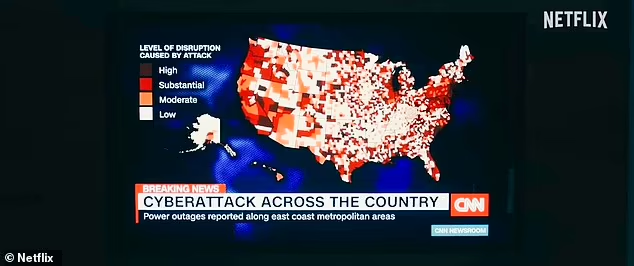
Perhaps viewers a couple of years ago were comfortable, while watching the 2023 American apocalyptic thriller ‘Leave the World Behind’, to think that they would be returning safely to reality when the credits finally rolled, because….

[Editor’s note: If you haven’t seen the movie, here comes a spoiler alert!]

cyber attack leave the world behind | Vox | Real Risks of Critical Infrastructure Cyber Attacks

…because a war was NOT actually being started outside the cinema by sinister forces who began by first destroying communication networks and critical infrastructure through a highly targeted cyber attack.

(If you haven’t seen the movie and want to know more, here’s a quick sneak peek at the trailer. The movie stars Julia Roberts, Mahershala Ali, Ethan Hawke and Kevin Bacon.)

Except that… attacks on infrastructure ARE becoming more commonplace in the real world, as Information Technology (IT) and Operational Technology (OT) systems become increasingly intertwined.

Let’s look at some real-life examples.


Why It’s real: IT and OT Convergence 

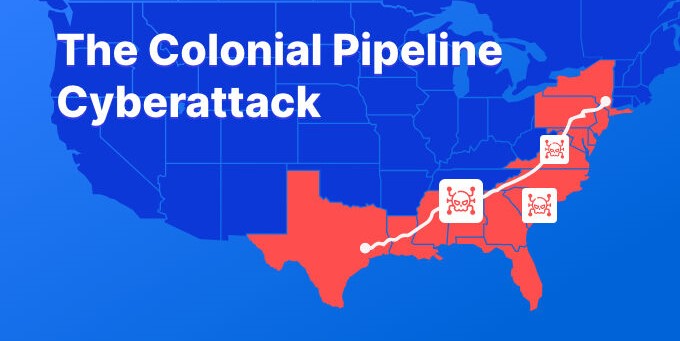
large Colonial Pipeline | Vox | Real Risks of Critical Infrastructure Cyber Attacks

One of the largest oil pipelines in the United States, the Colonial Pipeline in the eastern USA, went down in May 2021 for a few days because of a massive cyber-attack. It caused fuel shortages, panic buying and a temporary spike in gasoline prices.

The attack, from a Ransomware-as-a-Service (RaaS) operation named DarkSide, caused a four-day shutdown of the pipeline, after DarkSide’s operators had accessed the company’s IT network, stolen 100 gigabytes of data and encrypted several critical systems. A significant section of the eastern part of the country was affected, and Colonial Pipeline paid the hackers nearly $5 million as a ransom to finally regain control of their systems.

The Colonial Pipeline ransomware attack is considered to be one of the most significant attacks on critical national infrastructure in history.

So perhaps the moral of this particular story is this: Taking down critical infrastructure is not so far-fetched after all!

digital 4683519 1920 Infrastructure threat resized | Vox | Real Risks of Critical Infrastructure Cyber Attacks

As for communications networks, cyber-attacks on telecommunications companies (telcos) can have far-reaching consequences. The nature of the information held on customers can put their personal safety at risk if it’s breached.

American telco giant AT&T has had its systems breached more than once. System breaches have also taken place on Tangerine in Australia, Kyivstar in Ukraine, Alphalink in France, Bharat Sanchar Nigam Limited in India… the list of international telcos that have been attacked just goes on.

Data breaches and service failures undermine customer trust and have a negative impact on reputations. The result is companies being hit with recovery expenses as well as a potential loss of future customer revenue.


Closer to Home: South African Incidents

South Africa has not gone unscathed as far as significant cyber attacks are concerned.

michael geiger JJPqavJBy k unsplash resized | Vox | Real Risks of Critical Infrastructure Cyber Attacks

  • Transnet Attack: In July 2021, South Africa’s state-owned logistics firm, Transet, suffered a major ransomware attack that disrupted operations at ports and significantly affected the supply chain, demonstrating how ransomware can affect national economic activities. You could perhaps regard this as being SA’s own version of the Colonial Pipeline major critical infrastructure attack, because the results were also severe and far-reaching – in fact, Transnet declared a ‘Force Majeure’, meaning an event that cannot be reasonably anticipated or controlled.
  • Experian South Africa: In August 2020, this renowned consumer, business and credit information services agency experienced a data breach where a fraudster gained unauthorised access to the personal information of approximately 24 million South Africans and almost 800,000 (793,749) businesses. The exposed data included contact information and employment details.
  • National Health Laboratory Service (NHLS): When the IT systems of the NHLS were targeted by ransomware in 2024, all files on the affected computers and servers became inaccessible, leading to a halt in NHLS operations. In addition, 1.2 terabytes of data was stolen during the attack, including the sensitive medical information of millions of patients.
  • South African Weather Service (SAWS): In January 2025, the SAWS disclosed that its ICT-base systems were disrupted by an attack led by ransomware-as-a-service group RansomHub.


These are just a few examples of local cyber breaches in South Africa. Knowing the cause, impact and response to past data breaches can help businesses protect their own data – and bottom-line – by ensuring that they avoid the same pitfalls and mistakes.


Practical, Non-technical Actions Organisations Can Take

You don’t need to be a security expert to take sensible steps that reduce risk. Recommended actions include:

  • Develop and exercise an incident response plan and communications strategy so you can act fast when an event occurs.
  • Classify and prioritise critical assets and data to focus protection and recovery efforts where they matter most.
  • Conduct regular tabletop exercises with leadership, legal and communications teams to test decision-making under pressure.
  • Strengthen supplier and vendor oversight — downstream vendors can introduce supply-chain risk.
  • Train staff to recognise phishing and social engineering, the most common initial vectors for ransomware attack.
  • Consider cyber insurance and ensure coverage aligns with your operational risk profile.


It’s important to understand that kidnapping today is no longer only the domain of Somali pirates operating off the coast of Northeast Africa, using speedboats and machine guns to take over lucrative international cargo ships. Cybercriminals – like the Colonial Oil attackers – now ‘kidnap’ data, holding systems and companies to ransom until significant sums of money are paid.

No organisation wants to be in the media spotlight for the wrong reasons. Being aware of cyber attacks suffered by other companies can help your business to learn from these pitfalls and stay safe moving forward. Let’s go back to the movies to ponder that one a bit more closely:

Leave the world behind | Vox | Real Risks of Critical Infrastructure Cyber Attacks

“In my line of work, you have to understand the patterns that govern the world. It can help you see your future. And I knew something was coming.” – George H Scott, ‘Leave the World Behind’

Any business can be a victim of cybercrime. If you need help with cyber protection for your organisation, please contact Vox to see how we can be of assistance.


FAQs

What are critical infrastructure cyberattacks?
Critical infrastructure cyberattacks target systems that support essential services — such as energy, transport, health and communications — and can disrupt services, harm the economy and endanger the public.

How can I tell if my organisation is being targeted?
Common signs include unexplained system slowdowns, unusual login patterns, unexpected file encryption, or ransom notes. Prompt investigation and containment are vital.

What’s the difference between a ransomware attack and a data breach?
A ransomware attack encrypts and locks systems to demand payment; a data breach involves unauthorised access and exfiltration of sensitive information. Both can occur together.

How can smaller businesses protect themselves against these threats?
Smaller businesses should focus on basics: backups, an incident response plan, staff training, and assessing third-party risks — these steps significantly reduce exposure.

Does cyber insurance replace preparedness?
No. Cyber insurance can help with financial recovery, but it does not replace proactive measures like planning, training and asset prioritisation.

Cyber Attacks on Small Businesses

Cyber attacks on small businesses are on the rise – why SMEs are more vulnerable to cyberattacks, and how to stay safe

When we think of cyberattacks, we often picture a giant corporation with hackers trying to break into a billion-dollar cyberdeck (we blame the movies). The truth, however, lies on the opposite end of the spectrum – cyberattacks on small businesses are rising.

Thi is mainly because many SMEs have limited budgets, outdated systems and minimal staff training. Put simply: attackers go where the doors are easiest to open.

Think of it like this: large corporates invest heavily in security teams and layers of protection. Smaller businesses are often leaner, making them attractive targets for opportunistic hackers. Below we explain why, and give practical, affordable steps you can implement right away.


business 3639565 1280 | Vox | Cyber Attacks on Small Businesses


Why small businesses are vulnerable to cyber attacks

Limited budget = limited defence: Large firms can afford dedicated security teams, regular audits and enterprise-grade tools. Most SMEs operate on tight margins, so security is often deferred. That can mean unpatched systems, basic antivirus only and no 24/7 monitoring — an invitation to attackers.

A false sense of security: Many small business owners assume they’re “too small to matter”. In reality, cyber criminals treat SMEs as low-effort, high-reward targets. Simple breaches multiplied across dozens of businesses still pay off.

Human error and lack of training: All it takes is a click. Yup. Just one innocent click from a person who doesn’t know better can take down an entire organisation. Employees without regular training often can’t spot scams, dangerous links, or social engineering tricks. Good habits are the frontline defence.

Weak Passwords  and Outdated Systems: Is your team still using the hand-me-down PC that needed replacing about 4 years ago? And when was the last time anyone – ANYONE – updated their software? Nothing screams entry point like an unpatched system. Combine this with weak or recycled passwords, and you’ve basically left the front door open. Attackers scan for known vulnerabilities — if your systems aren’t updated, you’re presenting an easy route in.


Practical Steps Every SME Can Take Today

You don’t need a military-grade budget to reduce risk. Adopt these practical measures and you’ll significantly lower your exposure to cyberattacks on small businesses.

data privacy 9611620 1280 | Vox | Cyber Attacks on Small Businesses

Maintain cyber hygiene

  • Keep operating systems and applications up to date.
  • Apply security patches promptly.
  • Use a password manager and enforce strong, unique passwords.
  • Enable multi-factor authentication (MFA) for all critical accounts.


Train your people regularly

  • Run short, frequent sessions on spotting phishing emails, suspicious links and safe browsing.
  • Make cybersecurity part of employee onboarding and monthly refreshers.


Backup and test backups

  • Use both cloud and offline backups for critical data.
  • Test restores regularly so you know your backups work when you need them.


Invest sensibly

  • Move beyond free antivirus. Affordable endpoint protection, email filtering and a good firewall make a big difference.
  • Consider managed security services if you don’t have in-house expertise — they can be cost-efficient for SMEs.


Have an incident response plan

  • Know who to call and what steps to take if you detect a breach.
  • Assign responsibilities, contact details and a communication plan to minimise disruption.


Quick Checklist — Low-Cost Steps to Reduce Risk Now

  • Update all systems and software this week
  • Enable MFA on business email and admin accounts
  • Start monthly phishing-awareness emails/trainings
  • Implement a password manager and roll out strong passwords
  • Schedule automatic daily backups and test restores monthly
  • Put an incident response contact list where staff can find it


It’s not that small businesses don’t face the same threats as larger ones, but rather they face them with far fewer defences – which is exactly what makes them such attractive targets. However, by combining the correct mindset with easy, practical steps, you can go a long way to reducing this vulnerability.

You don’t need to build Fort Knox – you just have to make sure your doors are locked in order to sleep at night.

Stay safe, stay secure, and stay cyber smart.

Vox has partnered with global cybersecurity experts Sophos for cybersecurity solutions and we are easily able to cater to the needs of SMEs – contact us to find out more.


Some Frequently Asked Questions

Are small businesses at greater risk of cyberattacks?
Yes. Many small businesses have fewer security resources and less training, making them easier targets. Attackers often target SMEs for the same reasons they target larger firms: for data, money or to use compromised systems as launch points.

What types of cyberattacks target SMEs?
Common attacks include phishing emails, ransomware, credential theft, business email compromise (BEC) and unpatched software exploits. Phishing and ransomware are particularly damaging for small businesses.

How much should an SME spend on cybersecurity?
There’s no one-size-fits-all number. Start with basic protections (patching, backups, MFA, endpoint security) and scale from there. Many affordable solutions and managed services are tailored to SME budgets.

How often should employees be trained?
Short, regular sessions (quarterly or monthly refreshers) are ideal. Frequent reminders, simulated phishing tests and clear reporting steps help keep awareness high.

What should I do immediately after a cyberattack?
Disconnect affected systems if safe to do so, preserve logs where possible, notify your IT/security provider and follow your incident response plan. Report significant breaches to relevant authorities and affected parties as required.

Are backups enough to protect my business?
Backups are essential but not sufficient on their own. They protect your data from loss and ransomware, but you also need preventive measures (patching, MFA, endpoint protection) and an incident response plan.

Costs of a Data Breach to Your South African Business

Money, reputation, customers: A cyberattack is costly in multiple ways

It’s estimated that cyberattacks will cost the South African economy R2.2 billion in 2025. That’s according to a recent Vodacom Business report, which revealed that 80% percent of South African businesses had experienced a cyberattack during 2024.

These are incredibly high numbers.

Firstly, the fact that 8 out of every 10 local businesses was attacked last year underscores the persistence and determination of cybercriminals as they attempt data breaches.

As for the resultant costs of a data breach – R2.2 billion – these add up in a number of different ways, both directly and indirectly.


cost 1174936 1280 | Vox | Costs of a Data Breach to Your South African Business

Firstly, there’s the ransomware that must be paid if the cybercriminals succeed in breaching an organisation and encrypting its data. The attackers then demand a ransom to provide the decryption key and restore access, sometimes threatening to leak stolen data if the payment isn’t made.

Even if the organisation pays the ransom, this is not always a guarantee that the decryption key will be handed over. It seems that there isn’t always ‘honour among thieves’.

In addition, there will be incident response and recovery costs to pay, with significant expenses for hiring in consultants to carry out recovery efforts, forensic investigations and system restoration.

But these direct costs aren’t the end of the story – indirect costs are also incurred as a result of a successful cyberattack.

This includes through operational downtime, leading to lost productivity and revenue; reputational damage, causing potential new customers choosing to go elsewhere; and legal and regulatory costs, with companies facing possible fines from regulatory agencies for failing to protect sensitive data (and there may even be lawsuits from affected parties).


Costs of a Data Breach in South Africa

cyber 3324202 640 | Vox | Costs of a Data Breach to Your South African Business 

Over the past two years, advancements in artificial intelligence and machine learning have equipped cybercriminals to orchestrate and successfully execute sophisticated cyberattacks. From phishing, malware, ransomware, identity theft, hacking, social media fraud to social engineering, cyber threats are no longer simply a technology problem but a business problem.

South Africa is no exception – we were recently ranked as being the number 1 target for cyberattacks in Africa. No matter its size, every business is a possible target for cyberattackers[1].

Other frightening statistics include the following:

  • 40% of ransomware attacks in Africa recently occurred in SA; and
  • We also claimed 35% of infostealer incidents across the continent.


Factors contributing to SA’s #1 position as most attacked country in Africa include:

  • A lack of cybercrime investment;
  • Ineffective law enforcement prosecution; and
  • Lack of awareness.


Cybersecurity incidents on government bodies, such as the South African Weather Service and the National Health Laboratory Service, and well-established brands like Dis-Chem, show how vulnerable local organisations can be in the face of these rising threat levels.


How to Reduce the Expected Cost of a Data Breach

Organisations that proactively reduce their attack surface and improve recovery capability materially lower the potential cost of a breach. Focus on four priority areas:

Prevent

  • Deploy layered defences (endpoint protection, firewall, email security and web filtering).
  • Train staff regularly on phishing, social engineering and secure practices.
  • Apply strong access controls and multi-factor authentication.


Detect

  • Implement continuous monitoring and logging to identify anomalous behaviour quickly.
  • Use managed threat detection services where in-house capability is limited.


Respond

  • Maintain a tested incident response plan with defined roles, communication templates and escalation paths.
  • Engage forensic and legal partners on retainer to reduce response time.


Recover

  • Ensure immutable, tested backups and documented recovery runbooks.
  • Use segmented network design and least-privilege policies to limit lateral movement.


Protecting Your Organisation from Cyberattacks

cyber security 1784985 1280 | Vox | Costs of a Data Breach to Your South African Business

firewall is your network’s first line of defence against the cybersecurity threats of the public internet. You could think of firewalls as the gatekeepers to the public internet for your network users, filtering out threats and enabling them to connect safely to the sites and applications where they need access to do their work.

Existing as both hardware and software, firewalls are designed to restrict access to your organisation’s sensitive data while helping you monitor your network for suspicious activity.

Too many organisations still see cyberattacks as an irrelevant global problem, not a high-risk local threat. It’s imperative to make sure that your company has the necessary defence mechanisms in place, starting with identifying the risks and implementing an incident response plan.

Contact Vox and Sophos to find out more about how we can assist you.


Frequently Asked Questions

What is the typical data breach cost for South African businesses?
Data breach cost varies widely, but South African firms face direct and indirect losses including ransom payments, recovery, legal fees and reputational damage, often totalling tens of thousands to millions of rand.

How does ransomware affect data breach cost?
Ransomware dramatically increases data breach cost through demanded payments, extended downtime, forensic investigations and possible double extortion, as well as the risk that paid ransoms do not yield reliable decryption.

Are small businesses in South Africa at risk of cyberattacks?
Yes, small businesses are frequent targets. This is because limited budgets, weak defences and lack of awareness make them vulnerable, increasing the likelihood of high data breach cost and reputational harm.

What are the most common cyber threats facing South African businesses?
Phishing, malware, ransomware, identity theft and social engineering are most common, driven by AI‑enhanced tactics and posing major challenges for cybersecurity South Africa across sectors.

How much does operational downtime add to the overall data breach cost?
Operational downtime can multiply losses through lost revenue, reduced productivity and contractual penalties, often matching or exceeding direct remediation costs in severe incidents.

Is paying a ransom a reliable way to restore data?
No. Paying a ransom is risky, because attackers may not provide decryption or may demand more, and paying can increase overall data breach cost and legal or ethical complications.

What indirect costs should businesses anticipate after a cyberattack?
Anticipate indirect costs like reputational damage, customer churn, regulatory fines, legal claims, increased insurance premiums and long‑term loss of market trust, all contributing substantially to data breach cost.

What practical steps reduce data breach cost and improve cybersecurity in South Africa?
Implement firewalls, regular backups, employee training, incident response plans and patch management; invest in monitoring and third‑party partnerships to lower data breach cost and strengthen cybersecurity South Africa defences.


[1] Source: Newzroom Afrika