4 Ways to Improve Your Home Wi-Fi Signal and Router:

Wait, I Put My Router WHERE? 4 Ways to Improve your Home Wi-Fi Signal

You’d be shocked at how many “Wi-Fi” problems aren’t actually problems with the Wi-Fi (or the ISP, and we’re not just trying to save face). Many times, the key problem is in fact a Router problem – a Router placement problem, to be exact.

Unlike Calculus, humans tend to keep and apply many of the skills they pick up in early childhood development. Some humans, however, take this a step further, and integrate elements of “hide and seek” within their Router setup thought process. We’ve seen them behind TV’s, inside cupboards, on top of microwaves and next to the fridge. More often than not, people play “Where’s Wally” with their shiny new device, only to act shocked when it works like it’s on a National Shutdown.

Fact is, Router placement directly impacts signal strength, speed, and connection quality. So, before blaming your friendly neighbourhood ISP, let’s make sure we’ve covered the basics.

6 3 | Vox | 4 Ways to Improve Your Home Wi-Fi Signal and Router:

The Problem:

Think of Wi-Fi as a radio signal, meaning it travels through the air but gets weaker on impact. Walls, furniture, distance, and other interruptions act like virtual speedbumps. Even the best package and speed can still experience buffering, lag, and dead zones due to poor choice of placement.

If you’ve noticed signal = great in one room and “home affairs” in the next, it’s probably a placement issue.

First, the Quick Fixes: Here’s our guide to proper placement:

  • Place it in a central location:

Try and stay as close to the centre of the home as possible. Usually, sticking it in one corner means the signal has to work twice as hard to reach distant corners.

5 2 | Vox | 4 Ways to Improve Your Home Wi-Fi Signal and Router:
  • Keep it elevated:

Statistics show that performance is increased when devices are placed higher up. Whether on a shelf, desk, or mounted, avoid the floor. Remember that signal spreads outward, not downward, so the higher the better.

  • Keep it open:

This isn’t your best China, so there’s no need to stash it in the glass cabinet with a single mystery key. Routers need space to broadcast effectively. Our motto? Function > form; meaning if it looks neater but doesn’t work, it’s not worth it.

  • Size matters:

Everything from mirrors to concrete, thick walls to your favourite couch can negatively impact your signal. The greater the obstacles, the weaker the connection. Not all walls were created equal either. Whereas drywall is one story, solid brick is another ball game. The more barriers your signal has to pass through, the tougher time you’re in for when it’s time to connect. Hence why the device which worked perfectly in your apartment is suddenly JD Vance once you upscale. Bet the agent didn’t mention that one (they never do).

This doesn’t seem like rocket science, but we swear by it. Sometimes, small fixes make big impacts.

Now, here’s what to avoid:

(because, truthfully, some locations should be a war crime):

Avoid the following like the plague:

  • Inside anything: cupboards, chest of drawers, toy boxes (it happens), even the TV cabinet
  • On top of, behind, or next to key appliances like TV’s or radios.
  • On the floor. At all. Just don’t do it.
  • In the garage, or the distant corner of Mordor.
  • Near bases (think phones, wireless chargers, PS5’s)

If your router is hidden behind décor like it’s part of the furniture, that may be exactly why your Wi-Fi is struggling

4 1 | Vox | 4 Ways to Improve Your Home Wi-Fi Signal and Router:

Also note that certain devices can drastically impact Wi-Fi quality. These include microwaves, baby monitors, and even some Bluetooth devices (of course, the Air Fryer is exempt – because when is it not?). Whilst it doesn’t mean that your kitchen is a Wi-Fi no-go zone, it DOES mean that you should apply a bit of Social Distancing between your Router and the next big lump.

What happens when placement isn’t the only problem?

Sometimes, it’s not a matter of where the Router is, but rather where the Router is expected to encompass. Many users experience poor coverage in:

  • Multi-storey homes
  • Complicated layouts
  • Rooms far away from the living area
  • Lots of walls. It’s a thing.

If that’s the case, one tiny router can’t be expected to cover the entirety of Buckingham Palace; and your Royal needs might necessitate investing in Mesh or an Extender.

If you’ve noticed:

  • Strong Wi-Fi in some rooms, but weak in others
  • Internet only buffers in certain bedrooms
  • Video calls cut once you hit a dead zone
  • Speed is fine when you “switch it on and off” but dies when you sit down again

You may need to relocate (the device that is) or invest in a solution that broadens your covered.

Many users assume that poor Wi-Fi = poor Internet. However, the issue is often simultaneously simpler, yet more complex. So, before letting an inanimate object rage-bait you, ask yourself where your device is placed and whether you should consider moving it.

Because, sometimes, better Wi-Fi doesn’t involve a bigger package – all it takes is proper placement.


4 Reasons Why Cyber Security is Not a Tech Problem (it’s a People Problem)

Cybersecurity: It’s Not a Tech Problem — It’s a People Problem

We’ve all heard the term Cyber Security, but the reality is not all of us have tuned in and paid attention. Indeed, there are two types of people; those who listen when the topic comes up, and those who don’t believe it applies to them.

A key reason for this alienation is simple; say the word Cyber Security, and the conversation quickly turns technical. We go from “real threat” to Firewalls, Endpoint, Encryption with no middle ground.

Yes, the above are important, but oftentimes they cut out many people who need to understand the fundamentals. It also distracts from an uncomfortable truth: most breaches are the result of human error, NOT intricate hacking schemes.

Maybe it’s a clink. Possibly it’s a password. Probably someone acted without thinking. Each time, a person. And each time, the real weak point isn’t the system, but rather basic human behaviour.

  1. Human Error = Your Biggest Entry Point:

      Complex exploits and systems breached? Too much work. Most attacks need something far simpler; basic human trust.

      Whether a phishing email or fake login, made up invoices or a call from “FNB”, impersonation attempts are all geared around tricking unsuspecting users into voluntarily providing access. Rather than break the system, they’ll convince you to open the door and say come inside.

      They’re getting better at it too. Many scam emails are almost indistinguishable from their legit counterparts. Websites have genuine domains, and the messages come directly from the people you know (who’ve also been hacked).

      All it takes is a momentary lapse of concentration and they’re in.

      Woman sitting at a desk at night, covering her mouth in shock while staring at a desktop monitor, with a laptop and office equipment visible in a dimly lit workspace.

      2. The Poor Password Problem:

        We’ve created mailers, run webinars, sent out SMS’s and put out social media posts, yet poor password behaviour remains a key Cyber Security weakness (which you, yes you, may be compounding). This includes:

        • Recycling passwords across systems
        • Using easy-to-guess, personally grounded passwords
        • Sharing of info with friends or colleagues
        • Documenting passwords in easy to access places

        All it takes for the Dominoes to fall is ONE breach here. Attackers then usually gain access to multiple systems purely because the details have been repeated everywhere.

        Close-up of a laptop keyboard with a padlock placed on top and a sticky note showing a handwritten password, highlighting weak password security practices.

        3. Security vs Convenience:

        The nature of today’s fast-paced work environment is that everyone is under pressure. We have a constant need to be faster, work efficiently, meet our deadlines and deliver quicky. Sadly, this often leads to shortcuts and a high-pressure situation when safety is NOT the number one priority.

        Have you, for example, ever:

        • Sent important work info via your personal Email as Outlook wasn’t working?
        • Stored important company data on your mobile device?
        • Clicked “skip” on your two-factor authentication because you were in a rush?

        This transcends conventional protection and becomes a discussion of security habits which are sustainable and easy to follow.

        4. Training Beats Tools:

        Many companies go big on Cyber Security software but small on the human element. Regular training and support is as important as a fancy firewall – because there’s no point Norton fighting fires when you have an active match that can’t recognise a dodgy link.

        Well-trained workforces can stop attacks before Tech needs to step in – and that’s a key difference in a time sensitive environment.

        In the end, the best Cyber Security practices are cultural, not purely technological.

        Close-up of an old wooden door with a worn metal lock and latch, symbolising traditional physical security.

        Encourage a workspace where reporting mistakes is acceptable and policies are easy to digest. Leadership needs to prioritise this as much as the team, because organisations who take this shared responsibility seriously are far more resilient.

        The bottom line is that Cyber crimes will always involve tech, but tech alone isn’t enough. There’s always a human behind the system. Someone making decisions, under pressure, clicking links and sending files. And, in most cases, it’s their ability to make those decisions (and the info behind them) which ensures a business stays secure or guarantees it’s the next headline.

        The Quiet Superstar Who Gets Things Done

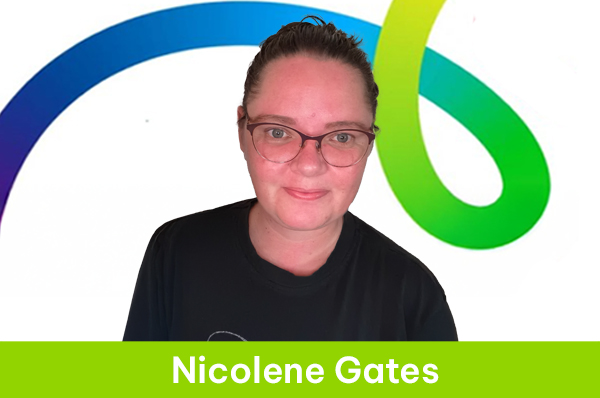
        People of Vox: Spotlight on Nicolene Gates

        At Vox, we believe our employees are the beating heart of our company, with merit and value built into all our available positions. In this edition of People of Vox, we meet Nicolene Gates, who works in the Procurement Department as a Team Leader.  Nicolene’s journey within Vox is a practical, inspiring example of steady progression, care for her colleagues and the everyday importance of operational excellence.

        Procurement is the company area which makes sure that departments can work effectively: from enabling the provision of desktops and Wi‑Fi routers to licences, capital equipment and conference‑room screens. At Vox, that responsibility sits with a small, focused team that’s co-led by Nicolene Gates, who joined the business in 2014.

        “People in Procurement are the buyers of the company,” Nicolene explains. “If you need anything at Vox, Procurement needs to raise the purchase order. We buy everything needed for operations, including stock, capital items and licences. We make it official!”

        Procurement at Vox operates as the central purchasing hub: internal staff raise requests, sometimes supported by quotes from Procurement, and the team manages the approvals and supplier interaction. For larger purchases, engineers or project teams will submit CapEx requests with quotes and line‑manager sign‑off; Procurement then processes the order.

        Nicolene’s path into Procurement was practical and familiar to many South Africans: she took temporary work, showed up reliably and was in the right place when a permanent role became available.

        We find out more about what Nicolene loves doing, both at Vox and at home, and why she’s described by as her line manager as being: ‘This quiet superstar sitting in the shadows simply getting things done!’

        Nicolene Rugby FINAL | Vox | The Quiet Superstar Who Gets Things Done
        Nicolene with her partner Johnathan


        A Compact Team with Wide Responsibility

        Nicolene’s early jobs after school included waitressing and telesales. She says these roles taught her practical discipline: getting used to long hours, how to meet customers, and dealing with issues efficiently.

        “Waitressing was great!” she says. “I enjoyed meeting a lot of different people. It taught me to be present and attentive, and I still find that incredibly useful today in my procurement career.”

        In 2013, Nicolene was able to work for Vox for a short while as a temp, and to her delight, a permanent post opened up in 2014, when she was then able to join the team on a full-time basis.

        “I started out doing all the requisitions and purchase order loading,” she recalls, “and ultimately become one of two co-team leaders. Now I check what the team loads, I review contracts, margins, quotes, suppliers, GL accounts; everything on an order, really, before I approve it.”

        Together with her co-team leader, Kaylen Pillay, Nicolene leads a small team with six people reporting to her. Despite its small size, the team covers a surprising extent of activity.

        “We don’t just order laptops,” says Nicolene. “We order PBX licences, VC systems, Wi‑Fi routers, consumables for Stores, stationery, and sometimes the larger CapEx requests when engineers need tools or installations. We work very closely with Vox’s Stores department, and if there’s faulty stock, we coordinate returns, warranties and replacements.”

        Vox Lions game 2019 | Vox | The Quiet Superstar Who Gets Things Done
        Nicolene at a Lions Rugby game with Vox colleagues Lizette van Rooyen, Ginene de Graaf, Charne Williams, Candice Shaw and Abu Omar


        The Magic of Exceeding Expectations

        Nicolene’s working day is disciplined. She starts by checking emails, noting: “I hate leaving something unread!” and then reviews reports and assigns tickets. Her team loads orders and she reviews and approves them. She creates item codes where needed, cancels incorrect orders, follows up on faulty stock, and sources quotes.

        “Sometimes licences have expired and it’s urgent,” she says. “The ticket comes in and we must renew it that day. It takes a few hours to load an order and get approvals, so I try to move things quickly. I just hate it when someone has to wait because of a long process.”

        That urgency is where Nicolene’s satisfaction comes from. She enjoys the ‘magic’ of solving problems fast: turning a ticket into a fully authorised purchase order and getting the supplier to act. “I love it when people expect us to get something done and we are able to deliver quickly,” she says. “It feels great to help and to exceed expectations!”

        In turn, Nicolene also finds working at Vox a largely pleasurable experience, and she believes that Vox’s employees are the company’s greatest asset, with respectful, helpful colleagues, and leaders who care about both customers and staff members.

        “People are respectful at every level,” she says. “Vox cares about its customers and the employees who serve them. The cross‑department effort that gets a product to a customer is huge, and ultimately, it’s the people who make it work.”


        From the Golf Course to Call of Duty

        At home in Pretoria, Nicolene lives with her partner and three daughters. Her eldest daughter completed matric recently; the others are in Grade 7 and Grade 3, and her family life has a large bearing on Nicolene’s down-time interests. She enjoys planning birthday outings and events for the family and hopes that one day they will all be able to go on a holiday to Mauritius.


        Nicolene Daughters Edited | Vox | The Quiet Superstar Who Gets Things Done
        Nicolene’s daughters (left to right): Mijah, Lené and Juané

        “My colleagues might be surprised to know that I also love cleaning!” she smiles. “I really enjoy rearranging rooms, as well as watching cleaning videos on TikTok! I also enjoy spending leisure time with my partner, and I join him when he plays golf, and sometimes during video games on the family’s PlayStation.

        “As far as golf is concerned, I enjoy driving the golf cart and time out on the beautiful, tranquil golf course, even if myself am not playing. As for the video games, I’m joining in games of Call of Duty, which I find quite challenging but overall a fun family activity!”


        Aspirations: Knowing the Business Inside Out

        Nicolene is quick to praise her current team and her line manager, Lizette: “I have the best team and the best boss! I wouldn’t be here without them,” she says. “One of my favourite workplace memories is an unexpected baby shower that was organised by my colleagues in the Procurement and Creditors Departments, when I had my youngest daughter in 2017.

        “We were still at the office before COVID, and it was such a lovely surprise – just underscoring how the team supports each other through our professional and personal milestones.”

        Vox Nicolene Baby shower | Vox | The Quiet Superstar Who Gets Things Done
        Nicolene’s baby shower in 2017

        Looking ahead within Vox, Nicolene aspires to one day achieving the breadth of knowledge that her own manager demonstrates: “Lizette knows everything about every product and what to ask when something new comes along, and I would like to get to this point also – to know the company well enough to answer questions, anticipate what’s needed and help teams make the right decisions.”

        This innate curiosity and desire to learn fit naturally within the Procurement Division’s role as a hub for information, because suppliers, contracts, product specs and financial approvals all require a sharp understanding.

        Although the Procurements division goes through busy periods, Nicolene’s approach to avoid being overwhelmed is practical. She explains: “Do the work you can today in a steady manner, follow up tomorrow and keep a close eye on tickets while dealing with urgent items swiftly. My advice to anyone is to be organised, pay attention to detail and don’t hesitate to take action where you can help.”

        Procurement rarely appears in the spotlight, but Nicolene’s story shows why it should: Procurement provides the processes that keep Vox operational and responsive.

        Nicolene’s enthusiasm for getting things done fast, her attention to detail and her pride in the team speaks to a department that values precision and people in equal measure. “I love assisting people,” she says. “I will always help if I can, and I love the fact that when we deliver quickly, people notice.”

        Nicolene embodies the quieter side of customer service: making sure Vox has what it needs so that everyone else can do their jobs well.

        Examining the Real Consequences of Poor Connectivity

        Business Continuity usually plans on disasters, but doesn’t take into account Fibre failures.

        By now, we’ve established that Fibre is the backbone of a successful business operation. It’s gone beyond being a utility. Today, everything from customer service to sales, inventory, payment and comms depends on reliable high-speed Connectivity. When your Internet drops, it’s no longer just slower emails and postponed Teams calls – organisations are seeing a marked, immediate impact on their bottom line.

        Today, we break down why poor connectivity has transcended the boundaries of being an IT Issue to become a major strategic risk.

        1. Time = Money
          Every minute without Connectivity costs money. Whether lost retail sales or Cloud disconnection in offices, even a short outage can mean:
          • Delayed logistics
          • Customers looking elsewhere
          • Reputational damage
        A white alarm clock sits next to a glass jar filled with US dollar bills, symbolising the concept that time equals money.

        Stuttering Internet is no longer just a minor delay – it’s bleeding money, and revenue exiting the building.

        1. Productivity? Out the Window
          Inability to connect to the Internet doesn’t just slow things down – it stops it entirely. Consider, for example, a team dependent on Cloud Apps or CRM. When the Fibre drops, users can’t access their base platforms, files refuse to sync, and all collaboration comes to a screeching halt. You can’t recover lost time. Worse, employees lose valuable working hours trying to troubleshoot or operate manual workarounds.
        A hand presses a neutral face icon on a digital satisfaction rating scale displayed on a touchscreen device.
        1. You can’t refund bad Customer Experiences
          Any customer expects reasonable reliability, quality, and speed. Whether support chats, check-outs, or filling in a digital form, a single bump in the road can lead to frustration or even a lost sale. Exceptional user experience is a differentiator in saturated markets; you can’t afford to risk your reputation or the resultant damage caused.

        Fact is, reviews matter, and they’re often public without option to delete.

        Brands today can’t gamble with their reputation, and Connectivity issues are often the first to get very publicly called out. In the age of Social Media Complaints and negative online feedback, customers don’t take kindly to unresponsive organisations, and they’ll let you hear about it.

        1. A disconnected brand is a vulnerable one
          In times of weakness, companies get desperate, often resorting to otherwise risky workarounds in an attempt to “make a plan”. These include using unsecured mobile hotspots, bypassing conventional firewalls, and overlooking VPN connections. These quick fixes can open up doors for exploitation. Data breaches, ransomware or even the most basic hack cost significantly more than just forking out for proper Fibre.
        A computer screen displays an error message reading “This webpage is not available” with a reload button below it.

        Business Continuity usually plans on disasters but doesn’t take into account Fibre failures.

        The harsh reality is that Poor Connectivity is not just an IT problem, it’s a serious business risk; a business risk which literally impacts efficiency, trust, security, and ultimately revenue. And, in a world where optimised performance is crucial to remain competitive, investing in Fibre that works means investing in far more.

        1. Downtime compounds faster than you think
          Connectivity interruptions rarely happen in isolation. A dropped connection during a critical moment can create a ripple effect across an organisation. Orders pause, customer queries stack up, internal approvals stall, and scheduled processes fail to run. What begins as a few minutes of downtime can translate into hours of operational disruption as teams work to recover lost progress and stabilise systems.

        Modern businesses rely on constant data flow between platforms, partners, and customers. When that flow is interrupted, everything slows down or stops entirely. The longer recovery takes, the more pressure builds internally and externally. Reliable Fibre therefore isn’t just about speed; it’s about operational stability and keeping the business engine running without interruption.

        Failure to Connect = Failure to Evolve. Just ask any of the brands that learned their lesson the hard way.

        Stop the Wi-Fi Wars: 4 Ways to Keep The Whole Family Connected

        We’re firm believers that peace of mind is underrated. Especially household peace.

        We also believe that few things destroy household peace faster than “broken” Wi-Fi. Yeah, forget politics, burned braai meat, and turns on the Xbox; buffering is this seasons Dr Doom.

        On your average day: one kid is on YouTube, the other playing Fortnite, Mom is on a video call and Dad trying to responsibly watch Man United in 4K. Suddenly, everything freezes. Fingers are pointed, voices raised, sanity does a runner – welcome to the Wi-Fi wars.

        Let’s fix it.

        Understanding the Battlefield.

        Toy soldiers lined up on the battlefield, ready to combat in the quest for Wi-Fi

        Most home Wi-Fi isn’t “slow” – it’s just more overwhelmed than a McDonald’s Ice Cream Machine. Today’s modern home is equivalent to a 2009 tech startup, with each containing multiple smartphones, Smart TV’s, laptops, tablets, consoles, cameras, a PC in a corner and that mysterious device nobody can explain.

        Each one is simultaneously fighting for bandwidth, and if your line can’t multitask (it happens to the best of us), the whole house is destined to suffer.

        So, herewith Rule One:

        You can’t use entry-level speeds for heavy duty Wi-Fi use.

        Be honest about your usage. If you’re simultaneously streaming Netflix, updating your PS5, Teams calling and downloading from the Cloud, you need serious bandwidth.

        Sometimes, you are the problem…

        … or maybe your Router is.

        A well placed router, which is clearly elevated and in close proximity to devices.

        Even lightning-fast Fibre is only as quick as the Router (and its positioning). If you’ve placed yours inside the spare microwave in the garage cupboard, congratulations – you’ve played yourself.

        Remember the days when we’d have entire computer stations in the house, complete with external speakers and cd racks? They sat there like modern day shrines to Connectivity – and their modern descendants have similarly royal aspirations. Wi-Fi needs optimal working conditions to perform better; so think open space, central positioning, and elevation. If your signal dies only in specific rooms of the house, you don’t need to invent cuss words, you may just need a better router setup (or to invest in mesh).

        Bigger house? You may need a bigger plan:

        Many users are surprised when their Wi-Fi doesn’t magically bend around walls. Go figure.

        Fact is, everything from concrete to an innocuous appliance can be a signal killer. If you’re living in a mansion, or even a double story place, you should always consider:

        Because the honest truth is that a single router in the lounge is never reaching the outer bedrooms.

        So, what’s the real solution?

        Simple: start by upgrading the experience.

        You see, fast internet isn’t about bragging rights and feeling better than the neighbour. It’s about eliminating buffering wheels, frozen faces on work calls, and PC’s going on vacation when you’ve just had enough and need to clock out.

        Sometimes you’re not buying Internet. You’re choosing peace. And, like we said, peace is underrated.

        After that? It’s just a series of small stuff, with a lot of mindfulness. Routers, placement, extenders, prioritising traffic and ensuring that the next door neighbour isn’t secretly downloading series are all key fundamentals to making your own Home Wi-Fi run smoother. In short form? All it takes is a bit of research, investing in the correct equipment, and taking the time to understand what makes a conducive environment for better browsing and you’re good to go.

        Let’s wrap it up…

        The War of the Wi-Fi doesn’t start because of unreasonable families. It starts because your Internet was designed to fail from the offset.

        Good Wifi connects devices easily and automatically

        Upgrade your speed.

        Optimise your setup.

        Say goodbye to buffering.

        And let everyone work, play, stream, or anything in between in harmony.

        Crunching the Business Numbers: Big Five, Big Four and Now Big Three

        Why connectivity isn’t just a line – it’s the backbone of your business

        Connectivity today is no longer just a simple line to the internet – it’s a robust network to ensure that daily operations run smoothly.

        What’s in a number? What do we think of when we hear the phrases ‘Big Five’, ‘Big Four’ and ‘Big Three’? And what does ‘Big Three’ have to do with the successful running of your business?

        The first answer is easy, at least for South Africans. Just say ‘Big Five’ and visions of lion, leopard, elephant, rhino and buffalo appear – some of Africa’s most iconic and dangerous wildlife species. We regard them so highly here in South Africa that they all live on our bank notes!

        Big Five

        As for the term ‘Big Four’, we generally think about SA’s traditional four biggest banks. (Although do watch out for the competitor snapping at your heels – we all know the names.)

        But what about the ‘Big Three’? What does that have to do with your business, and what does your modern business need to run effectively?


        The Utilities Needed Today

        From a purely utilities perspective, modern businesses have always required access to electricity and water as baseline conditions, which are necessary in the background for them to run effectively and be positioned for growth.

        Today, these two important utilities must also include a third one, namely internet connectivity as well. Not only that, but a company’s connectivity must be both fast and stable – the days of ADSL lines are arguably now the dinosaur days, at least at the enterprise level.

        Super-fast and stable connectivity is now a necessity, not a ‘nice to have’ – and it could arguably also have become the most important of the new ‘Big Three’ for your business.

        Consider this:

        • No electricity for hours or days at a time? It’s always extremely inconvenient and annoying, but alternative power sources do exist, as businesses across South Africa discovered during the dark days of Eskom (pun intended). Certainly, sometimes the high cost of alternative power sources (generators, for example) definitely ate into the profits, but staying connected was the literal price of a company’s survival, when many company owners had to settle simply for staying in business until better days returned.
        • No water? It’s also deeply inconvenient, but again, plans can arguably be made for non-industrial businesses at ad hoc moments, for example enabling a remote work force where possible, and buying water for those left on-site as required.
        • No fast and stable internet? This is more complicated. Connectivity is the backbone of modern business, functioning as a foundational asset that links people, systems and data. When it’s not stable or fast enough, growth is made more challenging.


        In short, we can argue that connectivity is the backbone of your business, and it’s critical for growth.


        Simply Inconceivable Without Lightning-Fast Connectivity

        Connectivity Isn’t Just a Line - It’s the Backbone of Your Business

        Connectivity today is no longer just a simple line to the internet – it’s a robust network to ensure that daily operations run smoothly.

        Business-grade connectivity requires a robust network to ensure that daily operations are seamless, from enabling real-time collaboration to Voice over Internet Protocol (VOiP) technology for your company’s internal and external communications, to processing payments… and the list goes on.

        As outlined previously, enterprise-level companies also require significant speed.

        We look at some of the reasons why business-grade connectivity is the new player in the utilities team.


        Connectivity: The Backbone of your Business

        Connectivity

        Connectivity is the foundation for operational continuity: it prevents downtime, and provides ‘always-on’ infrastructure, which allows uninterrupted access to Cloud-based tools and applications, which are essential for modern business operations.

        A properly set up network enables backup and redundant paths, as well as enhanced security measures (for example encryption and firewalls) which protect against costly downtime and cyber threats (see here for Vox’s cybersecurity solutions).

        In addition, modern connectivity also enables digital transformation, including maximising the power of AI and the Internet of Things (IoT) for automation, real-time data analysis and proactive maintenance. Moving operations to the Cloud requires high-speed, low-latency connections to ensure data is accessible and secure. In addition, investing in high-speed, scalable connectivity such as Fibre ensures that your infrastructure can grow as your business expands.

        Modern connectivity enables productivity and collaboration by allowing for remote / hybrid work, while also ensuring that departments can remain connected for seamless collaboration on projects and data.

        And finally, from the perspective of the customer, fast, secure and stable connections ensure that websites and e-commerce platforms operate smoothly, preventing lost sales due to slow load times or downtime.

        Reliable connectivity also allows for immediate customer service, such as live chats and social media support, which can improve satisfaction and loyalty, while high-speed, secure connections provide real-time access to customer data, enabling targeted and personalised marketing.

        In today’s digital-first world, a strong internet connection isn’t a luxury, it’s a necessity. Robust connectivity allows your entire organisation to communicate and function effectively. Whether you’re running a small local office or managing a distributed remote team, your ability to stay connected determines how effectively you can serve clients, collaborate and see business growth.

        Contact Vox for Business Fibre that will help you grow your business.


        One Final Note

        There are many reasons why Internet networks fail, including congestion, physical damage to the Fibre, area outages, planned or emergency maintenance, router issues, DDoS attacks, malware on devices, outdated software on customer equipment, and more.

        Did you know that Vox offers state-of-the-art failover solutions, to ensure that your business connectivity is always on? Failover options keep your services running when faults or outages happen.

        Vox offers passive-active as well as active-active failover options – click here to find out more. It’s just the Vox way of ensuring that our role in your business’s ‘Big Three’ utilities doesn’t ever need to go down!

        Vox Proudly Attains Google Verified Peering Provider Status

        Vox Proudly Attains Google Verified Peering Provider Status

        A significant accolade in the local ISP landscape

        Vox is proud to announce that it has become a Google Verified Peering Provider, one of a select group in the South African ISP arena. The Verified Peering Provider (VPP) Programme identifies a group of internet service providers (ISPs) that have demonstrated diverse and reliable connectivity to Google. ISPs are awarded a Verified Peering Provider badge based on technical criteria related to their connectivity depth with Google.

        “The Verified Peering Provider Programme is a recent accreditation from Google that recognises ISPs with high-quality, optimised connectivity into Google’s global network,” says Chris Burrell, Head of Network at Vox. “The Programme identifies providers that meet stringent technical and capacity standards, including diverse peering links to Google, ensuring faster access, improved performance, and greater reliability for customers using Google services.

        “The Verified Peering Provider Programme is basically a ‘trusted partner’ list. Networks on it can connect directly to Google to access the content in a way that’s fast, safe and of the highest quality. You could think of it as a shortcut to get premium, direct access to Google services and content.”

        Vox Customers using Google services such as YouTube, Gmail, Google Workspace, Google Meet and applications hosted on Google Cloud infrastructure will experience improved performance, reduced latency, and greater service reliability.

        We unpack how the Google Verified Peering Provider Programme works and the benefits customers can enjoy.


        ‘Let’s Shake Hands…’

        as photography internet search engine 1433323 640 | Vox | Vox Proudly Attains Google Verified Peering Provider Status

        Burrell notes that in today’s Cloud-focused world, Google customers need simple and highly available connectivity solutions to reach publicly available Google resources such as Workspace and other internet-facing applications.

        He explains: “Peering is like two networks shaking hands and saying, ‘Let’s share traffic/content directly with each other, instead of sending it through a middleman.’ It makes internet usage, including websites, videos, voice and Cloud apps, faster and more reliable for users, providing higher quality of experience.

        “Many customers connect to Google Workspace, Google Cloud, or Google APIs using Direct Peering or via Route Server infrastructures at Internet Exchanges. These solutions provide network operators interconnectivity to Google.

        “However, not all Google customers today are able to manage the complex connections of Peering, or they don’t meet the relevant requirements to maintain the high-quality standards required by Content providers. Against this context, using a Verified Peering Provider to connect to Google simplifies connectivity to Google’s network, and removes the complexity of managing Direct Peering connectivity.”

        By leaving Direct Peering to the ISPs, the Verified Peering Provider programme enables Google customers to access all Google services without the complexities of Direct Peering. Verified Peering Providers manage Direct Peering with Google over dedicated private connectivity with redundancy requirements for each enrolled provider.

        When Google customers connect to a Verified Peering Provider to reach Google, they are choosing a provider that has verified diverse connectivity to Google, which enables highly available access to Google services.


        Benefits of the Google Verified Peering Provider Programme


        Vox Proudly Attains Google Verified Peering Provider Status

        As Burrell outlines, Google evaluates networks that would like to be peering partners: “Vox went through a stringent application and technical review process showing that we meet their performance, network stability, reliability and capacity standards,” he says. “As a result of our successful application, we are able to offer our customers a number of benefits.”

        This includes the following:

        • Simplified connectivity: There is no need to meet Google’s peering requirements; instead, customers can leave the complexities of peering arrangements to Vox as a Verified Peering Provider.
        • High availability: The Google badge shows that the ISP has a highly redundant connectivity to Google.
        • Enterprise grade connectivity: Customers can connect to Google through internet products designed for enterprises; further, they can access Google with or without the need for border gateway protocol (BGP) or an autonomous system number (ASN). In addition, customers can work directly with the ISP’s customer services teams and operational escalations


        Burrell clarifies that Vox’s Verified Peering Provider Programme is suitable for enterprises and businesses running Google Cloud apps, ISPs or partners reselling internet services, and any tech-savvy user streaming, collaborating or relying on Google services.

        He adds: “Because Vox is a Verified Peering Provider, this ensures Google traffic is routed over well-engineered, high-capacity direct interconnects, reducing unnecessary transit paths and improving consistency. It’s part of Vox’s ongoing investment in network quality and reliability.

        “Vox is truly proud of this accolade, because it’s a mark of trust from Google, and not every local ISP will be able to qualify. It shows that Vox meets high technical standards and can deliver premium internet performance for Google services, making service better for our existing and future customers,” concludes Burrell.


        Frequently Asked Questions

        What is a Google Verified Peering Provider?
        A Verified Peering Provider is an ISP that has met Google’s technical and capacity standards for direct peering, offering optimised and reliable access to Google’s services.

        How will this improve performance for Google services?
        Direct peering reduces the number of network hops and potential bottlenecks, resulting in lower latency, faster load times and more consistent performance for apps like YouTube and Google Workspace.

        Do Vox customers need to change anything to benefit?
        No. Vox manages the peering relationship with Google. Most customers will see improved performance without changing their configuration.

        Is this available to all Vox customers?
        Benefits depend on routing and service configurations, but the VPP status enhances overall connectivity for enterprise and business customers across Vox’s network.

        Can resellers and other ISPs use Vox as a Verified Peering Provider?
        Yes. Resellers and partner ISPs can work with Vox to provide their customers with optimised access to Google services via Vox’s peering infrastructure.

        Does this replace direct peering for larger customers?
        No. Organisations that already operate direct peering can continue to do so. VPP provides an alternative path for customers who prefer Vox to manage peering complexities.

        How does Vox ensure redundancy and reliability?
        Vox maintains diverse, redundant links and operational processes that meet Google’s VPP requirements, ensuring high availability and predictable routing for Google-bound traffic.

        The Small Consistent Actions that Change Lives

        People of Vox: Brian Rossouw

        At Vox, we believe our employees are the beating heart of our company, with merit and value built into all our available positions. In this edition of People of Vox, we find out more about Brian Rossouw, who is Vox’s Regional Sales Manager for Mpumalanga and Limpopo. When you meet Brian, you notice straight away how warm and funny he is, with an incredibly positive attitude.

        As Vox’s Regional Sales Manager for Mpumalanga and Limpopo, Brian’s daily work sits where sales leadership meets customer experience. In addition to chasing targets and working on quotations, his daily purpose includes solving problems and creating consistent momentum, for both customers and his team members.

        Before joining Vox three years ago, Brian worked in retail and telecommunications. He’s experienced a number of curveballs and challenges during his lifetime, but instead of using former hardships as an excuse to throw in the towel or feel sorry for himself, he has let those experiences shape his approach to work and leadership.

        Let’s meet Brian and find out more about his amazing work ethic.


        Juggling His First Job with His Final School Exams

        Brian actually began his adult working life while he was still writing his matric final examinations. “When I was growing up,” he says, “my family was extremely poor, and my mom sometimes struggled to make ends meet. But, you know, God has always been good to us and I believe that He always had a plan for us. I knew that just as soon as I was able, I was going to start working to try and help her and my siblings.”

        An opportunity arose when Brian was offered a short-term contract job as a picker-packer for a company that supplied frozen fish to restaurants. He explains: “It was a bit problematic because of the clash with my final school exam period, but I took the job to help my family. It was challenging – I was working the night shift in freezers that were about 10 degrees Celsius below freezing point! – but I managed.

        “During the day, I would study and write my exams, and then I would work the night shift until about four or five o’clock in the morning. I’d get back home, study a bit or sleep if I could, depending on my exam schedule…. It was tough, but I made it through!”

        After matric, Brian was able to find more permanent work and later landed up selling tech accessories in stores.

        Young Brian | Vox | The Small Consistent Actions that Change Lives
        Young Brian already knows the importance of having fun at work!

        “These early jobs were tough but formative,” he says. “They taught me resilience, humility and the value of small, steady steps. Taking consistent small actions is a personal philosophy for me, which I like to describe with the acronym ACSA: ‘Attitude and Consistent Small Actions’. I believe this mantra will help with achieving success in any realm in this world but I find it especially helpful within the sales arena.”

        Brian believes everyone has the potential within them to change the world for the better. He elaborates: “And if you don’t have the power to change the world, at least change your world for the better!”


        Human Connection: The Competitive Advantage

        Brian describes himself as someone who creates ‘magic’ for customers when things go wrong. He treats each problem like an opportunity to deliver exceptional customer experience and to show his team how to close the loop properly.

        For Brian, attitude includes emotional resilience and the ability to keep going when prospects are difficult or rejection happens. “I believe that attitude is a choice: you own how you feel and react, and resilient people outlast obstacles,” he says. “Consistent small actions are the daily disciplines that compound into success: making calls, following leads, refining quotes and improving process detail. “

        Brian wants those he leads to cultivate emotional resilience, and he also believes in leadership as a teaching opportunity.

        “I want to model the behaviour that I expect from my team members: doing the work, being present for others, and demonstrating how to handle objections and close deals. I’m proud to be in the role I once looked up to, and I enjoy helping others to climb the same ladder.”

        Brian Rossouw Photo 2 cropped | Vox | The Small Consistent Actions that Change Lives

        Brian’s day starts early: he’s in the office at 07:00, reviewing sales interactions, quote volumes and order accuracy for every team member. From 08:00 Brian meets the team, unpacks individual performance and looks for the precise actions that will turn a weak day into a better one tomorrow. He spends the rest of the day in meetings, solving customer queries, planning strategic projects for multi-dwelling units and liaising with stakeholders. His role combines hands-on sales with coaching and troubleshooting.

        For Brian, the best part of his job is the people he works with. He says: “People matter above all: customers, colleagues and the communities around them. I find people fascinating – how everybody is different and has a different story to tell. And in the work environment, human connection is a competitive advantage. While it’s true that AI and automation is bringing uncertainty, my advice remains the same: build adaptable skills, stay curious and focus on the human capabilities that technology cannot replace.

        “My favourite success story is about a team member who could not write one quote in four months; after coaching, encouragement and steady accountability, this person became a top performer nationally. That is the essence of consistent small actions – you don’t need overnight successes; instead, you need persistence.”


        Why Vox? The Human Difference

        Brian believes that the combination of customer care and front-line coaching is what sets Vox apart, together with its people.

        “Vox employs a direct sales force, with employees out in the field who represent Vox, not outsourced contractors,” he says. “This human connection matters. Customers speak to someone who knows the product, owns the process and cares about the outcome. For me, this is a defining advantage: it makes Vox personal, accountable and responsive.”

        He also values how Vox embraces newcomers, explaining that when he joined the company, product managers and colleagues reached out to help him learn. He says: “This culture of openness and ownership impressed me, because not every company welcomes new starters with that level of support. My colleagues are incredibly generous and will always go the extra mile.”

        Brian Photo 1 | Vox | The Small Consistent Actions that Change Lives

        One of Brian’s most memorable Vox experiences was a team event in Nelspruit where colleagues from across Mpumalanga gathered for training, laughter and community. After a day of face-to-face coaching and team building, the group sang together late into the evening. He explains: “It was a spontaneous moment of unity that moved me deeply, and reinforced my conviction that beyond metrics and targets, shared human experiences build a stronger company culture.”


        Ending on a Positive Note…

        Outside the office, his family life gives Brian his solid foundations. He lives with his wife Fanisia, and two young daughters, Klara and Donné, who are around three and one years old currently, and spends most evenings with his family after work.

        He explains: “Most days, I work until just after four o’clock, and then I go and pick up the two most beautiful children in this world – and lucky enough they are also my children, otherwise that could be a bit awkward!” he laughs.

        Brian Family | Vox | The Small Consistent Actions that Change Lives

        “I can’t imagine a life without my children – when it comes to kids, you just can’t fake those feelings. They are little now, but when my daughters are bigger, it’s my ambition to travel with my wife later in life, and we would like to alternate time between developing and developed countries on a three-month global trip,” he says.

        Brian is also community-minded. He once chaired a Round Table chapter and helped raised significant funds – over R10 million – for local charities in Mpumalanga, which is a reminder that his leadership extends beyond the sales floor.

        He adds: “My ultimate aspiration at Vox is simple but also ambitious: I’d like to be known as the person who brings positivity to every room, and as a leader who inspires others day after day. And I definitely don’t believe in ‘pity parties’ – throw yourself a pity party if you must, but make sure it’s on a tourist visa and doesn’t take up permanent residency!”

        And with that blend of honesty and humour, Brian sums up his attitude to life: acknowledging life’s difficult moments while always keeping his eyes on solutions.

        Brian Rossouw 1 Cropped | Vox | The Small Consistent Actions that Change Lives
        ‘All glory to God’ says Brian gratefully

        Who Wants to Win A Car?!

        Win a Suzuki Jimny with Octotel and Vox!

         Imagine the joy of winning a car. The good news is that, with Vox and Octotel, you can!

        And what a fun car we are offering to one lucky customer.

        Our exciting new competition – ‘Win a Suzuki Jimny with Octotel and Vox’ – is offered together with Octotel, Cape Town’s largest open access Fibre Network.

        [Drumroll, lights, three-two-one…]

        Meet the Suzuki Jimny that could be yours!

        Win a Suzuki Jimny with Octotel and Vox 


        Suzuki Jimny: Engineered for Adventure with Metro-Style Comfort

        The Suzuki Jimny is a small but mighty four-wheel drive (4WD) vehicle, which opens up possibilities of exploring rugged places while also being comfortable for metro driving.

        With its rigid ladder frame chassis, 3-link rigid axle suspension and angled body with impressive ground clearance, the Suzuki Jimny is your gateway to new horizons!

        It’s equipped with 4WD and low-range transfer gear, powered by a 1.5ℓ engine, and enhanced with traction and hill descent control. The Suzuki Jimny’s rugged exterior is designed for off-road functionality, while the interior offers convenience and durability.

        Suzuki offers various colour scheme combinations, providing you with fun yet stylish options to choose from…

        …but the car that you could win is a custom-designed, one-of-a-kind special version that’s guaranteed to get you noticed, wherever you go!

        Win a Suzuki Jimny with Octotel and Vox

        And thanks to such features as practical rear storage and handy front seat storage, an illuminated dashboard panel and Bluetooth-compatible audio system, you’ll be comfortable and connected whether tackling rough terrain or cruising the city streets.


        A Potentially Life-Changing Opportunity

        Winning a car brings practically anyone huge joy and sometimes even relief from challenging circumstances. For some people, it could be life-changing – not just a new possession but also a symbol of freedom, convenience and independence.

        With Vox and Octotel, it’s a reward for loyalty for our qualifying Fibre to the Home customers. Do you think there’s a Suzuki Jimny out there with your name on it?

        Click here to find out more and enter the competition!


        FAQs

        Who can enter the competition?

        Qualifying Vox Fibre to the Home customers; check terms and conditions for full eligibility.


        How do I enter?

        Click here to find out more and enter the competition! (Follow the entry steps on the competition page.)


        Is the Suzuki Jimny new and custom-designed?

        Yes, it’s a specially customised Jimny as described in the prize details.


        How will the winner be notified?

        The winner will be contacted as per the competition terms; check the entry page for notification details.


        Win a Suzuki Jimny with Octotel and Vox

        Overcoming Challenges to Become a Valued Vox Leader

        People of Vox: Caleb Rutters

        At Vox, we believe our employees are the beating heart of our company, with merit and value built into all our available positions. In this edition of People of Vox, we meet Caleb Rutters, who works in the Stores Department as Team Leader: Vox Warehouse in Gauteng. Having been born and bred in Westbury, Gauteng, Caleb has faced and overcome challenges to become another valuable and award-winning Vox employee.

        Caleb is proud to work in Stores and believes the equipment and logistics that his team manages every day is critical to the functioning of the company overall. He knows that behind every satisfied customer, there’s a chain of processes and people who made the required delivery possible. He might be proud to work for Vox Stores, but Stores – and Vox in general – is equally proud of him!

        The Vox Stores department, which operates nationally across Cape Town, Durban and Samrand in Gauteng, is a central service point within the company, created to handle queries, give direction and ensure smooth coordination across the organisation. That’s why Caleb describes it as being vitally important to the daily functioning of Vox.

        Caleb office | Vox | Overcoming Challenges to Become a Valued Vox Leader

        We find out more about his daily working life, and what he enjoys when he’s off duty.

        The Internship that Began a Career

        Westbury, where Caleb grew up and went to school, is known as being a challenging urban environment to live and work in. The area is characterised by deep-seated problems that are rooted in the past history of the country, as well as by gang warfare over turf in the present. However, the media stories don’t always reflect the enduring spirit and aspirations of its people – and Caleb is one of its visible success stories.

        success 503509 640 | Vox | Overcoming Challenges to Become a Valued Vox Leader

        Aged just 18 years old, and with his matric exams still fresh in his mind – having finished school only three months before – Caleb was still wondering how he could start moving forward in life, when a stroke of luck arrived at exactly the right time. He found out quite suddenly about an internship opportunity with Vox and followed up on it by replying to an email late one Friday afternoon.

        His innate talent and can-do attitude clearly showed in that first outreach, because Caleb quickly found himself liaising with a person who was keen to hire him, and who would go on to become his manager.

        He explains: “I matriculated in November 2013 and, after a short period at home – which I found quite stressful while I was looking for job opportunities, which were rather scarce – I began working at Vox in March 2014 as an intern. A mentor whom I’d known at school found out about the internship and suggested to me, as well as a few of my peers from school, that we should apply. After a successful interview, I was offered the internship, for which I was very grateful!

        “Over time, I was then able to work my way up through the Stores team, and my pathway included becoming, in turn, a Junior Stores Assistant, Senior Stores Assistant, Stock Controller and then Team Leader. I believe that my growth can be attributed to on-the-job learning as well as the mentorship of my manager, Parthosam Jairaj, also known as AJ, who has been responsible for much of my development and to whom I’m very grateful for the initial opportunity.”

        (Editor’s note: Caleb modestly leaves out the fact that his growth can also be attributed to his desire to reach for opportunities and always give of his best!)

        Eleven years later, Caleb is now the team leader of Vox’s Stores and Warehouse Team in Samrand (Centurion), responsible for the daily choreography of stock, shipping and returns that keeps the hardware related to Vox’s internet connections moving across South Africa.

        “I’m proud of how far Vox has come,” he says. “I started at the company before Fibre and LTE were commonplace in South Africa, when services still relied heavily on ADSL and VoIP. Seeing Vox develop into one of the country’s leading ISPs has been a source of pride and motivation, and I’m grateful to be part of its journey as a company.”

        Caleb Voscars 1 | Vox | Overcoming Challenges to Become a Valued Vox Leader

        Caleb has also come a long way in his career with Vox, having twice been a winner of the ‘Voscars’ during 2018 and 2023. The Voscars is Vox’s internal employee awards, a programme designed to recognise and reward employees who go the extra mile for their customers, with winners receiving significant cash prizes.

        It’s a fantastic achievement to win the Voscars once – winning it twice is knocking it out of the park!

        The Busy-ness of the Daily Routine

        As team leader, Caleb oversees a compact and efficient team of five employees, not including himself. The team is kept busy with stock allocation, shipping and capturing stock in the system, processing large-scale orders, handling returns and managing billing queries, including situations where routers haven’t been delivered and where orders must be reconciled.

        Caleb explains: “Without accurate inventory, logistics and shipping, customer connections don’t happen! And no two days are the same, which I enjoy. I am grateful for the mentorship I’ve received from AJ, as well as the daily interaction with my colleagues, who make work feel like a close-knit family! People are definitely the part of the job that I enjoy most. I like to lead my team with a practical, hands-on approach and make a point of being the ‘go-to’ person my colleagues can rely on.”

        A typical morning begins early: Caleb aims to be at work by 07:00, which means waking up at about 05:00. “My commute can be long and subject to the usual traffic unpredictability,” he says. “Once I’m at the warehouse, the day is a stream of queries, urgent orders and escalations. I enjoy problem solving and when we’re working together as a team, there is a lot of joking and camaraderie to uplift us during our duties.”

        Caleb scanner | Vox | Overcoming Challenges to Become a Valued Vox Leader

        Having stock of necessary items available and to hand in an organised manner is necessary for Vox’s proper functioning, and so monthly stock counts are conducted on the first working day of every new month. Caleb adds: “Every item, in every location, is physically counted and matched against the system. The process is critical for finding errors and discrepancies, whether from theft, mistakes or data mismatches. Across all Vox’s Stores locations, over 120,000 individual items are counted every month. It’s a huge task, but it keeps the Vox balance sheet accurate!”

        A major operational milestone came in May 2024, when Vox consolidated several smaller stores locations in Waverley into a single large warehouse in Samrand. Caleb helped oversee the transfer: checking, boxing, labelling, transporting and then unpacking and verifying stock. It was physically demanding work and involved overtime and weekend shifts, but it also showed the team’s ability to coordinate under pressure.

        The move took about a month to settle, and Caleb says the increase in space has been useful. After the move to Samrand had taken place, Caleb was also promoted to his current position, which speaks volumes about his ability and talents in taking on an additional challenge.

        Caleb forklift | Vox | Overcoming Challenges to Become a Valued Vox Leader

        Music in His Veins

        Caleb’s life outside work is centred on family and music, and he has some travel ambitions as well. He says: “I try to balance my time between spending time with my daughter as well as my own interests. Music is a lifelong passion that’s rooted in my family history, because my grandfather played saxophone in a band, and music was a constant presence in the house. And so, as a hobby, I occasionally do some DJ-ing over weekends – I enjoy playing music for other people when I’m able to slot it in around family obligations.”

        He adds that in the future, he would like to explore South Africa more widely and see Cape Town, as well as travel to the United States, especially New York and other American cities that are known for their music and nightlife.

        An Empowering Philosophy  

        Caleb’s personal mantra is a simple encouragement that he tries to live by and share with others. He says: “It’s important to believe in yourself… even small steps forward still move you closer to something great.” It’s a practical philosophy that he tries to live by as he continues to make steady progress in his chosen career through diligence, persistence and a willingness to go the extra mile.

        Caleb and all his team members are vital cogs in the machine that is Vox, with their tried-and-trusted daily routines – involving managing stock, coordinating moves and motivating their colleagues – helping to make the promise of fast, reliable internet a reality for Vox’s customers across South Africa.