Cyber Space? No, Cyber Oceans…

How the Internet is powered in the depths of the sea

Subsea cables, which are bundles of fragile glass Fibre protected by heavy armour, carry roughly 98% of international internet traffic, linking continents via light pulses and landing stations that connect to national Fibre networks.

Did you ever wonder how the Internet reaches across oceans so that we can communicate – via Email, social media or Internet Voice functionality – between South Africa and the rest of the world? And how is it that, in the blink of an eye, a local gamer can execute a tactical manoeuvre with a team-mate in England to annihilate an ‘enemy’ in Australia? And what enables us to download American-made YouTube videos and watch X rants in real time from Donald Trump?

The Internet is able to reach across oceans like this because a huge chunk of it is actually placed in the oceans. Many people don’t realise that around 98 percent of international Internet traffic is carried around the world by subsea cables.

Let’s take a look.

The Hidden Deep-Sea Internet Highway

The Internet ‘superhighway’ joins continents and countries through both subsea as well as terrestrial cables. The data wires in this interconnected web bring high-speed Internet access to all parts of the globe, through around 1.5 million kilometres of cable criss-crossing the ocean floor.

These cables are laid on the seabed at an average depth of 3,600 metres. Today, there are about 500 subsea cables that are either live or under construction, and if their total lengths were combined, they could stretch – roughly – from the Earth to the moon, about three times over.
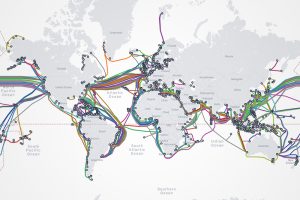
 

TeleGeography submarine cable map headline | Vox | Cyber Space? No, Cyber Oceans…
Image courtesy of https://www.submarinecablemap.com/


The cables are typically funded by the telecom industry, sovereign nations and technology companies such as Facebook and Google. So the reality is that the backbone of the planet’s Fibre cables are deep in the sea, quietly linking people and businesses to each other, all the time (except when something happens, but that’s a different story).

Thin Cables, Extraordinary Power

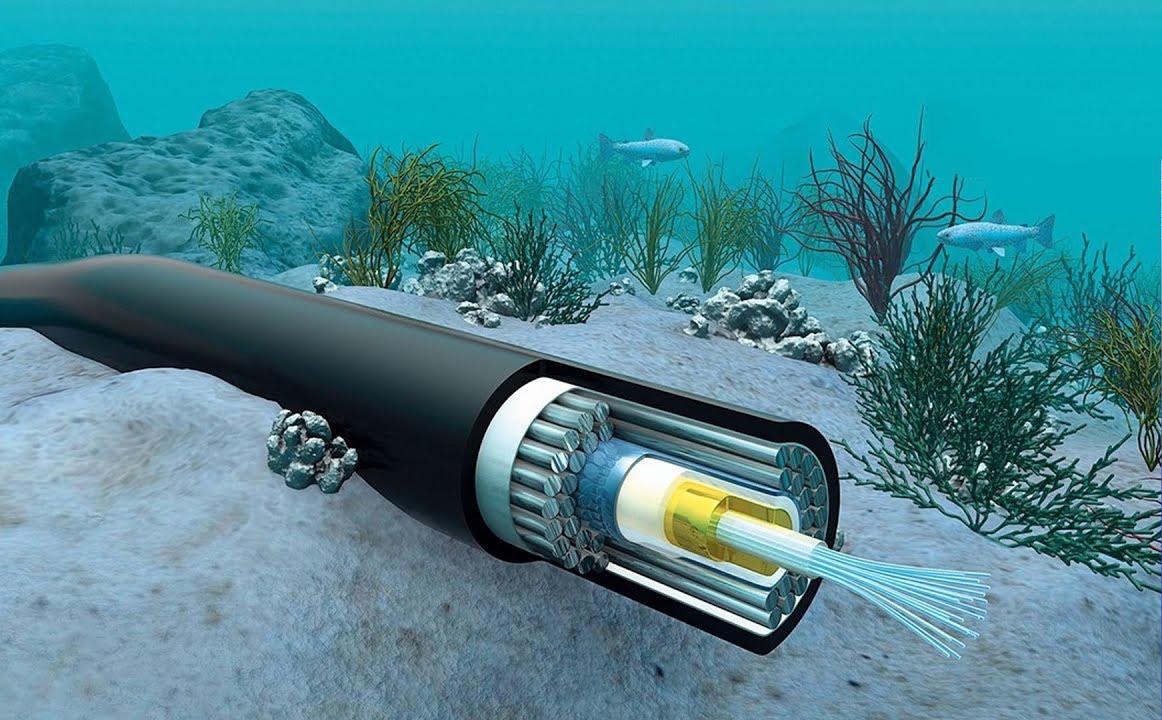
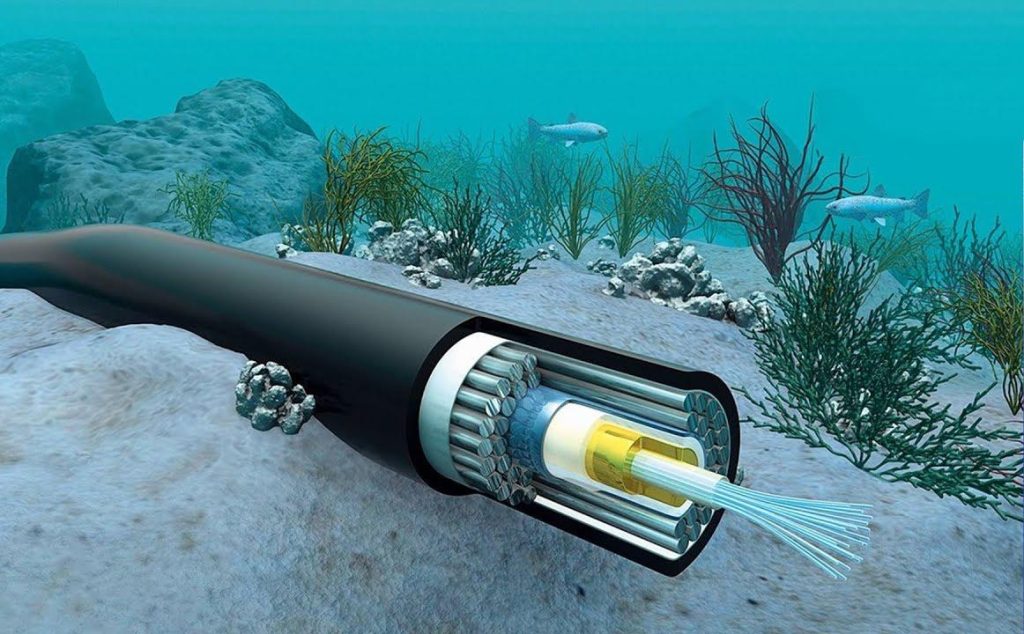
Fibre Optic cables transfer data across the world in the blink of an eye via light pulses, which travel through fragile wires just thicker than a needle. Fibre Optic cables are tiny tubes made of glass or plastic, which are in turn protected by multiple layers of hard materials like metal and rubber.
 

cabo submarino | Vox | Cyber Space? No, Cyber Oceans…


A single Fibre Optic can transmit 100 gigabits of data a second, with new cables able to transmit around 400 gigabytes per second. Thousands of Fibre Optics get bundled together and insulated, making one Fibre cable.

Subsea cables typically include a protective jelly around Fibre Optic cables and are also contained within multiple layers of plastic and copper wires. Under the water, ‘repeaters’ are connected at certain points. They amplify the signal and boost signal strength over long distances. The copper wires contained within the cable casing carry around 10 000 volts of electricity to power these repeaters.

The bottom line (pardon the pun) is that both within the sea and on land, the fine tubes that carry data packets at the speed of light need to be protected, which makes the cable overall – once properly wrapped up and protected – look much bigger than the thin part that actually does all the work.

 

underseacable | Vox | Cyber Space? No, Cyber Oceans…


From Sea to Land

When subsea cables under the world’s oceans reach the shore, they are then connected to landing stations, which are an essential part of the Fibre network infrastructure – they distribute the data carried on the networks, joining the submarine cables to terrestrial cables.

For example, there’s a landing station in Mtunzini in KwaZulu-Natal, where the SEACOM cable reaches South African shores. This cable connects the subsea cable directly to a data centre in Midrand, Johannesburg.

Once plugged into the landing stations on shore, the cables take on their overland mutation and are distributed by FNOs (Fibre network operators). The FNOs are responsible for deploying, managing and maintaining Fibre Optic networks – their role is the physical infrastructure, or, in short, running the cables under and next to roads and buildings.

Be Connected with Vox

As an Internet Service Provider (ISP), here at Vox we don’t physically lay the cables ourselves, but instead partner with a number of FNOs around the country to bring South Africans high-speed Fibre to the Home (FTTB) and Fibre to the Home (FTTH) offerings. Some of our local FNO partners include Openserve, Vumatel, Frogfoot, Metrofiber Networx and Octotel (you can find out more here).

An ISP – like Vox – provides Internet access to businesses or residential customers. An ISP’s role is to operate on top of the existing network infrastructure and manage services by offering different plans and packages based on speed and other features.

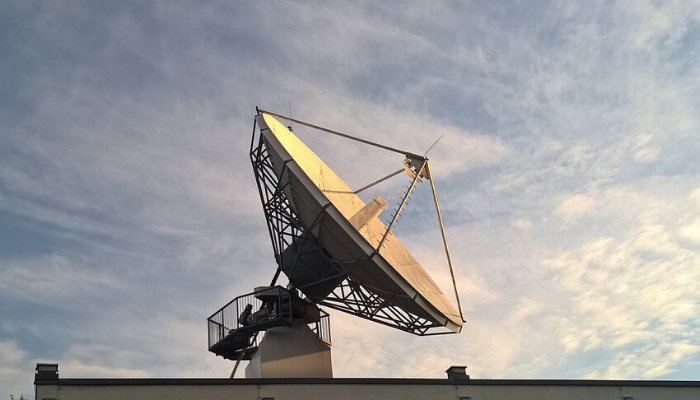
So next time someone talks about cyber ‘space’, you can point them in the right direction – that it’s mostly all about the ‘cyber oceans’. Except, of course, when it comes to a small section of Internet connectivity that’s powered by Satellite in outer space (just to talk about actual space here for a second).
 

Featured Image Content Hub Vox launches high speed uncapped data and voice satellite plans | Vox | Cyber Space? No, Cyber Oceans…


Satellite really comes into its own in regions where Fibre cables can’t be laid, perhaps because of rough terrain (like mountains) or because the area is just too remote. Vox also offers Satellite services – because as modern life becomes increasingly dependent on the Internet, reliable connectivity is more important than ever before.

Whether it’s for following the news, being connected for work, gaming, staying in touch with friends and family, or streaming shows and movies in your down-time, it’s great to live in today’s connected world. Whatever your needs, Vox will get you connected and keep you in the conversation.


Frequently Asked Questions

Q: What are subsea (submarine) cables and why do they matter?
Subsea cables are bundles of Fibre optic strands laid on the ocean floor that carry roughly 98% of international internet traffic. They form the global backbone that determines international speed, latency and reliability for streaming, gaming and global business traffic.

Q: Does Vox lay subsea cables?
No, Vox does not lay subsea cables. Instead, we partner with Fibre Network Operators (FNOs) and make use of landing‑station capacity so we can deliver international bandwidth into South Africa and on into local networks.

Q: How do subsea cables affect my home or business connection?
Subsea capacity affects international latency and throughput. Good access to landing stations and local distribution networks means smoother streaming, faster international downloads and better performance for cloud apps and gaming.

Q: How can I check if Vox Fibre is available at my address?
Plug in your home address on the Vox availability tool and select ‘Connect me’ to see whether Vox Fibre to the Home is offered at your location.

Q: What if Fibre isn’t available where I live?
Where Fibre is not yet available, for example in very remote or rugged areas, Vox offers Satellite services as an alternative to keep you connected.

Q: What support and contract options does Vox offer for business and residential Fibre?
Vox provides 24 / 7 / 365 support at no extra monthly cost and a range of contract terms to suit different needs. Business Fibre can include dedicated options, static IPs and VLANs; residential plans may offer zero upfront fees on qualifying 36‑month contracts. Contact Vox for package details and tailored service options.


From Sign to Surfing: How Vox Makes Your Home Internet Experience Hassle-Free

The internet is part of everyday life now and something that we access continually, whether it’s for online banking and shopping, working and studying, or gaming and entertainment options.

And the difference between having access to capped versus uncapped data can feel life-changing – not to mention that if you are constantly topping up your data, it can quickly become expensive. In comparison, Fibre to the Home (FTTH) provides lightning-fast, uncapped data – and the cost just might surprise you when you compare it to constantly having to buy data bundles.

Why not check out our Vox FTTH offerings and see how making the switch to uncapped data could change your life for the better?


What’s Your Story?

Almost everyone has had a bad experience with using uncapped data – so what’s yours?

Maybe you were working from home with an urgent deadline, but your Internet wasn’t up to the task and you missed the cut-off. (You also missed out on your next pay increase.)

Or perhaps your data ran out during a job interview? (Another potential salary increase that went whizzing by into the realm of ‘If Only’…)

What about that movie you were really looking forward to watching, but it stopped streaming halfway through? Or the times you were speaking to family members far away and the data-based call dropped, just when the catch-up was getting really enjoyable?

Maybe you were writing an online exam at home, but your data cut out and stopped you from submitting the paper. (You still passed, but that zero really brought down your grade average for the year.)

Kirill Makes Pics Pixabay despaired 2261021 1920 | Vox | From Sign to Surfing: How Vox Makes Your Home Internet Experience Hassle-Free

Running-out-of-data stories generally don’t end with a smile on the storyteller’s face – so maybe it’s time to ditch using a data package that needs constant topping up, and move over to the convenience and enjoyment of fast, uncapped data with Vox’s Fibre to the Home.


Problem, Solution: Enter Vox

If you’re still thinking: “Why Vox Fibre for your Home?” – well, Vox offers access to a home environment where super-fast Internet lets customers stream Netflix or YouTube without the annoying buffering. It allows you to connect multiple devices inside your home, simultaneously, on a single Fibre line. You can surf the Internet – for working, studying, gaming, shopping, socialising or simply being entertained – with no interruptions.

Long story short: Vox FTTH offerings bring you a home in which your Internet experience is reliable and fast (Eskom allowing, of course, and Vox has loadshedding solutions there too).

And not only does Vox FTTH bring you a fantastic Internet experience, it’s also pretty easy to sign up with us.


Easy Steps to Signing Up with Vox

Fibre Coverage?

The first step is checking that Fibre lines have been laid in the ground in your area. Go to the ‘Vox Shop’ to check out the useful coverage map. Simply put in your address – you can have a quick peak at the neighbours’ rooftops and surrounding vicinity if you enjoy cyber-sleuthing – to find out if Fibre to the Home is available in your area. The answer will come up very quickly.

Fibre Package

Next up is to choose a Fibre package option. Once you’ve matched the options to your needs, simply hit the ‘Send’ button and follow the instructions to input your details.

Quotation and RICA Time

Next, you will receive an emailed quote from one of our sales consultants. When you accept the quote, you’ll also need to send in your RICA documents.

  • A quick technical note: By law, you need to follow RICA procedures (the Regulation of Interception of Communications and Provision of Communication Related Information Act), which involves submitting certain documents, like your ID and proof of current address. RICA legislation was enacted to protect the security and privacy of South Africans.


Fibre Installation with the FNO

Once all your documents are processed, Vox will log a call with the relevant Fibre supplier associated with your chosen quotation package.

  • Another quick technical note: As an Internet Service Provider (ISP), Vox works with the Fibre Network Operators (FNOs) who own and operate the Fibre lines in the ground.


It’s a Date!

The relevant FNO will get in touch with you to bring a short Fibre line onto your property. Basically, the FNO’s job is to connect the Fibre outside in the street into your home, ultimately to be connected to your Vox Wi-Fi equipment.

The FNO will plan the route for the Fibre line and the location of the ONT inside your home, which you’ll be asked to accept and sign off.

  • Another quick technical note: The ONT is the Optical Network Terminal and is also commonly referred to as a ‘fibre box’. The ONT is what allows the fibre optic cable to be connected from inside your home, out through your property and to the fibre network at the street.


Once you have signed off the necessary paperwork for the Fibre line handover with the FNO company, it’s back to Vox.

Vox Wi-Fi Router

Vox will deliver your Wi-Fi router by courier. You’ll then set up the Wi-Fi router as per the self-installation instructions, which are simple and clear to understand. Welcome to an online experience that is easy, uncapped and FAST!


Come Home to Vox

Are you ready to make the life-changing move to uncapped data and super-fast internet?

With Vox, you will enjoy uncapped Wi-Fi, with unlimited surfing possibilities, an end to movies buffering, super-fast gaming and a working-from-home experience that, quite simply, works.

Just click here to find out more about signing up for FTTH with Vox.


Frequently Asked Questions

What is Vox Home Fibre and how does it differ from mobile data?

Vox Home Fibre is a fixed fibre connection to your house offering uncapped, high‑speed internet; unlike mobile data, Fibre provides consistent, symmetrical speeds and supports many devices simultaneously.

How do I check if Fibre is available at my home?

Use the Vox coverage map and enter your address. The tool will tell you immediately if Home Fibre is available in your area.

What documents do I need to sign up for Vox fibre?

You’ll need to submit RICA documents: a valid South African ID and proof of current address. RICA is a legal requirement for new internet connections.

What is an ONT and who installs it?

The ONT (Optical Network Terminal) is the fibre box installed by the Fibre Network Operator (FNO) to bring the fibre into your home. The FNO plans the route and hands over the ONT once installed.

Will Vox install my Wi‑Fi router?

Vox delivers your router by courier and provides simple self‑install instructions. Support is available if you prefer guided setup.

How long does installation take after I accept the quote?

Installation lead times vary by area and FNO schedules. After you accept the quote and submit RICA documents, Vox and the FNO will confirm an installation date.


Fibre to the Home: How Fast is Fast Enough?

Slow internet isn’t just annoying; it also costs time and productivity. Whether you’re joining an important Teams call, uploading large work files, streaming 4K video or gaming online, insufficient speed creates delays, buffering and poor call quality. Choosing the right Fibre to the Home plan reduces interruptions and keeps your household or small business running smoothly.


Nobody wants to look like a zombie in a bad freeze-frame moment.

So there you are: working from home, and one minute away from joining the most important conference call of the week.

Your outfit, hair and outward demeanour are all on point. You have great input to share when it’s your five minutes in the spotlight.

And then your Internet speed lets you down.

You are hit with the dreaded freeze-frame scenario in which your eyes are closed – but only halfway – giving you the dreaded Undead-Look-of-the-Day.

Never mind the hair and outfit: perhaps it’s time to upgrade your Internet speed.


When Good Internet Goes Bad

Slow internet can have clearly negative effects on people’s lives, including detrimental results on efficiency, communication, and access to information and opportunities. For example, slow internet can:

  • Reduce productivity: Slowing down work processes and making it harder to access and share information.
  • Have a negative effect on communication: Causing delays and disruptions in online conversations and video calls.
  • Limit access to online resources and opportunities: Certain websites and services may not load or function properly.
  • Affect your leisure time: Slowing down your streaming and gaming down-time.


From faster file downloads to interruption-free video and music streaming, you don’t have to be an IT expert to appreciate the benefits of high-speed internet service.

internet speed for gaming

How Fast is Fast Enough?

Your internet speed sets the framework for what you can do online, so it needs to be able to support your daily internet usage.

Ranging from less than 1 Mbps (very slow) to 5,000 Mbps (really fast), you can choose an internet plan to suit your needs. We recommend that a good download speed is at least 100 Mbps, while a good upload speed is at least 10 Mbps.

Let’s take a look at understanding the parameters of your internet speed in relation to your devices and usage.

  • Number of devices: If you have multiple devices (for example computers, smartphones, smart TVs, gaming consoles, etc.), you’ll want a higher speed to accommodate simultaneous usage without slowdowns.
  • Consider your specific needs: For basic web browsing, email and social media, a moderate speed should be fine. However, if you work from home and need to be online on platforms such as Teams, or else you enjoy streaming high-definition videos or participating in online gaming, you’ll benefit from faster speeds.
  • Upload versus download speed: Internet speeds are often quoted in terms of both download and upload speeds. The first number is the download speed and the second is the upload speed. If you frequently upload large files (such as videos or photos), prioritise a good upload speed.
  • Future proofing: As technology evolves and your own needs change, having a faster connection can prevent the need for upgrades later – so it’s wise to choose a speed that allows for future growth.


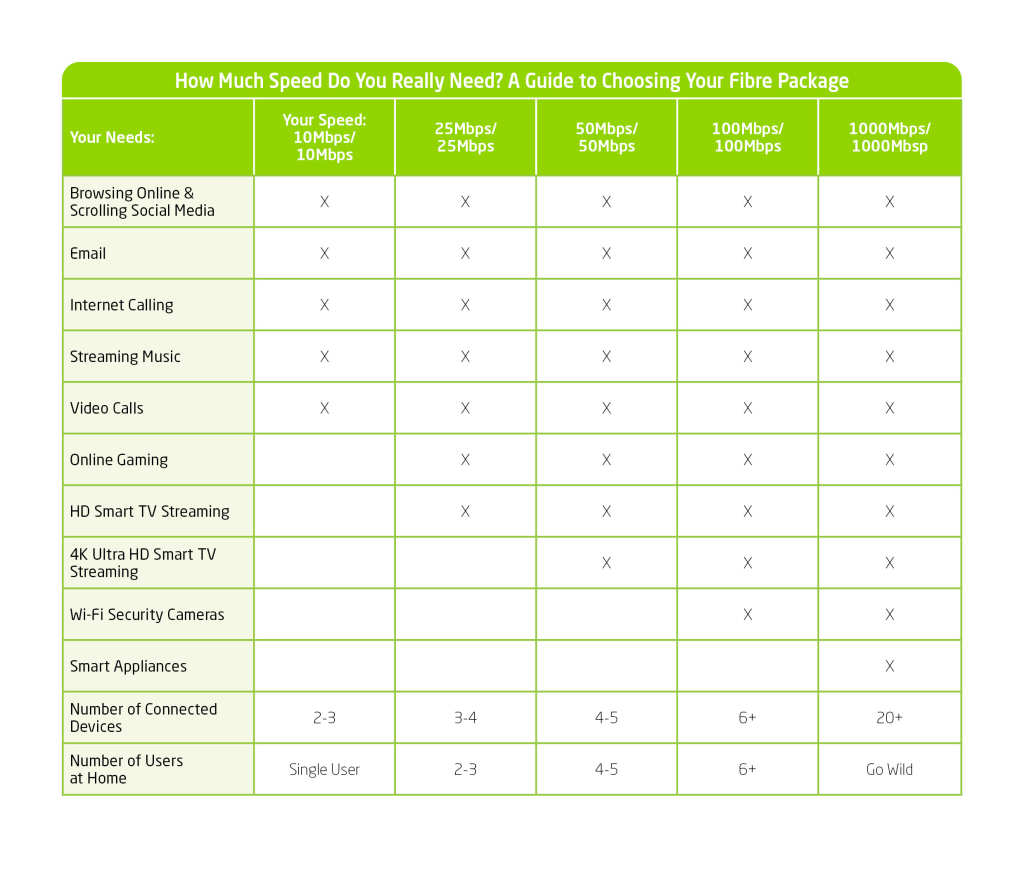
The table below shows how you can match your needs to your speeds, and you can check out some of our current offerings here.


What internet speed do I need

How About a Speed Test?

Higher internet speeds results in faster downloads and uploads – so you could notice that your internet searches are bringing up results faster, while your movie and audio downloads take just seconds.

On the flip side, if there are too many devices or users trying to use the internet connection at the same time, you’ll notice a lag, which is known as latency.

To conduct a speed test, you can:


For a more accurate speed test:

  • Connect a LAN cable directly from the router to your computer or laptop.
  • Perform the broadband test from the ONT/CPE to your device.


The bottom line: Why live with a situation in which slow internet causes tasks that should be quick and easy to become time-consuming and difficult?

At Vox, we have multiple solutions for your every speed requirement. We like to call it ‘The Vox Factor’.


FAQs

Q: What internet speed do I need for remote work and video calls?
For reliable remote work and multi‑participant video calls, aim for at least 100–200Mbps download with 10+ Mbps upload. If multiple people work from home simultaneously, choose higher tiers or symmetrical options.

Q Is 100Mbps enough for a typical family?
Yes, 100Mbps is a strong baseline for a family streaming HD video on several devices, browsing and video calling. Heavy 4K streaming or multiple simultaneous uploads may need higher speeds.

Q:What is symmetrical fibre and do I need it?
Symmetrical fibre provides the same upload and download speeds. It’s useful for content creators, frequent file uploaders, and businesses that require reliable two‑way performance.

Q How can I get the most accurate speed test results?
Use a wired connection from your ONT/CPE to a computer, close other apps and test at different times (peak and off‑peak). Use reliable tools like Speedtest.net or Nperf.

Q: What if fibre isn’t available at my address?
If Fibre to the Home isn’t yet available, Vox offers LTE and 5G, Wireless and Satellite options and works with FNO partners to expand coverage. Use the availability tool to see current options and timelines.

Q: Does a higher Mbps plan reduce latency?
Higher Mbps improves throughput but doesn’t always lower latency. Latency depends on network routing and congestion; however, better plans and lower contention ratios typically give a more responsive experience.

Q: How many devices can a 200Mbps plan support?
A 200Mbps plan comfortably supports multiple simultaneous 4K streams, several online gamers and multiple work‑from‑home users. Exact performance depends on device usage patterns.

Q: Are there cost‑effective ways to future‑proof my connection?
Choose slightly higher tiers than your current need, opt for symmetrical plans if you upload often, and check for bundle or contract options that include upgraded equipment and support.

On the Couch or in a Different Country: Unlocking the Future of Work

Companies can at last dip their toes into a truly global talent pool without necessarily having to ask a potential new employee to change cities or countries.


While the office premises will always be a feature of working life for most companies, it seems now that the future of work has arrived and is with us today. Work is no longer something that can only – or mostly – take place in a traditional office space.

Advancements in technology, combined with more flexible attitudes, mean that remote and hybrid work models are being offered by many more organisations today, giving employees greater independence and control over their work environments.

And as with most things in life, these new parameters bring their own sets of challenges and advantages.


On the Positive Side

Remote and hybrid work models allow organisations to tap into a significantly broader talent pool. When remote and / or hybrid arrangements are put on the table, companies can employ people who live a significant distance away from the office – even in another part of the country or the world.

This type of flexible employer/employee relationship was much scarcer in the past, and arguably even impossible for most companies.

So you want to employ an expert in their field who lives in the UK, or the UAE, or even Upington, but your head office is in Sandton? No problem – the time zones here are all similar, so it’s all Under Control. Remote working means it’s possible to hire in the person you really want to strengthen your team.

Looking at people in the US and Australia – Down Under – is of course a different story when it comes to time zones, but depending on the type of work required, tapping into a truly global office is no longer impossible – it just takes organisational skills and a flexible outlook.

Companies can at last dip their toes into a truly global talent pool without necessarily having to ask a potential new employee to change cities or countries.

From the employees’ perspective, they can avoid arduous daily commutes to and from work, and gain back more quality time for their personal lives, as well as working in a more flexible home space than occurs in your average office (the couch springs to mind).

And for the employer, once again, happy employees tend to be more productive employees who are more inclined to stay with a company that is more flexible – so this means less employee turnover.

There are many ways in which these positives feed into a virtuous cycle: employees who are happy because they have a flexible work arrangement tend to work harder and are more productive. This in turn pleases the employer, who is then more inclined to continue with flexible arrangements. On the surface, it seems like a great recipe for success.


Disadvantages to Remote or Hybrid Work

However, there are also challenges to contend with. Communication and collaboration can become more complex in remote and hybrid settings, especially when team members are scattered across different locations and time zones.

In addition, building and maintaining a solid company culture in a virtual environment can be difficult without regular face-to-face interaction.

It also needs to be noted that not everyone wants to work from home, at least all the time: some employees may struggle with feelings of isolation, which can actually lower their levels of engagement and productivity. Alternatively, there might be too many distractions at home preventing them from doing their best work (other people, a noisy environment outside the home, easy access to their favourite shows – there’s the couch again…).

In South Africa, of course, we also have regular load shedding to contend with, which can add in further permutations around working from home for employees – not everyone can afford a UPS to keep their devices switched on and connected when the power goes off.


Being Proactive

To thrive in this new reality, organisations are well-advised to prioritise their employees’ work experience. This has always been common sense for any company that wants to avoid a high staff turnover, but as the UK and the US found out after Covid during the ‘Great Resignation’ period, many employees got used to working from home, and then voted with their boots when they were given ultimatums to return to the office.

As noted in this online HR article: ‘The pandemic changed many people’s expectations of work – and many were prepared to quit if their employer wasn’t ready to meet those expectations.’

In South Africa, of course, we have different scenarios playing out, including the ever-present threat of load shedding as well as high unemployment rates, and so perhaps we didn’t experience the Great Resignation quite as much as in other parts of the globe. By and large, we could assume that the so-called Great Resignation in South Africa is ‘ring-fenced in the professional and specialist roles that are scarce skills in the market’.

But it still provides food for thought: namely, that keeping your employees happy – or at least showing that you are trying to listen to their concerns – can help to keep your staff numbers stable. This would involve trying to address the specific needs and preferences of remote and hybrid workers, while also ensuring that they feel valued and connected to the organisation’s mission and culture. A proactive approach to communication, performance assessment and technology is vital.

From a technology perspective, Vox can help with your connectivity and power requirements, through our vast range of solutions including fibre, voice, failover and UPS offerings.

As the future of work continues to evolve in the present, Long Live Working From The Couch.

At least sometimes.

Is Fast Fibre to the Home Still Relevant?

You’re back in the office: the daily commute is real again and working from home has mostly gone. So: is Fibre to the home still relevant in a non‑WFH world? The short answer is yes. Fast home fibre remains a smart household investment in South Africa, for security, entertainment, study, gaming and futureproofing, even when most people spend weekdays at the office.


So there you are, heading back to work in the morning traffic.

Life (perhaps via a Company Policy, or otherwise loadshedding?) has made the decision for you – working from home is over, and it’s now back to the office, like it or not.

Which is making you wonder whether you really need that fast Fibre to the Home (FTTH) now, after all.

As you dodge those special drivers who mistakenly believe that they own the road, your thoughts turn back to those pleasant days of WFH for almost everyone, when the main part of the daily commute to your desk involved just a short walk, and perhaps a change out of your night clothes (optional for some).

Then, of course, fast Fibre was as necessary for our collective well-being in the home as access to water and electricity. It was also – when boosted by an uninterruptible power supply (UPS) – arguably more reliable.

So this begs the question: if you’re back in the office for most or all of the working week, do you still need that amazing Fibre to the Home? Is fast FTTH still relevant in a non-WFH world?

After wading through the acronyms, the answer should surely be an emphatic ‘Yes, it is!’

Fibre to the Home


Why Fibre Comes First

As a company, Vox supports the upliftment of South Africans at both the Macro-Economic level as well as for individuals.

Economic growth depends on reliable and high-speed digital infrastructure – as a country, we need to work towards a digital future for everyone. Fibre lines use light, not electricity, to transfer data, offering significantly higher bandwidth speeds and capacity – the amount of information that your internet connection can handle at a given time – when compared to other internet solutions. (Short science lesson: this is because nothing yet discovered is as fast as the speed of light, which is quite literally what your data is being carried on.)

Currently, too many South Africans still have to rely on mobile data for their home internet communications, or even on copper-based ADSL lines. Neither of these internet options is steadily reliable, and they don’t offer the same high-speed connection as Fibre.

ADSL’s copper wires are unfortunately stolen regularly and, even when left undisturbed, have both a limited capacity and lifespan – not to mention that they are also susceptible to lightning strikes. Not unsurprisingly, and following in other global footsteps, ADSL is being phased out in South Africa and replaced with more modern technology wherever the opportunity arises.

Mobile data also does not offer South Africans the digital future we all deserve. With regular power outages and load-shedding, network towers can’t provide a stable connection. Fibre towers, on the other hand, often operate on solar energy, and users can back up their Fibre routers with UPS systems.

Despite all these advantages presented by Fibre, some people might feel that, if they are no longer working from home, they could downgrade their Fibre line speed to save some money. Below, we’ll unpack why you might want to think twice about this option.


Taking It Personally

Let’s look at how fast Fibre to the Home benefits you and your family members – even when you’re at work.
FTTH on your property is able to do the following:

  • Improve security: Beyond enabling a more digital-friendly lifestyle, Fibre contributes to good security such as channelling CCTV feeds through always-on internet access. Fibre-optic networks also offer improved security compared to traditional copper cable networks – they are difficult to tap into or intercept, making them a secure choice for transmitting sensitive data. (In comparison, copper cables are vulnerable to physical tampering, as they can be easily accessed and spliced into, leaving them open to data interception and manipulation.)
  • Provide entertainment: In the old days we would channel-hop. Today, the streaming options just keep on coming for those who like their entertainment in passive format. Stream shows and download movies faster, and enjoy your current-favourite shows with less buffering, or better yet none at all.
  • Gamers unite: Download and play games faster – gamers need the highest speed internet with minimal lag. Fibre has lower latency – the millisecond delay when data travels from your device to the game hosting server – and it should be low to prevent in-game lagging.
  • Facilitate studies: You might be at work in the afternoons again, but the chances are that your children will be at home (at least the older ones). Being able to use the internet for their homework and to research projects is critical. Give them the benefit of proper Fibre speeds and enable them to finish their projects faster and better, whether they’re at school or tertiary level. It’s all about enabling their future.
  • Futureproofing your home: And speaking of the future – connecting your home to high-speed Fibre will ensure your household’s digital activities can continue at future speeds without replacing the cabling in a few years’ time, because a Fibre network, once installed, does not require an imminent future change. Because the fibre-optic cabling infrastructure has unlimited bandwidth and can cover long distances, it will be able to handle future technological inventions. (Some of them, actually, like smart fridges, smart sensors and other appliances connected to the Internet of Things (IoT) are already here – but that’s a different story.)


home fibre for gamers


Why downgrading can cost you more

If you’re considering a cheaper, slower package because you no longer work from home, consider the hidden costs: slower downloads, more buffering, weaker CCTV feeds, and less headroom for multiple devices.

A small upgrade in monthly spend can deliver a markedly better experience and protect the value of smart devices and services you use at home.


Going Home

Fibre to the Home

So, there you are. The working day is over and you’re back in traffic, now on the evening run and driving home.

You have the satisfaction of knowing that your house – and most importantly, your family – is secured by a good security system channelled by CCTV feeds.

Your older kids are busy with their educational projects before putting away their homework and enjoying some well-deserved YouTube or gaming moments.

And for the adults, there is the latest streaming programme to look forward to as you prepare to wind down the day.

Before that, you might do a spot of quick banking, messaging or online shopping using your phone apps – with the emphasis being on quick, because it’s all enabled by super-fast Fibre to the Home.

And it makes your home just that bit more comfortable – and secure – all round than if you’d decided to downgrade to a slower Fibre package.

So yes. In a non-WFH world, super-fast FTTH is definitely still relevant.

Learn more about Vox Fibre to the Home options and find the right package for your household. Explore Vox Fibre packages at vox.co.za or Call 087 805 5050 to speak to an advisor.


Frequently Asked Questions

Do I still need fast Home Fibre if I don’t work from home?
Yes. Fast Home Fibre supports home security, streaming, gaming and multiple devices, which are benefits that remain even if you’re primarily office‑based.

How does Fibre compare to ADSL or mobile data?
Fibre offers higher speeds, lower latency and better stability than ADSL or mobile data. ADSL is being phased out and mobile can be affected by load‑shedding and tower congestion.

Will Fibre keep working during load‑shedding?
Fibre itself is resilient; many users back up their home router with a UPS. This keeps internet and home security systems running during power outages.

Is Fibre worth it for gamers?
Definitely. Fast Home Fibre lowers latency and provides consistent speeds needed for online gaming and quick downloads.

Can Fibre improve home security?
Yes. Constant high‑speed connectivity makes CCTV feeds and smart‑home alerts more reliable and secure compared with copper or mobile solutions.

If I downgrade my Fibre package, what could I lose?
You may experience slower downloads, more buffering, longer game update times and reduced performance when multiple devices are online simultaneously.

How do I sign up for Vox Fibre?
Visit vox.co.za to view available Home Fibre packages or Call 087 805 5050 to speak to a Vox advisor.

Does fibre futureproof my home?
Yes. Fibre cabling supports high capacities and new technologies, so it’s a long‑term solution for growing household connectivity needs.