Business Continuity usually plans on disasters, but doesn’t take into account Fibre failures.
By now, we’ve established that Fibre is the backbone of a successful business operation. It’s gone beyond being a utility. Today, everything from customer service to sales, inventory, payment and comms depends on reliable high-speed Connectivity. When your Internet drops, it’s no longer just slower emails and postponed Teams calls – organisations are seeing a marked, immediate impact on their bottom line.
Today, we break down why poor connectivity has transcended the boundaries of being an IT Issue to become a major strategic risk.
Time = Money Every minute without Connectivity costs money. Whether lost retail sales or Cloud disconnection in offices, even a short outage can mean: • Delayed logistics • Customers looking elsewhere • Reputational damage
Stuttering Internet is no longer just a minor delay – it’s bleeding money, and revenue exiting the building.
Productivity? Out the Window Inability to connect to the Internet doesn’t just slow things down – it stops it entirely. Consider, for example, a team dependent on Cloud Apps or CRM. When the Fibre drops, users can’t access their base platforms, files refuse to sync, and all collaboration comes to a screeching halt. You can’t recover lost time. Worse, employees lose valuable working hours trying to troubleshoot or operate manual workarounds.
You can’t refund bad Customer Experiences Any customer expects reasonable reliability, quality, and speed. Whether support chats, check-outs, or filling in a digital form, a single bump in the road can lead to frustration or even a lost sale. Exceptional user experience is a differentiator in saturated markets; you can’t afford to risk your reputation or the resultant damage caused.
Fact is, reviews matter, and they’re often public without option to delete.
Brands today can’t gamble with their reputation, and Connectivity issues are often the first to get very publicly called out. In the age of Social Media Complaints and negative online feedback, customers don’t take kindly to unresponsive organisations, and they’ll let you hear about it.
A disconnected brand is a vulnerable one In times of weakness, companies get desperate, often resorting to otherwise risky workarounds in an attempt to “make a plan”. These include using unsecured mobile hotspots, bypassing conventional firewalls, and overlooking VPN connections. These quick fixes can open up doors for exploitation. Data breaches, ransomware or even the most basic hack cost significantly more than just forking out for proper Fibre.
Business Continuity usually plans on disasters but doesn’t take into account Fibre failures.
The harsh reality is that Poor Connectivity is not just an IT problem, it’s a serious business risk; a business risk which literally impacts efficiency, trust, security, and ultimately revenue. And, in a world where optimised performance is crucial to remain competitive, investing in Fibre that works means investing in far more.
Downtime compounds faster than you think Connectivity interruptions rarely happen in isolation. A dropped connection during a critical moment can create a ripple effect across an organisation. Orders pause, customer queries stack up, internal approvals stall, and scheduled processes fail to run. What begins as a few minutes of downtime can translate into hours of operational disruption as teams work to recover lost progress and stabilise systems.
Modern businesses rely on constant data flow between platforms, partners, and customers. When that flow is interrupted, everything slows down or stops entirely. The longer recovery takes, the more pressure builds internally and externally. Reliable Fibre therefore isn’t just about speed; it’s about operational stability and keeping the business engine running without interruption.
Failure to Connect = Failure to Evolve. Just ask any of the brands that learned their lesson the hard way.
…with Cybersecurity Measures and Real-time Backups
Remember the Transnet cyberattacks of July 2021? They brought huge parts of the country’s supply chains to a standstill for weeks and were a grim reminder of the damage that a cybersecurity breach can cause, not only to a company, but to a country itself. The fact that such a level of disruption can take place at a national level is a stark reminder of how critically important cybersecurity is today, for larger and smaller businesses alike.
Transnet – the nation’s ports, rail and pipelines operator – became a victim of a huge ransomware attack on 22 July 2021, which took offline its IT system, several of its websites and its vital container terminal operating system. Trucks backed up outside Durban harbour on land while ships did the same at sea, as turnaround times to collect or offload containers turned from hours into days because of the manual processes that had to be implemented.
Finally, four days later on 26 July, the company was forced to throw in the towel, and Transnet Port Terminals sent a letter declaring ‘force majeure’ – because of ‘an act of cyberattack, security intrusion and sabotage’ – at several key container terminals, including the Ports of Durban, Ngqura, Port Elizabeth and Cape Town. Under international law, force majeure refers to an irresistible force or unforeseen event beyond the control of a state, making it materially impossible to fulfil an international obligation.
Ships at the Port of Durban
For South African businesses and the country itself, this was a further disaster for the economy, coming on the back of the COVID-19 global pandemic in 2020 and the wave of civil unrest that had taken place in KwaZulu-Natal and Gauteng earlier that month.
We take a closer look at the importance of implementing cybersecurity measures, including real-time back-ups, to help organisations keep their operations running during major disruptions.
Like the Boy Scouts Always Said: ‘Be Prepared!’
Whether it’s a cyberattack, natural disaster, system failure or even human error, organisations must always be prepared to respond and recover, fast. A business that isn’t prepared will risk prolonged downtime, financial losses and reputational damage – all of which happened in the Transnet cyberattack
Cybersecurity measures will help to protect against attacks before they can happen, using immutable backups as well as secure vaults to recover from ransomware. Real-time backups and replication use technologies to ensure minimal data loss.
The benefits of enhanced business resilience include minimising downtime and thus preventing financial losses; protecting your business’s reputation, which helps to maintain customer confidence and ensure future customers; and meeting regulatory compliance requirements, both legal and industry-specific.
Unexpected disruptions can bring businesses to a standstill at any time, with no warning. While global pandemics and civil unrest obviously remain out of the control of business, implementing effective cybersecurity measures, including real-time backups, can keep businesses of all sizes still running during major disruptions.
Organisations that fail to implement these measures face severe risks. We just have to think back to late July 2021 to be reminded of the importance being able to keep operations running during cyberattacks – for businesses of all sizes. ‘Too big to fail’ is not an effective security strategy.
Vox offers cybersecurity solutions to assist our business clients in protecting their systems and processes, and their data – click here to find out more about our offerings.
Frequently Asked Questions
What are real‑time backups and how do they keep operations running during a cyberattack?
Real‑time backups capture and replicate data continuously or at very short intervals so the most recent data is available for recovery. During a cyberattack—especially ransomware—real‑time backups reduce data loss and speed up recovery, helping operations resume faster. For managed real‑time replication, speak to Vox about our Real‑time Backup & Replication solutions.
How do immutable backups protect against ransomware?
Immutable backups are write‑once, read‑many copies that cannot be altered or deleted by attackers, ensuring a clean copy of your data is always available for restoration. Pairing immutable backups with secure vaulting is a best practice for resilient ransomware recovery—Vox’s Immutable Backup Vaults can be configured to meet regulatory and business requirements.
Are backups alone enough to ensure business continuity?
Backups are essential but not sufficient alone. Effective business continuity combines preventive cybersecurity measures (patching, endpoint protection, network security), incident response plans, and tested disaster recovery procedures alongside backups.
Are real‑time backups suitable for small and medium enterprises in South Africa? Yes. SMEs benefit from real‑time replication and managed backup services because they minimise data loss and avoid prolonged downtime without the need for large in‑house teams. Vox offers scalable backup and managed security services tailored to SME budgets and compliance needs.
What is a secure vault and why is it important for backup strategy?
A secure vault is an isolated, protected storage location, often with immutability and strict access controls, designed to keep backup copies safe from unauthorised changes or deletions. Secure vaulting prevents attackers from destroying backups as part of an attack; Vox’s Secure Backup Vault solutions provide controlled retention and strong access policies.
We’re firm believers that peace of mind is underrated. Especially household peace.
We also believe that few things destroy household peace faster than “broken” Wi-Fi. Yeah, forget politics, burned braai meat, and turns on the Xbox; buffering is this seasons Dr Doom.
On your average day: one kid is on YouTube, the other playing Fortnite, Mom is on a video call and Dad trying to responsibly watch Man United in 4K. Suddenly, everything freezes. Fingers are pointed, voices raised, sanity does a runner – welcome to the Wi-Fi wars.
Let’s fix it.
Understanding the Battlefield.
Most home Wi-Fi isn’t “slow” – it’s just more overwhelmed than a McDonald’s Ice Cream Machine. Today’s modern home is equivalent to a 2009 tech startup, with each containing multiple smartphones, Smart TV’s, laptops, tablets, consoles, cameras, a PC in a corner and that mysterious device nobody can explain.
Each one is simultaneously fighting for bandwidth, and if your line can’t multitask (it happens to the best of us), the whole house is destined to suffer.
So, herewith Rule One:
You can’t use entry-level speeds for heavy duty Wi-Fi use.
Be honest about your usage. If you’re simultaneously streaming Netflix, updating your PS5, Teams calling and downloading from the Cloud, you need serious bandwidth.
Even lightning-fast Fibre is only as quick as the Router (and its positioning). If you’ve placed yours inside the spare microwave in the garage cupboard, congratulations – you’ve played yourself.
Remember the days when we’d have entire computer stations in the house, complete with external speakers and cd racks? They sat there like modern day shrines to Connectivity – and their modern descendants have similarly royal aspirations. Wi-Fi needs optimal working conditions to perform better; so think open space, central positioning, and elevation. If your signal dies only in specific rooms of the house, you don’t need to invent cuss words, you may just need a better router setup (or to invest in mesh).
Many users are surprised when their Wi-Fi doesn’t magically bend around walls. Go figure.
Fact is, everything from concrete to an innocuous appliance can be a signal killer. If you’re living in a mansion, or even a double story place, you should always consider:
You see, fast internet isn’t about bragging rights and feeling better than the neighbour. It’s about eliminating buffering wheels, frozen faces on work calls, and PC’s going on vacation when you’ve just had enough and need to clock out.
Sometimes you’re not buying Internet. You’re choosing peace. And, like we said, peace is underrated.
After that? It’s just a series of small stuff, with a lot of mindfulness. Routers, placement, extenders, prioritising traffic and ensuring that the next door neighbour isn’t secretly downloading series are all key fundamentals to making your own Home Wi-Fi run smoother. In short form? All it takes is a bit of research, investing in the correct equipment, and taking the time to understand what makes a conducive environment for better browsing and you’re good to go.
Let’s wrap it up…
The War of the Wi-Fi doesn’t start because of unreasonable families. It starts because your Internet was designed to fail from the offset.
Upgrade your speed.
Optimise your setup.
Say goodbye to buffering.
And let everyone work, play, stream, or anything in between in harmony.
Switching back into work mode, after weeks of not looking at computer screens or checking messages regularly, is usually tough for most people. So be kind to yourself – with Vox as your partner – as you continue making the transition into 2026.
SA’s energy has shifted from sun-and-fun mode into normal gear again – otherwise known as ‘The Great Back-to-Work Depression’! As holidaymakers everywhere started going home, and the road and air traffic got moving in earnest, there was a sense of new beginnings but also some simultaneous low morale.
And with the December bonuses long spent, ‘Janu-worry’ (and now even ‘Febru-worry!‘) became a reality for most of us; a bit like the Springbok Bomb Squad sent in to take charge of the game: basically unstoppable, oh dear… The good news is that there are still practical ways that we can all use to regain focus and build positive momentum in these early weeks of 2026.
And so, whether you’re turning on your digital screens or closing them again at the end of the day, Vox is here to help you make the most of this still-new year.
Staying Mentally Balanced as You Re-Embrace Work
Here are some ways to embrace normality and make life easier for yourself once more.
Hint: None of it is really rocket science, but common sense is all about being like the Nike ads and just doing it!
Prepare in advance: Whether you’re working remotely or going into the office physically, it’s always useful to organise your calendar, plan meals or your work outfit, and make sure you get enough sleep.
Organise your workspace: Especially when you’re returning to your tasks and responsibilities, a clean, structured environment – both physical and digital – can calm your mind and boost your productivity.
Block out time: Try to stop your days from being swallowed up by too many meetings by ensuring that you have some time set aside to do or plan important tasks.
Decide what truly matters: Not every email will require immediate action, so you could create a priority list to take control of your workload. Ask yourself: right now is it truly urgent, or less important? This useful method, which uses the Urgent vs Important matrix methodology, might help you decide how to prioritise getting stuff done.
Ensuring Your Connectivity
So much for your mental strategies – let’s take a look at the practical side of today’s technology, which means being connected wherever you are.
Your urban home connectivity is always sorted with Vox, whether you choose Fibre to the Home, LTE/5G offerings, or Fixed Wireless solutions. And at any given moment, we’re sure to be running a great special to sweeten the deal further. Oh, and have you heard about Vox Rewards for our Fibre to the Home customers? It’s pretty unique in the South African ISP landscape, so check it out here!
With Vox, whichever technology works for your area, your connectivity is covered: for the beginning of your working day when you need to work remotely, and at the end of it, when you and your family embrace some down-time for streaming entertainment, gaming, online shopping and so on.
So why not ease yourself into 2026 gently with Vox as your partner, for your back-to-work hours as well as your down time?
May your early 2026 moments be as smooth as the natural Greek yoghurt that’s currently still a big part of your eating plan – and good luck with that too!
‘The new year stands before us, like a chapter in a book, waiting to be written.’ – Melody Beattie, self-help author
FAQs
How can I ease back to work after the holidays? Prepare the evening before, organise your workspace, block focused time, and prioritise tasks using an Urgent vs Important method.
Which Vox product is best for working from home? Fibre to the Home is ideal for consistent upload/download speeds; LTE/5G offers mobility and Fixed Wireless helps where fibre isn’t available.
Will Vox’s Fibre to the Home handle video conferencing and cloud apps? Yes, Vox Fibre offers symmetrical speeds and low contention suitable for video calls, cloud storage and collaboration tools.
Are there backup options if my home fibre goes down? Vox offers alternative connectivity options like LTE/5G and Fixed Wireless to keep you connected when needed.
What is Vox Rewards and who qualifies? Vox Rewards is a loyalty programme for qualifying Vox Fibre to the Home customers offering exclusive perks.
How can I contact Vox for help choosing a plan? Visit vox.co.za or Contact Vox Support for personalised advice and plan comparisons.
By Andre Eksteen, Senior Product Manager – FTTB at Vox
While niche internet service providers (ISPs) play a crucial role in bringing connectivity to underserved areas, they are often held back by the huge capital investment requirements. In response, Vox, one of South Africa’s leading internet and communications companies, has launched a partner programme that allows ISPs to benefit from our extensive network infrastructure, peering agreements, technical expertise, and more – while they can focus on delivering exceptional service to their customers.
These ISPs deliver reliable broadband and voice services in areas that larger providers often overlook. However, they lack the economies of scale, sizable infrastructure investments, and long-standing vendor relationships with vendors – challenges that create high barriers to entry for newcomers and mid-tier players alike.
ISPs have to source high quality network equipment as well as Business Support Systems (BSS) and Operations Support Systems (OSS) at competitive prices, and build a skilled technical team to manage complex networks.
They also have to deal with high interconnect costs, and negotiate peering and caching agreements with technology majors such as Apple, Google, Microsoft and Netflix; some of these ecosystem partners demand minimum capacity thresholds, making it economically unviable for ISPs not serving large customer bases.
These ISPs face significant hurdles in winning deals. Coverage gaps, limited network availability, and restricted access to premium networks put them at a disadvantage. On top of that, customers now expect a complete solution: multiple access technologies like fibre, wireless, and satellite, integrated with voice and PBX functionality, and delivered with speed.
Meeting these demands is not just challenging, it’s often impossible for niche players, which is why competing, let alone thriving, in this market remains such a struggle.
Expand without the heavy lifting
In an effort to address these challenges, Vox’s new Partner Programme will allow ISPs to leverage the company’s extensive experience in building and managing network infrastructure, delivering broadband and voice services to hundreds of thousands of customers countrywide; and technical and commercial partnerships with a wide array of access providers.
The Partner Programme provides the following benefits to small and mid-sized ISPs:
Seamless integration with flexible topologies: In order to ensure minimum disruption, Vox adapts to the ISPs setup, allowing them to choose from a range of options through which to connect their network, including point-to-point, ring or mesh configurations.
Premium infrastructure and expertise: ISPs gain cost-effective access to carrier-grade routers, switches, and skilled technicians – all without having to overpay for scale that they don’t need, and leaving the service provider with the task of customer acquisition and service excellence.
Ecosystem partnerships: ISPs can leverage Vox’s commercial agreements to get unmatched coverage across 10 fibre-to-the-business (FTTB) networks, 18 fibre-to-the-home (FTTH) networks, and 6 wireless-to-the-business (WTTB) networks. They can also bypass daunting minimum requirements and secure peering and caching with global leaders such as Google and Netflix at volumes that make sense for a connectivity provider of their size.
Tailored services: Modular and scalable offerings, from wholesale bandwidth to advanced voice solutions and beyond, mean that Vox gives ISPs the flexibility to grow at their own pace, while providing customers with low-latency, high-uptime performance.
Our new partner programme is tailored specifically for emerging and mid-sized ISPs that are ready to expand without the heavy lifting. The high fixed costs, building and maintaining complex networks, upstream relationships, and more are taken care of, leaving ISPs to focus on their unique selling proposition. This is not just about scale, but about enabling smart, sustainable growth that ISPs can tap into.
Become a Vox Partner and unlock new opportunities. ISPs need an ECS Licence, billing and network management systems, Teraco presence, CPE installation capability, and first-line support. For national and international core network capacity, use your own infrastructure or leverage Vox’s world-class backbone to deliver exceptional service.
It’s a partner offering that allows small and mid-sized ISPs to use Vox’s network, peering agreements, equipment and operational expertise to scale services without needing large capital investments.
Who is eligible to join the programme?
Emerging and mid-sized ISPs in South Africa with basic operational capabilities (ECS licence, billing and network management systems, CPE installation and first-line support) are the intended participants.
Can I use my own core network or must I use Vox’s backbone?
You can use your own national/international core capacity or opt to leverage Vox’s world-class backbone; the programme supports both models.
How does Vox help with peering and caching with platforms like Google and Netflix?
Vox’s commercial agreements and peering relationships allow partner ISPs to access caching and peering at volumes that make sense for smaller providers, removing minimum-capacity barriers.
What services can partners resell or access?
Modular options include wholesale bandwidth, advanced voice/PBX solutions, routing and switching, and multi-access topologies (FTTB, FTTH, WTTB).
Will I need to change my existing topology to join?
No, Vox adapts to your setup and supports point-to-point, ring or mesh connections to minimise disruption.
Are there pricing or contract minimums?
Commercial terms vary by partner needs and service selection. Speak to Vox for a tailored quote and contract options aligned to your growth strategy.
Staying connected as end-of-year down-time arrives
Our summer stories are starting to happen and the end of the year is really here! But even when we’ve packed our suitcases and made sure the pets are taken care of while we move into down-time, we still want (and need) to stay connected this holiday season.
Summer in South Africa means more streaming, online shopping and banking, video calls with family and online gaming – so choosing the right home Internet, and being aware of Internet options offered by your holiday location, can have an impact on your festive connectivity.
The good news is that, just as we all want a variety of ice cream options at the beach, so Vox has a connectivity option – and speed – to suit every home this holiday season. And in the spirit of the holiday season, we’re running some current and ongoing promotions to sweeten the deal even further.
Vox offers a mix of Fibre, Fixed Wireless, LTE/5G and Satellite options, with each option suited to different needs. So here’s a guide to help you pick the best option for your home, do your research on your holiday Connectivity options, and also make the most of current Vox promotions.
Let’s take a look.
Fibre To the Home: Best for Top Speed and Reliability
Fibre to the Home delivers high-speed, low-latency Internet directly into your home (or holiday home).
Benefits include very fast symmetrical speeds, which is excellent for 4K streaming, multiple devices and video calls. Uncapped options are available and performance is consistent.
It’s ideal for large households, heavy streamers, gamers, households with multiple remote workers (if you must work during the holidays! or when the holiday season is over…).
Availability depends on Fibre rollout in your neighbourhood. Installation may take time in new areas.
Current promotions linked to Vox Fibre to the Home include Vox Rewards and Fibre Frenzy!
Vox Rewards is our super-exciting, recently-launched loyalty programme for qualifying Vox customers, offering perks and rewards for staying connected with Vox through home fibre connections. Depending on the tier that you qualify for, you could enjoy a variety of discounts and savings on groceries, fashion, takeaways, tech, travel and more! See vox.co.za/vox-rewards for eligibility and benefits.
Fibre Frenzy is a limited-time campaign on Vox’s Home Fibre packages so do check vox.co.za for current Fibre Frenzy deals and exact terms – you can also click on this link for more information.
LTE / 5G Mobile Broadband: Flexible and Quick to Set Up
LTE / 5G uses mobile networks (LTE or 5G) to deliver Internet to a home router or portable device.
Benefits include fast setup and mobile flexibility. This option is suitable for temporary needs or where Fibre isn’t available yet. 5G can offer very high speeds in covered areas.
It’s ideal for urban areas with strong 4G/5G coverage as well as short-term stays and holiday homes.
Speed and latency depend on mobile network coverage and local congestion; fairness policies may apply depending on the package.
Vox and Telkom are currently running our Uncapped LTE promotion, starting from R589 per month, and including a pocket router as a R199 once-off – check it out.
Fixed Wireless (Licensed or Unlicensed Spectrum): Dependable Rural and Suburban Option
Fixed Wireless using microwave signals provides a point-to-point or point-to-multipoint radio link between a home-mounted antenna and a local tower. Its benefits include good speeds and stable connections where Fibre isn’t laid, but line-of-sight to a tower exists. It is often faster and provides a lower latency than Satellite.
It’s ideal for suburbs, small towns and rural areas with a Vox radio site nearby.
Fixed Wireless requires a professional site survey and performance depends on line-of-sight availability and network capacity.
Satellite: Providing Coverage where Nothing Else Reaches
Internet delivered via Satellite dishes is ideal for remote or rural properties beyond terrestrial networks. Its benefits include coverage that is available almost anywhere, making it perfect for some coastal areas, farms and remote homes, including holiday rentals.
It’s ideal for houses outside Fibre and mobile coverage areas, where connectivity is otherwise unavailable.
Higher latency means that it’s not ideal for competitive gaming. In addition, weather can affect reliability, and costs/data policies may be higher than terrestrial options.
A few factors should be considered as you think about your Connectivity options for the holiday season and even next year, if you want to take advantage of our Vox Rewards programme.
If you stream 4K, game and have many users, Fibre is your best bet.
If you need a quick setup or a temporary solution, LTE/5G works well.
If you’re in a small town or on the fringe of Fibre rollout, Fixed Wireless often gives the best compromise of speed and reliability.
If you’re remote and need coverage regardless of location, Satellite is the reliable fallback.
Practical Tips Before You Switch
Vox usually runs localised or seasonal promotions (discounted installation, bonus data or limited-time bundle savings). Check the Vox website regularly, including the promotions pages, for the most up-to-date specials and Ts and Cs. Here are some tips:
Check coverage: Use the coverage tool on vox.co.za to see what’s available at your address.
Match package to use requirements: Choose speeds that suit your household’s peak usage.
Ask about promos: Promotions can change monthly, so ask a Vox consultant about current offers and how long they run, and you can also check here.
Check coverage and current Fibre Frenzy or Vox Rewards offers at vox.co.za or on the latest deals page, or call Vox Consumer Support on 087 805 0530 for a personalised recommendation.
South Africans work hard and they play hard also, and never more than during our end-of-year summer holiday season! Stay connected with Vox – we have a solution for your location and your needs, no matter what time of year it is.
You always have choices – and sweet deals! – with Vox!
FAQs
Which Vox option is best for streaming and gaming during the holidays?
Fibre is best for low-latency, high-speed needs like 4K streaming and gaming. If Fibre isn’t available, 5G or fixed Wireless are the next-best options.
What is Vox Rewards and how do I join?
Vox Rewards is a loyalty programme for qualifying customers. Visit vox.co.za/vox-rewards to see eligibility and benefits.
What is Fibre Frenzy?
Fibre Frenzy is Vox’s limited-time promotion on selected Fibre packages. Check the Vox website for exact bundles and promotional periods.
How do I know if Fibre is available at my home?
Use the coverage checker on vox.co.za or contact Vox support to confirm availability for your address.
Is Satellite Internet good for a holiday home?
Yes, Satellite brings connectivity to remote holiday homes, though latency and weather impact should be considered.
Can I use LTE/5G as a permanent home solution?
Yes, in areas with strong coverage LTE/5G can be a permanent solution, especially where Fibre isn’t available, but check data fairness policies.
How long does installation take for Fibre or fixed Wireless?
Installation times vary by location and demand — ask Vox for a projected install date when you sign up.
Can I switch between Vox services if I move or change needs?
Yes. Vox offers different home connectivity products and can advise on switching based on coverage and your new address.
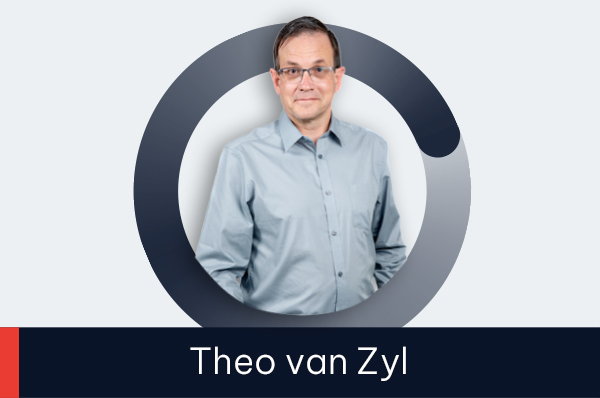
At Vox, we value, support and actively engage people with the levels of expertise that we require to keep us moving forward as a company. In this edition of ‘Meet our Experts’, we find out more about Theo van Zyl, who heads up the Wireless Department. Theo reflects on a lifelong relationship with communications technology, his journey into product leadership and his ambitions for extending connectivity across South Africa.
“The thing was called ‘fire’, and it was brought back to the cave by Og the inventor, who said he found it eating a tree. You had to keep it in a little cage of stones, he said.” ~ From ‘How It All Began…’ by Terry Pratchett
Question: What do Theo van Zyl, Head of Wireless at Vox, and Og the Inventor, also known as ‘the first caveman to cultivate fire’ and brought to us by author Terry Pratchett, both have in common?
Answer: They are both obsessed with the latest technology of the day, and how it can be used to help people and improve their lives.
People have been fascinated by the technology of the day for as long as we’ve been human, and for Theo, a life-long and highly practical love of technology began when he was still a child. Today, as Vox’s Head of Wireless, he is focused on building nimble teams and customer-first products, as well as bringing affordable connectivity to South Africa’s citizens, no matter where they are in the country.
We speak to Theo and find out more about how technology is front and centre in his life, both at work and at home, on a daily basis.
Telecomms in His Veins
Theo was still in primary school when his passion for electronics and communication began, and he describes fixing radios and building circuits as a child.
“My interest started with the ‘How and Why’ book range, especially electronics,” he explains. “As a child, I built electronic projects that did actually work, and I was always dismantling electronic equipment to understand the underlying processes. As a teenager, I made pocket money by repairing and building electronic circuit boards.”
That early curiosity matured into technical depth across analogue telephony, telex, data modems and later fibre, LTE and satellite. He also studied e‑commerce at Unisa and was involved in early online billing and payment gateway projects. His breadth of experience shows through in his product approach: he is comfortable with legacy systems and keen on combining them with modern ideas.
A Multi-Disciplinary and Empowering Team Leader
With more than three decades’ experience, including some 15 years heading up another ISP, Theo is a veteran of the telecommunications industry.
He explains: “From running around fixing analogue data copper line services, I have also spent time as a lecturer in data communications, mathematics and electronics. I then moved into practical roles in electronic data interchange, IP network design and product management across multiple disciplines – which is what I love the most, and where I’ve now been for around 25 years.”
He says: “Today, my job focus includes defining product strategies and managing the life cycles of products, leading the Wireless product team members, and ensuring that company strategic and financial goals are met. A key piece of the puzzle in delivering an end-to-end product portfolio includes cross-functional collaboration with areas across the business, including systems, marketing, PR, sales, channels, finance, networks and service delivery.”
Theo aims to keep his team at a manageable size so he can stay engaged with each area without losing control. He leads a compact team, organised around specialist areas, as follows: “Craig oversees Wi‑Fi for both consumer and enterprise; Chris and Kaylee look after LTE, 5G and APN products; Kathleen manages satellite services; Nikita handles microwave wireless; and Kolofelo manages manual feasibilities and operational tickets.”
L to R: Craig, Theo, Hendrik (Q-Kon account manager for Vox Satellite) and Kathleen
L to R: Chris and Theo
Daily work for Theo is very collaborative. He coaches and empowers his team, preferring to avoid micromanagement, and values bringing the broader team together to get multiple perspectives on a problem: “Micromanagement kills creativity,” he says. “I prefer to give people the freedom to try, possibly fail, and learn. I actively support piloting and experimentation, provided it doesn’t breach regulatory or company policy!”
Vox and Theo: The Perfect Fit
With Theo’s leadership characterised by empowerment, rapid decision‑making and a tolerance for well‑informed risk, he was understandably drawn to Vox’s culture and strategy, which embraces being nimble and cultivating a low‑red‑tape environment that gets things done quickly.
“Here at Vox, if the boss says do it, then you do it because you know you have the go-ahead!” he notes, contrasting Vox with organisations that can take 18 months to bring a product to market.
“This ability to act rapidly, combined with a collaborative culture where colleagues readily help each other, is what I value most. At Vox, things happen fast. I believe we are better positioned than many competitors because we can move quickly, learn speedily from experiments that don’t work, and then try another approach if need be.”
Theo positions product management as an end‑to‑end responsibility: “As our esteemed CEO, Jacques du Toit, is known to clarify, ‘You need to be the CEO of your own product’, meaning end to end, across every cost, every vendor, every customer interaction.
“This means being hands-on across finances, marketing, vendor relationships, costing, sales enablement and customer experience. Customer experience is also a priority: if internal processes let customers down, product teams must own the problem, resolve a customer’s issues, and implement improvements into future workflows.”
Affordable LEO Connectivity for Wider Access
“Technology is teaching us to be human again… the ability to witness and experience the lives of others anywhere around the world, often in real-time, awakens in us our innate empathy for each other.” ~Simon Mainwaring, businessman and author
Theo has a vision of being part of the rollout of affordable connectivity to rural and underserved communities through Low Earth Orbit (LEO) Satellite services. He describes this as being a major personal and professional ambition: getting low‑cost, operational LEO services into South Africa so that rural citizens can access connectivity comparable to urban Fibre or LTE users.
“I believe Vox is uniquely positioned to pursue this and capable of delivering services, with the success of GEO services bearing testimony to this. I am confident that Vox can achieve our goal of bringing connectivity to all rural citizens over time,” he says.
“I am passionate about the amazing possibilities that LEO satellite services could bring to the people of South Africa, bringing excellent connectivity to anyone across the country, no matter how remote they might be. My ambition is to launch an affordable LEO service so that rural South Africans can access connectivity the same way people in towns do.”
Hobbies and Hacking (You Can’t Make This Stuff Up…)
Away from work, Theo is an enthusiastic electronics hobbyist and home automation enthusiast. In the past, he’s also embraced amateur radio activity: he holds a ZR licence and recalls sending data between computers over radio long before dial‑up became widespread.
He has spent the last decade building smart home systems that incorporate voice‑enabled control for gates, lights, pool pumps, alarms and energy monitoring using remote cloud management, and is proficient at integrating different ecosystems such as Alexa and Google. For Theo, it’s not just a hobby but shows his passion for telecommunications in the workplace now brought into the home environment: “Home automation is not a gimmick for me – it’s about integrating ecosystems to make life easier and more efficient.”
He’s walking the talk, in other words. He’s also been known to carry out at least one ethical hack in his time….
Theo once accessed a public Wi‑Fi system that was not secure when he was eating out at a restaurant in Brooklyn, Pretoria. Realising that their Wi-Fi was vulnerable, and being a regular at the restaurant, he quickly hacked into their system while browsing through the menu: “I printed a warning on the restaurant’s printer and alerted the waiter at my table about the need to separate their guest and internal networks…”
(Editor’s note: So, not your average customer when waiting tables then!)
“Excuse me, but I think you just said that you hacked the restaurant’s Wi-Fi system, did I hear you correctly?”
The astonished waiter alerted the manager on duty and needless to say, the next time Theo went to eat there, the Wi-Fi network was significantly upgraded and stronger – although knowing Theo, he could probably have got in again if he’d really wanted to…
The incident underscores his practical focus on security and the real risks of poorly configured public Wi‑Fi.
It also underscores the fact that Theo really does know what he’s talking about – he combines deep technical knowledge with a pragmatic, people‑centred and fundamentally caring approach to launching and scaling services in a rapidly evolving connectivity landscape.
“I am grateful that my experience in the industry, starting with analogue telephones, telex machines, data modems and growing into today’s technology gave me exposure to areas that I never thought I would ever be involved in,” he says. “At Vox I can leverage on that experience and influence and create products that are customer centric and deliver real value, to help change and improve people’s lives.”
And just like the short story mentioned at the beginning: Isn’t technology and progress amazing?! Here at Vox, we are grateful for people like Theo who help us to keep moving forward. Never change, Theo!
“…several up-and-coming young apemen had got the idea and they invented Civilisation – eventually. The village grew. Some of the open plain was turned into fields. Pretty soon hunters like Hal were beginning to look a bit foolish. That’s how it all began.” ~ From ‘How It All Began…’ by Terry Pratchett
Uncapped, unshaped data with no fair use policies, Kiwi Wireless is about to change the face of connectivity in South Africa
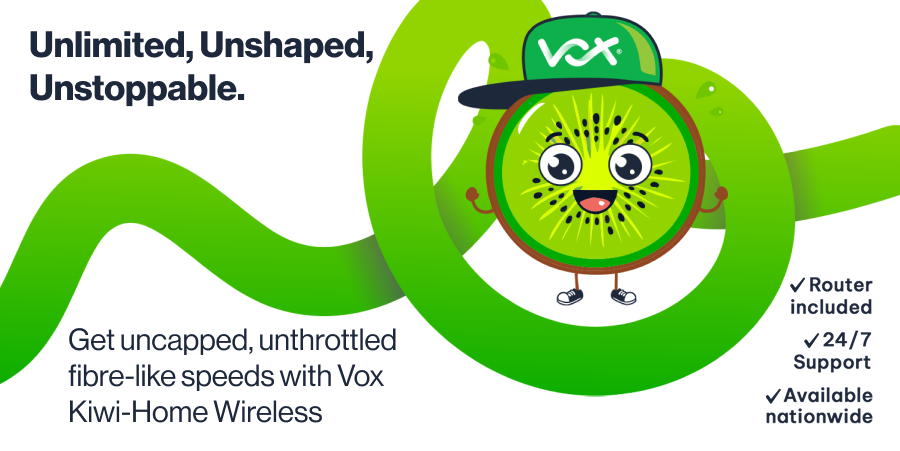
Vox, a specialist provider of top-class internet and voice solutions for homes and business, has announced the launch of Vox Kiwi Home Wireless, a new consumer broadband service that delivers a fibre-like experience without the need for trenching or cabling. Powered by Tarana’s next-generation technology, Kiwi offers speeds of 50 Mbps, 100 Mbps, and up to 200 Mbps, on an uncapped, unshaped and unthrottled line.
Fibre-like Speeds where Fibre Can’t Reach
Designed for South African households that don’t have access to fibre and where installation is prohibitively slow or expensive, Kiwi Wireless offers customers a simpler wireless alternative. One that delivers exceptional connectivity without the need for extensive infrastructure or disruption.
“Consumers have told us that they want fibre-quality internet without the hassle and with no fair-use policies or unpredictable throttling,” said Nikita Appelman, Product Manager for Wireless at Vox.
“Vox Kiwi Home Wireless is a smooth and simple alternative to disruptive trenching or fibre installation delays, offering consistent, high-quality connectivity people can rely on. Installation is also painless – a small, flat panel antenna is mounted on the roof connected to a router inside the home.”
The result is consistent connectivity for streaming, remote work, online learning and smart home devices, without the disruption of trenching or digging.
Affordable Costing
Vox Kiwi Home Wireless is also launching at an affordable price point, making it an accessible choice for consumers. It costs R849 per month for the 50 Mbps service with installation priced at just R999 as a once-off fee.
This upfront cost is competitive, lowering the barrier to entry for households wanting a trusted connectivity solution that doesn’t leave their wallet gasping. The 100 Mbps service is available for R1,039 a month and it is possible to upgrade to the 200 Mbps option if the home fits specific conditions, such as proximity to high sites.
Vox has a proven track record. The Service spans more than five million homes across South Africa, spanning both major metros and smaller towns.
“Vox Kiwi Home Wireless is giving South Africans more choice,” says Appelman. “If you can’t get fibre or you don’t want the wait and disruption that comes with installing fibre, then you can use Kiwi to get connected almost immediately. The service is fast and consistent and is designed to deliver high-quality connectivity.”
Vox Kiwi Home Wireless with the Vox backing, brings unmatched quality and reliability and a fresh and innovative new product offering to the South African consumer.
Available to order from 19 November 2025, with installations handled directly by Vox’s national support and service teams, Kiwi Wireless is the perfect fit for consumers who want access to the digital lifestyle without having to hurry up and wait for fibre.
Kiwi Wireless offers choice – a way to access a modern, connected lifestyle even when fibre isn’t feasible. With transparent pricing and uncapped data, it’s a practical, future‑ready option for many South African homes.
Ready to stop waiting for fibre? Discover Kiwi Wireless and order here:
FAQs
What is Vox Kiwi Home Wireless? Vox Kiwi Home Wireless is a fixed wireless consumer broadband service using Tarana technology that delivers fibre-like speeds (50/100/200 Mbps) without trenching or cabling.
Is the data capped or throttled? No. Kiwi is uncapped, unshaped and unthrottled, and it does not have a fair‑use policy.
How is Kiwi installed? A small flat panel antenna is mounted on the roof and connected to a router inside the home. Installation is managed by Vox certified teams.
Who is Kiwi best suited for? Households without access to fibre, properties where trenching is expensive or disruptive, renters, and anyone needing a quick, reliable broadband solution.
Does Vox provide support and maintenance? Yes. Vox handles installation and ongoing support through its national service teams.
How do I check availability at my address? Visit the Vox Kiwi product page and enter your address to check coverage and order options: https://www.vox.co.za/wireless-to-the-home/
The good news is out – the Vox Rewards programme for our loyal clients has been officially launched! As household budgets continue to take strain for millions of South Africans, we’ve designed our Vox Rewards programme – available since the 17th of November – to help our customers with a variety of ways to get through the month.
We’re proud that our loyalty programme sets us apart from our competitors by offering extra value to our clients, through the provision of carefully chosen lifestyle benefits. By signing up with Vox Rewards, customers are given access to thousands of Rands in monthly savings, through discounts and coupons from some of South Africa’s favourite brands.
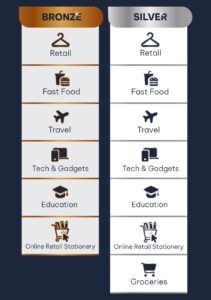
Vox customers, both new and existing, will be rewarded with retail choices, fast food options, travel discounts, reduced prices on tech and gadgets, access to lower costs for online education options, online retail and stationery purchases, and up to R1,250 in grocery rewards every month (Silver Tier only).
Simply by signing up with Vox Rewards, Vox customers get help with their budgeting and planning, across a number of different categories.
Calling all fashionistas: Update your wardrobe with up to 10% off retail gift cards from Edgars, Legit, Style and Beaver Canoe OR get 10% off online purchases at BRANDZ.
Enjoy takeaways: Treat your tastebuds with discount coupons from KFC, Steers, Debonairs Pizza and Hungry Lion.
Enjoy travel deals: With partners including FlySafair, Citiliner, Intercape and Luxliner.
Tech and gadgets: Keep up to date with Dress Your Tech, and enjoy up to 25% off (minimum spend of R500 online), as well as up to 8% off ASUS.
Online learning: Empower yourself through access to online learning through IT Upskill.
Online Stationery: Enjoy 10% off all your online stationery purchases at Statesman Stationery.
Groceries (Silver Tier only): Save up to R1,250 on groceries every month by using your Shoprite & Checkers coupons.
As you can see, the Vox Rewards are designed to help our customers with financial assistance in a holistic way.
Why not register today to start enjoying the benefits available to you through Vox Rewards? Visit our website at https://benefits.voxrewards.co.za – the process of signing up and participating in the programme is simple!
We look forward to signing up our new and existing customers and helping you to put real cash value back into your wallet.
Frequently Asked Questions
What is the Vox Rewards programme?
Vox Rewards is a loyalty programme for qualifying Vox customers that provides discounts, coupons and monthly savings across retail, food, travel, tech, online learning and groceries.
When did Vox Rewards launch?
Vox Rewards officially launched on 17 November 2025.
How much can I save on groceries?
Silver Tier members can save up to R1,250 per month using Shoprite & Checkers grocery coupons.
Which partners and discounts are included?
Partners include Edgars, Legit, BRANDZ, KFC, Steers, Debonairs, FlySafair, Dress Your Tech, ASUS, IT Upskill and Statesman Stationery, among others.
When ‘Kiwi’ means more than just nicely-packaged Vitamin C
Vox is shaking up some common kitchen features into Connectivity territory with our newest offering: Vox Kiwi Home Wireless.
Yes, it looks like a kiwi fruit (the branding).
Yes, it’s microwave (the connectivity technology).
No, it’s got nothing to do with your kitchen and everything to do with your Internet Connectivity!
Vox Kiwi Home Wireless is a Fixed Microwave connectivity solution available countrywide in selected areas where Fibre isn’t available, providing a Fibre-like experience and quick installation. So let’s take a look at what makes it such a juicy offering.
Not Just for the Kitchen
Fixed Microwave Internet – also known as Wireless – is a great alternative to Fibre, especially in areas where the Fibre Network Operators (FNOs) haven’t yet laid the required cabling infrastructure. Microwave signals provide a fixed wireless broadband connection through a high-capacity Microwave radio link, with speeds up to 200Mbps, and widely available.
The Vox Kiwi Home Wireless service is Uncapped, Unshaped and not restricted to any Fair Use Policy – it’s perfect for the home user who needs more for less!
Having a capped connectivity service essentially means that your internet access will be cut off as soon as you reach your data cap.
Uncapped Internet plans with a Fair Use Policy (FUP) limit the amount of data you can consume at your purchased speed. If your data threshold has been reached, then your speeds will be slower for the rest of the month.
Uncapped internet plans without a Fair Use Policy (FUP) don’t limit the amount of data you can consume and do not throttle your service. Users don’t have to worry about exceeding data limits and facing slower speeds or additional charges. Connectivity is never interrupted, providing a seamless browsing experience regardless of your usage experience.
And so, Vox Kiwi provides an uncapped, No FUP Fixed Microwave connectivity option that gives you constant, reliable and fast access to the Internet at all times, meaning that you will experience no drop in your connection speed, and you’ll have access to fast and reliable internet at all times – perfect for online gaming and streaming.
How It Works
The Vox Kiwi Home Wireless service provides a Fibre-like-experience, with low latency and low jitter, and high throughput.
Vox Kiwi uses the latest fixed Microwave technology, meaning we will be installing a small flat panel (about the size of a A4 sheet of paper) on your roof, as opposed to using a Fibre cable, as well as providing you with a free-to-use Wi-Fi router!
It’s quick to deploy in feasible areas, with no delays caused by trenching requirements and wayleave approvals, as occurs with Fibre installations (a wayleave is a contractual agreement between municipalities and a telecoms provider, enabling the provider to install, maintain and repair telecoms equipment).
Vox provides easy upgrades, to a service of up to 200Mbps, and our Managed Service offering provides you with 24 / 7 / 365 support.
When Life Gives You Lemons…
Vox took note of the old saying that says: ‘When life gives you lemons, make lemonade’, meaning that when you’re faced with a challenge, find a way to sweeten it. In this case, we prefer to say: ‘When life gives you lemons, choose Kiwis instead’, meaning that when Fibre is unavailable in your area, choose Fixed Microwave!
Now isn’t that something to sweeten the deal? Contact us for more information.
FAQs
What is Vox Kiwi Home Wireless? A fixed microwave (fixed wireless) internet service from Vox that uses a roof‑mounted flat panel antenna to deliver Fibre-like connectivity where Fibre isn’t available.
Is Kiwi Home Wireless uncapped? Yes. Vox Kiwi Home Wireless is uncapped and offered without a Fair Use Policy (no FUP), so you don’t face throttling when you use more data.
What speeds can I get with Kiwi Home Wireless? Packages scale up to 200Mbps in feasible areas. Exact speeds depend on site feasibility and the package you select.
How long does installation take? Installation is typically quick once feasibility is confirmed because it doesn’t require trenching or wayleave approvals; exact lead times depend on local scheduling.
Do I get a router and equipment? Yes. Vox supplies the roof-mounted microwave panel and a free-to-use Wi‑Fi router as part of the service.
Is Kiwi Home Wireless suitable for gaming and streaming? Yes. With low latency, low jitter and high throughput, it’s well suited to online gaming, streaming and real-time applications.
How do I check if Kiwi Home Wireless is available at my address? Visit vox.co.za to check availability in your area. Availability is determined by line‑of‑sight to the nearest microwave site.