5-Star Experience vs 1-Star Google Review: Your Guests Want Great Wi-Fi

How the Travel Industry Needs to Get Connected


From the moment that plane commuters reach their destination, travellers around the world can immediately hear the surround-sound beeping noises as passengers, now safely arrived, turn on their phones to once again become fully connected. We find a similar story when travellers arrive at their guesthouse or hotel: according to a travel industry survey, one-third of guests ask for the Wi-Fi password as they register at the front desk, and two-thirds are online within seven minutes of checking in.

 

luggage 7653518 1920 | Vox | 5-Star Experience vs 1-Star Google Review: Your Guests Want Great Wi-Fi

It just proves once again that in today’s connected world, being able to access information and communication services is increasingly important. Just because someone is away from home doesn’t mean they don’t need to stay connected, even when on holiday (unless they’re making the deliberate choice to go off-line).

As for business travellers, a seamless Internet experience is necessary to communicate with clients and colleagues, access work documents and take part in meetings. Providing quick and efficient Wi-Fi services allows both leisure and business guests to enjoy their stay without undue stress.

Let’s look at how the Wi-Fi experience in a guesthouse or hotel can shape either a five-star guest experience or earn your establishment an unwanted one-star Google review.


Wi-Fi For Guests: A Fundamental Hospitality Amenity

People who travel want to update others on their safe whereabouts, and being unable to receive communication, or send outbound messages, can cause anxiety. By providing reliable, fast Wi-Fi services from the moment of registration, hotel guests can start to relax and enjoy their stay sooner.

Access to excellent Wi-Fi increasingly ranks as a necessity for today’s traveller when choosing a hotel – right up there with comfort, cleanliness, and excellent food and beverage offerings. With mobile devices, laptops and remote work now prevalent, complimentary access to Wi-Fi has become a key requirement for both business travellers and holiday makers.

A speed of 10 to 20Mbps per guest is recommended as being a decent Wi-Fi offering that should comfortably allow your guests to stream in full HD – you wouldn’t receive complaints if your customers had access to these speeds.

Excellent Wi-Fi adds to the guest experience, while the opposite also holds true: unhappiness with the Wi-Fi can make people more easily inclined to find fault in other, unrelated areas. From a purely commonsense perspective, this seems counter-intuitive, and a negation of the cost and effort that’s been spent on the marketing initiatives to entice the traveller to your establishment in the first place.


Factors to Consider for your Guests’ Wi-Fi

nature 2564502 1920 2 | Vox | 5-Star Experience vs 1-Star Google Review: Your Guests Want Great Wi-Fi

While most hotels and guesthouses today offer complimentary Wi-Fi service to guests, it might not be equivalent to what people are used to having in their own homes, which can cause frustration.

Considerations when choosing a guest Wi-Fi solution include the following:

  • Cost: The pricing structure will be based on the coverage area, usage and the number of users.
  • Technical support: Reliable customer support is critical.
  • Compliance requirements: The network must meet relevant data privacy and security regulations.


Elevating the Wi-Fi Experience

Vox provides managed Wi-Fi services for businesses. This enables remote software and firmware updates, as well as remote troubleshooting and fault remediation using cloud-based administrative tools. This all works to enhance ongoing connectivity.

Vox offers audits on existing Wi-Fi, because we know that not every business is looking for a new-build Wi-Fi, and we may be  able to upgrade existing assets or infrastructure. To provide a superior internet experience for guests, hotels and guesthouses should ensure that they:

  • Invest in high-speed Internet infrastructure (the foundation of your Wi-Fi experience) to support faster bandwidth and improve overall performance.
  • Implement a reliable Wi-Fi network that covers all areas of the premises, including common areas and guest rooms.
  • Optimise the Wi-Fi signal strength with strategic placement  of Wi-Fi access points or meshdevices, to ensure a strong and consistent connection throughout the premises.
  • Implement robust security measures such as strong encryption and password protocols.


With Vox, our aim is to enhance your guests’ Wi-Fi experience. We can provide a neatly pre-packaged Wi-Fi mesh unit solution to ensure that all areas of the guesthouse are serviced. These mesh units are also easily managed by a user-friendly app, which further enhances the functionality. If more advanced cabling solutions are required, perhaps for a larger premises, our technicians and engineers can set up the solution.


Happy Guests, Positive Business Outcomes

Noting that ‘The Customer is King’ is especially critical in the travel industry – guests want to feel valued as they step over the threshold, and excellent Wi-Fi is a key aspect of attracting quality guests and then retaining them for future return visits.

 

woman 1851464 1920 | Vox | 5-Star Experience vs 1-Star Google Review: Your Guests Want Great Wi-Fi

Investing in fast and dependable Wi-Fi access gives you a competitive edge in terms of increased guest satisfaction and corresponding loyalty. It’s also important to gather feedback from your guests to stay on top of any Internet connectivity issues that might have occurred, to keep your standards consistently high.

Another consideration is for South African hoteliers to aim their marketing at the local target market. The rise of domestic travel since the aftermath of the Covid-19 pandemic presents an alternative option in addition to targeting overseas guests. Arguably, domestic tourists might also be more easily able to plan a repeat visit if they’re content with their overall experience.

With everything that South Africa has to offer tourists, both local and international, wouldn’t it be a pity for guests to be unhappy with your Wi-Fi offering, when it’s a relatively simple amenity to offer – to excellent standards – thanks to experts like Vox?

Talk to us at Vox if you have any questions or concerns about setting up a great guesthouse Wi-Fi experience. We’d love to hear from you – contact us via help@voxtelecom.co.za or call 087 805 0530.


Fibre or Wireless for Business: When Your Real Estate Makes a Difference

Vox has a business solution no matter where you’re based, because location matters. Whether your premises sit in a newly cabled business park or in an area where fibre isn’t yet available will determine the most practical, cost‑effective and resilient connectivity option. Vox offers both Business Fibre  and licensed Wireless for Business so your organisation can stay connected, wherever you are.

‘Location, location, location.’

It’s the mantra that estate agents everywhere live by, and it also works in the world of Business Connectivity – where your business is located can have significant implications for your Internet options.

Is your organisation situated in an area where Fibre Optic Cables are already laid – or at least in the planning stage? If so, sorting out excellent Internet Connectivity for your organisation is guaranteed, and you’ll be able to make use of the fantastic speed of Fibre to the Business (FTTB), with its clear benefits for all users.

But what if the neighbourhood doesn’t yet have FTTB on its radar?

That’s when you look to another phrase that starts with the letter ‘L’ – and find out how ‘Line-of-sight’ can also help with excellent Internet access, through Wireless for Business Connectivity, delivered by Microwave radio technology.

We take a look at the different features and benefits provided by both FTTB and Wireless Connectivity for organisations.


Business Fibre: A Premium Cabled Service

Internet Connectivity that’s provided by Fibre to the Business, or FTTB (as well as Fibre to the Home, FTTH) uses Fibre Optic cables, composed of strands of glass, to transmit Data at incredibly high speeds using light pulses sent through the glass Fibre. This means that Fibre Optic networks are capable of much greater speeds and bandwidth than the traditional copper-based ADSL lines.


Fibre to the Business

Fibre Optic solutions bring you the best available speed within the current Internet landscape – users can achieve incredible speeds of up to 1,000Mbps. They’re also highly reliable due to the smooth, constant flow of Data during transmission, while the steady signal, with increased bandwidth, means that even with multiple users, Fibre Optics can handle the load.

Overall, Fibre Optic Internet is generally regarded as being the pinnacle of Connectivity. However, it’s not the only option for businesses to consider today.


Not Just for the Office Kitchen

Microwave Internet – also known as Wireless – is a worthy alternative to FTTB, especially in areas where the Fibre Network Operators (FNOs) haven’t yet laid the required cabling infrastructure. It’s just as fast as Fibre, and more widely available.

Microwave signals provide a fixed wireless broadband connection through a high-capacity Microwave radio link, requiring arguably less infrastructure than Fibre Optics. A fixed Microwave signal delivers both voice and data traffic over long distances and to more remote locations and rural areas.

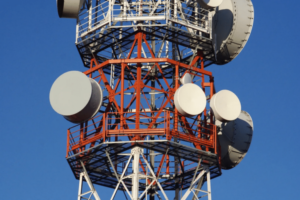
Wireless Microwave Connectivity requires power and a clear line of sight, with its access towers connected to Fibre lines. A device is pointed at a tower which services the area in which your business operates. While the last-mile connection may be wireless, the backhaul is provided by Fibre Optics.


Wireless for business
Image courtesy of: https://protowermaintenance.com/what-is-microwave-communication/

Vox Business Wireless, using licensed Microwave spectrum, is an excellent replacement for traditional fixed-line last-mile connections. With Vox, you can ensure that your business is always connected where Fibre connectivity is limited or not available, and the deployment is significantly quicker than with Fibre.

You can also choose to connect a Temporary Vox Wireless connection while you wait for your Fibre – our rapid Installation saves you time and gets your Internet operating at world-class standards. Vox Wireless can also be used as a redundancy option to Fibre, to ensure that your business is always connected.


Which Option is Right for Your Business?

Fibre to the Business is generally regarded as being the ‘standard bearer’ of Internet connectivity today. Often referred to as the ‘gold in the ground’, it opens a fantastic doorway to the business requirements of the digital age.

However, Vox’s Wireless for Business is an excellent alternative to Fibre to the Business, particularly when the Fibre Optic cabling infrastructure hasn’t yet been laid in your neighbourhood. One potential drawback is that, because the connection is delivered over the air, line-of-sight is needed between both points. This can make installation more difficult in certain locations – for example if your business premises is in a valley surrounded by hills.

A Microwave Internet link can also be used as an excellent backup solution to Fibre, because when a company isn’t reliant on only one technology, this allows for business continuity and resilience planning. If a fault should occur with a Fibre connection, the Microwave Internet solution isn’t likely to be experiencing the same type of failure: one solution runs through cabling while the other is air-based.


An Added Bonus: The Best of Both Worlds

The choice between FTTB and Wireless to the Business is essentially a win-win for our customers. But what if there was a reason NOT to make a choice? What about an option that provides the best of both worlds?

If downtime would be a catastrophe for your business, then check out our Active-Active offering and enjoy the best of both worlds – Vox is the first local ISP to offer this exciting new product!

Vox has always been able to incorporate both FTTB and Wireless to the Business into our business failover solutions, which are designed to keep your organisation’s Connectivity up and running even during challenging periods. And now, we’ve proudly gone one step further.

Our new Active-Active failover offering is a groundbreaking new option that no other local ISP is presenting. This option maximises the use of both a Business Fibre connection as well as a Wireless to the Business solution, to make sure that your organisation never loses connectivity.

system 3541577 1920 | Vox | Fibre or Wireless for Business: When Your Real Estate Makes a Difference

Our National Footprint

The great news is that Vox is able to offer viable solutions for your business, no matter where your organisation is located. Our innovative Connectivity solutions can be customised to the specific challenges of your business location and buildings, as well as your Internet speed requirements.

Our Wireless offerings range from 5Mbps up to 100Mbps, with alternatives in between. As for our Business Fibre solutions, our range can go up to 1Gbps, and we offer scalable options with tailored value-adds to suit your business needs – for example, state-of-the-art Wi-Fi connectivity and DDoS attack defences.

Our offerings criss-cross South Africa no matter where your business is situated. Contact us today for more information, because we’ve got the ‘Location, location, location’ philosophy sorted.


Frequently Asked Questions

Is Wireless as reliable as Fibre?
Wireless (licensed microwave) is highly reliable and carrier‑grade, especially when mounted on properly surveyed sites, but it usually requires line‑of‑sight. Dedicated Fibre offers uncontended bandwidth and typically the highest resilience for heavy, continuous workloads.

What speeds can I get with Vox Wireless?
Vox Wireless licensed microwave services are available from 5 Mbps up to 100 Mbps (symmetrical), offered as either broadband (shared) or dedicated (1:1) links.

Can Wireless be used as a failover to Fibre?
Yes. Wireless is commonly used as a temporary connection while waiting for Fibre or as a redundant/failover link to keep your business online during cable faults.

What is Active‑Active and do I need it?
Active‑Active uses both fibre and wireless concurrently to maximise availability. It’s recommended where downtime would be costly, for example within retail, call centres, data replication and payment processing environments.

How long does installation take?
Wireless installations are typically faster because they don’t require trenching; Fibre timelines depend on local build status and site readiness. Contact Vox for a site assessment and estimated lead time.

Are speeds symmetrical?
Yes. Vox offers symmetrical lines for both Fibre and Wireless where specified (important for uploads, cloud backups and VoIP).

Do Vox services include SLAs and business support?
Vox provides 24/7 business support. Premium and Dedicated services offer stronger SLAs and priority support; details are provided during quoting.

What if my site is in a valley or has obstructions?
If line‑of‑sight is an issue, Vox will recommend alternative options based on a site survey, for example a nearby rooftop relay, temporary wireless, fibre where available, or hybrid redundancy.

Vox Hosting with the Mosting

Providing a solution to meet your business requirements

Customer loyalty today demands digital options. If your business doesn’t have an attractive and well-functioning website, your potential customers will shop elsewhere.

South Africa’s online retail sector showed a significant increase in the past few years, growing by almost 30 percent (29 percent) between 2022 and 2023. Having reached the R71 billion mark in 2023, online sales are now anticipated to break the R100 billion barrier by 2026 – which is just around the corner.

And so, with South Africa’s online sales soaring, there’s never been a better time to make sure your business has a functioning website. Even with a bricks-and-mortar operation, it’s essential to back it up with an online option as well.

If you’re keen to upgrade your company’s online presence quickly and effectively – or even kickstart one if you haven’t got a website already – Vox offers several different hosting experiences with solutions to meet your business’s unique requirements, no matter your budget.


Domain and Web Hosting: The Right Address and Functioning Operations

street 767772 1920 edited | Vox | Vox Hosting with the Mosting

In the physical world, you need an address so your customers can find you, and you need premises from which to operate. These two terms represent different things in terms of getting your website infrastructure up and running.

  • Start with an address: Domain hosting is a service that allows you to choose and register a unique online name for your website and brand, in other words your web address.
  • Make sure your premises are fit for purpose: Behind the address lies the property from which your business operates. Web hosting is essentially what stores all your site’s information and files. It’s usually a server, or space on a server.
  • Let your customers come inside: When someone uses your domain to access your website, signals are sent to the server, which then opens up your live site for the customer – the online version of ‘going into your shop’.


With Vox Web Hosting, you rent space on our server and host your website contents through us. We offer multiple platforms to choose from, including WordPress, Linux and Windows. Vox Web Hosting includes a free .co.za domain.


Backed by Vox Expertise

difference 7370145 1920 | Vox | Vox Hosting with the Mosting

As well as being able to choose from multiple platforms and have a free domain, Vox Web Hosting also offers the following benefits:

  • Extensive network coverage: Vox Web Hosting has an established national and international backbone with over 13 local PoPs (Point of Purchase outlets) and footprints in all the Teraco Data Centre environments.
  • Security Team: All servers sit behind Vox’s state-of-the-art firewall infrastructure, with virus management and security updates.
  • 24/7 Expert Support: Our servers are locally hosted and managed around the clock by our engineering team for peace of mind.
  • Includes a Free SSL Certificate: If you’re going to run a prosperous website that is secure for your users and browsers, SSL certificates are an essential. Vox SSL Certificates keep your customers’ confidence by ensuring the safety of their data while they visit your website.


WordPress, Linux and Windows are some of the world’s most popular website hosting platforms today, and Vox Web Hosting is proud to bring you different options across each brand.


Shared Web Hosting: Linux and Windows

Shared hosting makes getting started online simpler and easier, saving you money, as well as taking the headache out of hosting.

With Vox shared Web Hosting, our customers experience a form of web hosting in which more than one website shares the resources of a single virtual or physical server, which means a stable but also low-cost solution.

Choose from Linux options as follows:

  • Linux Basic: 1GB of storage, 25 email addresses;
  • Linux Standard: 4GB of storage, 75 email addresses;
  • Linux Advanced: 20 GB of storage, 200 email addresses; and
  • Linux Ultimate: 30 GB of storage, 250 email addresses.

Alternatively, Vox Web Hosting also offers Windows options, as follows:

  • Windows Standard: 2GB of storage, 100 email addresses;
  • Windows Advanced: 4GB of storage, 200 email addresses; and
  • Windows Ultimate: 20GB of storage, 250 email addresses.


Premium WordPress Hosting

If you want to kick your website functionality up a notch, consider WordPress. Over the last two decades, WordPress has grown from being a simple blogging website to one of the world’s most used hosting platforms today.

Our premium WordPress offering delivers performance and scalability to your fingertips. It’s an excellent solution for customers who require better performance, uptime and scalability – although please note: it doesn’t come with email addresses built into the offering.

  • WordPress Starter is ideal for startups that require a professional WordPress website, offering 50GB storage and able to cater to up to 30,000 visitors monthly.
  • WordPress Innovator is perfect for growing businesses that need to scale and require speed and reliability, with 100 GB storage and ideal for up to 120,000 monthly visitors.
  • WordPress Fanatic is excellent for running an e-commerce website, with 150GB storage. It’s capable of catering to an unlimited number of visitors monthly.


Which Option to Choose?

Whether your business is already established or a startup about to take off, you need a strong online presence. From your website address to the online ‘premises’ behind it, Vox has the right option to help you with your online sales.

open sign 1309682 1920 | Vox | Vox Hosting with the Mosting

Shared hosting shares a single physical server with hundreds (if not thousands) of other websites, giving you a low-cost service. WordPress hosting is tweaked for high traffic websites, providing excellent performance and faster loading websites.

Contact us for more information and we can assist you with working out the option that’s best for your business. We can help you establish a business identity, give your organisation a professional look and feel, and build credibility on the web.

Join the sales revolution and be part of the drive to reach the one billion Rand online sales mark next year!

Vox MTN LTE-A Promotion: Double the FUP, Double the Fun This Festive Season

With Vox and MTN LTE Uncapped Packages


In the spirit of giving back, Vox and MTN are running a fantastic Vox MTN LTE-A promotion to give you double the FUP, and more than double the fun.

“Double the what?” – yes, it’s a fair question.

In short, our promo gives you double the allocated data bundle, free of charge, till the end of January 2025.

Let’s see what you and your family can do with double the FUP when you sign up for a Vox MTN LTE Uncapped package.

But first – what does FUP actually mean?

To ensure fair use on the MTN network (and ISP networks in general), your maximum download and upload speeds will be adjusted if you consume more data in the specific month than the Fair Usage Policy, or FUP limit, of your selected plan.

This is called ‘speed throttling’ and it plays an important part of the FUP rules for your selected plan. If your Internet usage speed is throttled, you will still have use of the service at the adjusted rate until the next month, when your normal maximum speed is restored.

Let’s unpack it.

Sharing is Caring

This is how speed throttling works.

architecture 1837176 1920 | Vox | Vox MTN LTE-A Promotion: Double the FUP, Double the Fun This Festive Season

Imagine a multi-lane highway of holidaymakers all heading down to the coast. Everyone is keeping nicely to the rules of the road and sharing the infrastructure, except for a small group of road hogs swerving in and out of the lanes and taking up most of the road, trying to get there faster and inconveniencing everyone else in the process. Just because, you know, they’re ‘special’.

Because of their assumption that they own the road, everyone else is forced to repeatedly hit the brakes. And then, tada! – the Highway Police arrive and put a stop to their high jinks. While the road hogs are pulled over and put in their place, everyone else is able to continue travelling again at a decent speed, as per how the highway was designed to be used by all.

Well, FUP is all about making sure the Internet ‘highway’ is used fairly by everyone in a way that the designated infrastructure allows – and speed throttling plays an important part in doing this.

What’s FUP, Guys?

As outlined above, Fair Usage Policy (FUP) is a set of guidelines imposed by Internet Service Providers (ISPs) to ensure fair and equal access to the Internet for all users. It’s designed to prevent network abuse and congestion by placing limits on the data usage of individual subscribers, especially at peak usage times.

If you use more than a certain, predetermined ‘fair’ amount of data in a given timeframe, your line speed could be slowed down during peak times to give other users fair access to the network.

In essence, FUP is designed to prevent a few users from hogging the available bandwidth, thereby causing shared services to become unavailable for others. And so, if you’ve ever found that your broadband speed has suddenly slowed down significantly, you might have just been FUPPED. You were one of the roadhogs!

Or, to put it in terms that might appear in your contract: “When you reach your FUP, your speed will be throttled up to 1Mbps.”

In simple terms, being throttled means that your upload and download speeds will be significantly reduced. You just got pulled over – except that the ISPs are nicer than the Highway Police and they let you off with a warning.

lego 5567753 1920 | Vox | Vox MTN LTE-A Promotion: Double the FUP, Double the Fun This Festive Season

That’s because with FUP, your ISP doesn’t send you to jail and stop your Internet usage completely, but instead allows you to continue accessing the Internet and ‘keep on driving’ – just significantly slower for a while. By restricting individuals’ bandwidth, more people can use the Internet service at the same time.


The Convenience and Quality of LTE-A Connectivity

With high-speed, top-quality Internet access, Fixed LTE-A offers connectivity that provides near-Fibre like experiences, together with hassle free installation: a plug and play service means no waiting for fixed line installation.

In addition, where Fibre networks might take weeks or months to roll out and to install, Fixed LTE-A is a rapid order-to-installation product – whenever there is high-density Fixed LTE-A coverage, the time to deliver quality Internet access is between seven to 10 days – another win as we approach the festive season!

go sign 2816455 1920 | Vox | Vox MTN LTE-A Promotion: Double the FUP, Double the Fun This Festive Season

Enough Bandwidth for the Good Times

Many people are still on vacation quite late into January, after which they go back to school, varsity / college, and work. And so now we see the real advantage of signing up for the promo – increased data consumption! (And as mentioned previously – free of charge!)

Different apps have different data appetites – streaming on Netflix or Showmax in HD will consume more data than just reading an article online, and downloading a game eats up more data than actually playing it.

Here are some everyday activities that you and your family are likely to be doing more of at this time of the year, together with their possible hourly data consumption rates:

  • Web browsing: Approximately 50 to 70MB per hour.
  • Streaming video: High-definition (HD) video can consume up to 8GB per hour.
  • Online gaming: Up to 100MB per hour.
  • Social media: Platforms like Instagram and Facebook can use around 200MB per hour.


Vox and MTN Fixed LTE-A Promo Offerings

The current promotion applies to two of our Vox Fixed MTN LTE-A offerings, as follows:

Normal Offering:

  • R849 per month: Uncapped with normal FUP of 1,000GB (ie line speed is throttled back for the rest of the month when you / your household have used 1,000GB of data).
  • R499 per month: Uncapped 50MBps with normal FUP of 500GB (line speed is throttled for the rest of the month when 500GB of data usage is reached).

Promotional Offering:

During the promotion period, the Uncapped 1,000GB FUP offering will be extended to 2,000GB, and the uncapped 50Mbps FUP offering will be doubled to 1,000GB (1TB of data usage).

RICA documents will be required when ordering Vox Fixed MTN LTE-A and these are:

  • A certified copy of your ID; and
  • Proof of your residential address that is not older than three months.

A Great Start to the Year

With the Vox / MTN Uncapped LTE promotion, we’re offering you – free of charge – double the bandwidth before FUP is applied, on the specified packages.

  • No more slow internet
  • Stream without buffering
  • Connect to multiple smart devices
  • VoIP calling and lightning-fast connection
  • Efficient for going back to work and studies

AdobeStock 399195503 resized 3 | Vox | Vox MTN LTE-A Promotion: Double the FUP, Double the Fun This Festive Season

From video calls to streaming entertainment, gaming and online shopping, Vox and MTN’s Fixed LTE Uncapped Double the FUP deal has you covered to ensure that your Internet connection is up to the task and ready to manage the digital demands of you and your family.

You can click here to find out more .

So, What’s the (Sweet) Deal with Vox Wireless Lite?

Vox Wireless: Just as fast as Fibre, and more widely available


What do Coca Cola and Vox Wireless to the Business (WTTB) each have in common? Besides being leading brands in their arenas, that is.

The answer is in the word Light. Or Lite.

Coca Cola gave the world Coke Light, for those who wanted the same original sweet taste but with zero sugar. Vox Fixed Wireless to the business (WTTB) gives you two options, including Vox Wireless Lite – because we also believe in providing a fantastic product, but with choices available for different requirements.

Wireless Lite is especially good for start-ups and SMEs. It’s also on promotion right now.

Let’s see how well it could work for your business.


A Quick Technology Outline

Fixed Wireless can deliver a Fibre-like experience if the service provider gets it right with regards to capacity and area coverage. This, of course, goes without saying at Vox.

Vox Fixed Wireless is a high-quality, high-speed Fixed Wireless connection, using Microwave technology that can be deployed around South Africa, to ensure that your business is always connected. It’s an excellent alternative when Fibre cables aren’t laid in your area, or as a redundancy option if your Fibre goes down. It’s also a fantastic solution if you need to be connected in a hurry and can’t wait weeks for your Fibre installation.

Coca Cola never officially reveals its recipes, but here at Vox we believe in being transparent, so let’s take a look at how WTTB works.

It’s pretty simple.


700x400 Wireless blog | Vox | So, What’s the (Sweet) Deal with Vox Wireless Lite?


  • A device is pointed at a tower, which services the area in which your business is situated.
  • The device provides a high-speed Internet connection using Microwave technology, whose access towers are served and connected to Fibre lines as the ‘backhaul’.
  • Because the station is close to and in view of the premises, a Fixed Wireless connection can deliver a very fast Internet experience with low latency.


Vox Wireless Lite

Vox Wireless Lite is one of two different Fixed Wireless offerings for businesses that we offer, with the other being Vox Wireless.

Vox Wireless Lite – Licensed is a more cost-effective service than Vox Wireless, without compromising on quality. This service is available as a Broadband Primary service but will also make an excellent Failover solution to cater for all your business needs.

We offer a Symmetrical service (same upload and download speeds) of 10 Mbps and 20Mbps, and an Asymmetrical service of 50Mbps and 100 Mbps.

Vox also offers Vox Wireless Lite – Unlicensed, in which different speed profiles are once again offered, but with this option, all speeds are Asymmetrical.

With Vox Wireless Lite, just like Coke Lite, we leave out one ingredient, so where the beverage is minus the sugar, we help you streamline your costs by leaving off the Voice offering that comes with Vox Wireless, which includes a Voice VLAN to streamline your VoIP (Voice over Internet Protocol) communication.

But don’t worry – if your business grows, you can add more ‘sugar’ later – it’s simple to change options.


Something for Every Business with Vox Fixed Wireless Options

The famous beverage company has a range of refreshing drinks available in several varieties and sizes to suit different lifestyle, and in the same way, Vox Wireless to the Business is able to cater to your different needs and speeds.


choice 2692466 1920 | Vox | So, What’s the (Sweet) Deal with Vox Wireless Lite?

All Vox Wireless packages include data and line rental, and speeds can range from 5Mbps to 1Gbps – the flexibility and choice of packages is a real value-add, allowing you to match your speeds to your business needs.

The main features and benefits of Fixed WTTB are as follows:

  • Quick to deploy in feasible areas: If your business has a remote site where no fixed-line connectivity is possible, Vox Fixed Wireless options are an ideal alternative. They are also generally quicker than Fibre to install.
  • Duplex Service enables you to transmit and receive data at the same time, giving you dual efficiency.
  • Managed Service 365/24/7 Support ensures that we’re there when your business needs us the most.
  • Scalable: It’s easy to upgrade your link to grow with your business.
  • Business continuity: Can be deployed as a primary or failover service to ensure you are always connected.


Depending on the area and requirement, Vox Wireless works with the following Wireless connectivity providers: Comsol, Easyweb, Kliq. MTN, Rapidnet, Tech5 and VO Connect.


Sweet Offerings to Refresh Your Business

Vox Wireless offers speeds comparable to Fibre, but is more widely available. With quick deployment and low latency, it’s geared to help your business stay connected. Whether you’re in the city centre or out in the country, Vox Wireless ensures your business stays connected, competitive, and ready to grow.

For high speeds and the most innovative, cutting-edge microwave technology on the market, you can’t go wrong with Fixed Wireless to the Business from Vox. Whether it’s Vox Wireless or Vox Wireless Lite, we’ve got you covered with great options.

And we think that’s a pretty sweet and refreshing deal.


artem beliaikin rNQ3TFuLkQU unsplash Coke | Vox | So, What’s the (Sweet) Deal with Vox Wireless Lite?

Playing Detective: Why Do I Have No Internet Access?!!

Possibilities to unpack

There’s never a good time for the Internet to go down, and we’ve all been there – that “Oh nooooo!” moment of discovering that there’s no Internet access (generally the polar opposite of an “Aha!” moment). Whether or not there’s an instantly obvious reason as to why you suddenly have no Internet access (for example, an unexpected power outage), you’ll want to get back online immediately to carry on with where you were, whether it was working, streaming, gaming or banking.

Finding out exactly where the fault lies can be a little like playing detective (probably a detective in a bad mood). Let’s take a look at the possible reasons for your lack of Internet access, and how to handle the problem.


ISPs versus FNOs

With Fibre Internet connectivity, customers generally deal directly with their Internet Service Providers (ISP) – which is where Vox comes in – but Fibre Network Operators (FNOs) also play a significant role in the connectivity landscape.

  • An FNO installs, owns and maintains the Fibre Optic Cable network infrastructure that allows users to access the Internet.
  • An ISP manages how customers receive their Internet services, essentially acting as a middleman between the FNO and the customer. The ISP manages the speed and bandwidth of the Internet coming from the FNO’s cables into your home, offering different Internet packages to cater for different customers’ needs.


Help – My Internet Access is Down!

Let’s say you’re watching your current favourite TV show via a streaming service and the screen suddenly goes blank (but the lights are still on). First things first: try to keep your blood pressure under control, and then check that the issue doesn’t lie with the TV. If you can access your show on your phone or laptop, then it’s not Internet access that’s down but rather your smart TV.

On the other hand, if you’re having connectivity issues across multiple devices, you can then assume that something has gone wrong with your Internet access. There could be a few reasons for this.

internet down

  • Check that your Wi-Fi router and/or ONT (modem) isn’t malfunctioning: Your ONT (also known as an Optical Network Terminal) is the box on the wall (originally installed by the FNO) that connects the Fibre cables outside your property to your Wi-Fi router inside. Make sure all cables are connected properly and that none have come loose. If everything seems fine, unplugging and plugging back in, then waiting about 30 seconds for the device to reboot, usually fixes most ONT and / or router problems.


Additionally, you might physically be too far away from your Wi-Fi router, or the router itself is in the wrong place. Ideally, your Wi-Fi router should be in a central location in your home, not too close to the floor and away from your kitchen Microwave or other electronic devices that might interfere with the radio signal, such as a baby monitor in a child’s room.

  • The Wi-Fi network might be congested (externally and internally):

While network congestion won’t necessarily knock out your Internet connection completely, it can certainly cause slower speeds. Are other members of your family causing your Internet access to slow because of massive bandwidth consumption via streaming, downloading or gaming?

Besides waiting for the congestion to clear (or bribing your teenagers to stop playing), you can make the most of the speeds you are getting by placing your router in an optimal location (as outlined above), adjusting your Wi-Fi settings or using an Ethernet cable.

wi fi 5438427 1920 | Vox | Playing Detective: Why Do I Have No Internet Access?!!


The good news is that usually, ISP outages happen rather seldom and are resolved as quickly as possible; it’s not in the best interests of any ISP to be slack in leaving things unresolved.

  • Is it the FNO? This is where it can get tricky for consumers. Their ISP is usually their first port of call and being told, with apologies, that “It’s not us; it’s the people who provide the Fibre network to your area” can feel like someone is not taking ownership. Having contacted your ISP, you could use your mobile phone data and see if there are any outages reported on Twitter, or perhaps your neighbourhood WhatsApp group. If there’s a number to call, do so – and again, hopefully the problem will be resolved as quickly as possible.


Sometimes, Fibre networks go down because of breaks in submarine Fibre cables in the ocean – that’s generally a global issue, and a massive headache for everyone.

  • Power outages: If the power goes out, so does your Wi-Fi router, so we can’t forget about electricity issues, whether they are called load shedding, load reduction or come in a no-name brand packaging. Best practice advice is to support your Wi-Fi connection with an uninterruptible power supply (UPS). ONTs and routers use very little electricity, and having access to a UPS could save your Teams meeting – and your sanity.


Few things today are more guaranteed to put us instantly into Angry Detective Mode than suddenly losing our Internet access.


detective 8619520 1920 | Vox | Playing Detective: Why Do I Have No Internet Access?!!

The most common cause is a problem with your router or modem, or a loose cable, but your Internet can also fail because of a more technical reason. Whenever there’s an issue, you can always contact us and we will gladly be of assistance.

At Vox, our help is available 24 hours a day, throughout the year.


When to contact Vox support

If you’ve run the checks above and still have no internet access, contact Vox for assistance:


Quick FAQs

Q: My TV lost streaming but my phone works — is the internet down?
A: No – this usually means the smart TV or the app is at fault. Try restarting the TV or app first.

Q: How long do ISP outages usually take to fix?
A: Most ISP issues are resolved quickly; longer outages can occur if there’s damage to the fibre network or major maintenance.

Q: Can broken submarine fibre affect my home connection?
A: Yes. Submarine cable faults can cause wider regional disruptions, which your ISP will report on if affected.

Q: My device shows ‘connected’ but there’s no internet – what now?
A: This often means the device is connected to your router but the router itself has lost upstream connection. Reboot your ONT and router, try a different device, and if multiple devices still have no internet, contact Vox on 087 805 0530.

Q: Can I use my phone’s mobile data as a temporary fix?
A: Yes, you can hotspot your phone to get devices online while you troubleshoot. Remember mobile data may be slower or limited by your cap, so use it for essential tasks until your home connection is restored.

Q: I see a cut or damage to fibre outside my property — who fixes it?
A: Physical fibre repairs are handled by the Fibre Network Operator (FNO). Report the issue to Vox support (087 805 0530 / help@voxtelecom.co.za ) so they can escalate to the FNO and arrange a repair.

Internet, Unplugged: The Convenience of Wi-Fi

(‘The Internet’ and ‘Wi-Fi’ Are Not the Same)


“Hi, can I please use your Internet?”

“No, but you are welcome to access my Wi-Fi – let me give you the password.”

The Internet and Wi-Fi are not the same. Nobody owns the global Internet, but people pay for their connectivity and Wi-Fi services (to the home or office) to access the Internet. Knowing the difference makes for clearer understanding and communication.

And just as it’s the nature of water to flow freely through a well-built system, so does  information on the internet when it’s enabled by the correct infrastructure. Wi-Fi enables us to access this information without having to plug in our devices through a cable – let’s take a look.


The Internet of Possibilities

Back in its earliest days, people had to plug their devices into an ethernet cable (or before that, an ADSL connection, which was essentially a Telkom landline) to connect to the Internet.

That’s why people talked about ‘Being online’ – because you were ON the internet, but only because you were connected to a LINE (i.e. the cable).

Today, most people connect to the Internet in their homes (or at their office premises) through a wireless connection, in other words through Wi-Fi access. It’s a huge step up from having to have your device constantly plugged in to remain connected.

So how does Wi-Fi access enable wireless connectivity?

marvin meyer SYTO3xs06fU unsplash | Vox | Internet, Unplugged: The Convenience of Wi-Fi


From Fibre Outside to Wireless Inside

Your home Wi-Fi network begins with Fibre Optic cables that are laid outside your property within the neighbourhood by the fibre network operators (FNOs). Through these Fibre Optic cables, Internet data is transmitted at the speed of light.

When you sign up for a Wi-Fi service, an internet service provider (ISP) – like Vox – then takes over. The ISP links the FNO Fibre box outside your property boundary with a separate (shorter) Fibre Optic cable to an optical network terminal (ONT) inside your home.

The ONT is linked with one last short cable into your Wi-Fi router, which then ‘converts’ Internet data received via the Fibre optics into radio signals, to create your home Wi-Fi network.

And voila! You and your devices have access to wireless Internet access in your home.


Internet Like Water

Much like water, the Internet, with its constant access to information and services, has become fundamental to modern life today. So you could also think of the process like this:

  • Firstly, the Internet is the water that is constantly flowing.
  • The Fibre cables are your hosepipe – the actual infrastructure that carries the Internet to you.
  • Your Wi-Fi router is the primary sprinkler that makes the Internet easily accessible. Wi-Fi lets you access the Internet without having to literally plug in your device.
  • Finally, mesh units or access points placed strategically within your home further sprinkle your Wi-Fi everywhere it’s needed, allowing for the freest possible flow of the Internet and the information it allows us to share.

hose 3401513 1920 | Vox | Internet, Unplugged: The Convenience of Wi-Fi


From the way we communicate and work, to how we shop, bank and entertain ourselves, the Internet has revolutionised multiple aspects of our lives.

Vox can assist you with all of your connectivity needs, from infrastructure to Wi-Fi, with a host of additional options to quench your thirst for fully-enabled communications.

We’re proud to say that there’s no obstacle to free-flowing communications that we can’t solve for you.


How 5G Networks Can Strengthen Your Business Cybersecurity

The rollout of 5G technology is revolutionising more than just network speeds—it’s reshaping enterprise cybersecurity. With stronger encryption, smarter authentication, real-time monitoring, and network segmentation, 5G delivers an advanced security framework that helps businesses proactively defend against cyber threats.

Below, we explore how 5G enhances cybersecurity and strengthens your company’s digital resilience.

Key Cybersecurity Benefits of 5G Networks

  • Enhanced data encryption

  • Stronger privacy protection

  • Network slicing for isolated security zones

  • Multi-layered authentication

  • Real-time threat monitoring and anomaly detection

  • Edge computing security advantages

  • Automated security responses

  • Secure connectivity for large device ecosystems

  • AI and machine learning-driven threat prevention

  • Improved global roaming security

Let’s unpack how these 5G capabilities work to secure your business.

1. Enterprise-Grade Data Encryption

5G introduces next-generation encryption, including 256-bit encryption standards and advanced cryptographic algorithms—future-proofing networks, even against emerging quantum computing threats.

Why this matters:
Sensitive business data is significantly harder to intercept or decrypt, drastically reducing exposure to cybercrime.

2. Stronger Privacy & Identity Protection

Unlike 4G, 5G masks user identities using a Subscriber Concealed Identity (SUCI) instead of transmitting personal identifiers in plain text.

What this means for business:
Better protection for confidential internal data, customer profiles, and proprietary information.

3. Network Slicing: Custom Security Zones for Your Business

5G allows multiple isolated virtual networks to run on the same infrastructure. Each can have tailored security controls, access rules, and monitoring.

Security advantage:
If a breach occurs in one slice, it can be instantly quarantined—leaving the rest of the network untouched.

4. More Secure Authentication

5G strengthens access control through:

  • Multi-factor authentication (MFA)

  • Secure device verification

  • Asymmetric encryption-based identity validation

Result:
Fewer risk points, less impersonation, and tighter access control across networks and connected devices.

5. Real-Time Threat Monitoring and Detection

Powered by machine learning analytics, 5G monitors networks in real time to detect unusual activity and security anomalies at internet scale.

Security outcome:
Faster detection = faster response = fewer breaches.

6. Edge Computing for Reduced Attack Surfaces

5G can process data closer to its origin rather than routing everything through central servers.

Benefits include:

  • Lower risk of data exposure

  • Faster incident response

  • Fewer network choke points for attackers

7. Automated Cybersecurity Response

5G networks can support self-automated threat detection and mitigation, reducing reliance on manual intervention.

Impact on business:
Shorter vulnerability windows, fewer successful exploits, and less operational downtime.

8. High-Volume Device Security

With capacity for up to 1 million connected devices per square kilometre, 5G delivers scalable, secure support for large device ecosystems.

Security benefit:
Centralised security oversight, real-time monitoring, and stronger endpoint protection across massive connected environments.

9. AI-Driven Cyber Defence

The ultra-low latency and high throughput of 5G allows AI and machine learning security models to respond instantly to emerging threats.

Bottom line:
Cybersecurity becomes predictive, not reactive.

10. Safer Global Roaming & Network-to-Network Security

5G replaces outdated roaming protocols like SS7 and Diameter with the Security Edge Protection Proxy (SEPP)—creating a unified, encrypted communication layer between global networks.

Advantage:
Improved protection for businesses operating across borders, especially those with mobile or roaming workforces.

5G Is a Major Leap Forward for Business Security

5G is no longer just about faster internet—it is a cybersecurity enabler that provides:

  • Stronger encryption

  • Smarter authentication

  • Intelligent threat monitoring

  • Network isolation and control

  • Faster automated responses

For businesses navigating an increasingly unpredictable digital threat landscape, 5G delivers a future-ready security foundation.

🔐 Secure Your Business with 5G-Enabled Cyber Protection

The companies that adopt 5G aren’t just upgrading their networks—they’re upgrading their security strategy.

Want to explore how 5G can protect and enable your business? Get in touch with Vox to future-proof your organisation today.

SD-WAN White Paper

One of the most disruptive network technologies available today, software-defined wide area networks (SD-WAN) not only allow companies to leverage a mix of various information transport services (including Fibre, 5G, LTE-A and Wireless) to connect users quickly and securely to applications, they also hold the promise of significantly lowering operational costs and improving resource optimisation in the process.

In this white paper, we offer a detailed outline of the future of SD-WAN in South Africa as well as how our unique SD-WAN offerings will:

  • Future-proof business infrastructure – particularly for SMEs
  • Bridge the divide between traditional and modern technologies
  • Enhance agility and support for cloud applications
  • Increase efficiency and promote flexibility within the workplace

More than just another tech industry buzzword, we believe SD-WAN holds the key to creating a more innovative and agile enterprise environment.

Vox Announces IoT Network Partnership with Sqwidnet

Vox has partnered with local network provider Sqwidnet, to provide individual consumers and enterprise customers with connectivity, data analytics and reporting for Internet of Things (IoT) applications in the near future.

An IoT network consists of three parts: the devices that collect information, the network that connects everything, and the data analytics capabilities that allow companies to turn the volumes of data into actionable business intelligence.

“One of the reasons we partnered with Sqwidnet is that they are the sole Sigfox operator in South Africa. As an international IoT network with a presence in over 30 countries, using Sigfox means that you can use compliant devices on their network across the country and beyond,” says Vox CEO, Jacques du Toit.

Sqwidnet plans to have nationwide IoT network coverage by 2018, allowing for millions of sensors and devices across the country to transmit data to a centralised location for analysis, immediate action, and record keeping.

Vox’s integration and consultancy subsidiary, Braintree, will be used to provide customers with analytical capabilities, reporting, and dashboards to monitor and manage their IoT networks.

While the simpler consumer model will enable individuals to purchase compliant devices and register them via Vox in order to get notifications, enterprise customers stand to benefit from custom built solutions with specialised notifications, reporting, dashboards, workflows, and other advanced features

IoT Market Growth

Research by Africa Analysis shows that the IoT market is a growing segment in the local ICT industry, with the South African market being valued at $485-million – accounting for approximately 25% of total revenue in Africa – and projected to grow by 9% per annum by 2022.

One of the main contributors to this growth being a significant decline in the price of the chips that power these IoT devices, with prices having fallen from over $9 in 2016 to an expected price of 20c by 2018. Usage of narrow-band communication over a low-power wide area network brings down energy consumption on connected devices, further bringing down costs and broadening access to IoT technology.

However, unlike developed countries where there has been a huge focus on smart home and smart city deployments, users in South Africa are looking for cost savings and adding value, and the increasing trend is to leverage IoT applications for agriculture, utilities and manufacturing and industrial processes.

Vox is in discussions with a wide variety of industry players over enterprise IoT applications, with examples including a smart geyser application for the insurance industry that enables remote monitoring and preventative maintenance.

“IoT is going to provide a huge area for growth in South Africa, especially in the area of integration. The network and devices are going to accrue for a small percentage of revenue generated from IoT; the value is in the integration and the analytics that we get out of all the data being collected – and that’s where Vox comes in,” says Du Toit.