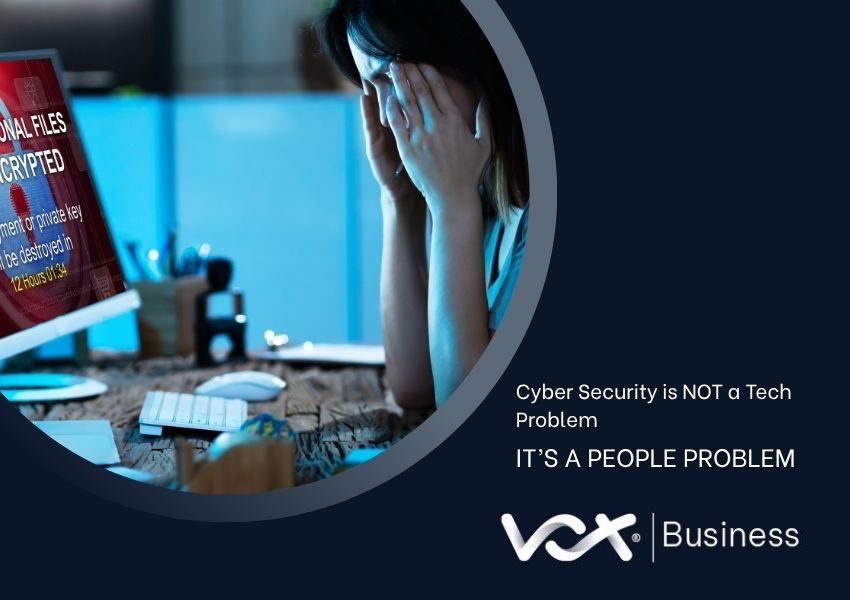
Cybersecurity: It’s Not a Tech Problem — It’s a People Problem
We’ve all heard the term Cyber Security, but the reality is not all of us have tuned in and paid attention. Indeed, there are two types of people; those who listen when the topic comes up, and those who don’t believe it applies to them.
A key reason for this alienation is simple; say the word Cyber Security, and the conversation quickly turns technical. We go from “real threat” to Firewalls, Endpoint, Encryption with no middle ground.
Yes, the above are important, but oftentimes they cut out many people who need to understand the fundamentals. It also distracts from an uncomfortable truth: most breaches are the result of human error, NOT intricate hacking schemes.
Maybe it’s a clink. Possibly it’s a password. Probably someone acted without thinking. Each time, a person. And each time, the real weak point isn’t the system, but rather basic human behaviour.
Human Error = Your Biggest Entry Point:
Complex exploits and systems breached? Too much work. Most attacks need something far simpler; basic human trust.
Whether a phishing email or fake login, made up invoices or a call from “FNB”, impersonation attempts are all geared around tricking unsuspecting users into voluntarily providing access. Rather than break the system, they’ll convince you to open the door and say come inside.
They’re getting better at it too. Many scam emails are almost indistinguishable from their legit counterparts. Websites have genuine domains, and the messages come directly from the people you know (who’ve also been hacked).
All it takes is a momentary lapse of concentration and they’re in.
2. The Poor Password Problem:
We’ve created mailers, run webinars, sent out SMS’s and put out social media posts, yet poor password behaviour remains a key Cyber Security weakness (which you, yes you, may be compounding). This includes:
Recycling passwords across systems
Using easy-to-guess, personally grounded passwords
Sharing of info with friends or colleagues
Documenting passwords in easy to access places
All it takes for the Dominoes to fall is ONE breach here. Attackers then usually gain access to multiple systems purely because the details have been repeated everywhere.
3. Security vs Convenience:
The nature of today’s fast-paced work environment is that everyone is under pressure. We have a constant need to be faster, work efficiently, meet our deadlines and deliver quicky. Sadly, this often leads to shortcuts and a high-pressure situation when safety is NOT the number one priority.
Have you, for example, ever:
Sent important work info via your personal Email as Outlook wasn’t working?
Stored important company data on your mobile device?
Clicked “skip” on your two-factor authentication because you were in a rush?
This transcends conventional protection and becomes a discussion of security habits which are sustainable and easy to follow.
4. Training Beats Tools:
Many companies go big on Cyber Security software but small on the human element. Regular training and support is as important as a fancy firewall – because there’s no point Norton fighting fires when you have an active match that can’t recognise a dodgy link.
Well-trained workforces can stop attacks before Tech needs to step in – and that’s a key difference in a time sensitive environment.
In the end, the best Cyber Security practices are cultural, not purely technological.
Encourage a workspace where reporting mistakes is acceptable and policies are easy to digest. Leadership needs to prioritise this as much as the team, because organisations who take this shared responsibility seriously are far more resilient.
The bottom line is that Cyber crimes will always involve tech, but tech alone isn’t enough. There’s always a human behind the system. Someone making decisions, under pressure, clicking links and sending files. And, in most cases, it’s their ability to make those decisions (and the info behind them) which ensures a business stays secure or guarantees it’s the next headline.
We’re firm believers that peace of mind is underrated. Especially household peace.
We also believe that few things destroy household peace faster than “broken” Wi-Fi. Yeah, forget politics, burned braai meat, and turns on the Xbox; buffering is this seasons Dr Doom.
On your average day: one kid is on YouTube, the other playing Fortnite, Mom is on a video call and Dad trying to responsibly watch Man United in 4K. Suddenly, everything freezes. Fingers are pointed, voices raised, sanity does a runner – welcome to the Wi-Fi wars.
Let’s fix it.
Understanding the Battlefield.
Most home Wi-Fi isn’t “slow” – it’s just more overwhelmed than a McDonald’s Ice Cream Machine. Today’s modern home is equivalent to a 2009 tech startup, with each containing multiple smartphones, Smart TV’s, laptops, tablets, consoles, cameras, a PC in a corner and that mysterious device nobody can explain.
Each one is simultaneously fighting for bandwidth, and if your line can’t multitask (it happens to the best of us), the whole house is destined to suffer.
So, herewith Rule One:
You can’t use entry-level speeds for heavy duty Wi-Fi use.
Be honest about your usage. If you’re simultaneously streaming Netflix, updating your PS5, Teams calling and downloading from the Cloud, you need serious bandwidth.
Even lightning-fast Fibre is only as quick as the Router (and its positioning). If you’ve placed yours inside the spare microwave in the garage cupboard, congratulations – you’ve played yourself.
Remember the days when we’d have entire computer stations in the house, complete with external speakers and cd racks? They sat there like modern day shrines to Connectivity – and their modern descendants have similarly royal aspirations. Wi-Fi needs optimal working conditions to perform better; so think open space, central positioning, and elevation. If your signal dies only in specific rooms of the house, you don’t need to invent cuss words, you may just need a better router setup (or to invest in mesh).
Many users are surprised when their Wi-Fi doesn’t magically bend around walls. Go figure.
Fact is, everything from concrete to an innocuous appliance can be a signal killer. If you’re living in a mansion, or even a double story place, you should always consider:
You see, fast internet isn’t about bragging rights and feeling better than the neighbour. It’s about eliminating buffering wheels, frozen faces on work calls, and PC’s going on vacation when you’ve just had enough and need to clock out.
Sometimes you’re not buying Internet. You’re choosing peace. And, like we said, peace is underrated.
After that? It’s just a series of small stuff, with a lot of mindfulness. Routers, placement, extenders, prioritising traffic and ensuring that the next door neighbour isn’t secretly downloading series are all key fundamentals to making your own Home Wi-Fi run smoother. In short form? All it takes is a bit of research, investing in the correct equipment, and taking the time to understand what makes a conducive environment for better browsing and you’re good to go.
Let’s wrap it up…
The War of the Wi-Fi doesn’t start because of unreasonable families. It starts because your Internet was designed to fail from the offset.
Upgrade your speed.
Optimise your setup.
Say goodbye to buffering.
And let everyone work, play, stream, or anything in between in harmony.
Vox Proudly Attains Google Verified Peering Provider Status
A significant accolade in the local ISP landscape
Vox is proud to announce that it has become a Google Verified Peering Provider, one of a select group in the South African ISP arena. The Verified Peering Provider (VPP) Programme identifies a group of internet service providers (ISPs) that have demonstrated diverse and reliable connectivity to Google. ISPs are awarded a Verified Peering Provider badge based on technical criteria related to their connectivity depth with Google.
“The Verified Peering Provider Programme is a recent accreditation from Google that recognises ISPs with high-quality, optimised connectivity into Google’s global network,” says Chris Burrell, Head of Network at Vox. “The Programme identifies providers that meet stringent technical and capacity standards, including diverse peering links to Google, ensuring faster access, improved performance, and greater reliability for customers using Google services.
“The Verified Peering Provider Programme is basically a ‘trusted partner’ list. Networks on it can connect directly to Google to access the content in a way that’s fast, safe and of the highest quality. You could think of it as a shortcut to get premium, direct access to Google services and content.”
Vox Customers using Google services such as YouTube, Gmail, Google Workspace, Google Meet and applications hosted on Google Cloud infrastructure will experience improved performance, reduced latency, and greater service reliability.
We unpack how the Google Verified Peering Provider Programme works and the benefits customers can enjoy.
‘Let’s Shake Hands…’
Burrell notes that in today’s Cloud-focused world, Google customers need simple and highly available connectivity solutions to reach publicly available Google resources such as Workspace and other internet-facing applications.
He explains: “Peering is like two networks shaking hands and saying, ‘Let’s share traffic/content directly with each other, instead of sending it through a middleman.’ It makes internet usage, including websites, videos, voice and Cloud apps, faster and more reliable for users, providing higher quality of experience.
“Many customers connect to Google Workspace, Google Cloud, or Google APIs using Direct Peering or via Route Server infrastructures at Internet Exchanges. These solutions provide network operators interconnectivity to Google.
“However, not all Google customers today are able to manage the complex connections of Peering, or they don’t meet the relevant requirements to maintain the high-quality standards required by Content providers. Against this context, using a Verified Peering Provider to connect to Google simplifies connectivity to Google’s network, and removes the complexity of managing Direct Peering connectivity.”
By leaving Direct Peering to the ISPs, the Verified Peering Provider programme enables Google customers to access all Google services without the complexities of Direct Peering. Verified Peering Providers manage Direct Peering with Google over dedicated private connectivity with redundancy requirements for each enrolled provider.
When Google customers connect to a Verified Peering Provider to reach Google, they are choosing a provider that has verified diverse connectivity to Google, which enables highly available access to Google services.
Benefits of the Google Verified Peering Provider Programme
As Burrell outlines, Google evaluates networks that would like to be peering partners: “Vox went through a stringent application and technical review process showing that we meet their performance, network stability, reliability and capacity standards,” he says. “As a result of our successful application, we are able to offer our customers a number of benefits.”
This includes the following:
Simplified connectivity: There is no need to meet Google’s peering requirements; instead, customers can leave the complexities of peering arrangements to Vox as a Verified Peering Provider.
High availability: The Google badge shows that the ISP has a highly redundant connectivity to Google.
Enterprise grade connectivity: Customers can connect to Google through internet products designed for enterprises; further, they can access Google with or without the need for border gateway protocol (BGP) or an autonomous system number (ASN). In addition, customers can work directly with the ISP’s customer services teams and operational escalations
Burrell clarifies that Vox’s Verified Peering Provider Programme is suitable for enterprises and businesses running Google Cloud apps, ISPs or partners reselling internet services, and any tech-savvy user streaming, collaborating or relying on Google services.
He adds: “Because Vox is a Verified Peering Provider, this ensures Google traffic is routed over well-engineered, high-capacity direct interconnects, reducing unnecessary transit paths and improving consistency. It’s part of Vox’s ongoing investment in network quality and reliability.
“Vox is truly proud of this accolade, because it’s a mark of trust from Google, and not every local ISP will be able to qualify. It shows that Vox meets high technical standards and can deliver premium internet performance for Google services, making service better for our existing and future customers,” concludes Burrell.
Frequently Asked Questions
What is a Google Verified Peering Provider?
A Verified Peering Provider is an ISP that has met Google’s technical and capacity standards for direct peering, offering optimised and reliable access to Google’s services.
How will this improve performance for Google services?
Direct peering reduces the number of network hops and potential bottlenecks, resulting in lower latency, faster load times and more consistent performance for apps like YouTube and Google Workspace.
Do Vox customers need to change anything to benefit?
No. Vox manages the peering relationship with Google. Most customers will see improved performance without changing their configuration.
Is this available to all Vox customers?
Benefits depend on routing and service configurations, but the VPP status enhances overall connectivity for enterprise and business customers across Vox’s network.
Can resellers and other ISPs use Vox as a Verified Peering Provider?
Yes. Resellers and partner ISPs can work with Vox to provide their customers with optimised access to Google services via Vox’s peering infrastructure.
Does this replace direct peering for larger customers?
No. Organisations that already operate direct peering can continue to do so. VPP provides an alternative path for customers who prefer Vox to manage peering complexities.
How does Vox ensure redundancy and reliability?
Vox maintains diverse, redundant links and operational processes that meet Google’s VPP requirements, ensuring high availability and predictable routing for Google-bound traffic.
At Vox, we believe our employees are the beating heart of our company, with merit and value built into all our available positions. In this edition of People of Vox, we find out more about Brian Rossouw, who is Vox’s Regional Sales Manager for Mpumalanga and Limpopo. When you meet Brian, you notice straight away how warm and funny he is, with an incredibly positive attitude.
As Vox’s Regional Sales Manager for Mpumalanga and Limpopo, Brian’s daily work sits where sales leadership meets customer experience. In addition to chasing targets and working on quotations, his daily purpose includes solving problems and creating consistent momentum, for both customers and his team members.
Before joining Vox three years ago, Brian worked in retail and telecommunications. He’s experienced a number of curveballs and challenges during his lifetime, but instead of using former hardships as an excuse to throw in the towel or feel sorry for himself, he has let those experiences shape his approach to work and leadership.
Let’s meet Brian and find out more about his amazing work ethic.
Juggling His First Job with His Final School Exams
Brian actually began his adult working life while he was still writing his matric final examinations. “When I was growing up,” he says, “my family was extremely poor, and my mom sometimes struggled to make ends meet. But, you know, God has always been good to us and I believe that He always had a plan for us. I knew that just as soon as I was able, I was going to start working to try and help her and my siblings.”
An opportunity arose when Brian was offered a short-term contract job as a picker-packer for a company that supplied frozen fish to restaurants. He explains: “It was a bit problematic because of the clash with my final school exam period, but I took the job to help my family. It was challenging – I was working the night shift in freezers that were about 10 degrees Celsius below freezing point! – but I managed.
“During the day, I would study and write my exams, and then I would work the night shift until about four or five o’clock in the morning. I’d get back home, study a bit or sleep if I could, depending on my exam schedule…. It was tough, but I made it through!”
After matric, Brian was able to find more permanent work and later landed up selling tech accessories in stores.
Young Brian already knows the importance of having fun at work!
“These early jobs were tough but formative,” he says. “They taught me resilience, humility and the value of small, steady steps. Taking consistent small actions is a personal philosophy for me, which I like to describe with the acronym ACSA: ‘Attitude and Consistent Small Actions’. I believe this mantra will help with achieving success in any realm in this world but I find it especially helpful within the sales arena.”
Brian believes everyone has the potential within them to change the world for the better. He elaborates: “And if you don’t have the power to change the world, at least change your world for the better!”
Human Connection: The Competitive Advantage
Brian describes himself as someone who creates ‘magic’ for customers when things go wrong. He treats each problem like an opportunity to deliver exceptional customer experience and to show his team how to close the loop properly.
For Brian, attitude includes emotional resilience and the ability to keep going when prospects are difficult or rejection happens. “I believe that attitude is a choice: you own how you feel and react, and resilient people outlast obstacles,” he says. “Consistent small actions are the daily disciplines that compound into success: making calls, following leads, refining quotes and improving process detail. “
Brian wants those he leads to cultivate emotional resilience, and he also believes in leadership as a teaching opportunity.
“I want to model the behaviour that I expect from my team members: doing the work, being present for others, and demonstrating how to handle objections and close deals. I’m proud to be in the role I once looked up to, and I enjoy helping others to climb the same ladder.”
Brian’s day starts early: he’s in the office at 07:00, reviewing sales interactions, quote volumes and order accuracy for every team member. From 08:00 Brian meets the team, unpacks individual performance and looks for the precise actions that will turn a weak day into a better one tomorrow. He spends the rest of the day in meetings, solving customer queries, planning strategic projects for multi-dwelling units and liaising with stakeholders. His role combines hands-on sales with coaching and troubleshooting.
For Brian, the best part of his job is the people he works with. He says: “People matter above all: customers, colleagues and the communities around them. I find people fascinating – how everybody is different and has a different story to tell. And in the work environment, human connection is a competitive advantage. While it’s true that AI and automation is bringing uncertainty, my advice remains the same: build adaptable skills, stay curious and focus on the human capabilities that technology cannot replace.
“My favourite success story is about a team member who could not write one quote in four months; after coaching, encouragement and steady accountability, this person became a top performer nationally. That is the essence of consistent small actions – you don’t need overnight successes; instead, you need persistence.”
Why Vox? The Human Difference
Brian believes that the combination of customer care and front-line coaching is what sets Vox apart, together with its people.
“Vox employs a direct sales force, with employees out in the field who represent Vox, not outsourced contractors,” he says. “This human connection matters. Customers speak to someone who knows the product, owns the process and cares about the outcome. For me, this is a defining advantage: it makes Vox personal, accountable and responsive.”
He also values how Vox embraces newcomers, explaining that when he joined the company, product managers and colleagues reached out to help him learn. He says: “This culture of openness and ownership impressed me, because not every company welcomes new starters with that level of support. My colleagues are incredibly generous and will always go the extra mile.”
One of Brian’s most memorable Vox experiences was a team event in Nelspruit where colleagues from across Mpumalanga gathered for training, laughter and community. After a day of face-to-face coaching and team building, the group sang together late into the evening. He explains: “It was a spontaneous moment of unity that moved me deeply, and reinforced my conviction that beyond metrics and targets, shared human experiences build a stronger company culture.”
Ending on a Positive Note…
Outside the office, his family life gives Brian his solid foundations. He lives with his wife Fanisia, and two young daughters, Klara and Donné, who are around three and one years old currently, and spends most evenings with his family after work.
He explains: “Most days, I work until just after four o’clock, and then I go and pick up the two most beautiful children in this world – and lucky enough they are also my children, otherwise that could be a bit awkward!” he laughs.
“I can’t imagine a life without my children – when it comes to kids, you just can’t fake those feelings. They are little now, but when my daughters are bigger, it’s my ambition to travel with my wife later in life, and we would like to alternate time between developing and developed countries on a three-month global trip,” he says.
Brian is also community-minded. He once chaired a Round Table chapter and helped raised significant funds – over R10 million – for local charities in Mpumalanga, which is a reminder that his leadership extends beyond the sales floor.
He adds: “My ultimate aspiration at Vox is simple but also ambitious: I’d like to be known as the person who brings positivity to every room, and as a leader who inspires others day after day. And I definitely don’t believe in ‘pity parties’ – throw yourself a pity party if you must, but make sure it’s on a tourist visa and doesn’t take up permanent residency!”
And with that blend of honesty and humour, Brian sums up his attitude to life: acknowledging life’s difficult moments while always keeping his eyes on solutions.
Staying connected as end-of-year down-time arrives
Our summer stories are starting to happen and the end of the year is really here! But even when we’ve packed our suitcases and made sure the pets are taken care of while we move into down-time, we still want (and need) to stay connected this holiday season.
Summer in South Africa means more streaming, online shopping and banking, video calls with family and online gaming – so choosing the right home Internet, and being aware of Internet options offered by your holiday location, can have an impact on your festive connectivity.
The good news is that, just as we all want a variety of ice cream options at the beach, so Vox has a connectivity option – and speed – to suit every home this holiday season. And in the spirit of the holiday season, we’re running some current and ongoing promotions to sweeten the deal even further.
Vox offers a mix of Fibre, Fixed Wireless, LTE/5G and Satellite options, with each option suited to different needs. So here’s a guide to help you pick the best option for your home, do your research on your holiday Connectivity options, and also make the most of current Vox promotions.
Let’s take a look.
Fibre To the Home: Best for Top Speed and Reliability
Fibre to the Home delivers high-speed, low-latency Internet directly into your home (or holiday home).
Benefits include very fast symmetrical speeds, which is excellent for 4K streaming, multiple devices and video calls. Uncapped options are available and performance is consistent.
It’s ideal for large households, heavy streamers, gamers, households with multiple remote workers (if you must work during the holidays! or when the holiday season is over…).
Availability depends on Fibre rollout in your neighbourhood. Installation may take time in new areas.
Current promotions linked to Vox Fibre to the Home include Vox Rewards and Fibre Frenzy!
Vox Rewards is our super-exciting, recently-launched loyalty programme for qualifying Vox customers, offering perks and rewards for staying connected with Vox through home fibre connections. Depending on the tier that you qualify for, you could enjoy a variety of discounts and savings on groceries, fashion, takeaways, tech, travel and more! See vox.co.za/vox-rewards for eligibility and benefits.
Fibre Frenzy is a limited-time campaign on Vox’s Home Fibre packages so do check vox.co.za for current Fibre Frenzy deals and exact terms – you can also click on this link for more information.
LTE / 5G Mobile Broadband: Flexible and Quick to Set Up
LTE / 5G uses mobile networks (LTE or 5G) to deliver Internet to a home router or portable device.
Benefits include fast setup and mobile flexibility. This option is suitable for temporary needs or where Fibre isn’t available yet. 5G can offer very high speeds in covered areas.
It’s ideal for urban areas with strong 4G/5G coverage as well as short-term stays and holiday homes.
Speed and latency depend on mobile network coverage and local congestion; fairness policies may apply depending on the package.
Vox and Telkom are currently running our Uncapped LTE promotion, starting from R589 per month, and including a pocket router as a R199 once-off – check it out.
Fixed Wireless (Licensed or Unlicensed Spectrum): Dependable Rural and Suburban Option
Fixed Wireless using microwave signals provides a point-to-point or point-to-multipoint radio link between a home-mounted antenna and a local tower. Its benefits include good speeds and stable connections where Fibre isn’t laid, but line-of-sight to a tower exists. It is often faster and provides a lower latency than Satellite.
It’s ideal for suburbs, small towns and rural areas with a Vox radio site nearby.
Fixed Wireless requires a professional site survey and performance depends on line-of-sight availability and network capacity.
Satellite: Providing Coverage where Nothing Else Reaches
Internet delivered via Satellite dishes is ideal for remote or rural properties beyond terrestrial networks. Its benefits include coverage that is available almost anywhere, making it perfect for some coastal areas, farms and remote homes, including holiday rentals.
It’s ideal for houses outside Fibre and mobile coverage areas, where connectivity is otherwise unavailable.
Higher latency means that it’s not ideal for competitive gaming. In addition, weather can affect reliability, and costs/data policies may be higher than terrestrial options.
A few factors should be considered as you think about your Connectivity options for the holiday season and even next year, if you want to take advantage of our Vox Rewards programme.
If you stream 4K, game and have many users, Fibre is your best bet.
If you need a quick setup or a temporary solution, LTE/5G works well.
If you’re in a small town or on the fringe of Fibre rollout, Fixed Wireless often gives the best compromise of speed and reliability.
If you’re remote and need coverage regardless of location, Satellite is the reliable fallback.
Practical Tips Before You Switch
Vox usually runs localised or seasonal promotions (discounted installation, bonus data or limited-time bundle savings). Check the Vox website regularly, including the promotions pages, for the most up-to-date specials and Ts and Cs. Here are some tips:
Check coverage: Use the coverage tool on vox.co.za to see what’s available at your address.
Match package to use requirements: Choose speeds that suit your household’s peak usage.
Ask about promos: Promotions can change monthly, so ask a Vox consultant about current offers and how long they run, and you can also check here.
Check coverage and current Fibre Frenzy or Vox Rewards offers at vox.co.za or on the latest deals page, or call Vox Consumer Support on 087 805 0530 for a personalised recommendation.
South Africans work hard and they play hard also, and never more than during our end-of-year summer holiday season! Stay connected with Vox – we have a solution for your location and your needs, no matter what time of year it is.
You always have choices – and sweet deals! – with Vox!
FAQs
Which Vox option is best for streaming and gaming during the holidays?
Fibre is best for low-latency, high-speed needs like 4K streaming and gaming. If Fibre isn’t available, 5G or fixed Wireless are the next-best options.
What is Vox Rewards and how do I join?
Vox Rewards is a loyalty programme for qualifying customers. Visit vox.co.za/vox-rewards to see eligibility and benefits.
What is Fibre Frenzy?
Fibre Frenzy is Vox’s limited-time promotion on selected Fibre packages. Check the Vox website for exact bundles and promotional periods.
How do I know if Fibre is available at my home?
Use the coverage checker on vox.co.za or contact Vox support to confirm availability for your address.
Is Satellite Internet good for a holiday home?
Yes, Satellite brings connectivity to remote holiday homes, though latency and weather impact should be considered.
Can I use LTE/5G as a permanent home solution?
Yes, in areas with strong coverage LTE/5G can be a permanent solution, especially where Fibre isn’t available, but check data fairness policies.
How long does installation take for Fibre or fixed Wireless?
Installation times vary by location and demand — ask Vox for a projected install date when you sign up.
Can I switch between Vox services if I move or change needs?
Yes. Vox offers different home connectivity products and can advise on switching based on coverage and your new address.
At Vox, we value, support and actively engage people with the levels of expertise that we require to keep us moving forward as a company. In this edition of ‘Meet our Experts’, we find out more about Theo van Zyl, who heads up the Wireless Department. Theo reflects on a lifelong relationship with communications technology, his journey into product leadership and his ambitions for extending connectivity across South Africa.
“The thing was called ‘fire’, and it was brought back to the cave by Og the inventor, who said he found it eating a tree. You had to keep it in a little cage of stones, he said.” ~ From ‘How It All Began…’ by Terry Pratchett
Question: What do Theo van Zyl, Head of Wireless at Vox, and Og the Inventor, also known as ‘the first caveman to cultivate fire’ and brought to us by author Terry Pratchett, both have in common?
Answer: They are both obsessed with the latest technology of the day, and how it can be used to help people and improve their lives.
People have been fascinated by the technology of the day for as long as we’ve been human, and for Theo, a life-long and highly practical love of technology began when he was still a child. Today, as Vox’s Head of Wireless, he is focused on building nimble teams and customer-first products, as well as bringing affordable connectivity to South Africa’s citizens, no matter where they are in the country.
We speak to Theo and find out more about how technology is front and centre in his life, both at work and at home, on a daily basis.
Telecomms in His Veins
Theo was still in primary school when his passion for electronics and communication began, and he describes fixing radios and building circuits as a child.
“My interest started with the ‘How and Why’ book range, especially electronics,” he explains. “As a child, I built electronic projects that did actually work, and I was always dismantling electronic equipment to understand the underlying processes. As a teenager, I made pocket money by repairing and building electronic circuit boards.”
That early curiosity matured into technical depth across analogue telephony, telex, data modems and later fibre, LTE and satellite. He also studied e‑commerce at Unisa and was involved in early online billing and payment gateway projects. His breadth of experience shows through in his product approach: he is comfortable with legacy systems and keen on combining them with modern ideas.
A Multi-Disciplinary and Empowering Team Leader
With more than three decades’ experience, including some 15 years heading up another ISP, Theo is a veteran of the telecommunications industry.
He explains: “From running around fixing analogue data copper line services, I have also spent time as a lecturer in data communications, mathematics and electronics. I then moved into practical roles in electronic data interchange, IP network design and product management across multiple disciplines – which is what I love the most, and where I’ve now been for around 25 years.”
He says: “Today, my job focus includes defining product strategies and managing the life cycles of products, leading the Wireless product team members, and ensuring that company strategic and financial goals are met. A key piece of the puzzle in delivering an end-to-end product portfolio includes cross-functional collaboration with areas across the business, including systems, marketing, PR, sales, channels, finance, networks and service delivery.”
Theo aims to keep his team at a manageable size so he can stay engaged with each area without losing control. He leads a compact team, organised around specialist areas, as follows: “Craig oversees Wi‑Fi for both consumer and enterprise; Chris and Kaylee look after LTE, 5G and APN products; Kathleen manages satellite services; Nikita handles microwave wireless; and Kolofelo manages manual feasibilities and operational tickets.”
L to R: Craig, Theo, Hendrik (Q-Kon account manager for Vox Satellite) and Kathleen
L to R: Chris and Theo
Daily work for Theo is very collaborative. He coaches and empowers his team, preferring to avoid micromanagement, and values bringing the broader team together to get multiple perspectives on a problem: “Micromanagement kills creativity,” he says. “I prefer to give people the freedom to try, possibly fail, and learn. I actively support piloting and experimentation, provided it doesn’t breach regulatory or company policy!”
Vox and Theo: The Perfect Fit
With Theo’s leadership characterised by empowerment, rapid decision‑making and a tolerance for well‑informed risk, he was understandably drawn to Vox’s culture and strategy, which embraces being nimble and cultivating a low‑red‑tape environment that gets things done quickly.
“Here at Vox, if the boss says do it, then you do it because you know you have the go-ahead!” he notes, contrasting Vox with organisations that can take 18 months to bring a product to market.
“This ability to act rapidly, combined with a collaborative culture where colleagues readily help each other, is what I value most. At Vox, things happen fast. I believe we are better positioned than many competitors because we can move quickly, learn speedily from experiments that don’t work, and then try another approach if need be.”
Theo positions product management as an end‑to‑end responsibility: “As our esteemed CEO, Jacques du Toit, is known to clarify, ‘You need to be the CEO of your own product’, meaning end to end, across every cost, every vendor, every customer interaction.
“This means being hands-on across finances, marketing, vendor relationships, costing, sales enablement and customer experience. Customer experience is also a priority: if internal processes let customers down, product teams must own the problem, resolve a customer’s issues, and implement improvements into future workflows.”
Affordable LEO Connectivity for Wider Access
“Technology is teaching us to be human again… the ability to witness and experience the lives of others anywhere around the world, often in real-time, awakens in us our innate empathy for each other.” ~Simon Mainwaring, businessman and author
Theo has a vision of being part of the rollout of affordable connectivity to rural and underserved communities through Low Earth Orbit (LEO) Satellite services. He describes this as being a major personal and professional ambition: getting low‑cost, operational LEO services into South Africa so that rural citizens can access connectivity comparable to urban Fibre or LTE users.
“I believe Vox is uniquely positioned to pursue this and capable of delivering services, with the success of GEO services bearing testimony to this. I am confident that Vox can achieve our goal of bringing connectivity to all rural citizens over time,” he says.
“I am passionate about the amazing possibilities that LEO satellite services could bring to the people of South Africa, bringing excellent connectivity to anyone across the country, no matter how remote they might be. My ambition is to launch an affordable LEO service so that rural South Africans can access connectivity the same way people in towns do.”
Hobbies and Hacking (You Can’t Make This Stuff Up…)
Away from work, Theo is an enthusiastic electronics hobbyist and home automation enthusiast. In the past, he’s also embraced amateur radio activity: he holds a ZR licence and recalls sending data between computers over radio long before dial‑up became widespread.
He has spent the last decade building smart home systems that incorporate voice‑enabled control for gates, lights, pool pumps, alarms and energy monitoring using remote cloud management, and is proficient at integrating different ecosystems such as Alexa and Google. For Theo, it’s not just a hobby but shows his passion for telecommunications in the workplace now brought into the home environment: “Home automation is not a gimmick for me – it’s about integrating ecosystems to make life easier and more efficient.”
He’s walking the talk, in other words. He’s also been known to carry out at least one ethical hack in his time….
Theo once accessed a public Wi‑Fi system that was not secure when he was eating out at a restaurant in Brooklyn, Pretoria. Realising that their Wi-Fi was vulnerable, and being a regular at the restaurant, he quickly hacked into their system while browsing through the menu: “I printed a warning on the restaurant’s printer and alerted the waiter at my table about the need to separate their guest and internal networks…”
(Editor’s note: So, not your average customer when waiting tables then!)
“Excuse me, but I think you just said that you hacked the restaurant’s Wi-Fi system, did I hear you correctly?”
The astonished waiter alerted the manager on duty and needless to say, the next time Theo went to eat there, the Wi-Fi network was significantly upgraded and stronger – although knowing Theo, he could probably have got in again if he’d really wanted to…
The incident underscores his practical focus on security and the real risks of poorly configured public Wi‑Fi.
It also underscores the fact that Theo really does know what he’s talking about – he combines deep technical knowledge with a pragmatic, people‑centred and fundamentally caring approach to launching and scaling services in a rapidly evolving connectivity landscape.
“I am grateful that my experience in the industry, starting with analogue telephones, telex machines, data modems and growing into today’s technology gave me exposure to areas that I never thought I would ever be involved in,” he says. “At Vox I can leverage on that experience and influence and create products that are customer centric and deliver real value, to help change and improve people’s lives.”
And just like the short story mentioned at the beginning: Isn’t technology and progress amazing?! Here at Vox, we are grateful for people like Theo who help us to keep moving forward. Never change, Theo!
“…several up-and-coming young apemen had got the idea and they invented Civilisation – eventually. The village grew. Some of the open plain was turned into fields. Pretty soon hunters like Hal were beginning to look a bit foolish. That’s how it all began.” ~ From ‘How It All Began…’ by Terry Pratchett
The good news is out – the Vox Rewards programme for our loyal clients has been officially launched! As household budgets continue to take strain for millions of South Africans, we’ve designed our Vox Rewards programme – available since the 17th of November – to help our customers with a variety of ways to get through the month.
We’re proud that our loyalty programme sets us apart from our competitors by offering extra value to our clients, through the provision of carefully chosen lifestyle benefits. By signing up with Vox Rewards, customers are given access to thousands of Rands in monthly savings, through discounts and coupons from some of South Africa’s favourite brands.
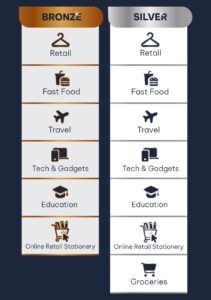
Vox customers, both new and existing, will be rewarded with retail choices, fast food options, travel discounts, reduced prices on tech and gadgets, access to lower costs for online education options, online retail and stationery purchases, and up to R1,250 in grocery rewards every month (Silver Tier only).
Simply by signing up with Vox Rewards, Vox customers get help with their budgeting and planning, across a number of different categories.
Calling all fashionistas: Update your wardrobe with up to 10% off retail gift cards from Edgars, Legit, Style and Beaver Canoe OR get 10% off online purchases at BRANDZ.
Enjoy takeaways: Treat your tastebuds with discount coupons from KFC, Steers, Debonairs Pizza and Hungry Lion.
Enjoy travel deals: With partners including FlySafair, Citiliner, Intercape and Luxliner.
Tech and gadgets: Keep up to date with Dress Your Tech, and enjoy up to 25% off (minimum spend of R500 online), as well as up to 8% off ASUS.
Online learning: Empower yourself through access to online learning through IT Upskill.
Online Stationery: Enjoy 10% off all your online stationery purchases at Statesman Stationery.
Groceries (Silver Tier only): Save up to R1,250 on groceries every month by using your Shoprite & Checkers coupons.
As you can see, the Vox Rewards are designed to help our customers with financial assistance in a holistic way.
Why not register today to start enjoying the benefits available to you through Vox Rewards? Visit our website at https://benefits.voxrewards.co.za – the process of signing up and participating in the programme is simple!
We look forward to signing up our new and existing customers and helping you to put real cash value back into your wallet.
Frequently Asked Questions
What is the Vox Rewards programme?
Vox Rewards is a loyalty programme for qualifying Vox customers that provides discounts, coupons and monthly savings across retail, food, travel, tech, online learning and groceries.
When did Vox Rewards launch?
Vox Rewards officially launched on 17 November 2025.
How much can I save on groceries?
Silver Tier members can save up to R1,250 per month using Shoprite & Checkers grocery coupons.
Which partners and discounts are included?
Partners include Edgars, Legit, BRANDZ, KFC, Steers, Debonairs, FlySafair, Dress Your Tech, ASUS, IT Upskill and Statesman Stationery, among others.
When ‘Kiwi’ means more than just nicely-packaged Vitamin C
Vox is shaking up some common kitchen features into Connectivity territory with our newest offering: Vox Kiwi Home Wireless.
Yes, it looks like a kiwi fruit (the branding).
Yes, it’s microwave (the connectivity technology).
No, it’s got nothing to do with your kitchen and everything to do with your Internet Connectivity!
Vox Kiwi Home Wireless is a Fixed Microwave connectivity solution available countrywide in selected areas where Fibre isn’t available, providing a Fibre-like experience and quick installation. So let’s take a look at what makes it such a juicy offering.
Not Just for the Kitchen
Fixed Microwave Internet – also known as Wireless – is a great alternative to Fibre, especially in areas where the Fibre Network Operators (FNOs) haven’t yet laid the required cabling infrastructure. Microwave signals provide a fixed wireless broadband connection through a high-capacity Microwave radio link, with speeds up to 200Mbps, and widely available.
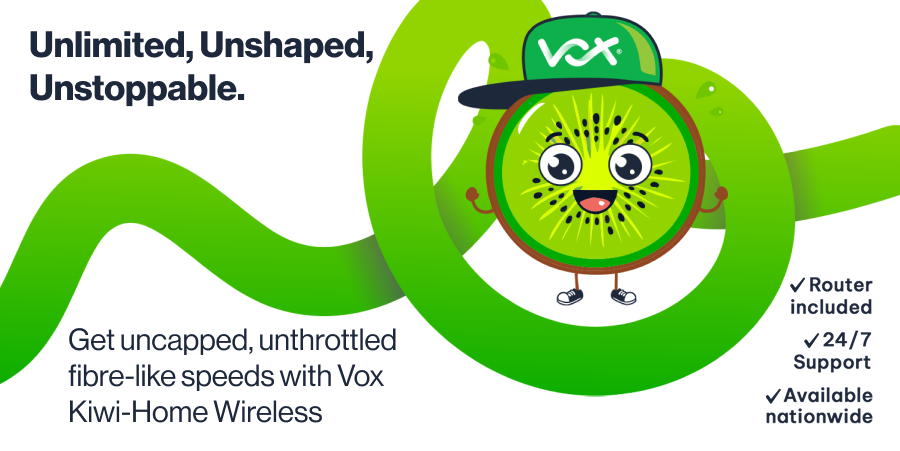
The Vox Kiwi Home Wireless service is Uncapped, Unshaped and not restricted to any Fair Use Policy – it’s perfect for the home user who needs more for less!
Having a capped connectivity service essentially means that your internet access will be cut off as soon as you reach your data cap.
Uncapped Internet plans with a Fair Use Policy (FUP) limit the amount of data you can consume at your purchased speed. If your data threshold has been reached, then your speeds will be slower for the rest of the month.
Uncapped internet plans without a Fair Use Policy (FUP) don’t limit the amount of data you can consume and do not throttle your service. Users don’t have to worry about exceeding data limits and facing slower speeds or additional charges. Connectivity is never interrupted, providing a seamless browsing experience regardless of your usage experience.
And so, Vox Kiwi provides an uncapped, No FUP Fixed Microwave connectivity option that gives you constant, reliable and fast access to the Internet at all times, meaning that you will experience no drop in your connection speed, and you’ll have access to fast and reliable internet at all times – perfect for online gaming and streaming.
How It Works
The Vox Kiwi Home Wireless service provides a Fibre-like-experience, with low latency and low jitter, and high throughput.
Vox Kiwi uses the latest fixed Microwave technology, meaning we will be installing a small flat panel (about the size of a A4 sheet of paper) on your roof, as opposed to using a Fibre cable, as well as providing you with a free-to-use Wi-Fi router!
It’s quick to deploy in feasible areas, with no delays caused by trenching requirements and wayleave approvals, as occurs with Fibre installations (a wayleave is a contractual agreement between municipalities and a telecoms provider, enabling the provider to install, maintain and repair telecoms equipment).
Vox provides easy upgrades, to a service of up to 200Mbps, and our Managed Service offering provides you with 24 / 7 / 365 support.
When Life Gives You Lemons…
Vox took note of the old saying that says: ‘When life gives you lemons, make lemonade’, meaning that when you’re faced with a challenge, find a way to sweeten it. In this case, we prefer to say: ‘When life gives you lemons, choose Kiwis instead’, meaning that when Fibre is unavailable in your area, choose Fixed Microwave!
Now isn’t that something to sweeten the deal? Contact us for more information.
FAQs
What is Vox Kiwi Home Wireless? A fixed microwave (fixed wireless) internet service from Vox that uses a roof‑mounted flat panel antenna to deliver Fibre-like connectivity where Fibre isn’t available.
Is Kiwi Home Wireless uncapped? Yes. Vox Kiwi Home Wireless is uncapped and offered without a Fair Use Policy (no FUP), so you don’t face throttling when you use more data.
What speeds can I get with Kiwi Home Wireless? Packages scale up to 200Mbps in feasible areas. Exact speeds depend on site feasibility and the package you select.
How long does installation take? Installation is typically quick once feasibility is confirmed because it doesn’t require trenching or wayleave approvals; exact lead times depend on local scheduling.
Do I get a router and equipment? Yes. Vox supplies the roof-mounted microwave panel and a free-to-use Wi‑Fi router as part of the service.
Is Kiwi Home Wireless suitable for gaming and streaming? Yes. With low latency, low jitter and high throughput, it’s well suited to online gaming, streaming and real-time applications.
How do I check if Kiwi Home Wireless is available at my address? Visit vox.co.za to check availability in your area. Availability is determined by line‑of‑sight to the nearest microwave site.
We’re living in turbulent times, and many of us are getting hammered (financially) on all fronts. And so Vox is proud to be the first local ISP to offer our customers, both new and existing, a brand-new…
*drum roll*
*it-really-doesn’t-get-much-better than this*
… loyalty programme, named Vox Rewards, which is guaranteed to help you stretch those Rands, and put a bit of sense back into your monthly budget!
Our favourite local blogger, The Good Things Guy, has also commented on how cash-strapped many South Africans are right now – does any of this sound familiar?
Picking which bill will go unpaid this month;
Choosing cheaper options in the grocery store;
Cutting back on data; and
Skipping meals (when you’re not on a diet)?
If none of the above apply to you right now, then they could surely mean something to someone you know?
Perhaps these scenarios are also familiar:
Persuading your carnivorous teenagers that ‘meat-free Mondays’ should be done for the household grocery budget as well as the planet;
Scouring online ads for specials (coffee!); and
Not being offended when you get offered the pensioner discount at the till, when you’re still some years off retirement age.
The struggle is real.
And so Vox is thrilled to announce the launch of Vox Rewards, which is being offered to both our new and existing Home Fibre clients. Designed in tiers – you can work your way up the levels – Vox Rewards will offer our customers access to thousands of Rands in monthly savings, discounts, vouchers and coupons from some of South Africa’s favourite brands!
The Rewards available will vary depending on the tier that you’re on, but include the following from some of our favourite local brands:
Enjoy up to R1,250 monthly in grocery savings (tier dependent);
Tickle your tastebuds with discounts on takeout;
Enjoy deals on travel, tech and gadgets, and online stationery;
Empower yourself with savings on online learning;
Get access to free legal or medical advice; and
Put your best fashion-foot forward with fashion retailers.
At Vox, we’re working together to help you navigate the challenges of the economy, and put real savings back into your pocket.
Now you can once again make ‘meat-free Mondays’ a personal choice, and not a financial survival strategy.
Watch this space – and our social media platforms – for more information coming soon!
Live Life in the Rewards Lane with Vox Fibre. Call us on 087 805 0003 for more information.
FAQs
What is Vox Rewards?
Vox Rewards is Vox’s new tiered loyalty programme offering discounts, vouchers and savings to both new and existing customers.
When does Vox Rewards launch?
Vox Rewards launched on 17 November 2025. Watch our social channels and your Vox account for full details.
Who is eligible for Vox Rewards?
Qualifying Vox customers, both new and existing, are eligible. Benefits depend on the tier you reach.
How do I join Vox Rewards?
Qualifying customers will receive launch and sign-up instructions from Vox. You can also visit our sign-up page: https://vox.co.za/sign-up
Are the rewards available nationwide?
Most partner offers are available across South Africa. Specific offers and participating retailers will be listed when the programme launches.
Can I move up tiers?
Yes. Vox Rewards is tiered so increased engagement and activity can unlock higher-level rewards.
Where can I get help or more information?
Call us on 087 805 0003 for more information.
Vox partnered with the South African Heritage Resources Agency (SAHRA) to deliver an integrated programme of connectivity, voice and network security, demonstrating how SAHRA connectivity and SD‑WAN for heritage sites can safeguard archives, improve communication and reduce costs. SAHRA requires a modern, secure and resilient IT environment to protect national heritage records and support remote working.
Planning SAHRA’s Connectivity and SD-WAN for SA’s Heritage Sites
The South African Heritage Resources Agency (SAHRA) is an agency of the Department of Sport, Arts and Culture – formerly known until 2000 as the National Monuments Council – which is tasked with an overall legislative mandate to identify, assess, manage, protect and promote heritage resources in South Africa, and to protect them for future generations.
National heritage sites need to be protected and safeguarded from damage or alteration, and it’s important to prevent development that could endanger their existence. As a national agency with additional provincial authorities, SAHRA works with local communities to identify heritage resources and record their oral and living histories, as well as increase public involvement in the preservation of heritage resources.
“South Africa has a very rich heritage,” says Stephen Muller, SAHRA ICT Manager, “and SAHRA works across a number of business units – including Heritage Properties, Burial Grounds and Graves, the Built Environment and Heritage Protection – to identify and protect heritage resources in South Africa.
“We have a very valuable registry in the form of our internal archives, encompassing a vast amount of heritage documents including old papers, plans, maps, information about graves…. information from the past that it’s important to protect and preserve.
“Overall, our outlook for the future is to become significantly more digitalised, including with our registry and archives, and also as an organisation overall. The work done by SAHRA is valuable and it’s important that it’s assisted in the digital realm, to protect South Africa’s Heritage Sites in the physical realm.”
South Africa has eight World Heritage Sites, as follows: Robben Island (Western Cape), iSimangaliso Wetland Park (formerly known as the Greater St Lucia Wetland Park in Kwa-Zulu/Natal); the Cradle of Humankind (Gauteng), Maloti Drakensberg Park (Kwa-Zulu/Natal), Mapungubwe Heritage Site (in Limpopo province, located at the border of South Africa, Zimbabwe and Botswana), the Cape Floral Kingdom (Western Cape), the Richtersveld Cultural and Botanical Landscape (in the Northern Cape, along the Orange River border with Namibia) and the Vredefort Dome (Free State).
In addition, there are also several heritage sites declared by SAHRA, which include the Castle of Good Hope, the Bushmanskloof Rock Painting Landscape, the Daljosafat Cultural Landscape, the SS Mendi Memorial, the South African Astronomical Observatory, Liliesleaf Farm and the West Coast Fossil Park, among others.
SS Mendi Memorial
The Business Challenge
“It’s our intention to have a proper electronic document records management system in place so that we can get all our information, including our records and administrative systems, more digital,” explains Muller.
“We are moving forward in this regard; for example we have a YouTube channel and we use it to broadcast on pertinent issues, including a webinar in September – which is Heritage Month in South Africa – which is geared towards allowing the public to share in the conversation. I like to say that even though we’re a heritage organisation, it doesn’t mean that our technology or infrastructure needs to be heritage as well!”
In the quest to keep SAHRA’s digital processes and communications systems modern and not ‘vintage’, the organisation has carried out a significant number of implementations or upgrades in the past 10 years or so. These include such important technology elements as:
Business Fibre connectivity;
Voice and Telephony solutions;
Backup of data;
Foundational network security; and
The implementation of an SD-WAN solution.
Some of these implementations have been carried out at SAHRA’s head office in the Western Cape, and others have been at regional offices. SAHRA operates across four sites around the country. Muller clarifies that there have been some challenges previously with getting all the sites connected with fast connectivity, including the use of a slow ADSL line at one of the regional offices.
“Our concerns were around data security and service continuity, as well as site integrations that were required to interlink all our colleagues and allow them to interact and integrate with our existing systems and offices. Vox was able to address these requirements through well detailed bids,” he explains.
The Business Solution
As a government entity, SAHRA is required to follow strict bidding / tender procedures each time a new project or upgrade over a particular Rand value is required. Muller explains: “Being a government entity, we have to follow a formal public procurement process and that’s always done by a means of competitive bidding. SAHRA’s relationship with Vox began when we had to shift our existing voice solution, and then we also added in the Internet connectivity as well. Later on, we found the need to include managed firewall services and most recently we have had a requirement for an SD-WAN solution.
“On each of these occasions, Vox has submitted separate tender documentation in response to the advertised tenders. In summary, Vox has helped SAHRA to improve on our operational efficiency, including the enhancement of our remote working capabilities. Additionally, Vox has helped us to strengthen our cybersecurity posture, while also reducing infrastructure costs over time.”
Vox was the successful winner of a number of tender processes for SAHRA in recent years, as follows:
2018/2019: Hosted Digital Communication System
Fibre connectivity
Verto Hosted PBX and Yealink handsets
Uncapped Voice
Communications Manager (TMS)
Network Cabling
Chrome Air (Voice over LTE)
Number porting
2020: Poly Studio VC Solution
2021: Veeam Backup & Replication Enterprise Plus
2022: Connectivity and Voice and Network security
Primary and failover connectivity at five sites
Consists of fibre, wireless and LTE
Moved from Verto Supreme to 3CX Cloud for PBX, Unified Communication and mobility services
Uncapped Voice
Fortigate Firewall at five sites
2024: Connectivity and Voice and Network security / SD-WAN
Provision of two stand-alone internet links at four sites
Consists of fibre, wireless and LTE
Moved from Verto Supreme to 3CX Cloud for PBX, Unified Communication and mobility services
Uncapped Voice
Fortigate Firewall at five sites with SD-WAN for WAN resiliency
René Minnie, Key Account Manager at Vox, clarifies that the most recent 2024 upgrades are of particular interest and significance for SAHRA, involving upgrades to the entity’s connectivity, voice and network security. She says: “When we look at the migration from Verto Supreme to 3CX Cloud, we see that Vox is providing SAHRA with a solution that is future-proof and rich in functionality, and which allows more control. With regards to the implementation of an SD-WAN solution, it is important to note that Vox has provisioned for the ability to use both links at each site.
“As for the benefits of SD-WAN, it’s a modern networking solution that simplifies the management and operation of a wide area network (WAN) by decoupling the network hardware from its control mechanism, with key benefits including improved network performance, cost efficiency, enhanced security, simplified management, and scalability and flexibility.”
More details on the benefits of SD-WAN are as follows:
Improved Performance: SD-WAN intelligently routes traffic across the most efficient paths, reducing latency and improving application performance, especially for cloud-based services.
Cost Efficiency: SD-WAN allows businesses to use lower-cost internet connections (like broadband) alongside or instead of expensive MPLS links, significantly reducing WAN costs.
Enhanced Security: Built-in encryption, firewall capabilities and centralised security policies help protect data across all network endpoints.
Simplified Management: Centralised control makes it easier to configure, monitor and manage the network, reducing the need for manual intervention and on-site IT support.
Scalability and Flexibility: SD-WAN supports rapid deployment across multiple locations and adapts easily to changing business needs, making it ideal for growing organisations.
A Strategic Partner Towards the SAHRA IT Unit
Muller says he has been very happy with both the service and the products received from Vox overall, and enjoys an extremely positive relationship with Vox. He clarifies: “The service levels have always been consistently high, and in fact have always exceeded what we at SAHRA have requested. We also very much appreciate the scalability of the available offerings.
“You could say that Vox has essentially become a strategic partner towards the SAHRA IT unit, and as a company, its employees and divisions are very good at communicating the available offerings, both for a present requirement as well as for future possibilities and planning – I find Vox to be well-structured and transparent.”
Muller also praises the quality of Vox’s tender documents, which, he says, are unfailingly of a high quality and provide all the information – and sometimes more – than actually required.
“Usually, we look to see that the potential service providers are able to meet or even exceed our minimum requirements,” he explains. “Then we look at proven reliability and uptime, scalability, security and compliance. Cost-effectiveness plays a vital role as well, and we also look at strong support and after-sales service.
“Vox scores consistently highly across all these categories, including with excellent service and competitive pricing across all its products. The type of bid received from Vox overall is always excellent. No matter big or small, there’s always enough information. If it’s a specific brand or model mentioned, there will be a specification sheet that paints a clear picture.”
Minnie adds that the interactions with Muller and the rest of his team at SAHRA have always been most pleasant: “As a company, people across a number of divisions at Vox appreciate SAHRA’s business relationship, which is based on mutual politeness and respect. Our two companies work extremely well together, and we look forward to continuing to be of assistance to SAHRA for many years into the future,” she says.
“I believe that in Vox, SAHRA has found an excellent partner and over the years, we have met regularly and enjoyed smooth operations overall. And so if I could sum it up, Vox’s offerings are a clear commitment to a partnership with long-term value overall, because of the scalability and expansions that are offered by Vox,” concludes Muller.
What is SD‑WAN and why is it important for heritage institutions? SD‑WAN is a modern WAN architecture that intelligently routes traffic across multiple links. It improves performance, resilience and security, which is critical for institutions needing reliable access to cloud archives and remote collaboration.
Which Vox products were implemented at SAHRA? Vox implemented Business Fibre, voice platforms (Verto Hosted PBX historically and migration to 3CX Cloud), Yealink handsets, Fortigate firewalls, Veeam backup and Poly Studio VC, plus wireless/LTE failover.
How does SD‑WAN improve security? SD‑WAN supports centralised security policies, encryption of WAN links and integration with managed firewalls, reducing exposure for distributed sites and sensitive data.
Can SD‑WAN reduce costs for government agencies? Yes. By enabling the use of lower‑cost broadband and LTE alongside fibre, SD‑WAN can lower WAN expenses while maintaining performance and resilience.
How did Vox ensure compliance with SAHRA’s procurement rules? All implementations were awarded through formal competitive tenders, with Vox submitting detailed, compliant bid documents for each procurement phase.
Will SD‑WAN help with disaster recovery and backups? SD‑WAN improves connectivity resilience which supports replication and backup workflows. Combined with solutions like Veeam, it strengthens overall data protection and recovery capabilities.
Is 3CX Cloud suitable for public sector organisations? 3CX Cloud provides unified communications, mobility and scalability, making it suitable for public sector needs when paired with secure network infrastructure and managed services.
How can heritage organisations begin modernising their IT? Start with a connectivity assessment, define continuity and security requirements, and procure resilient links, firewall protection and a future‑proof voice platform. Consider a phased tendered approach similar to SAHRA’s.