“No, but you are welcome to access my Wi-Fi – let me give you the password.”
The Internet and Wi-Fi are not the same. Nobody owns the global Internet, but people pay for their connectivity and Wi-Fi services (to the home or office) to access the Internet. Knowing the difference makes for clearer understanding and communication.
And just as it’s the nature of water to flow freely through a well-built system, so does information on the internet when it’s enabled by the correct infrastructure. Wi-Fi enables us to access this information without having to plug in our devices through a cable – let’s take a look.
The Internet of Possibilities
Back in its earliest days, people had to plug their devices into an ethernet cable (or before that, an ADSL connection, which was essentially a Telkom landline) to connect to the Internet.
That’s why people talked about ‘Being online’ – because you were ON the internet, but only because you were connected to a LINE (i.e. the cable).
Today, most people connect to the Internet in their homes (or at their office premises) through a wireless connection, in other words through Wi-Fi access. It’s a huge step up from having to have your device constantly plugged in to remain connected.
So how does Wi-Fi access enable wireless connectivity?
From Fibre Outside to Wireless Inside
Your home Wi-Fi network begins with Fibre Optic cables that are laid outside your property within the neighbourhood by the fibre network operators (FNOs). Through these Fibre Optic cables, Internet data is transmitted at the speed of light.
When you sign up for a Wi-Fi service, an internet service provider (ISP) – like Vox – then takes over. The ISP links the FNO Fibre box outside your property boundary with a separate (shorter) Fibre Optic cable to an optical network terminal (ONT) inside your home.
The ONT is linked with one last short cable into your Wi-Fi router, which then ‘converts’ Internet data received via the Fibre optics into radio signals, to create your home Wi-Fi network.
And voila! You and your devices have access to wireless Internet access in your home.
Internet Like Water
Much like water, the Internet, with its constant access to information and services, has become fundamental to modern life today. So you could also think of the process like this:
Firstly, the Internet is the water that is constantly flowing.
The Fibre cables are your hosepipe – the actual infrastructure that carries the Internet to you.
Your Wi-Fi router is the primary sprinkler that makes the Internet easily accessible. Wi-Fi lets you access the Internet without having to literally plug in your device.
Finally, mesh units or access points placed strategically within your home further sprinkle your Wi-Fi everywhere it’s needed, allowing for the freest possible flow of the Internet and the information it allows us to share.
From the way we communicate and work, to how we shop, bank and entertain ourselves, the Internet has revolutionised multiple aspects of our lives.
Time to Leave Your Business Rental Lease – Or Not?
Employees are collectively one of an organisation’s most valuable assets, and if they’re motivated, your company is more likely to achieve its best possible results. It’s therefore good sense for management to check in periodically on what makes their employees happy – besides salary increases, of course.
According to the latest Cisco Global Hybrid Work Study, skilled South Africans prefer to work remotely at least some of the time, with almost 95 percent of the local respondents (from a global poll of 28,000 participants) wanting to work either in a hybrid or fully remote working model.
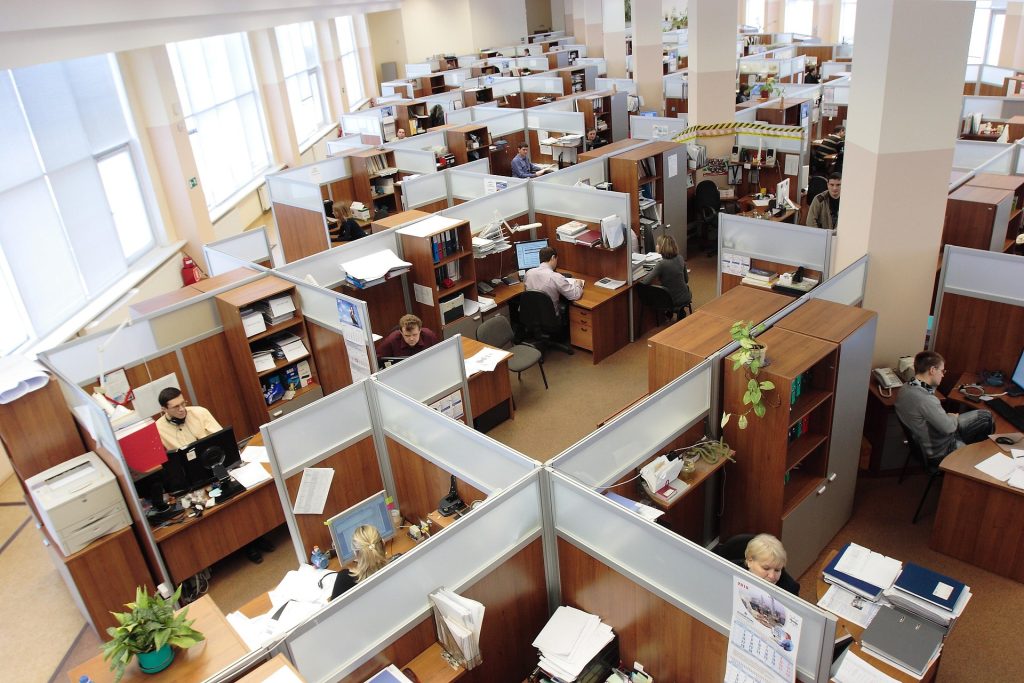
It therefore makes good sense to consider the possible benefits of remote or hybrid working arrangements, to both the organisation as well as the workforce. One of the employer advantages could include needing less office space, thereby freeing up significant rental or maintenance costs.
Remote But Not Removed
Employees who enjoy working remotely and are enabled to do so with the correct tools and infrastructure (a decent laptop and a fast and reliable internet connection are key) value a potentially better work-life balance. This includes not having to spend hours commuting every week, and so gaining back time while also reducing stress.
Productivity has been shown to spike because of reasons such as people getting more sleep, having fewer distractions from colleagues, and experiencing improved morale overall. With lengthy commutes out of the equation, attendance should also improve.
Video conferencing platforms such as Microsoft Teams allow geographically dispersed colleagues people to have virtual meetings, conduct presentations, and foster face-to-face interactions. This also allows organisations of all sizes to hire in top employees from a global talent pool, without being bound by location limitations (providing that differences in time zones are managed efficiently).
However, this doesn’t necessarily mean that your organisation should immediately terminate its rental lease, or sell a corporate property investment at the first available opportunity – not everything about remote working is advantageous.
Isolation and Other Issues
Going to the office regularly can bring structure and routine to people’s lives, while in contrast, working remotely can be isolating and lonely for some. Managers might worry that their team members are not working as efficiently as they would be in the office, and conversely, some employees can struggle without face-to-face leadership input.
It can also be more challenging for remote employees to find and locate all the information they need. Additionally, remote working can bring decreased collaboration, with fewer opportunities for employees to talk to each other during breaks, thereby cementing workplace friendships and cooperation.
Enter the ‘middle ground’.
Saying ‘Hi’ to Hybrid
A hybrid workplace model mixes in-office and remote work to offer employees flexibility and support. In a hybrid workplace, employees typically enjoy more autonomy and better work-life balance – and are more engaged as a result. Employers benefit by building a more productive and stable workforce, with people more easily able to engage and learn from each other.
Unified digital workplace platforms make it easier for employees to access all their work-related data and applications, while also assisting with effective communications. For example, Microsoft Teams facilitates effective communications among skilled colleagues, no matter where they are based. As a Microsoft Operator Connect partner, Vox can assist your employees to make and receive phone calls directly within Teams, for both landline and mobile phones.
Another option is to have your employees using Vobi, from Vox – our mobile softphone app, that gives users the ability make and receive voice and video calls, including in app texting from their mobile phones using the Vox network. Designed for both home users and businesses, Vobi allows users to benefit from reduced call rates on video and voice calls across all networks. Vobi enables you to route your home phone and/or office phone calls to your mobile phone, ensuring you are always available.
Getting Real with Real Estate Issues
For employers, renting office space – or owning and maintaining it – can be very costly. Remote working can lower costs by reducing the amount of office equipment and space required, potentially allowing your organisation to move into smaller premises – or even forego a physical space entirely.
Instead, all employees could work remotely, and your company might simply hire meeting rooms or co-working space as and when needed.
If an office premises is owned by a company, selling it outright could put money back into the organisation.
Where to From Here?
We believe the future of work for skilled employees will continue to embrace both hybrid models and fully remote opportunities, with these options being driven by modern technology, increased flexibility, cost savings, a desire for an improved work-life balance, and being able to hire people from a global talent pool.
The Covid-19 pandemic first turned people’s homes into their offices. Now, the aftermath can drive a movement in which unused offices can be turned into homes. Around the world, including in South Africa, property developers are looking at ways to turn empty office buildings into housing solutions. While not every empty office building is suitable for conversion, it offers interesting possibilities.
The Atlas in Sunninghill, the largest office park conversion to a residential complex in SA, according to Africrest Properties.
And so, if your organisation is going to embrace a fully or partially remote solution, do you have a building to sell? It could be an added bonus.
Is that all? The importance of offering ‘more’ in a saturated environment
Today’s world is defined by Connectivity in ways that seemed unimaginable when the clock first ticked over into the current millennium. Whether it’s WhatsApp, X, LinkedIn, Pinterest, Facebook, Snapchat or TikTok, people love being connected, and online is here to stay.
Here at Vox, Connectivity lies at the heart of everything we do.
As a leading South African Internet Service Provider (ISP), we are all about connection, communication and conversation – but we also know that we’re not alone. The local telecoms landscape has more than 20 ISPs in operation – you could call it a saturated market.
And so Vox goes above and beyond to offer our customers more than the competition – you definitely won’t hear the phrase: ‘Is that all?’ about any of our offerings! At the heart of our multiple solutions is the goal of being able to offer every South African access to affordable high-speed broadband.
Let’s take a look at how we can get our customers connected.
Dealing With Market Saturation
In addition to high-speed broadband, Vox provides many excellent value-adds. As well as lightning-fast Internet, we offer Wi-Fi solutions to keep you connected; cost-effective and quality Voice over Internet Protocol (VoIP) offerings; energy back-up products for power outages; and even cell boosters to enhance your mobile phone experience – no more ‘dead’ zones in the house!
You can look to Vox for the following:
Our connectivity solutions begin with Vox Fibre, which comes with value-added extras upon sign-up, like free installation and a free-to-use router.
When Fibre is unavailable, other options are provided:
Vox Wireless presents high-speed, fixed Microwave Data Connectivity that uses the most innovative microwave technology on the market. It comes with free installation, meaning more money to invest in your business.
Consumers and businesses also have the option of choosing Fixed LTE, 5G, and satellite, depending on factors such as their needs and budget, and geographic location.
To ensure that our customers get the most out of their Internet solution, we supply best-of-breed Wi-Fi devices, which allow you to maximise your Wi-Fi experience. We also offer managed Wi-Fi network solutions, which enable remote software, firmware updates and reduced technician callouts with remote troubleshooting and fault remediation. Additionally, our expert advice is always available to enhance your overall network experience.
We also provide excellent access to power solutions for those times when the power goes down, to keep your Wi-Fi running even in an energy outage.
Vox’s shared Mobile Data offering is an ideal mobile wireless solution for a family with multiple SIM-enabled devices, to keep everyone connected while maintaining control over your mobile data bill using our simple online portal.
What Sets Our Connectivity Options Apart?
Vox offers our clients high network availability and an extensive national footprint, as follows:
We have a huge range of subscription and pricing solutions, and our sales agents will help you choose the best package for your needs, rather than upselling you on the most expensive.
Vox subscribers, both consumers and businesses, have the option of adding backup Internet solutions to their Fibre packages (like LTE or Wireless) to ensure they stay online all the time.
Our Proactive Network Monitoring offers safer, more secure Internet access and lower latency.
A 24/7/365 in-house Service Centre is available for troubleshooting and incident response for all our customers, across any product.
As far as Voice offerings are concerned, we believe that we’re the number 1 VoIP provider in the country.
Individual consumers and SMEs can make use of our Vobi softphone application, which is unique to Vox, and allows customers to make and receive high quality Voice and Video calls over Wi-Fi, 3G, 4G-LTE and 5G on the Vox network.
Organisations can make use of our Titanium partnership (the highest status possible) with global cloud PBX leader 3CX, to experience a comprehensive communication platform that includes Live Chat, WhatsApp, Facebook, SMS and Video Conferencing.
Vox teams are situated in multiple locations across the country, supported by our extensive footprint of over 1 000 business partners to ensure that our customers receive fast, efficient service wherever they are, whenever needed.
Value-Added Service Offerings
We take full responsibility for all our technical implementations and systems, from concept to installation.
The Service Centre also continuously monitors all of Vox’s networks and infrastructure, to ensure that quality of service is always maintained.
Specialist product managers are assigned to oversee each portfolio, for continuous research and development to ensure each product is always of the highest standard.
An extensive team of account managers and technical engineers offers convenient customer service and solution implementation.
If you’ve decided to upscale your business with better Connectivity, don’t stop there! Vox can also organise a customised domain and email address for you, to turbocharge your professionalism, as well as taking care of your email archiving needs with the most comprehensive and hassle-free cloud email and compliancy solution on the market.
Expertise, innovation and superior quality products are at the heart of Vox. Ultimately, we have everything required to meet our customers’ needs at every stage of their journey – both now, and in the future – and that’s how we keep South Africans staying connected together.
Imagine a world in which people are completely reliant on a Super-Machine for all their needs…
Living in self-contained areas, they have little social contact, but are content because they’re sheltered and warm, with access to food, communication and entertainment – all enabled by the Machine. But one day the Machine goes down, and society crashes into a new reality. Does it sound… plausible? This is actually the plot of a science-fiction book written by EM Forster, called ‘The Machine Stops’.
In the real world, when people ‘sheltered in place’ during the Covid-19 pandemic, South Africans embraced online communication, shopping, banking, remote working and entertainment like never before – and when the pandemic eased, many people didn’t particularly want to go back ‘outside’ in quite the same way.
So even though we aren’t living in the sci-fi world of ‘the Machine’, the question is: How reliant are people today on the Internet? And has modern Internet usage made us more vulnerable to previously unimagined threats? The answers might be a bit shocking.
The Power’s Out
Let’s start with one of the basics: electricity. In South Africa, we’re used to power outages. Over time, we’ve come up with multiple solutions to deal with challenges like no heating or lights, cooking on gas instead of electricity, and having the Wi-Fi go down. But that was all because of Eskom’s troubles, which (whisper so as not to jinx things) might be on the mend at last?
Much more alarmingly, there are places in the world where the power can be taken out by acts of war, because the rise of technology means infrastructure is now linked to the online world. This brings improved functionality to critical national infrastructure sites around the world, but also new vulnerabilities – including electricity grids.
For example, Ukraine has experienced documented cases of cyber attacks on its power grid that have been attributed to its Russian enemies, in addition to actual physical attacks via traditional weapons of war.
The reality is that the Internet is now so intricately involved with our critical infrastructure that power outages – which can be life threatening in some situations – can be caused by online activity as well as physical damage. So yes – modern Internet usage has definitely made us more valuable to this particular threat.
The Internet of Threats
On a smaller scale than targeting national infrastructure, there are other ways in which the Internet can cause us to be vulnerable in our daily lives.
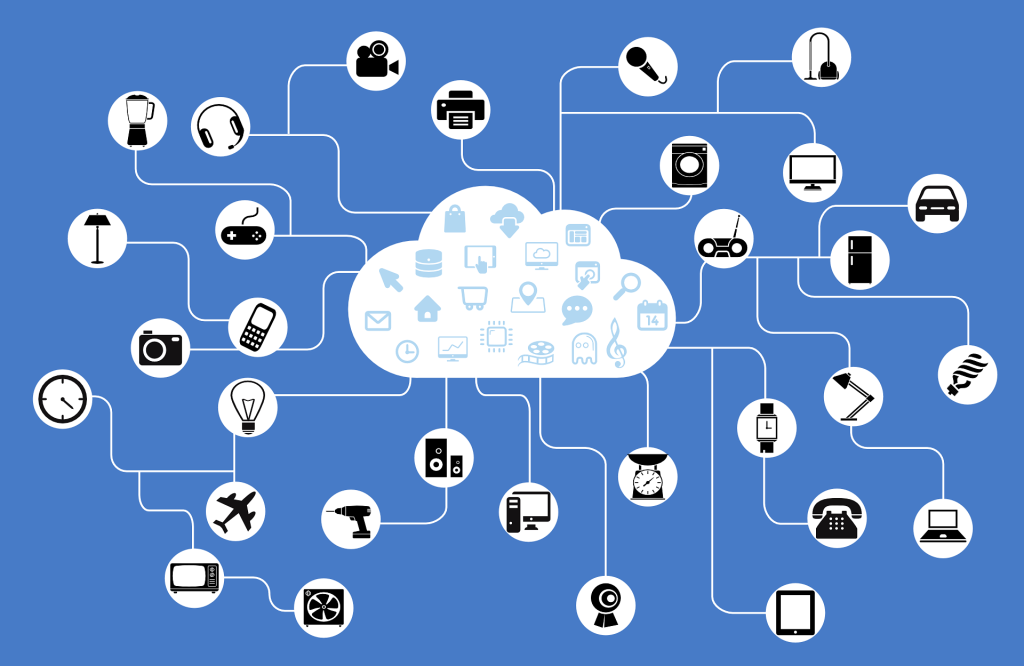
We’re used to connecting different devices to the Internet, including industrial sensors and CCTV cameras, as well as home devices such as security cameras (again), Internet routers, smart utility meters, connected TVs, and monitors for our small children’s bedrooms. Together, they form part of the Internet of Things (IoT), geared to make life easier.
However, many of these devices are set up with a default password already installed -that is something as basic as ‘Password’ – with the onus on the owner or installer of the IoT device to change it once in use. But frequently, the password isn’t changed – and in addition, there are lists of widely available (if you know where to look) IoT device passwords available on the Internet for threat actors to access quite easily.
The danger of IoT devices being hacked includes strangers spying on your home and frightening your kids through the baby monitor (yes, this really has been done), as well as, at a more industrial level, being turned into ‘zombie bots’. The so-called zombies become part of a botnet – a network of private computers or IoT devices infected with malicious software, and controlled as a group (without the individual owners’ knowledge) to carry out cyber crimes.
In late May 2024, the US Federal Bureau of Investigation (FBI) carried out an operation to take down what was thought to have been the world’s biggest-ever botnet, made up of millions of computers, in nearly 200 countries, that had been infected with malware. Selling access to this network enabled serious crimes around the globe, including financial fraud, identity theft and bomb threats.
It sounds like something from the movies, but unfortunately it’s not – it’s a reality today of modern Internet usage. So how do people and countries protect themselves from such possible cyber threats?
Protecting Your Data and Yourself
There’s obviously not a great deal that individuals can do to protect national infrastructure – that’s up to the sovereign nations concerned. As far as IoT devices are concerned, hopefully manufacturers, service providers and security experts are becoming more invested in developing effective strategies to improve their security – but it’s imperative that the consumer also shares the responsibility.
Here are some tips to make yourself less vulnerable to Internet threats:
For any device in your home: change the default password to something stronger.
Ensure that you have a strong Wi-Fi password for your home network.
Install all updates from the manufacturer to ensure you have the latest security patches.
Install, and then continue to update, anti-virus and malware software on your computers.
We are definitely more connected today than ever before – even if not actually within an all-powerful Machine – but at the same time, we have also become more vulnerable to threats from the Internet. Terrorists and criminals have shown their ability – and unfortunately their willingness – to use technology to harm countries, organisations and individuals. The reality is that no one is immune.
Here at Vox, we understand the vulnerability that comes with modern Internet usage. The only way to stop cyber criminals from making use of ‘the Machine’ in ways that unleash harm is to be constantly more aware and proactive.
Fibre optic Internet uses light through glass Fibres to deliver far higher speeds and steadier performance than copper ADSL, making it ideal for streaming, gaming, remote work and business continuity.
Why would you NOT want to make use of the speed of light?
Because let’s face it: nothing in the current known universe is faster.
The DC Universe aside, the speed of light is an amazing thing. According to Einstein’s theory of relativity, it’s the fastest speed in the universe: 300,000 kilometres per second in optimal circumstances.
It’s even more amazing to think it can be used to power our Internet usage.
But this only happens if your Internet service provider is using Fibre Optic cables. If your service provider is still using copper lines as the (much) older technology, Internet at the speed of light is completely out of the question.
How Fast Do You Want to Go?
Internet speed means the speed at which information or Data travels from the web to your connected device. It’s calculated in megabits per second (Mbps) and the downloading speed (getting information from the Internet to your device) is often higher than the uploading speed (the other way around – sending information from your device to the Internet).
In the old days, our Internet connections were only able to run on ADSL (Asymmetric Digital Subscriber Line). ADSL uses telephone lines (Telkom lines) to transmit Data along copper cables from your nearest telephone exchange to your home or office. These are frequently unreliable and heavily shared among users – which slows down the possible speed of your connection.
Two factors slow down ADSL speed significantly:
Distance:The further away you are from the exchange, the greater the distance the Data has to travel, and the slower your Internet.
Traffic:When copper cables experience more traffic, the wires heat up and the connection slows.
It’s a bit like driving on the highway: when you’re the only driver on the road, you can reach a very satisfying speed, but when it gets crowded, traffic slows down. ADSL can provide average speeds of approximately 4Mbps.
In contrast, Fibre Optic technology transmits Data as light impulses along flexible glass Fibres, enabling users to achieve speeds that are about 500 to 1,000 times faster than your average ADSL line. So how does the marvellous invention of Fibre Optic cables use this speed for Internet services?
Fun fact: The first actual Fibre Optic cable was invented in 1952 by UK-based Indian-American physicist, Narinder Singh Kapany, who was a pioneer in the field of Fibre Optics and popularised the term.
Harnessing the Speed of Light for Communications
Fibre to the Home (FTTH) and Fibre to the Business (FTTB) services use Optical Fibre to deliver high-speed Internet directly to individual buildings. These Fibre Optic cables, composed of strands of glass, transmit Data using light pulses. Users can achieve incredible speeds of up to 1,000Mbps.
Some of the benefits of Fibre Optics include the following:
High speed: Starting with the most obvious point, Fibre Optics brings you the best available speed within the current Internet landscape.
Reliability: Lots of ‘hiccups’ take place during transmission in a copper cable Internet, all the time. With Fibre Optic Internet, a smooth and constant flow of Data means this no longer happens.
Fun fact: This is important for gamers, where a small blip at the wrong moment can lose the game.
No difference between upload and download speeds: Depending on your needs, you can choose an Internet package that gives you symmetrical speeds for both downloading and uploading. With ADSL copper cables, this isn’t possible (it’s in the name, after all: Asymmetric Digital Subscriber Line).
Connecting multiple devices: The steady signal, with more bandwidth, means you can connect with multiple tablets, laptops, smart TVs and phones at once. Even with different people streaming music and video simultaneously, Fibre Optics can handle the load.
Safety and security: Unlike copper wires, Fibre Optic cables have no second-hand value for criminals, which means cables are not usually targeted for theft. They are also much less easy for cybercriminals to hack.
Higher quality: Ultra High-Definition TVs pack significantly more pixels into the same area, which makes for better images, but also uses more bandwidth. For Fibre Optic networks, it’s not a problem.
Consistent reliability: Fibre Optic cables are less susceptible to interference from weather conditions or other devices, so you’re less likely to experience outages or slow speeds on your network during peak usage times.
It’s clear that Fibre Optic networks are capable of much greater speeds and bandwidth than copper-based ADSL. In recent years, prices have also come down substantially.
Why not look into Fibre to the Home from Vox? Just plug in your home address and a map will show you all our Connectivity options available in your area.
What are you waiting for? Move towards the light!
FAQs
Q: How fast is Fibre compared to ADSL? A: Fibre commonly delivers speeds up to 1 000Mbps and can provide symmetrical upload/download rates; ADSL typically delivers much lower, asymmetric speeds that decline with distance from the exchange.
Q: Can Fibre handle multiple devices streaming at once? A: Yes, Fibre offers greater bandwidth and steadier throughput, so multiple users can stream, game and work simultaneously without noticeable slowdowns.
Q: Is Fibre more secure than copper? A: Fibre is harder to tap and has little resale value for thieves, making it more secure physically. It also supports network configurations (VLANs) that improve data separation and security.
Q: What’s the difference between Vox Fibre to the Home and Vox Fibre to the Business? A: Vox Fibre to the Home targets residential customers with high‑speed packages for streaming and everyday use. Vox Fibre to the Business offers dedicated options, lower contention ratios, VLANs and support packages tailored to commercial needs.
Q: How do I check if Vox Fibre is available in my area? A: Plug in your home address on the Vox availability page and select ‘Connect me’ to check availability and see current connectivity options for your location.
Not Just Entertainment: The Future of 5G in Business Communications
5G was developed to handle the growing demand for data and deliver faster, more efficient mobile networks. In doing so, it brings major improvements to how we connect, work, and communicate. While most people get excited about 5G for entertainment — lightning-fast downloads or smoother gaming — the real game-changer lies in what 5G can do for business communications and business operations.
Why Effective Communication Still Decides Business Success
Business communication — internal and external — is the backbone of operational success. When communication is strong, companies see higher productivity, quicker problem-solving, better relationships, and healthier company culture.
DecisionWise, a global consulting firm, found:
Companies with low employee engagement earn 32.7% less in operating income compared to engaged companies.
Companies with a highly engaged workforce see operating income rise by 19.2% within 12 months.
The message is simple: when communication improves, engagement improves, and the bottom line follows.
How 5G Transforms Business Communications
5G theoretically delivers up to 20Gbps download speeds, 10Gbps uploads, and latency as low as 4ms. Tests in South Africa reached average speeds around 250Mbps, equivalent to high-end fibre.
Its biggest strengths — speed, latency, bandwidth and efficiency — directly improve how companies communicate, collaborate, and operate.
1. Faster Speeds for Instant Collaboration
5G can reach speeds up to 100x faster than 4G LTE. This means:
Faster file transfers
Smoother video calls with clients and teams
Instant software updates
Faster access to cloud platforms and business tools
For fast-paced businesses, speed equals efficiency.
2. Ultra-Low Latency for Real-Time Performance
Latency is the time it takes data to travel from point A to point B. With 5G, latency drops to 1 millisecond — compared to 30–50ms on 4G.
Ultra-low latency benefits:
Real-time communication tools
Live collaboration
AI-driven decision-making
Virtual reality (VR) and augmented reality (AR) applications
Data-heavy IoT devices
Web pages load faster, systems respond instantly, and real-time technologies finally work the way they’re supposed to.
3. More Bandwidth for More Devices
Modern workplaces rely on multiple connected devices. 5G’s increased bandwidth allows:
More IoT devices operating at once
More users connected without slowdowns
Better performance in high-density environments
Reliable smart office automation
As businesses add more tools, sensors, and platforms, bandwidth becomes non-negotiable.
4. Improved Network Efficiency and Reliability
5G introduces technologies like:
Dynamic spectrum sharing
Network slicing
Both ensure users get the network resources they need without interruptions — even during peak usage.
This allows businesses to:
Automate processes
Host high-quality web conferencing
Enjoy consistent, reliable connectivity
Reduce downtime and performance bottlenecks
Reliable networks aren’t a luxury. They’re a requirement.
The Future: 5G Unlocks the Next Wave of Innovation
5G doesn’t just improve communication — it enables entirely new business models and capabilities.
5G supports advanced technologies such as:
Internet of Things (IoT)
Artificial intelligence (AI)
Augmented reality (AR)
Virtual reality (VR)
These aren’t new concepts, but 5G finally gives them the infrastructure to scale.
For example, VR in education and training is already accelerating. Forbes projects the global VR education market to reach US$13 billion by 2026.
With 5G, innovations like VR classrooms, remote diagnostics, AR-assisted engineering, and predictive automation move from “future tech” to daily reality.
Bring Your Business Comms Into the Future with 5G
The advantages of 5G — speed, low latency, bandwidth, and efficiency — make it a powerful upgrade for any organisation looking to improve productivity and communication.
Chris Boshoff unpacks how 5G technology has the potential to affect various aspects of everyday life, from streaming to smart homes – sooner than you’d think.
There’s a huge buzz today around the arrival of 5G, the latest advancement in wireless technology that has the potential to revolutionise our digital landscape – and with it our daily lives.
From incredibly fast data transfers to enabling smart homes and cities, 5G is set to be a game-changer. The fifth generation of wireless technology is expected to transform how we connect and interact with the digital world. Just imagine our current internet capabilities, but significantly enhanced – for example, with download speeds up to 100 times faster than 4G – and that’s what 5G is all about.
What the Current Hype is All About
5G technology is revolutionising the way we experience mobile connectivity, bringing a host of benefits to everyday life. Developed to manage the growing demand for data and enhance the efficiency of mobile networks, 5G delivers a range of improvements that make our digital interactions faster and more reliable.
One of the standout features of 5G is its peak speed capabilities. With 5G, downloading movies, streaming videos, and accessing apps and music happens in mere seconds. This increased speed translates to a smoother and more enjoyable user experience, reducing wait times and frustration.
In addition to speed, 5G significantly reduces latency, meaning the delay before a transfer of data begins following an instruction. This low latency ensures that web pages load almost instantaneously and that new applications, such as artificial intelligence (AI), the Internet of Things (IoT), and virtual reality (VR), perform efficiently and seamlessly.
5G also enhances network reliability and availability. With a more stable connection, users can enjoy uninterrupted service even in high-traffic areas or during peak usage times. This improved reliability is beneficial for personal use while also offering substantial advantages for businesses. Companies can leverage 5G to automate processes, engage in advanced web conferencing, and maintain consistent, high-quality connectivity.
The increased network capacity of 5G supports a higher volume of connected devices, making it easier to manage multiple smart devices and IoT applications simultaneously. This capacity is crucial for accommodating the growing number of connected gadgets in homes and workplaces.
Theoretically, 5G offers data transfer speeds of up to 20Gbps for downloads and up to 10Gbps for uploads, with a maximum latency of up to 4ms. Tests conducted in South Africa revealed average download speeds of around 250Mbps, which compares well to a fast fibre experience. Looking at the practical implications of 5G for both individuals and society is fascinating. When will this amazing new future arrive – and how much of it is here already?
So that’s what 5G can already do in the present. Just for fun, let’s look at connectivity, Hollywood-style.
Remember the much-loved Hollywood cult classic, ‘Back to the Future 2’?
This movie, starring Michael J Fox as street-smart teenager Marty McFly and Christopher Lloyd as the ‘mad genius’ scientist Doc Brown, was filmed in 1989 (35 years ago). It predicted quite a lot of the technology that we know and love today.
Drones as newspaper reporters and dog walkers: Drones today are becoming part of everyday life and new uses for them such as package deliveryare being constantly innovated.
The point is that a movie which is still regularly streamed today has accurately predicted some of today’s technology like smartwatches, video calling, flat screen TVs, biometric security scanners and digital currencies.
And in all these instances, super-fast data connections, and significant data capacity, lie at the heart of the applications.
Moving Into the Future – With 5G
However, we could also think: “Well, never mind ‘Back to the Future’, this is all ‘Back to the Present’ – so where’s the real future?”
This is where discussing 5G brings us today’s ‘Into the Future’!
Enhanced mobile connectivity: Waiting for videos to buffer, or large files to download, will truly come to an end. Additionally, the quality of our communications is set to improve dramatically, so that video calls will feature crystal-clear images and seamless audio.
Business and manufacturing: Remote work could become smoother and more productive with high-quality video conferencing and faster file transfers. In manufacturing, 5G could power the next phase of industrial automation. The high bandwidth and low latency of 5G could enable more sophisticated robotics and real-time monitoring of production lines, potentially increasing efficiency and reducing downtime.
Internet of Things (IoT) revolution: 5G is set to be the IoT backbone, bringing us closer to the reality of truly smart homes and cities. Imagine a refrigerator that automatically orders groceries when supplies run low, or a heating system that learns your preferences and adjusts accordingly. On a larger scale, 5G will enable smarter, more efficient cities. Traffic management systems could adapt in real-time to reduce congestion, and energy usage could be optimised with intelligent streetlights. Already, in Los Angeles, more than 3,000 of the city’s street lights are providing extended cellular and data connectivity to LA residents with 4G and 5G service, and much of the equipment is embedded in the poles.
Automotive industry: 5G will play a crucial role in the development of connected and autonomous vehicles. Cars will be able to communicate with each other and with infrastructure, potentially reducing accidents and improving traffic flow.
Healthcare transformation: Wearable devices could transmit real-time health data to healthcare providers as a general reality for everyone, allowing for more personalised care. IoT capabilities can continue to facilitate the reality of drones delivering packages for medical and blood supplies, as well as vaccines, in remote areas – this area has huge potential to, if you’ll pardon the pun, really take off.
Education and remote learning: The use of mixed reality in education and training can promote deeper understanding. With the use of headsets, visors and sensors, teachers can explain complex concepts to students in a sensory-rich environment.
Entertainment and media: Streaming services will be able to offer higher quality content with less buffering. 4K and even 8K video streaming could become common, providing viewers with an unprecedented level of detail and immersion. Cloud gaming services could allow users to play graphically intensive games on mobile devices. The low latency of 5G could also improve multiplayer gaming experiences.
As outlined previously, LTE customers today who already have high data usage of over 500GB per month are ideal users to adopt 5G technology. Not only does 5G offer better speeds and deliver more data throughput, it also creates a much better user experience for high demand use, as indicated above.
Even if LTE customers are gaming fanatics, but don’t use a lot of data, 5G will benefit them since it provides the improved latency that they require.
Technology has already had a massive impact on the way we work, play and live. However, with the introduction of 5G, we’re at the beginning of a new technological revolution.
It’s not only about having access to faster internet; it’s about creating a more connected and responsive world. As for flying cars… that’s still up in the air.
The internet is part of everyday life now and something that we access continually, whether it’s for online banking and shopping, working and studying, or gaming and entertainment options.
And the difference between having access to capped versus uncapped data can feel life-changing – not to mention that if you are constantly topping up your data, it can quickly become expensive. In comparison, Fibre to the Home (FTTH) provides lightning-fast, uncapped data – and the cost just might surprise you when you compare it to constantly having to buy data bundles.
Why not check out our Vox FTTH offerings and see how making the switch to uncapped data could change your life for the better?
What’s Your Story?
Almost everyone has had a bad experience with using uncapped data – so what’s yours?
Maybe you were working from home with an urgent deadline, but your Internet wasn’t up to the task and you missed the cut-off. (You also missed out on your next pay increase.)
Or perhaps your data ran out during a job interview? (Another potential salary increase that went whizzing by into the realm of ‘If Only’…)
What about that movie you were really looking forward to watching, but it stopped streaming halfway through? Or the times you were speaking to family members far away and the data-based call dropped, just when the catch-up was getting really enjoyable?
Maybe you were writing an online exam at home, but your data cut out and stopped you from submitting the paper. (You still passed, but that zero really brought down your grade average for the year.)
Running-out-of-data stories generally don’t end with a smile on the storyteller’s face – so maybe it’s time to ditch using a data package that needs constant topping up, and move over to the convenience and enjoyment of fast, uncapped data with Vox’s Fibre to the Home.
Problem, Solution: Enter Vox
If you’re still thinking: “Why Vox Fibre for your Home?” – well, Vox offers access to a home environment where super-fast Internet lets customers stream Netflix or YouTube without the annoying buffering. It allows you to connect multiple devices inside your home, simultaneously, on a single Fibre line. You can surf the Internet – for working, studying, gaming, shopping, socialising or simply being entertained – with no interruptions.
Long story short: Vox FTTH offerings bring you a home in which your Internet experience is reliable and fast (Eskom allowing, of course, and Vox has loadshedding solutions there too).
And not only does Vox FTTH bring you a fantastic Internet experience, it’s also pretty easy to sign up with us.
Easy Steps to Signing Up with Vox
Fibre Coverage?
The first step is checking that Fibre lines have been laid in the ground in your area. Go to the ‘Vox Shop’ to check out the useful coverage map. Simply put in your address – you can have a quick peak at the neighbours’ rooftops and surrounding vicinity if you enjoy cyber-sleuthing – to find out if Fibre to the Home is available in your area. The answer will come up very quickly.
Fibre Package
Next up is to choose a Fibre package option. Once you’ve matched the options to your needs, simply hit the ‘Send’ button and follow the instructions to input your details.
Quotation and RICA Time
Next, you will receive an emailed quote from one of our sales consultants. When you accept the quote, you’ll also need to send in your RICA documents.
A quick technical note: By law, you need to follow RICA procedures (the Regulation of Interception of Communications and Provision of Communication Related Information Act), which involves submitting certain documents, like your ID and proof of current address. RICA legislation was enacted to protect the security and privacy of South Africans.
Fibre Installation with the FNO
Once all your documents are processed, Vox will log a call with the relevant Fibre supplier associated with your chosen quotation package.
Another quick technical note: As an Internet Service Provider (ISP), Vox works with the Fibre Network Operators (FNOs) who own and operate the Fibre lines in the ground.
It’s a Date!
The relevant FNO will get in touch with you to bring a short Fibre line onto your property. Basically, the FNO’s job is to connect the Fibre outside in the street into your home, ultimately to be connected to your Vox Wi-Fi equipment.
The FNO will plan the route for the Fibre line and the location of the ONT inside your home, which you’ll be asked to accept and sign off.
Another quick technical note: The ONT is the Optical Network Terminal and is also commonly referred to as a ‘fibre box’. The ONT is what allows the fibre optic cable to be connected from inside your home, out through your property and to the fibre network at the street.
Once you have signed off the necessary paperwork for the Fibre line handover with the FNO company, it’s back to Vox.
Vox Wi-Fi Router
Vox will deliver your Wi-Fi router by courier. You’ll then set up the Wi-Fi router as per the self-installation instructions, which are simple and clear to understand. Welcome to an online experience that is easy, uncapped and FAST!
Come Home to Vox
Are you ready to make the life-changing move to uncapped data and super-fast internet?
With Vox, you will enjoy uncapped Wi-Fi, with unlimited surfing possibilities, an end to movies buffering, super-fast gaming and a working-from-home experience that, quite simply, works.
Just click here to find out more about signing up for FTTH with Vox.
Frequently Asked Questions
What is Vox Home Fibre and how does it differ from mobile data?
Vox Home Fibre is a fixed fibre connection to your house offering uncapped, high‑speed internet; unlike mobile data, Fibre provides consistent, symmetrical speeds and supports many devices simultaneously.
How do I check if Fibre is available at my home?
Use the Vox coverage map and enter your address. The tool will tell you immediately if Home Fibre is available in your area.
What documents do I need to sign up for Vox fibre?
You’ll need to submit RICA documents: a valid South African ID and proof of current address. RICA is a legal requirement for new internet connections.
What is an ONT and who installs it?
The ONT (Optical Network Terminal) is the fibre box installed by the Fibre Network Operator (FNO) to bring the fibre into your home. The FNO plans the route and hands over the ONT once installed.
Will Vox install my Wi‑Fi router?
Vox delivers your router by courier and provides simple self‑install instructions. Support is available if you prefer guided setup.
How long does installation take after I accept the quote?
Installation lead times vary by area and FNO schedules. After you accept the quote and submit RICA documents, Vox and the FNO will confirm an installation date.
Working together to build inclusive internet access can improve people’s lives.
Connectivity through the internet brings many benefits, but while internet access is something that many of us take for granted, accessing its benefits is still a challenge for many South Africans.
Greater connectivity allows people to learn new skills and advance their abilities. It also allows employers and businesses to create opportunities that will unlock future jobs and drive our economy forward.
The internet, you could say, opens up the highway to the future, providing tools, skills, benefits and opportunities. Like access to regular and efficient electricity and water supplies, reliable internet access should be part of modern life for everyone.
A New Basic Necessity
According to the World Bank[1], high-speed internet access is not a luxury, but a basic necessity for economic and human development in both developed and developing countries.
The World Bank clarifies: “(The internet) is a powerful tool for the delivery of essential services such as education and healthcare, offers increased opportunities for women’s empowerment and environmental sustainability, and contributes to enhanced government transparency and accountability. It also helps foster the social development of communities, including within the broader global context.”
The World Bank adds that the challenge is to expand broadband access to all, noting that: “Only about 35 percent of the population in developing countries has access to the Internet (versus about 80 percent in advanced economies).”
So where does that leave South Africa?
Spotlight on SA
The Independent Communications Authority of South Africa (ICASA) says: “As of October 2022, some 78% of South African households had access to or had used the Internet in some form or another. This includes access at home, at work, at their place of study, via an Internet café, or at a public hot spot. This represents a dramatic increase from the national average of a mere 28% from ten years ago.”
At almost 80% access, this is a surprisingly hopeful statistic. We could argue that, even if not everyone in the home is internet-savvy, having just one person in the household who is able to access the Internet is beneficial in some form or another.
However, ICASA also goes on to add the following warning: “Worrying though, Internet access at home (largely by means of a device such as a laptop computer or tablet) continues to languish at around a mere 10% of households.”
In other words, those in South Africa who actually have access to the internet at home through a laptop or tablet computer – and not only via a smart phone – number only about one in 10 households.
As ICASA points out: “…substantial and active steps remain necessary to address South Africa’s digital divide, a divide that separates urban and rural, rich and poor, men and women, and that prevents far too many of our people from exercising their fundamental human rights. Indeed, access to the Internet is now widely accepted as a fundamental human right in its very self.”
Internet access has the capacity to change and improve the lives of our citizens, from those in rural areas and small towns to metropolitan hubs. No matter where in the country we are, the internet brings new possibilities – provided, of course, that our citizens have access to it.
Benefits of Internet Access
The benefits of internet connectivity include the following: access to information; communication possibilities over various online platforms; educational opportunities; remote working possibilities; entertainment via online streaming, gaming, YouTube, TikTok and more; online shopping; banking and investment applications; and security through CCTV access – to name just a few.
Let’s unpack a few of the ways in which internet access has changed – or is changing – people’s lives in South Africa.
Information Access: The Internet democratises information access and makes it possible to communicate with people all over the country, in real time. Email, instant messaging, and social media platforms like Facebook, Twitter and Instagram have made it possible to share news, views and opinions, and join in conversations – without needing to wait for the ‘official’ news to break the story.
Lower Communication Costs: Using an internet-enabled app on your smartphone is generally cheaper than a landline or normal mobile call (check out Vox’s Vobi app for smartphones here).
Online Banking and eWallets: Mobile banking allows users to access and manage their bank accounts and financial information without needing to physically go to the bank all the time. In addition, eWallets are instant, easy and secure, and are offered by all the big banks, as well as some other services, bringing consumers an instant, easy and affordable money transfer service that allows anyone to send money to anyone else.
ICT-Related Jobs: The rolling out of internet infrastructure, such as fibre or wireless technology, brings employment opportunities to people across communities, including fibre installation, route surveying, network design and service provisioning. Here at Vox, our journey first began in 1998 with around 20 employees. Today, we employee almost 2,000 employees and interact with several business partners, while our numbers continue growing every month – we are proud to play our role in facilitating employment growth in South Africa. If you’re interested, view our job opportunities here.
On the flip side, the rise of internet connectivity has also enabled e-hailing – giving rise to fleets of drivers for apps like Uber, Bolt and others – while online shopping for groceries and takeaways has brought a new dynamic to our city roads in the form of death-defying motorbike riders bringing groceries and foods to households as fast as is humanly possible.
Satellite Connectivity in Remote Areas: Satellite Internet has become a game-changer for those living in rural or outlying areas, where Fibre and Wireless Internet options aren’t available. Check out our Vox Satellite options – we offer high-speed Internet, independent of conventional cabling, across the country. And unlike some others, we’re here to stay – we’ll never pull out of SA Inc.
Access to Weather Updates: Just for fun but still important: Vox Weather brings you the weather details through the internet. It’s a fantastic service for anyone whose job requires knowing whether thunderstorms or snow are on the horizon, as well as for the rest of us who just want to know how to dress for the day.
ICASA Assists in Democratising Broadband Access
The digital divide in South Africa is multi-faceted, encompassing not only the availability of technology but also access.
According to ICASA, the successful 2023 auction – after years of waiting for finality – of broadband radio frequencies that enable the implementation of 4G and 5G radio waves, will bring the country a significant step closer to achieving universal access and service.
ICASA gave six companies licences to acquire a large amount of additional spectrum that is suitable for providing voice and data services in both urban and rural areas. Consumers can expect greater levels of access and enhanced quality of service, giving them faster download speeds, lower latency, more capacity and connectivity for millions of connected devices. This in turn will pave the way for far better access to online information and content.
In addition, which is probably less universally realised and a Really Good Thing, ICASA has imposed a number of service obligations on the companies that bought spectrum in the auction. These obligations are aimed at increasing the pace of network rollout in previously under-served areas, and include providing connectivity to public institutions.
The licence-holders are required to connect over 18,000 government schools, over 3 900 government clinics, more than 1 700 government hospitals, over 550 police stations, and 8 200 traditional authorities (tribal offices), as well as providing zero-rated access to a range of public benefit websites, including .gov.za websites.
At Vox, we look forward to hearing positive news of this ICASA rollout, as it will move the country closer to having all its citizens able to enjoy their human rights through connectivity.
The Final Word
Between laptops, tablets and mobile phones, internet access is now enabled on the move in today’s world. Even if a smartphone is the only electronic communication device that an individual has, it is capable of giving full and widespread access to the internet in a way that was unheard of just 15 years ago.
There are other ways in which the future is already here. Smartphones today can also understand complex spoken commands; make reservations for entertainment or eating out options; control a smart home; be used to play a sophisticated video game; and stream 4K video.
But that’s a different story – a sequel maybe? Watch this space.
[1] The World Bank is an international development organisation owned by 187 countries. It provides loans and grants to the governments of low- and middle-income countries to help them pursue project to improve their economies and also improve the standard of living of their citizens.
Slow internet isn’t just annoying; it also costs time and productivity. Whether you’re joining an important Teams call, uploading large work files, streaming 4K video or gaming online, insufficient speed creates delays, buffering and poor call quality. Choosing the right Fibre to the Home plan reduces interruptions and keeps your household or small business running smoothly.
Nobody wants to look like a zombie in a bad freeze-frame moment.
So there you are: working from home, and one minute away from joining the most important conference call of the week.
Your outfit, hair and outward demeanour are all on point. You have great input to share when it’s your five minutes in the spotlight.
And then your Internet speed lets you down.
You are hit with the dreaded freeze-frame scenario in which your eyes are closed – but only halfway – giving you the dreaded Undead-Look-of-the-Day.
Slow internet can have clearly negative effects on people’s lives, including detrimental results on efficiency, communication, and access to information and opportunities. For example, slow internet can:
Reduce productivity: Slowing down work processes and making it harder to access and share information.
Have a negative effect on communication: Causing delays and disruptions in online conversations and video calls.
Limit access to online resources and opportunities: Certain websites and services may not load or function properly.
Affect your leisure time: Slowing down your streaming and gaming down-time.
From faster file downloads to interruption-free video and music streaming, you don’t have to be an IT expert to appreciate the benefits of high-speed internet service.
How Fast is Fast Enough?
Your internet speed sets the framework for what you can do online, so it needs to be able to support your daily internet usage.
Ranging from less than 1 Mbps (very slow) to 5,000 Mbps (really fast), you can choose an internet plan to suit your needs. We recommend that a good download speed is at least 100 Mbps, while a good upload speed is at least 10 Mbps.
Let’s take a look at understanding the parameters of your internet speed in relation to your devices and usage.
Number of devices: If you have multiple devices (for example computers, smartphones, smart TVs, gaming consoles, etc.), you’ll want a higher speed to accommodate simultaneous usage without slowdowns.
Consider your specific needs: For basic web browsing, email and social media, a moderate speed should be fine. However, if you work from home and need to be online on platforms such as Teams, or else you enjoy streaming high-definition videos or participating in online gaming, you’ll benefit from faster speeds.
Upload versus download speed: Internet speeds are often quoted in terms of both download and upload speeds. The first number is the download speed and the second is the upload speed. If you frequently upload large files (such as videos or photos), prioritise a good upload speed.
Future proofing: As technology evolves and your own needs change, having a faster connection can prevent the need for upgrades later – so it’s wise to choose a speed that allows for future growth.
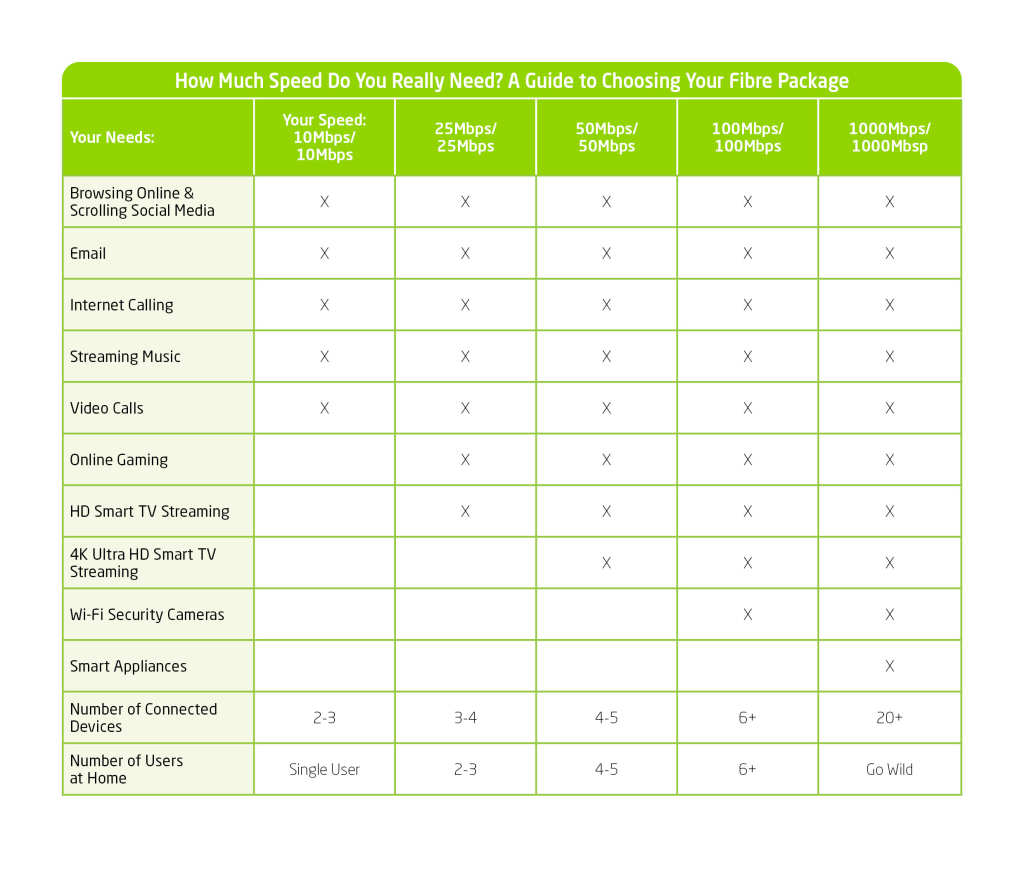
The table below shows how you can match your needs to your speeds, and you can check out some of our current offerings here.
How About a Speed Test?
Higher internet speeds results in faster downloads and uploads – so you could notice that your internet searches are bringing up results faster, while your movie and audio downloads take just seconds.
On the flip side, if there are too many devices or users trying to use the internet connection at the same time, you’ll notice a lag, which is known as latency.
Connect a LAN cable directly from the router to your computer or laptop.
Perform the broadband test from the ONT/CPE to your device.
The bottom line: Why live with a situation in which slow internet causes tasks that should be quick and easy to become time-consuming and difficult?
At Vox, we have multiple solutions for your every speed requirement. We like to call it ‘The Vox Factor’.
FAQs
Q: What internet speed do I need for remote work and video calls? For reliable remote work and multi‑participant video calls, aim for at least 100–200Mbps download with 10+ Mbps upload. If multiple people work from home simultaneously, choose higher tiers or symmetrical options.
Q Is 100Mbps enough for a typical family? Yes, 100Mbps is a strong baseline for a family streaming HD video on several devices, browsing and video calling. Heavy 4K streaming or multiple simultaneous uploads may need higher speeds.
Q:What is symmetrical fibre and do I need it? Symmetrical fibre provides the same upload and download speeds. It’s useful for content creators, frequent file uploaders, and businesses that require reliable two‑way performance.
Q How can I get the most accurate speed test results? Use a wired connection from your ONT/CPE to a computer, close other apps and test at different times (peak and off‑peak). Use reliable tools like Speedtest.net or Nperf.
Q: What if fibre isn’t available at my address? If Fibre to the Home isn’t yet available, Vox offers LTE and 5G, Wireless and Satellite options and works with FNO partners to expand coverage. Use the availability tool to see current options and timelines.
Q: Does a higher Mbps plan reduce latency? Higher Mbps improves throughput but doesn’t always lower latency. Latency depends on network routing and congestion; however, better plans and lower contention ratios typically give a more responsive experience.
Q: How many devices can a 200Mbps plan support? A 200Mbps plan comfortably supports multiple simultaneous 4K streams, several online gamers and multiple work‑from‑home users. Exact performance depends on device usage patterns.
Q: Are there cost‑effective ways to future‑proof my connection? Choose slightly higher tiers than your current need, opt for symmetrical plans if you upload often, and check for bundle or contract options that include upgraded equipment and support.