Crunching the Business Numbers: Big Five, Big Four and Now Big Three

Why connectivity isn’t just a line – it’s the backbone of your business

Connectivity today is no longer just a simple line to the internet – it’s a robust network to ensure that daily operations run smoothly.

What’s in a number? What do we think of when we hear the phrases ‘Big Five’, ‘Big Four’ and ‘Big Three’? And what does ‘Big Three’ have to do with the successful running of your business?

The first answer is easy, at least for South Africans. Just say ‘Big Five’ and visions of lion, leopard, elephant, rhino and buffalo appear – some of Africa’s most iconic and dangerous wildlife species. We regard them so highly here in South Africa that they all live on our bank notes!

Big Five

As for the term ‘Big Four’, we generally think about SA’s traditional four biggest banks. (Although do watch out for the competitor snapping at your heels – we all know the names.)

But what about the ‘Big Three’? What does that have to do with your business, and what does your modern business need to run effectively?


The Utilities Needed Today

From a purely utilities perspective, modern businesses have always required access to electricity and water as baseline conditions, which are necessary in the background for them to run effectively and be positioned for growth.

Today, these two important utilities must also include a third one, namely internet connectivity as well. Not only that, but a company’s connectivity must be both fast and stable – the days of ADSL lines are arguably now the dinosaur days, at least at the enterprise level.

Super-fast and stable connectivity is now a necessity, not a ‘nice to have’ – and it could arguably also have become the most important of the new ‘Big Three’ for your business.

Consider this:

  • No electricity for hours or days at a time? It’s always extremely inconvenient and annoying, but alternative power sources do exist, as businesses across South Africa discovered during the dark days of Eskom (pun intended). Certainly, sometimes the high cost of alternative power sources (generators, for example) definitely ate into the profits, but staying connected was the literal price of a company’s survival, when many company owners had to settle simply for staying in business until better days returned.
  • No water? It’s also deeply inconvenient, but again, plans can arguably be made for non-industrial businesses at ad hoc moments, for example enabling a remote work force where possible, and buying water for those left on-site as required.
  • No fast and stable internet? This is more complicated. Connectivity is the backbone of modern business, functioning as a foundational asset that links people, systems and data. When it’s not stable or fast enough, growth is made more challenging.


In short, we can argue that connectivity is the backbone of your business, and it’s critical for growth.


Simply Inconceivable Without Lightning-Fast Connectivity

Connectivity Isn’t Just a Line - It’s the Backbone of Your Business

Connectivity today is no longer just a simple line to the internet – it’s a robust network to ensure that daily operations run smoothly.

Business-grade connectivity requires a robust network to ensure that daily operations are seamless, from enabling real-time collaboration to Voice over Internet Protocol (VOiP) technology for your company’s internal and external communications, to processing payments… and the list goes on.

As outlined previously, enterprise-level companies also require significant speed.

We look at some of the reasons why business-grade connectivity is the new player in the utilities team.


Connectivity: The Backbone of your Business

Connectivity

Connectivity is the foundation for operational continuity: it prevents downtime, and provides ‘always-on’ infrastructure, which allows uninterrupted access to Cloud-based tools and applications, which are essential for modern business operations.

A properly set up network enables backup and redundant paths, as well as enhanced security measures (for example encryption and firewalls) which protect against costly downtime and cyber threats (see here for Vox’s cybersecurity solutions).

In addition, modern connectivity also enables digital transformation, including maximising the power of AI and the Internet of Things (IoT) for automation, real-time data analysis and proactive maintenance. Moving operations to the Cloud requires high-speed, low-latency connections to ensure data is accessible and secure. In addition, investing in high-speed, scalable connectivity such as Fibre ensures that your infrastructure can grow as your business expands.

Modern connectivity enables productivity and collaboration by allowing for remote / hybrid work, while also ensuring that departments can remain connected for seamless collaboration on projects and data.

And finally, from the perspective of the customer, fast, secure and stable connections ensure that websites and e-commerce platforms operate smoothly, preventing lost sales due to slow load times or downtime.

Reliable connectivity also allows for immediate customer service, such as live chats and social media support, which can improve satisfaction and loyalty, while high-speed, secure connections provide real-time access to customer data, enabling targeted and personalised marketing.

In today’s digital-first world, a strong internet connection isn’t a luxury, it’s a necessity. Robust connectivity allows your entire organisation to communicate and function effectively. Whether you’re running a small local office or managing a distributed remote team, your ability to stay connected determines how effectively you can serve clients, collaborate and see business growth.

Contact Vox for Business Fibre that will help you grow your business.


One Final Note

There are many reasons why Internet networks fail, including congestion, physical damage to the Fibre, area outages, planned or emergency maintenance, router issues, DDoS attacks, malware on devices, outdated software on customer equipment, and more.

Did you know that Vox offers state-of-the-art failover solutions, to ensure that your business connectivity is always on? Failover options keep your services running when faults or outages happen.

Vox offers passive-active as well as active-active failover options – click here to find out more. It’s just the Vox way of ensuring that our role in your business’s ‘Big Three’ utilities doesn’t ever need to go down!


New Vox Partner Programme for ISPs: Expand Without the Heavy Lifting

By Andre Eksteen, Senior Product Manager – FTTB at Vox

While niche internet service providers (ISPs) play a crucial role in bringing connectivity to underserved areas, they are often held back by the huge capital investment requirements. In response, Vox, one of South Africa’s leading internet and communications companies, has launched a partner programme that allows ISPs to benefit from our extensive network infrastructure, peering agreements, technical expertise, and more – while they can focus on delivering exceptional service to their customers.

These ISPs deliver reliable broadband and voice services in areas that larger providers often overlook. However, they lack the economies of scale, sizable infrastructure investments, and long-standing vendor relationships with vendors – challenges that create high barriers to entry for newcomers and mid-tier players alike.

ISPs have to source high quality network equipment as well as Business Support Systems (BSS) and Operations Support Systems (OSS) at competitive prices, and build a skilled technical team to manage complex networks.

They also have to deal with high interconnect costs, and negotiate peering and caching agreements with technology majors such as Apple, Google, Microsoft and Netflix; some of these ecosystem partners demand minimum capacity thresholds, making it economically unviable for ISPs not serving large customer bases.

These ISPs face significant hurdles in winning deals. Coverage gaps, limited network availability, and restricted access to premium networks put them at a disadvantage. On top of that, customers now expect a complete solution: multiple access technologies like fibre, wireless, and satellite, integrated with voice and PBX functionality, and delivered with speed.

Meeting these demands is not just challenging, it’s often impossible for niche players, which is why competing, let alone thriving, in this market remains such a struggle.


Expand without the heavy lifting

Vox Partner Programme

In an effort to address these challenges, Vox’s new Partner Programme will allow ISPs to leverage the company’s extensive experience in building and managing network infrastructure, delivering broadband and voice services to hundreds of thousands of customers countrywide; and technical and commercial partnerships with a wide array of access providers.

The Partner Programme provides the following benefits to small and mid-sized ISPs:

  • Seamless integration with flexible topologies: In order to ensure minimum disruption, Vox adapts to the ISPs setup, allowing them to choose from a range of options through which to connect their network, including point-to-point, ring or mesh configurations.
  • Premium infrastructure and expertise: ISPs gain cost-effective access to carrier-grade routers, switches, and skilled technicians – all without having to overpay for scale that they don’t need, and leaving the service provider with the task of customer acquisition and service excellence.
  • Ecosystem partnerships: ISPs can leverage Vox’s commercial agreements to get unmatched coverage across 10 fibre-to-the-business (FTTB) networks, 18 fibre-to-the-home (FTTH) networks, and 6 wireless-to-the-business (WTTB) networks. They can also bypass daunting minimum requirements and secure peering and caching with global leaders such as Google and Netflix at volumes that make sense for a connectivity provider of their size.
  • Tailored services: Modular and scalable offerings, from wholesale bandwidth to advanced voice solutions and beyond, mean that Vox gives ISPs the flexibility to grow at their own pace, while providing customers with low-latency, high-uptime performance.


Our new partner programme is tailored specifically for emerging and mid-sized ISPs that are ready to expand without the heavy lifting. The high fixed costs, building and maintaining complex networks, upstream relationships, and more are taken care of, leaving ISPs to focus on their unique selling proposition. This is not just about scale, but about enabling smart, sustainable growth that ISPs can tap into.

Become a Vox Partner and unlock new opportunities. ISPs need an ECS Licence, billing and network management systems, Teraco presence, CPE installation capability, and first-line support. For national and international core network capacity, use your own infrastructure or leverage Vox’s world-class backbone to deliver exceptional service.

Ready to supercharge your network? Visit our Partner Programme page today.


FAQs

What is the Vox Partner Programme for ISPs?

It’s a partner offering that allows small and mid-sized ISPs to use Vox’s network, peering agreements, equipment and operational expertise to scale services without needing large capital investments.

Who is eligible to join the programme?

Emerging and mid-sized ISPs in South Africa with basic operational capabilities (ECS licence, billing and network management systems, CPE installation and first-line support) are the intended participants.

Can I use my own core network or must I use Vox’s backbone?

You can use your own national/international core capacity or opt to leverage Vox’s world-class backbone; the programme supports both models.

How does Vox help with peering and caching with platforms like Google and Netflix?

Vox’s commercial agreements and peering relationships allow partner ISPs to access caching and peering at volumes that make sense for smaller providers, removing minimum-capacity barriers.

What services can partners resell or access?

Modular options include wholesale bandwidth, advanced voice/PBX solutions, routing and switching, and multi-access topologies (FTTB, FTTH, WTTB).

Will I need to change my existing topology to join?

No, Vox adapts to your setup and supports point-to-point, ring or mesh connections to minimise disruption.

Are there pricing or contract minimums?

Commercial terms vary by partner needs and service selection. Speak to Vox for a tailored quote and contract options aligned to your growth strategy.

Secure Your Connectivity with our Fibre Plus Firewall Bundle October Special

Secure connectivity is about speed and protection.


South African networks face multiple threats on a daily basis. Recent reporting shows that Interpol detected roughly 230 million cyber threats in South Africa, which is a clear signal that homes and businesses must harden their borders.

Secure connectivity prevents unauthorised access, data loss and downtime, helping you to keep operations and productivity running smoothly within your business.


Sophos Firewalls with Vox

Vox has partnered with Sophos to offer next-generation firewalls to help you better protect your network, quickly and efficiently.

Sophos Gold Partner 1 | Vox | Secure Your Connectivity with our Fibre Plus Firewall Bundle October Special

With Sophos firewalls from Vox, you can enjoy no hidden costs – just great security, and you will find that it’s easy to use, even if you’re not technical.

The advanced threat protection blocks viruses, ransomware and hackers, leaving you with peace of mind. You can also block websites and non-work apps so that your employees’ efficiency is boosted, allowing you to boost security and productivity at the same time.

The solution is designed to promote a fast and secure network that continues running at high speed, which serves as another productivity value-add.


Why A Fibre Plus Firewall Bundle Is Crucial

Vox’s Fibre Plus Firewall bundle gives you both speed AND protection.

Our October 2025 special offer combines resilient Vox Fibre with next‑gen Sophos Firewall protection, allowing you to protect your devices, data and productivity with a single, easy solution.


Firewalls: Your First Line of Defence

Optimised SophosXGSSeries Web ValueAdd Banner V2 | Vox | Secure Your Connectivity with our Fibre Plus Firewall Bundle October Special

A Firewall monitors and filters incoming and outgoing traffic based on set rules, creating a perimeter between your trusted network and the internet. Modern, next‑generation Firewalls also:

  • Detect and block intrusions and malware (IDS/IPS).
  • Support VPNs for secure remote access.
  • Log activity for rapid incident response.
  • Block malicious websites and non‑work apps to protect users and increase productivity.


Why Pairing Fibre with a Firewall is a Great Idea

Fibre delivers fast, symmetrical bandwidth essential for cloud apps, video conferencing and backups. Pairing that connectivity with a dedicated Firewall ensures high performance isn’t offset by exposure to threats. The Fibre plus Firewall bundle gives you:

  • Speed and security in one purchase.
  • Simpler billing and deployment with Vox.
  • Managed support to keep both connectivity and protection performing.


Sophos Firewalls with Vox: What You Get

The key benefits include the following:

  • Advanced threat protection against viruses, ransomware and hackers.
  • VPN support for secure remote workers and branch offices.
  • Centralised logging and reporting for faster incident handling.
  • Options to block websites and non‑work apps to boost staff productivity.
  • Backed by Vox 24/7 support and clear pricing with no hidden costs.


October special: Fibre plus Firewall bundle

This October, Vox is running a limited‑time Fibre plus Firewall bundle special. It’s an ideal time to:

  • Move to faster Fibre connectivity;
  • Add enterprise‑grade Sophos Firewall protection; and
  • Consolidate services and simplify billing.


Enquire early to reserve bundle availability and special pricing.


How To Get Started

Assess your needs in terms of the required bandwidth, number of users and remote access requirements. Then:

  1. Choose a Vox Fibre package and Sophos Firewall level.
  2. Book installation and configuration with Vox support.
  3. Activate monitoring and policies with assistance from Vox 24/7 support.


Protect Your Network with Vox and Sophos

By protecting your sensitive data, devices and systems from threats like malware, hackers, denial of service attacks and malicious software, firewalls are a fundamental component of any network security strategy.

Contact us today to find out more on how you can implement a firewall to protect your network.


Frequently Asked Questions

What is a Fibre plus Firewall bundle?

A Fibre plus Firewall bundle combines Vox Fibre internet connectivity with a managed next‑generation Sophos Firewall, to deliver both high performance and network security in a single package.

Why should I buy a Firewall if I already have Fibre?

Fibre gives you speed; a Firewall protects that connection. Without a Firewall, your fast connection can make attacks more damaging. A combined solution ensures both performance and protection.

What protection do Sophos Firewalls provide?

Sophos Firewalls include intrusion detection and prevention, anti‑malware and ransomware protection, VPN support, web and app control, and central logging for incident response.

Who is the Fibre plus Firewall bundle suitable for?

The bundle is ideal for small businesses and larger organisations that need reliable Fibre speeds with enterprise‑grade security and managed support.

When is the Vox October special available?

Vox will run the Fibre plus Firewall bundle special in October 2025 – contact us to confirm availability, exact pricing and terms.

Can Vox manage the Firewall for me?

Yes. Vox offers managed services and 24/7 support to help configure, monitor and maintain your Firewall and connectivity.

Will a Firewall slow down my Fibre connection?

Properly configured next‑gen Firewalls are designed to protect without significant performance impact. Vox matches Firewall capacity to your Fibre speed to preserve throughput.

How do I enquire about the October bundle?

Click here on the Vox website to request details and a tailored quote.

Turbocharge Your Business Operations with a Fibre Internet Line

How Fibre Internet can give your business – and your employees – a massive boost 

Does the Internet at your company’s premises tend to lag or go down more often than not – so your employees are often forced to spend time doing nothing, or else are flocking to the coffee facilities (and then taking ages to get back to work)?


coffee cups | Vox | Turbocharge Your Business Operations with a Fibre Internet Line


Perhaps your document saving and archiving is an on-premises administrative hassle, or else your on-prem PBX system is the weakest link when the power goes out.

If any of these scenarios sound familiar, then it could be that your organisation’s productivity would benefit massively from a Fibre Internet boost. Business operations today need fast, reliable Internet for everything from their business communication to customer service, and Vox Fibre to the Business is guaranteed to offer you the fastest speeds and most reliable service possible for your Internet connectivity.


The Extensive Benefits of Fibre-Based Internet

Vox offers scalable options with tailored value-adds to suit your business needs. Our Fibre to the Business (FTTB) offerings include Business Fibre, for broadband solutions at excellent prices; Premium Business Fibre, where you get more ‘bang for your buck’ with added value and an improved service; and Dedicated Fibre if your business requires uncontended connectivity and top priority service level agreements (SLAs).


business 2553884 1920 | Vox | Turbocharge Your Business Operations with a Fibre Internet Line


The benefits of a Fibre Optic Internet service for your business include the following:

  • Faster uploads and downloads: Fibre connections use Fibre Optic cables to transmit data at incredibly fast speeds, by using light pulses, meaning faster uploads and downloads for file sharing and other data-intensive tasks.
  • Reduction in downtime: Breaks in your company’s Internet service have a negative impact on all operations, including the critical elements of internal and external communication. Setting up a Failover option will help your organisation to remain ready for any challenges, by providing a secondary connection to your company’s Internet via diverse routes and/ or technologies.
  • Improved productivity: With limited downtime and faster Internet speeds, your employees can download faster, collaborate better, and increase their overall productivity. Reduced lag and latency also improve online video conferencing. Your employees can save on time out of the office by having more online meetings with quality video or VoIP calls, instead of having to meet face-to-face or over a PBX conference phone.
  • Cloud services and data backup: Fibre Optic Internet connectivity means better access to cloud-based services for storage and backup, as well as other collaboration tools. You can quickly and efficiently access any stored data for seamless business operations.
  • Increased security: Fibre Optic cables are extremely secure, giving you peace of mind that your sensitive data is better protected.
  • Cost savings: By eliminating speed issues, increasing the reliability of your Internet, and improving business productivity, you’ll save costs over time. In addition, cloud-based storage options, as well as the implementation of VoIP telecommunications, will save even more in the longer term.
  • Scalability: With FTTB, you can easily increase your Internet capabilities as the business expands.


Employer of the Year?

As 2025 enters the second half of the year, why not investigate getting a Fibre Connection for your organisation? This way, you can make sure your business is always online with a reliable connection, and with incredibly high data transmission speeds, your employees can easily upload and download files and stay connected with each other, and your customers, at all times.

analyst 6492859 1920 | Vox | Turbocharge Your Business Operations with a Fibre Internet Line


In addition, VoIP calls can cut your phone costs significantly, both locally and internationally. It all works together to help make the way you do business even better – and efficiently-run organisations tend to have more productive employees. In turn, employees who are enabled with higher business functionality also tend to be happier and more positive at work – nobody likes having to do their job with less effective products and solutions.

And with a bit more ready cash at your disposal, you could even earn some more ‘Employer of the Year’ brownie points with an improved brand of coffee in the kitchen facilities, when it’s finally time for those well-deserved breaks.

Convinced yet? We’d love to hear from you if you’re ready to make the move to Business Fibre.


Frequently Asked Questions

What is Business Fibre Internet?
Business Fibre Internet is a commercial-grade Fibre connection with SLAs, priority support and optional uncontended bandwidth (Dedicated Fibre). It’s built for uptime, security and scalability.

What is Dedicated Fibre and why would my business need it?
Dedicated Fibre offers uncontended, 1:1 bandwidth with stronger SLAs, and is ideal for data centres, high-transaction businesses, or organisations running latency-sensitive applications and large-scale cloud services.

How does Failover Internet work with Fibre?
Failover provides a secondary connection over a different route or technology to automatically keep your network online during primary-link outages. It’s recommended for businesses that cannot tolerate downtime.

Can Fibre reduce our phone costs?
Yes. Using VoIP over Fibre can significantly cut local and international call costs, and improves call quality compared with older PSTN or contended mobile links.

Will Fibre help our cloud backup and collaboration?
Absolutely. Fibre’s high throughput and low latency enable faster backups, seamless access to cloud-based tools and better real-time collaboration for distributed teams.

dedicated business fibre

Fibre or Wireless for Business: When Your Real Estate Makes a Difference

Vox has a business solution no matter where you’re based, because location matters. Whether your premises sit in a newly cabled business park or in an area where fibre isn’t yet available will determine the most practical, cost‑effective and resilient connectivity option. Vox offers both Business Fibre  and licensed Wireless for Business so your organisation can stay connected, wherever you are.

‘Location, location, location.’

It’s the mantra that estate agents everywhere live by, and it also works in the world of Business Connectivity – where your business is located can have significant implications for your Internet options.

Is your organisation situated in an area where Fibre Optic Cables are already laid – or at least in the planning stage? If so, sorting out excellent Internet Connectivity for your organisation is guaranteed, and you’ll be able to make use of the fantastic speed of Fibre to the Business (FTTB), with its clear benefits for all users.

But what if the neighbourhood doesn’t yet have FTTB on its radar?

That’s when you look to another phrase that starts with the letter ‘L’ – and find out how ‘Line-of-sight’ can also help with excellent Internet access, through Wireless for Business Connectivity, delivered by Microwave radio technology.

We take a look at the different features and benefits provided by both FTTB and Wireless Connectivity for organisations.


Business Fibre: A Premium Cabled Service

Internet Connectivity that’s provided by Fibre to the Business, or FTTB (as well as Fibre to the Home, FTTH) uses Fibre Optic cables, composed of strands of glass, to transmit Data at incredibly high speeds using light pulses sent through the glass Fibre. This means that Fibre Optic networks are capable of much greater speeds and bandwidth than the traditional copper-based ADSL lines.


Fibre to the Business

Fibre Optic solutions bring you the best available speed within the current Internet landscape – users can achieve incredible speeds of up to 1,000Mbps. They’re also highly reliable due to the smooth, constant flow of Data during transmission, while the steady signal, with increased bandwidth, means that even with multiple users, Fibre Optics can handle the load.

Overall, Fibre Optic Internet is generally regarded as being the pinnacle of Connectivity. However, it’s not the only option for businesses to consider today.


Not Just for the Office Kitchen

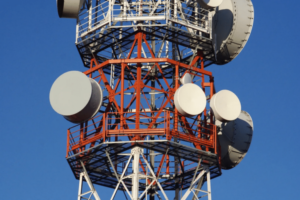
Microwave Internet – also known as Wireless – is a worthy alternative to FTTB, especially in areas where the Fibre Network Operators (FNOs) haven’t yet laid the required cabling infrastructure. It’s just as fast as Fibre, and more widely available.

Microwave signals provide a fixed wireless broadband connection through a high-capacity Microwave radio link, requiring arguably less infrastructure than Fibre Optics. A fixed Microwave signal delivers both voice and data traffic over long distances and to more remote locations and rural areas.

Wireless Microwave Connectivity requires power and a clear line of sight, with its access towers connected to Fibre lines. A device is pointed at a tower which services the area in which your business operates. While the last-mile connection may be wireless, the backhaul is provided by Fibre Optics.


Wireless for business
Image courtesy of: https://protowermaintenance.com/what-is-microwave-communication/

Vox Business Wireless, using licensed Microwave spectrum, is an excellent replacement for traditional fixed-line last-mile connections. With Vox, you can ensure that your business is always connected where Fibre connectivity is limited or not available, and the deployment is significantly quicker than with Fibre.

You can also choose to connect a Temporary Vox Wireless connection while you wait for your Fibre – our rapid Installation saves you time and gets your Internet operating at world-class standards. Vox Wireless can also be used as a redundancy option to Fibre, to ensure that your business is always connected.


Which Option is Right for Your Business?

Fibre to the Business is generally regarded as being the ‘standard bearer’ of Internet connectivity today. Often referred to as the ‘gold in the ground’, it opens a fantastic doorway to the business requirements of the digital age.

However, Vox’s Wireless for Business is an excellent alternative to Fibre to the Business, particularly when the Fibre Optic cabling infrastructure hasn’t yet been laid in your neighbourhood. One potential drawback is that, because the connection is delivered over the air, line-of-sight is needed between both points. This can make installation more difficult in certain locations – for example if your business premises is in a valley surrounded by hills.

A Microwave Internet link can also be used as an excellent backup solution to Fibre, because when a company isn’t reliant on only one technology, this allows for business continuity and resilience planning. If a fault should occur with a Fibre connection, the Microwave Internet solution isn’t likely to be experiencing the same type of failure: one solution runs through cabling while the other is air-based.


An Added Bonus: The Best of Both Worlds

The choice between FTTB and Wireless to the Business is essentially a win-win for our customers. But what if there was a reason NOT to make a choice? What about an option that provides the best of both worlds?

If downtime would be a catastrophe for your business, then check out our Active-Active offering and enjoy the best of both worlds – Vox is the first local ISP to offer this exciting new product!

Vox has always been able to incorporate both FTTB and Wireless to the Business into our business failover solutions, which are designed to keep your organisation’s Connectivity up and running even during challenging periods. And now, we’ve proudly gone one step further.

Our new Active-Active failover offering is a groundbreaking new option that no other local ISP is presenting. This option maximises the use of both a Business Fibre connection as well as a Wireless to the Business solution, to make sure that your organisation never loses connectivity.

system 3541577 1920 | Vox | Fibre or Wireless for Business: When Your Real Estate Makes a Difference

Our National Footprint

The great news is that Vox is able to offer viable solutions for your business, no matter where your organisation is located. Our innovative Connectivity solutions can be customised to the specific challenges of your business location and buildings, as well as your Internet speed requirements.

Our Wireless offerings range from 5Mbps up to 100Mbps, with alternatives in between. As for our Business Fibre solutions, our range can go up to 1Gbps, and we offer scalable options with tailored value-adds to suit your business needs – for example, state-of-the-art Wi-Fi connectivity and DDoS attack defences.

Our offerings criss-cross South Africa no matter where your business is situated. Contact us today for more information, because we’ve got the ‘Location, location, location’ philosophy sorted.


Frequently Asked Questions

Is Wireless as reliable as Fibre?
Wireless (licensed microwave) is highly reliable and carrier‑grade, especially when mounted on properly surveyed sites, but it usually requires line‑of‑sight. Dedicated Fibre offers uncontended bandwidth and typically the highest resilience for heavy, continuous workloads.

What speeds can I get with Vox Wireless?
Vox Wireless licensed microwave services are available from 5 Mbps up to 100 Mbps (symmetrical), offered as either broadband (shared) or dedicated (1:1) links.

Can Wireless be used as a failover to Fibre?
Yes. Wireless is commonly used as a temporary connection while waiting for Fibre or as a redundant/failover link to keep your business online during cable faults.

What is Active‑Active and do I need it?
Active‑Active uses both fibre and wireless concurrently to maximise availability. It’s recommended where downtime would be costly, for example within retail, call centres, data replication and payment processing environments.

How long does installation take?
Wireless installations are typically faster because they don’t require trenching; Fibre timelines depend on local build status and site readiness. Contact Vox for a site assessment and estimated lead time.

Are speeds symmetrical?
Yes. Vox offers symmetrical lines for both Fibre and Wireless where specified (important for uploads, cloud backups and VoIP).

Do Vox services include SLAs and business support?
Vox provides 24/7 business support. Premium and Dedicated services offer stronger SLAs and priority support; details are provided during quoting.

What if my site is in a valley or has obstructions?
If line‑of‑sight is an issue, Vox will recommend alternative options based on a site survey, for example a nearby rooftop relay, temporary wireless, fibre where available, or hybrid redundancy.

Vox and the Lions Group – A Case Study

The Lions Group consists of three entities, namely the Golden Lions Rugby Union, the Lions Rugby Company, and EPS Management. Collectively, the three companies are the custodians of rugby in their region, from grassroots development all the way up to international interprovincial teams. While their primary focus is rugby, the Group has diversified its revenue streams to include various other activities, including concerts, sporting events, commercial rentals, and private functions and conferencing.

Pieter Burger, Manager Director: EPS, explains: “We have a passion for innovation and doing things differently, and consistent improvements in and around our facilities make them not only relevant, but also industry leaders in certain areas. This flexibility in our product offering, combined with innovation, is what distinguishes us from our competitors.”


The Business Challenge

During big games or concerts, stadiums face unique challenges due to their large, dense crowds, and one of these challenges involves providing connectivity to the highest standard.

Excellent connectivity is needed for broadcasting purposes, both within the stadium as well as to external broadcasting channels; financial transactions, including the sales of food and beverages and retail items; and Wi-Fi connectivity for the fans, which is an imperative for any live entertainment experience.

“As with any large sports and entertainment stadium, technology plays an important role in customer experiences at the Emirates Airline Park (Ellis Park Stadium), the home of the Golden Lions rugby team,” notes Stefan Pretorius: Enterprise Key Account Manager at Vox.

“Through Vox’s use of innovative technology, we assist in providing both stadium employees and customers alike with positive experiences during high-profile events. The use of network optimisation techniques can help maintain a high-quality Wi-Fi connection for everyone, but it all starts with sufficient and optimal broadband infrastructure.”

“As part of the entertainment industry, it is critical for the Lions Group to know that innovative technology and leading connectivity are together able to enhance high performance, as well as the consumers’ experience and preferences,” adds Burger. “Connectivity access networks, and their reliable uptime, is key in our industry.”


465008034 8772678062797376 4077640001360117771 n | Vox | Vox and the Lions Group – A Case Study


The Business Solution

Pretorius clarifies that Vox is responsible for supplying all connectivity to Emirates Airline Park, as follows:

  • Two 1Gbps dedicated Business Fibre links;
  • One 200Mbps dedicated Business Fibre link to the practice stadium next door;
  • Firewalls; and
  • An SD-WAN Solution for load balancing.


“Vox is a strategic partner of the Lions Group,” says Burger, “and we have benefited from our existing partnership with them for some years now. One of these advantages is that, as our technology requirements progressively increase, so we turn to Vox to implement enhancements as required.

“Before signing up with Vox, our main concerns and challenges involved Voice over Internet Protocol (VoIP), Connectivity and cloud solutions. Today, as our infrastructure partner, Vox provides excellent bandwidth and reliable uptime, and takes care of any required upgrades following a needs assessment and consultation. We also enjoy efficient support from Vox very quickly whenever required.”


Overall Experience with Vox

“We never have any concerns or issues with the implementation processes for our chosen solutions, which are always effectively handled by Vox engineers,” comments Burger. “Just like the Lions Group, we know that Vox has a strong entrepreneurial spirit and always strives to improve and enhance its service offering and effectiveness, and we admire and appreciate this shared synergy.

“We believe that Emirates Airline Park has the best bandwidth and reliability of any stadium in South Africa, as was displayed to such good effect during the Springboks versus New Zealand test in August 2024. Our relationship and overall experience with Vox is excellent – we could not ask for a better partner!”

Is the future of work remote, hybrid, or both?

Time to Leave Your Business Rental Lease – Or Not?

Employees are collectively one of an organisation’s most valuable assets, and if they’re motivated, your company is more likely to achieve its best possible results. It’s therefore good sense for management to check in periodically on what makes their employees happy – besides salary increases, of course.

According to the latest Cisco Global Hybrid Work Study, skilled South Africans prefer to work remotely at least some of the time, with almost 95 percent of the local respondents (from a global poll of 28,000 participants) wanting to work either in a hybrid or fully remote working model.

It therefore makes good sense to consider the possible benefits of remote or hybrid working arrangements, to both the organisation as well as the workforce. One of the employer advantages could include needing less office space, thereby freeing up significant rental or maintenance costs.

Remote But Not Removed

Employees who enjoy working remotely and are enabled to do so with the correct tools and infrastructure (a decent laptop and a fast and reliable internet connection are key) value a potentially better work-life balance. This includes not having to spend hours commuting every week, and so gaining back time while also reducing stress.

Productivity has been shown to spike because of reasons such as people getting more sleep, having fewer distractions from colleagues, and experiencing improved morale overall. With lengthy commutes out of the equation, attendance should also improve.

Video conferencing platforms such as Microsoft Teams allow geographically dispersed colleagues people to have virtual meetings, conduct presentations, and foster face-to-face interactions. This also allows organisations of all sizes to hire in top employees from a global talent pool, without being bound by location limitations (providing that differences in time zones are managed efficiently).

virtual coworkers 3382503 1920 | Vox | Is the future of work remote, hybrid, or both?

However, this doesn’t necessarily mean that your organisation should immediately terminate its rental lease, or sell a corporate property investment at the first available opportunity – not everything about remote working is advantageous.

Isolation and Other Issues

Going to the office regularly can bring structure and routine to people’s lives, while in contrast, working remotely can be isolating and lonely for some. Managers might worry that their team members are not working as efficiently as they would be in the office, and conversely, some employees can struggle without face-to-face leadership input.

It can also be more challenging for remote employees to find and locate all the information they need. Additionally, remote working can bring decreased collaboration, with fewer opportunities for employees to talk to each other during breaks, thereby cementing workplace friendships and cooperation.

Enter the ‘middle ground’.

Saying ‘Hi’ to Hybrid

A hybrid workplace model mixes in-office and remote work to offer employees flexibility and support. In a hybrid workplace, employees typically enjoy more autonomy and better work-life balance – and are more engaged as a result. Employers benefit by building a more productive and stable workforce, with people more easily able to engage and learn from each other.

husna miskandar FC4z3l4sUYc unsplash happy employees | Vox | Is the future of work remote, hybrid, or both?

Unified digital workplace platforms make it easier for employees to access all their work-related data and applications, while also assisting with effective communications. For example, Microsoft Teams facilitates effective communications among skilled colleagues, no matter where they are based. As a Microsoft Operator Connect partner, Vox can assist your employees to make and receive phone calls directly within Teams, for both landline and mobile phones.

Another option is to have your employees using Vobi, from Vox – our mobile softphone app, that gives users the ability make and receive voice and video calls, including in app texting from their mobile phones using the Vox network. Designed for both home users and businesses, Vobi allows users to benefit from reduced call rates on video and voice calls across all networks. Vobi enables you to route your home phone and/or office phone calls to your mobile phone, ensuring you are always available.

Getting Real with Real Estate Issues

For employers, renting office space – or owning and maintaining it – can be very costly. Remote working can lower costs by reducing the amount of office equipment and space required, potentially allowing your organisation to move into smaller premises – or even forego a physical space entirely.

office 95311 1920 | Vox | Is the future of work remote, hybrid, or both?

Instead, all employees could work remotely, and your company might simply hire meeting rooms or co-working space as and when needed.

If an office premises is owned by a company, selling it outright could put money back into the organisation.

Where to From Here?

We believe the future of work for skilled employees will continue to embrace both hybrid models and fully remote opportunities, with these options being driven by modern technology, increased flexibility, cost savings, a desire for an improved work-life balance, and being able to hire people from a global talent pool.

The Covid-19 pandemic first turned people’s homes into their offices. Now, the aftermath can drive a movement in which unused offices can be turned into homes. Around the world, including in South Africa, property developers are looking at ways to turn empty office buildings into housing solutions. While not every empty office building is suitable for conversion, it offers interesting possibilities.

Africrest Prop Atlas Apollo Sunninghil 744x418 1 | Vox | Is the future of work remote, hybrid, or both?
The Atlas in Sunninghill, the largest office park conversion to a residential complex in SA, according to Africrest Properties.

And so, if your organisation is going to embrace a fully or partially remote solution, do you have a building to sell? It could be an added bonus.

Affordable High-Speed Broadband, Plus Value-Adds, for Every South African

Is that all? The importance of offering ‘more’ in a saturated environment


Today’s world is defined by Connectivity in ways that seemed unimaginable when the clock first ticked over into the current millennium. Whether it’s WhatsApp, X, LinkedIn, Pinterest, Facebook, Snapchat or TikTok, people love being connected, and online is here to stay.

Here at Vox, Connectivity lies at the heart of everything we do.

As a leading South African Internet Service Provider (ISP), we are all about connection, communication and conversation – but we also know that we’re not alone. The local telecoms landscape has more than 20 ISPs in operation – you could call it a saturated market.

And so Vox goes above and beyond to offer our customers more than the competition – you definitely won’t hear the phrase: ‘Is that all?’ about any of our offerings! At the heart of our multiple solutions is the goal of being able to offer every South African access to affordable high-speed broadband.

Let’s take a look at how we can get our customers connected.


Rocket1 | Vox | Affordable High-Speed Broadband, Plus Value-Adds, for Every South African 

Dealing With Market Saturation

In addition to high-speed broadband, Vox provides many excellent value-adds. As well as lightning-fast Internet, we offer Wi-Fi solutions to keep you connected; cost-effective and quality Voice over Internet Protocol (VoIP) offerings; energy back-up products for power outages; and even cell boosters to enhance your mobile phone experience – no more ‘dead’ zones in the house!

You can look to Vox for the following:

  • Our connectivity solutions begin with Vox Fibre, which comes with value-added extras upon sign-up, like free installation and a free-to-use router.
  • When Fibre is unavailable, other options are provided:
    • Vox Wireless presents high-speed, fixed Microwave Data Connectivity that uses the most innovative microwave technology on the market. It comes with free installation, meaning more money to invest in your business.
    • Consumers and businesses also have the option of choosing Fixed LTE, 5G, and satellite, depending on factors such as their needs and budget, and geographic location.
  • To ensure that our customers get the most out of their Internet solution, we supply best-of-breed Wi-Fi devices, which allow you to maximise your Wi-Fi experience. We also offer managed Wi-Fi network solutions, which enable remote software, firmware updates and reduced technician callouts with remote troubleshooting and fault remediation. Additionally, our expert advice is always available to enhance your overall network experience.
  • We also provide excellent access to power solutions for those times when the power goes down, to keep your Wi-Fi running even in an energy outage.
  • Vox’s shared Mobile Data offering is an ideal mobile wireless solution for a family with multiple SIM-enabled devices, to keep everyone connected while maintaining control over your mobile data bill using our simple online portal.


AdobeStock 478762309 | Vox | Affordable High-Speed Broadband, Plus Value-Adds, for Every South African

What Sets Our Connectivity Options Apart?

Vox offers our clients high network availability and an extensive national footprint, as follows:

  • We have a huge range of subscription and pricing solutions, and our sales agents will help you choose the best package for your needs, rather than upselling you on the most expensive.
  • Vox subscribers, both consumers and businesses, have the option of adding backup Internet solutions to their Fibre packages (like LTE or Wireless) to ensure they stay online all the time.
  • Our Proactive Network Monitoring offers safer, more secure Internet access and lower latency.
  • A 24/7/365 in-house Service Centre is available for troubleshooting and incident response for all our customers, across any product.
  • As far as Voice offerings are concerned, we believe that we’re the number 1 VoIP provider in the country.
    • Individual consumers and SMEs can make use of our Vobi softphone application, which is unique to Vox, and allows customers to make and receive high quality Voice and Video calls over Wi-Fi, 3G, 4G-LTE and 5G on the Vox network.
    • Organisations can make use of our Titanium partnership (the highest status possible) with global cloud PBX leader 3CX, to experience a comprehensive communication platform that includes Live Chat, WhatsApp, Facebook, SMS and Video Conferencing.


Orange woman megaphone resized | Vox | Affordable High-Speed Broadband, Plus Value-Adds, for Every South African

Vox teams are situated in multiple locations across the country, supported by our extensive footprint of over 1 000 business partners to ensure that our customers receive fast, efficient service wherever they are, whenever needed.

Value-Added Service Offerings

We take full responsibility for all our technical implementations and systems, from concept to installation.

  • The Vox Service Centre offers immediate support to all our customers.
  • The Service Centre also continuously monitors all of Vox’s networks and infrastructure, to ensure that quality of service is always maintained.
  • Specialist product managers are assigned to oversee each portfolio, for continuous research and development to ensure each product is always of the highest standard.
  • An extensive team of account managers and technical engineers offers convenient customer service and solution implementation.
  • If you’ve decided to upscale your business with better Connectivity, don’t stop there! Vox can also organise a customised domain and email address for you, to turbocharge your professionalism, as well as taking care of your email archiving needs with the most comprehensive and hassle-free cloud email and compliancy solution on the market.
  • There’s always a good time to sign up with us – you could win with our ‘Refer a friend’ campaign, and there’s always a fabulous promo running that allows you to sign up and save.

Expertise, innovation and superior quality products are at the heart of Vox. Ultimately, we have everything required to meet our customers’ needs at every stage of their journey – both now, and in the future – and that’s how we keep South Africans staying connected together.

With us, there’s always more.


AdobeStock 399195503 resized | Vox | Affordable High-Speed Broadband, Plus Value-Adds, for Every South African

The Benefits of Switching to Fibre Optic Internet

Fibre optic Internet uses light through glass Fibres to deliver far higher speeds and steadier performance than copper ADSL, making it ideal for streaming, gaming, remote work and business continuity.


Why would you NOT want to make use of the speed of light?

Because let’s face it: nothing in the current known universe is faster.

Except for The Flash, who can apparently run 13 trillion times faster than the speed of light.

81sicgpYcjL. AC UF10001000 QL80 | Vox | The Benefits of Switching to Fibre Optic Internet

The DC Universe aside, the speed of light is an amazing thing. According to Einstein’s theory of relativity, it’s the fastest speed in the universe: 300,000 kilometres per second in optimal circumstances.

It’s even more amazing to think it can be used to power our Internet usage.

But this only happens if your Internet service provider is using Fibre Optic cables. If your service provider is still using copper lines as the (much) older technology, Internet at the speed of light is completely out of the question.


How Fast Do You Want to Go?

Internet speed means the speed at which information or Data travels from the web to your connected device. It’s calculated in megabits per second (Mbps) and the downloading speed (getting information from the Internet to your device) is often higher than the uploading speed (the other way around – sending information from your device to the Internet).

In the old days, our Internet connections were only able to run on ADSL (Asymmetric Digital Subscriber Line). ADSL uses telephone lines (Telkom lines) to transmit Data along copper cables from your nearest telephone exchange to your home or office. These are frequently unreliable and heavily shared among users – which slows down the possible speed of your connection.

Two factors slow down ADSL speed significantly:

  • Distance:The further away you are from the exchange, the greater the distance the Data has to travel, and the slower your Internet.
  • Traffic:When copper cables experience more traffic, the wires heat up and the connection slows.


It’s a bit like driving on the highway: when you’re the only driver on the road, you can reach a very satisfying speed, but when it gets crowded, traffic slows down. ADSL can provide average speeds of approximately 4Mbps.

In contrast, Fibre Optic technology transmits Data as light impulses along flexible glass Fibres, enabling users to achieve speeds that are about 500 to 1,000 times faster than your average ADSL line. So how does the marvellous invention of Fibre Optic cables use this speed for Internet services?

  • Fun fact: The first actual Fibre Optic cable was invented in 1952 by UK-based Indian-American physicist, Narinder Singh Kapany, who was a pioneer in the field of Fibre Optics and popularised the term.


Harnessing the Speed of Light for Communications

Fibre to the Home (FTTH) and Fibre to the Business (FTTB) services use Optical Fibre to deliver high-speed Internet directly to individual buildings. These Fibre Optic cables, composed of strands of glass, transmit Data using light pulses. Users can achieve incredible speeds of up to 1,000Mbps.


Fibre optic internet


Some of the benefits of Fibre Optics include the following:

  • High speed: Starting with the most obvious point, Fibre Optics brings you the best available speed within the current Internet landscape.
  • Reliability: Lots of ‘hiccups’ take place during transmission in a copper cable Internet, all the time. With Fibre Optic Internet, a smooth and constant flow of Data means this no longer happens.
    • Fun fact: This is important for gamers, where a small blip at the wrong moment can lose the game.
  • No difference between upload and download speeds: Depending on your needs, you can choose an Internet package that gives you symmetrical speeds for both downloading and uploading. With ADSL copper cables, this isn’t possible (it’s in the name, after all: Asymmetric Digital Subscriber Line).
  • Connecting multiple devices: The steady signal, with more bandwidth, means you can connect with multiple tablets, laptops, smart TVs and phones at once. Even with different people streaming music and video simultaneously, Fibre Optics can handle the load.
  • Safety and security: Unlike copper wires, Fibre Optic cables have no second-hand value for criminals, which means cables are not usually targeted for theft. They are also much less easy for cybercriminals to hack.
  • Higher quality: Ultra High-Definition TVs pack significantly more pixels into the same area, which makes for better images, but also uses more bandwidth. For Fibre Optic networks, it’s not a problem.
  • Consistent reliability: Fibre Optic cables are less susceptible to interference from weather conditions or other devices, so you’re less likely to experience outages or slow speeds on your network during peak usage times.


It’s clear that Fibre Optic networks are capable of much greater speeds and bandwidth than copper-based ADSL. In recent years, prices have also come down substantially.

Why not look into Fibre to the Home from Vox? Just plug in your home address and a map will show you all our Connectivity options available in your area.

What are you waiting for? Move towards the light!


FAQs

Q: How fast is Fibre compared to ADSL?
A: Fibre commonly delivers speeds up to 1 000Mbps and can provide symmetrical upload/download rates; ADSL typically delivers much lower, asymmetric speeds that decline with distance from the exchange.

Q: Can Fibre handle multiple devices streaming at once?
A: Yes, Fibre offers greater bandwidth and steadier throughput, so multiple users can stream, game and work simultaneously without noticeable slowdowns.

Q: Is Fibre more secure than copper?
A: Fibre is harder to tap and has little resale value for thieves, making it more secure physically. It also supports network configurations (VLANs) that improve data separation and security.

Q: What’s the difference between Vox Fibre to the Home and Vox Fibre to the Business?
A: Vox Fibre to the Home targets residential customers with high‑speed packages for streaming and everyday use. Vox Fibre to the Business offers dedicated options, lower contention ratios, VLANs and support packages tailored to commercial needs.

Q: How do I check if Vox Fibre is available in my area?
A: Plug in your home address on the Vox availability page and select ‘Connect me’ to check availability and see current connectivity options for your location.


Fibre optic internet

Cyber Space? No, Cyber Oceans…

How the Internet is powered in the depths of the sea

Subsea cables, which are bundles of fragile glass Fibre protected by heavy armour, carry roughly 98% of international internet traffic, linking continents via light pulses and landing stations that connect to national Fibre networks.

Did you ever wonder how the Internet reaches across oceans so that we can communicate – via Email, social media or Internet Voice functionality – between South Africa and the rest of the world? And how is it that, in the blink of an eye, a local gamer can execute a tactical manoeuvre with a team-mate in England to annihilate an ‘enemy’ in Australia? And what enables us to download American-made YouTube videos and watch X rants in real time from Donald Trump?

The Internet is able to reach across oceans like this because a huge chunk of it is actually placed in the oceans. Many people don’t realise that around 98 percent of international Internet traffic is carried around the world by subsea cables.

Let’s take a look.

The Hidden Deep-Sea Internet Highway

The Internet ‘superhighway’ joins continents and countries through both subsea as well as terrestrial cables. The data wires in this interconnected web bring high-speed Internet access to all parts of the globe, through around 1.5 million kilometres of cable criss-crossing the ocean floor.

These cables are laid on the seabed at an average depth of 3,600 metres. Today, there are about 500 subsea cables that are either live or under construction, and if their total lengths were combined, they could stretch – roughly – from the Earth to the moon, about three times over.


TeleGeography submarine cable map headline | Vox | Cyber Space? No, Cyber Oceans…
Image courtesy of https://www.submarinecablemap.com/


The cables are typically funded by the telecom industry, sovereign nations and technology companies such as Facebook and Google. So the reality is that the backbone of the planet’s Fibre cables are deep in the sea, quietly linking people and businesses to each other, all the time (except when something happens, but that’s a different story).

Thin Cables, Extraordinary Power

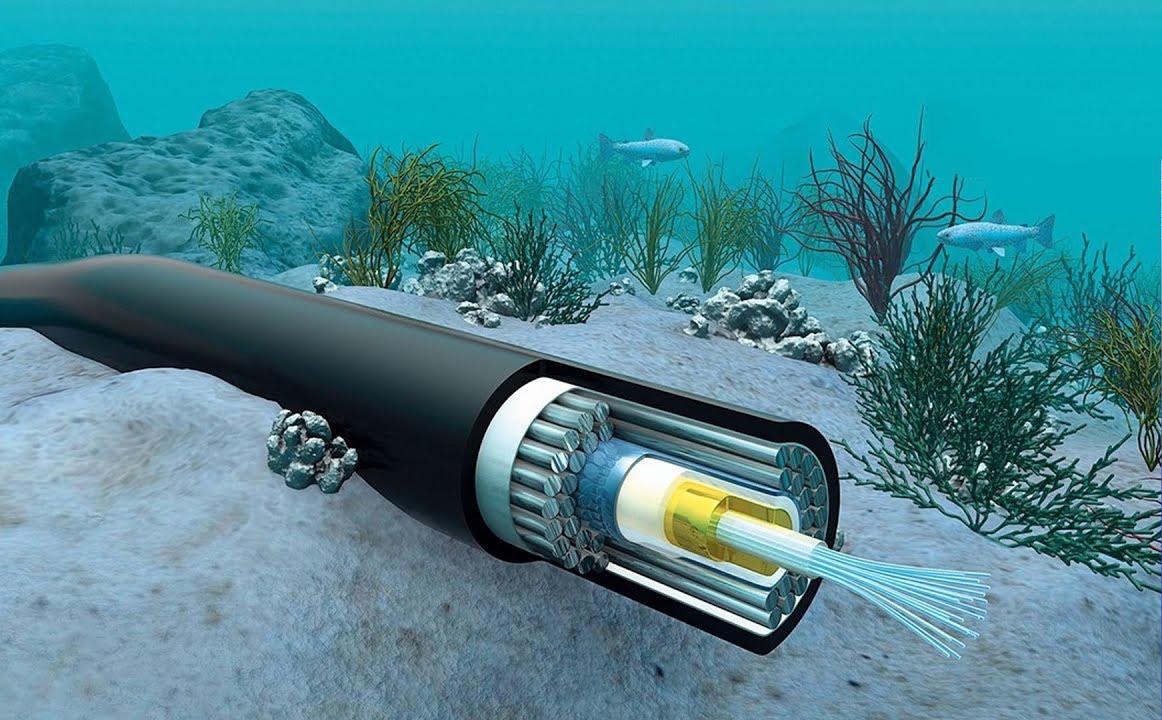
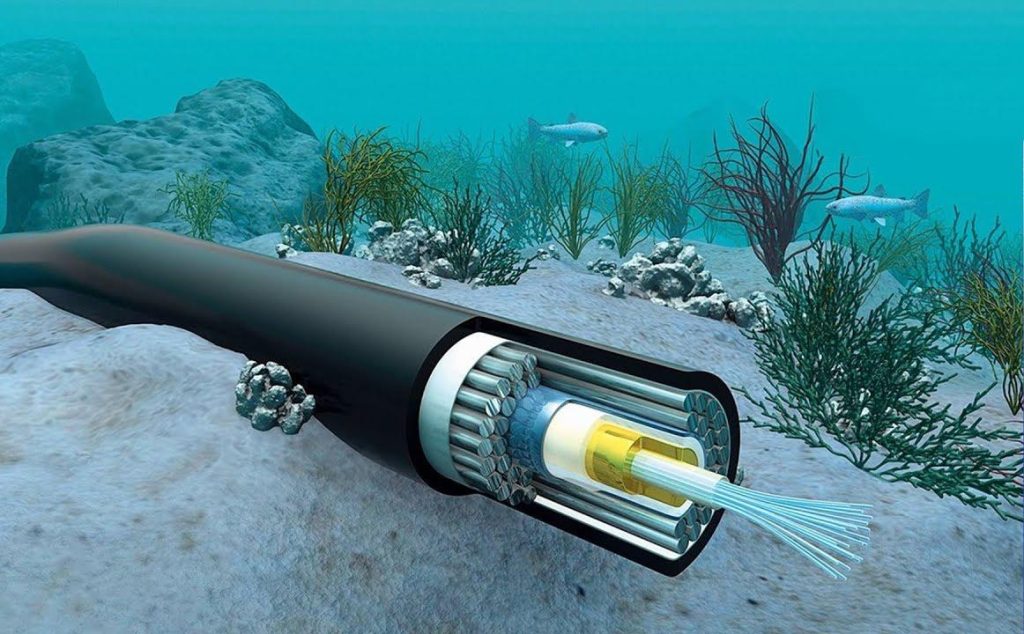
Fibre Optic cables transfer data across the world in the blink of an eye via light pulses, which travel through fragile wires just thicker than a needle. Fibre Optic cables are tiny tubes made of glass or plastic, which are in turn protected by multiple layers of hard materials like metal and rubber.


cabo submarino | Vox | Cyber Space? No, Cyber Oceans…


A single Fibre Optic can transmit 100 gigabits of data a second, with new cables able to transmit around 400 gigabytes per second. Thousands of Fibre Optics get bundled together and insulated, making one Fibre cable.

Subsea cables typically include a protective jelly around Fibre Optic cables and are also contained within multiple layers of plastic and copper wires. Under the water, ‘repeaters’ are connected at certain points. They amplify the signal and boost signal strength over long distances. The copper wires contained within the cable casing carry around 10 000 volts of electricity to power these repeaters.

The bottom line (pardon the pun) is that both within the sea and on land, the fine tubes that carry data packets at the speed of light need to be protected, which makes the cable overall – once properly wrapped up and protected – look much bigger than the thin part that actually does all the work.


underseacable | Vox | Cyber Space? No, Cyber Oceans…


From Sea to Land

When subsea cables under the world’s oceans reach the shore, they are then connected to landing stations, which are an essential part of the Fibre network infrastructure – they distribute the data carried on the networks, joining the submarine cables to terrestrial cables.

For example, there’s a landing station in Mtunzini in KwaZulu-Natal, where the SEACOM cable reaches South African shores. This cable connects the subsea cable directly to a data centre in Midrand, Johannesburg.

Once plugged into the landing stations on shore, the cables take on their overland mutation and are distributed by FNOs (Fibre network operators). The FNOs are responsible for deploying, managing and maintaining Fibre Optic networks – their role is the physical infrastructure, or, in short, running the cables under and next to roads and buildings.

Be Connected with Vox

As an Internet Service Provider (ISP), here at Vox we don’t physically lay the cables ourselves, but instead partner with a number of FNOs around the country to bring South Africans high-speed Fibre to the Home (FTTB) and Fibre to the Home (FTTH) offerings. Some of our local FNO partners include Openserve, Vumatel, Frogfoot, Metrofiber Networx and Octotel (you can find out more here).

An ISP – like Vox – provides Internet access to businesses or residential customers. An ISP’s role is to operate on top of the existing network infrastructure and manage services by offering different plans and packages based on speed and other features.

So next time someone talks about cyber ‘space’, you can point them in the right direction – that it’s mostly all about the ‘cyber oceans’. Except, of course, when it comes to a small section of Internet connectivity that’s powered by Satellite in outer space (just to talk about actual space here for a second).


Featured Image Content Hub Vox launches high speed uncapped data and voice satellite plans | Vox | Cyber Space? No, Cyber Oceans…


Satellite really comes into its own in regions where Fibre cables can’t be laid, perhaps because of rough terrain (like mountains) or because the area is just too remote. Vox also offers Satellite services – because as modern life becomes increasingly dependent on the Internet, reliable connectivity is more important than ever before.

Whether it’s for following the news, being connected for work, gaming, staying in touch with friends and family, or streaming shows and movies in your down-time, it’s great to live in today’s connected world. Whatever your needs, Vox will get you connected and keep you in the conversation.


Frequently Asked Questions

Q: What are subsea (submarine) cables and why do they matter?
Subsea cables are bundles of Fibre optic strands laid on the ocean floor that carry roughly 98% of international internet traffic. They form the global backbone that determines international speed, latency and reliability for streaming, gaming and global business traffic.

Q: Does Vox lay subsea cables?
No, Vox does not lay subsea cables. Instead, we partner with Fibre Network Operators (FNOs) and make use of landing‑station capacity so we can deliver international bandwidth into South Africa and on into local networks.

Q: How do subsea cables affect my home or business connection?
Subsea capacity affects international latency and throughput. Good access to landing stations and local distribution networks means smoother streaming, faster international downloads and better performance for cloud apps and gaming.

Q: How can I check if Vox Fibre is available at my address?
Plug in your home address on the Vox availability tool and select ‘Connect me’ to see whether Vox Fibre to the Home is offered at your location.

Q: What if Fibre isn’t available where I live?
Where Fibre is not yet available, for example in very remote or rugged areas, Vox offers Satellite services as an alternative to keep you connected.

Q: What support and contract options does Vox offer for business and residential Fibre?
Vox provides 24 / 7 / 365 support at no extra monthly cost and a range of contract terms to suit different needs. Business Fibre can include dedicated options, static IPs and VLANs; residential plans may offer zero upfront fees on qualifying 36‑month contracts. Contact Vox for package details and tailored service options.