Can Minecraft Help to ‘Craft’ Budding Engineers, Architects and Designers?

Online gaming – it’s categorically bad for your kids, right? Or is it…? 

So there you are – having yet another argument with your six-year-old about video games. The last half-an-hour has seen whining, snot-en-trane and threats about who has control over the controller – and that’s just the adults.

portrait little girl upset because game resized | Vox | Can Minecraft Help to ‘Craft’ Budding Engineers, Architects and Designers?

Your youngster, meantime, is on the brink of a meltdown rivalling the tantrums you last saw during the Terrible Two’s period. Wasn’t parenting supposed to get easier when they were out of nappies and actually sleeping through the night?

You know you have to win this battle because ‘The School Said That Screen Time Must Be Limited to Maximum One Hour Per Day’ in the last newsletter – or something deeply unrealistic like that; but anyway Junior is definitely well over that limit on average every day… And resorting to bribery is going to prove difficult because screentime normally *is* the prize at the end of the bribery equation.

If only there was a game that wasn’t so bad…


Everything In Moderation?

Most parents today have wrestled at some time or another with how to manage their children’s daily online screen time, starting with movies and shows, and graduating to online gaming. ‘How much is too much?’ is an ongoing question.

The bad news is that, in excess, online games CAN be bad for your kids. This happens when your children, both younger and older, become too fond of gaming to the detriment of – or even the exclusion of – other ways to occupy themselves in real life. (This, of course, goes for adults as well.) Even the World Health Organization (WHO) has developed a description of ‘gaming disorder’ as an addictive behaviour.

But the good news is that, properly managed, the opposite can also be true, and playing video games can actually be beneficial in some ways for your kids. Here, you can read how a mom of nine sets out some suggested do’s and don’ts around video games and your children.

From a Vox perspective, we wanted to be more specific, so in this article we look at whether playing Minecraft could actually encourage your youngsters in such career path options as architects, engineers and interior designers – never mind graphic designers and software animation.

It seems there just might be a video game that’s actually good for your kids – in moderation, of course.


How Minecraft Works
Wiles Minecraft 11 1020x638 1 | Vox | Can Minecraft Help to ‘Craft’ Budding Engineers, Architects and Designers?

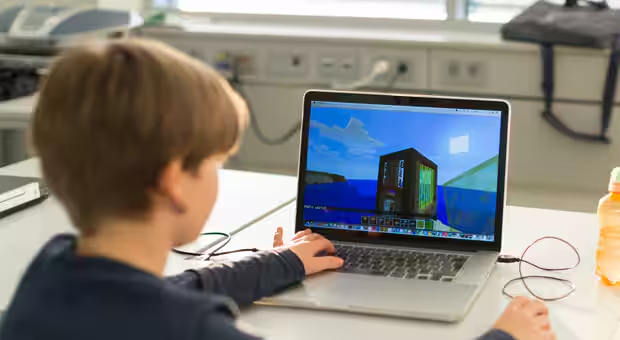
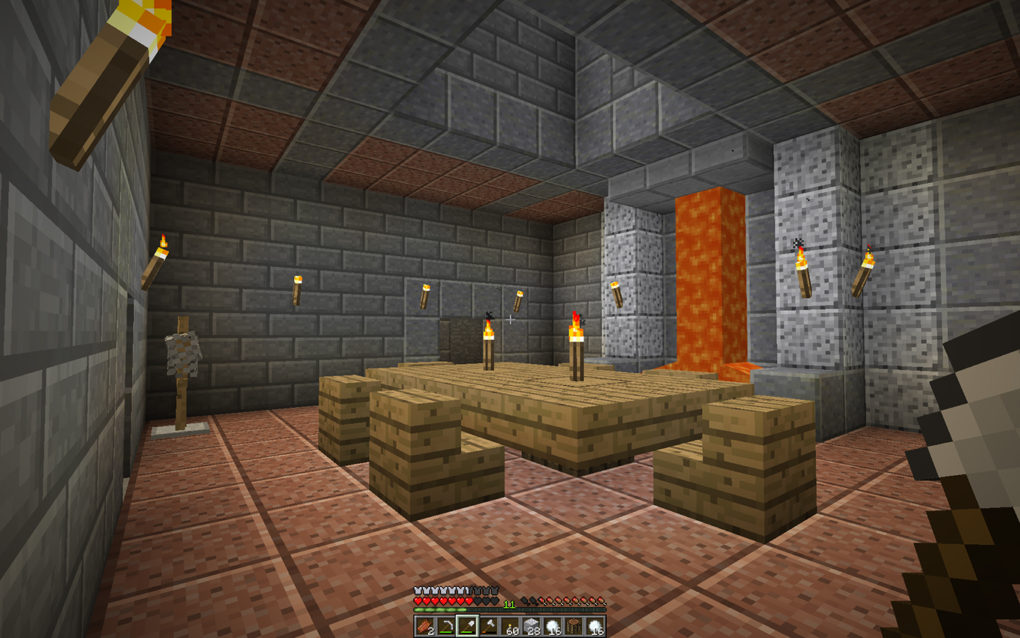
It’s a game where the players can build things with blocks or resources – think Lego, only online, with almost unlimited possibilities – and you work your way up through basic resources to more complex ones. You can choose to work in either a creative mode – where you build virtual structures and worlds – or a survival mode, where you must harvest the materials and try to stay alive without dying. Because of the visual style of the graphics – the little block-like people in motion are really quite funny! – it never really looks very violent (even if someone gets terminated).

imrs | Vox | Can Minecraft Help to ‘Craft’ Budding Engineers, Architects and Designers?

A description from Minecraft itself is as follows: “Minecraft is a game made up of blocks, creatures, and community. You can survive the night or build a work of art – the choice is all yours.

“…Minecraft has no set goal and can be played however you’d like! This is why it’s sometimes called a ‘sandbox game’ – there are lots of things for you to do, and lots of ways that you can play. If you like being creative, then you can use the blocks to build things from your imagination. If you’re feeling brave, you can explore the world and face daring challenges.”

The ‘mining’ part of Minecraft means removing or taking away, while the ‘crafting’ refers to creating by using materials within the online world. You can progress in the game by scavenging or ‘mining’ blocks of various materials such as stone, wood, iron, gold, emeralds and a whole lot more (if only it was as easy to get precious metals and jewels in the real world!). These are used as the basis for creations, or combined to create more advanced materials, tools and objects.

Players can design houses, cities, and even machines, and so the requisite problem-solving skills include learning how to plan, adapt and experiment. We shared a link earlier to an article giving tips on managing kids and video games in general – here’s another useful parental resource about Minecraft itself.


Besides Creativity, What Else Does Minecraft Encourage?

2829340 6515276496 maxre | Vox | Can Minecraft Help to ‘Craft’ Budding Engineers, Architects and Designers?

Wall-E in Minecraft [courtesy: https://www.gamespot.com/gallery/17-amazing-minecraft-creations-that-will-blow-your/2900-84/#13]


According to many educators and child development experts, playing Minecraft can be great for children, if used responsibly. Playing Minecraft supports a range of skills, including:

  • Creativity: Players design houses, cities and even machines, and you can work in a free-form design that just keeps growing, or strictly according to design parameters.
  • Problem-solving: Players learn to plan, adapt and experiment.
  • Teamwork: Being in a multiplayer game encourages collaboration and communication.
  • Computational thinking: By designing and building complex structures and automated systems, players develop their computational thinking skills, learning to break down problems into smaller steps and devising logical solutions.


Having been released in November 2011 (the earliest version was released for PC players in May 2009 and was called Cave Game), Minecraft was bought by Microsoft in November 2014 (for a staggering amount of money!).

Microsoft then wasted no time in releasing Minecraft Education in November 2016, a special version of Minecraft created specifically for use in schools, with extra tools and features that allow teachers to harness the fun and creativity of Minecraft to teach everything from reading to chemistry to coding.

Can Minecraft Encourage Career Choices?

Besides the creation and use of Minecraft Education in schools, there are other ways in which Minecraft can help children with learning in a more focused way.

In mid-2024, an event in the United Kingdom showcased the use of Minecraft to explore careers in aerospace, during the annual Farnborough International Airshow of that year. The event, Pioneers of Tomorrow, is a dedicated STEM-focused (Science, Technology, Engineering and Mathematics) event designed to inspire and engage the next generation of aerospace leaders.

During Pioneers of Tomorrow in July 2024, over 300 children played the Skills Miner aerospace game. As they proceeded through each game level, students explored core STEM principles and gained insight into engineering careers by experiencing the different roles from designers to coders, and maintenance engineers to aerodynamicists and stress engineers.

Analysis revealed that playing the game improved participants’ understanding of engineering concepts and left a lasting positive impression, encouraging many to consider a future career in the field:

  • 91 percent of participants said they had gained new insights into engineering; and
  • 87% expressed increased interest in pursuing a career in engineering.

 

fallingwater | Vox | Can Minecraft Help to ‘Craft’ Budding Engineers, Architects and Designers?

Anecdotal evidence is also available for people who say they’ve chosen their career because of a love of playing Minecraft as a child. One such person is Arihant Bhattacharjee, a student in Year 11 at The British School of Beijing, Shunyi – China. He told his story of how he was inspired to become an architect during a Ted Talk entitled ‘From Blocks to Bricks’ – you can listen to his story here. On the design side of life, Lucas Pion believes that playing Minecraft inspired him to become a designer.

While some people don’t agree that Minecraft is necessarily going to lead to a career in architecture and similar design- or building-related careers, others have strongly positive views. James Delaney, who studied architecture at Cambridge University in the UK, says: “Whilst the architects of today grew up playing with LEGO, I have no doubt the next generation will have played Minecraft. People have to stop thinking of it as a game. It’s a CAD tool, and as such it is the most widely used one in the world. We’re looking forward to bridging the gaps between design and reality.”

And then there was the release earlier this year of ‘A Minecraft Movie’, starring Jason Momoa, Jennifer Coolidge and Jack Black. According to a Google Trends analysis, there was a nearly 200% (194.1%) surge in interest around building, design and architecture careers among younger generations, with searches for ‘builders’ alone almost tripling following the premiere of the movie. (We’re not so sure about how many people searched for ‘pink fringed leather jacket’ after the movie’s release but that’s a different conversation.)

MV5BNjgxMWQ3ZTgtMDJhZi00N2ZkLWI5MTUtOTZjZThiMDM2ZmM1XkEyXkFqcGc@. V1 FMjpg UX1800 1024x576 1 | Vox | Can Minecraft Help to ‘Craft’ Budding Engineers, Architects and Designers?

While the jury is out for some, for others the message is very clear: Minecraft can inspire people to pursue careers in architecture, design, and engineering. The game’s creative environment definitely encourages players to experiment with building, spatial reasoning and problem-solving, and these are all fundamental aspects of these professions. It can also act as a stepping stone to more advanced design tools and concepts.

And so back to your kids and the ongoing debate in your home about online gaming time.

Perhaps good advice would be to follow a similar attitude to car pioneer Henry Ford, in the early days of car production lines, when he said: “You can have it in any colour as long as it’s black.”

Ok then.

“Kids, you can play any video game you like, as long as it’s Minecraft.”

Because it’s actually good for you… Have fun!

[Editor’s note: Of course, good gaming requires a fast Internet connection, and Vox is always available to help with your connectivity!]


 

contentname Thumbnail 0 | Vox | Can Minecraft Help to ‘Craft’ Budding Engineers, Architects and Designers?

Who You Gonna Call?

People of Vox: Spotlight on Greg Gyngell


If there’s something strange

In your neighbourhood

Who you gonna call?

Greg Gyngell!

If there’s something weird

And it don’t look good

Who you gonna call?

Greg Gyngell!

Ghostbusters | Vox | Who You Gonna Call?

Right, well with apologies to the Ghost Busters franchise (do you have an ear-worm now?), it’s time for another peek into the life and times of another of our green-blooded Voxies. In this episode, we shine the spotlight on a man who is normally the MC within the training environment, and so he’s actually used to turning the spotlight on everyone else…but he agreed to be interviewed without too much of a fuss.

And a good thing too, because he’s got some really interesting stories to tell!

“I’m Greg and I look after the Training Department,” says Vox’s well-known and well-loved Soft Skills Trainer. “I’ve been at Vox for about 13 years now and together with my team, I do anything and everything that is related to training, including some video production work.

“I’m always available to do anything else that might be asked of me, and wherever I can assist, I’m happy to step in. No day is ever the same, and that’s exactly how I like it!”

Greg leads a team of four Trainers across the country and reports directly to Head of Human Resources, Pam McLeod. Let’s take a look at how he champions the cause of training throughout the company – another great example of how life and a career at Vox never has to be linear.

Greg Plett nu resized | Vox | Who You Gonna Call?

Starting Out in Film and Entertainment

“When I left school I had only two real passions,” explains Greg. “I wanted to be a pilot – I was one of those kids who built little aeroplanes and hung them off the ceiling – and in my teenage years I got very involved in movies.

“Flight school was unfortunately just too expensive, so when I realised that flying wasn’t a career option, I went into the local film industry. I was involved in making some incredible movies in South Africa and was able to meet some amazing people.

Greg learned his craft from the ground up and thoroughly enjoyed being in the movie world, but it wasn’t to be forever.

bestfilmjob | Vox | Who You Gonna Call?

He clarifies: “The industry in South Africa went through a phase in which international big budget films were being shot here, but the production houses were bringing over their own crews. I went freelance for a while but realised quite quickly that it was unfortunately time to leave the movie industry in the quest simply to earn a living.

“I also dabbled in radio, and DJ-ing at clubs, both of which were obviously great fun. Eventually I landed up at a large cellular company and became entrenched in the mobile phone arena. After some time with this enterprise, my intuitive knowledge and understanding of gadgets and technology, together with my ability to explain things and talk to people, collided in a fortuitous manner and I ended up in my first training position with them, where I stayed for quite some time – over a decade, in fact.”

The end result was a man who understood the value of entertainment, technology and training, as well as being flexible in his outlook on life – not to mention the importance of having fun! The stage was set for Greg to come to Vox.


‘You’d better call…’

We can thank a retrenchment exercise that took place at his previous employer for Greg’s eventual arrival at Vox. He explains: “In the wake of being unfortunately retrenched, one of my former work colleagues phoned me and told me that that @lantic – one of the businesses that was later to be merged into the group of companies under the Vox umbrella – was planning to set up a training department, and they were interested in talking to me. And so I had an interview and was offered a six-month contract.”

At that stage, Greg and his wife Claire were actually planning to emigrate to New Zealand, but in the light of this new development, they decided to stay for a while longer.

Greg continues: “At the end of the six months, I was then offered a permanent position, because my previous background in the film industry, and how I could use it within the training division to create videos when required, was seen to be advantageous. My technical outlook, combined with my training soft skills plus the film experience, all merged neatly into a new position within Vox. And so the rest, as they say, is history!

“I like to tell people that my love for Vox as a company meant that, even though we’d been accepted into New Zealand, we stayed in South Africa and have never looked back since. Everything came together at the right time and I’ve now been at Vox for about 13 years. My passion is training, but at Vox, as I mentioned, I’m able to look after a number of other things as well.”


A Strong Team of Trainers

As far as the Vox Training is concerned, Greg coordinates with his four Trainers every day. “We all work remotely,” he explains. ”Alex McDonald is the Systems Trainer and looks after all systems-related training, including for our partners, while Victor Kemp is in charge of our Technical Training, including our Mikrotik router training; our e-learning system and ‘Friday Bytes Live’. Our other two team members are Ryan Varga, our Sales Trainer, who also takes care of our leadership and mentoring system; and Craig Jewell, who looks after Soft Skills, presenting courses that include themes around customer service, time management and adaptability.”

“One of the Training Department’s innovative initiatives is the ‘Friday Bytes Live’, when Voxies come together every Friday morning to hear and learn about different areas of the company using a fun, interactive quiz approach. Victor runs with this every week, and we have prizes up for grabs to incentivise everyone further.”

Friday Bytes | Vox | Who You Gonna Call?

Greg clarifies that the Training department is in charge of the general training needs of around two and a half thousand people, as well as the monthly Induction training for all new Vox employees.

“I’m the main person at the helm of the induction training,” he says, “and here I run training over a few days at the beginning of every month, when every department in the company sends a representative to introduce the different aspects of Vox to all our new employees. Induction training takes place in person at our Johannesburg head office, and we also facilitate online participation.

“One of the primary elements of Induction is simply chatting! I’m like the MC, if you like, and I try to make new people feel comfortable while I also liaise with the presenters. I’ve always been a big fan of comedy, and so we inject humour into these training days as much as possible. Another large element of Induction training – besides putting the programme together in advance and running with the required logistics – is to keep the sessions on track from a time perspective.”

head 1556568 1280 resized | Vox | Who You Gonna Call?

It’s certainly a mixed bag, bringing a significant variety to Greg’s working days and weeks, which he appreciates. Over and above that, he says: “Another thing that I really enjoy about my job is that, while training is my first love, I am also able to get involved in so many other different things.

“For example, I’ve been able to assist with elements of our recruitment system as well as working on study skills. And funny enough, I love doing the mandatory stuff – the admin challenges that most other people dislike. For example, I really enjoy organising and setting up the meetings required to kickstart a training session.”


‘If there’s something weird…’

Greg Background 2 resized | Vox | Who You Gonna Call?
Greg’s home office reflects his creative approach to life and training


To balance out his day-to-day organisational requirements, Greg’s creative side once again comes to the fore with his off-duty interests. A speed freak, he doesn’t own a car but instead rides a motor bike, and is also a huge Formula 1 fan, as seen in his office space, where the roof is painted with black and white checkered squares to look like an F1 flag – something that any Voxie who’s ever been on a Teams call with him will recognise instantly!

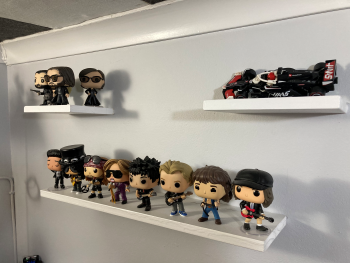
Staying in Greg’s home office, there are shelves filled with Lego versions of Formula 1 cars and drivers, as well as Funko Pop and Skylander collectable figurines, reflecting his taste in music, movies (think James Bond and The Matrix!) and video games. Other interests and hobbies include sports shooting, cooking and coffee – Greg intends to roast significant quantities of his own coffee beans in the future. As a self-confessed coffee snob, he limits himself to just two coffee cups per day, which is just enough to help him keep up with his busy pet Border Collies (just one more daily cup of coffee wouldn’t be fair on the dog…).

Add in his wife of 20 years, Claire, and his two teenage children, and it’s a busy and enjoyable life, he says gratefully.

Gyngell Family nu resized | Vox | Who You Gonna Call?

“For me, there is always something different to do at work. I’ve been exposed to working on new projects because of my line manager, Pam, as well as our CEO, Jacques du Toit – something that I appreciate enormously, and which speaks to the organisation’s culture of being innovative and flexible.

“This, I think, is what sets Vox apart from the other ISPs, together with the passion and heart for the business that our senior executives always display. There is a significant number of people within the company ‘who live and breathe green’, and I am passionately one of them,” he concludes.

And anyone who has a training need of any kind within Vox knows exactly who to call – Greg Gyngell!


Vox Fibre Frenzy!

The Fibre deal that actually makes sense

William Shakespeare once said, “what’s in a Frenzy?”

(Spoiler – he didn’t. But, then again, we hardly know what he’s saying most of the time anyway.)

shakespeare 6102162 1280 | Vox | Vox Fibre Frenzy!


Question, though – what IS in a frenzy?

Is it the frenzied breakdown when you told your boss you completed a presentation (you didn’t) and they ask for a copy (which you don’t have) and you’re trying to ChatGPT your way to success? Or is it that random Teams request from the CEO with no context (and the three days of nail biting preceding it)? Or is it being late, not connecting to a meeting, rushing for a deadline or just streaming your favourite season finale when, BOOM, Murphy invokes his Law and you meet the dreaded cry of dead Wi-Fi?

Actually; it’s none of the above. At least not today. So let’s step back from the fearmongering for a second.

You see, at Vox, Fibre Frenzy isn’t Fibre Inducing Frenzy situations – but rather getting caught up in a promo so crazy, it can’t be anything BUT a Frenzy.

frenzy resized ai generated 8528080 1920 | Vox | Vox Fibre Frenzy!

What You Get with Vox Fibre Frenzy

Let’s break it down:

With the Vox Fibre Frenzy, you enjoy:

  • High-Speed, Uncapped Fibre (because who has time for loading screens?
  • Prices dropped to as little as R400pm* (previously? It was R490)
  • Free installation? You got it (another saving. May as well be a superhero).
  • Month-to-month options available.
  • Smart support – so you’re never left wanting when your router gives you the stink eye.


How it Works (Three Easy Steps)

  1. Pick your FNO (Fibre Network Operator) — check which networks cover your area.
  2. Choose your line speed — from everyday browsing to heavy streaming and gaming.
  3. Sign up, wait for installation, and get connected.

The catch? There is none – just solid internet and a good deal.

What hiccoughs can I expect?

Other than the risk of struggling to keep up with your line speed (it can be THAT fast if you want it to), the promo is FNO/Line Speed Dependent (in non-tech terms: depends on which Fibre Network Operator is available in your area). Oh, and of course, Ts & Cs Apply (don’t they always?).

Naturally, it’s a limited time offer – so make fast (unlike your old ADSL line). That being said, if your area is covered and you’ve even given a spare thought to upgrading your line, now’s your time to shine.

Who Is This For?

If you work from home, binge-watch without shame, run a small business, game competitively, or simply refuse to watch a single spinning wheel, then this is for you. Vox Fibre Frenzy fits households and businesses wanting fast, flexible Fibre internet that South Africa trusts.

The long and short…

We live in a world where even buffering can feel like a personal attack. Whether working, playing, gaming, binge-watching, side hustling or juggling a house full of Internet demon-kids, you never DON’T need fast and stable Internet.

Gamer resized | Vox | Vox Fibre Frenzy!

And with the price of everything (except, strangely, the Rand) going up lately, these huge savings aren’t just nice – they’re necessary.

And did we mention free installation? We meant it.

So, why sign with Vox?

Every ISP promises you Fibre. One step further – they all promise the same keywords (super-fast, reliable, uncapped, blah blah blah). Vox, however, actually delivers it (plus adds world class support and a multitude of option add-ons – think failovers, voice, and more). Plus, our team won’t ghost you once your Router is plugged in.

One could even say that the Frenzy isn’t just about the price – but rather about finally having Internet that’s *worth it*.

Call us Greta Thunberg, because we’re right royal philanthropists.

Our Fibre Frenzy Promo is one of those sweet, unscripted moments where everything just feels right. It’s cheaper. It’s faster. It has all the support you could need. And it’s just so worth it. Remember, though, this deal isn’t here forever. It’s a promo. And, as promos do, it will end. Probably right as you decide to sign up – so maybe try not losing out instead?

Check availability and sign up at vox.co.za — or call our Fibre Specialists on 087 805 5050 for personalised help.

Peace.


Quick FAQ
Is the R400pm price available everywhere?
No, the offer hinges on FNO-dependent availability, meaning that pricing and package options depend on FNO coverage in your area. Use our availability check.

Can I add failover or voice later?
Yes, failover and voice add‑ons are available so you can scale your service as needed.

Are there contracts?
We offer month‑to‑month options. Specific terms vary by package, so please read the Ts & Cs.

Is the future of work remote, hybrid, or both?

Time to Leave Your Business Rental Lease – Or Not?

Employees are collectively one of an organisation’s most valuable assets, and if they’re motivated, your company is more likely to achieve its best possible results. It’s therefore good sense for management to check in periodically on what makes their employees happy – besides salary increases, of course.

According to the latest Cisco Global Hybrid Work Study, skilled South Africans prefer to work remotely at least some of the time, with almost 95 percent of the local respondents (from a global poll of 28,000 participants) wanting to work either in a hybrid or fully remote working model.

It therefore makes good sense to consider the possible benefits of remote or hybrid working arrangements, to both the organisation as well as the workforce. One of the employer advantages could include needing less office space, thereby freeing up significant rental or maintenance costs.

Remote But Not Removed

Employees who enjoy working remotely and are enabled to do so with the correct tools and infrastructure (a decent laptop and a fast and reliable internet connection are key) value a potentially better work-life balance. This includes not having to spend hours commuting every week, and so gaining back time while also reducing stress.

Productivity has been shown to spike because of reasons such as people getting more sleep, having fewer distractions from colleagues, and experiencing improved morale overall. With lengthy commutes out of the equation, attendance should also improve.

Video conferencing platforms such as Microsoft Teams allow geographically dispersed colleagues people to have virtual meetings, conduct presentations, and foster face-to-face interactions. This also allows organisations of all sizes to hire in top employees from a global talent pool, without being bound by location limitations (providing that differences in time zones are managed efficiently).

virtual coworkers 3382503 1920 | Vox | Is the future of work remote, hybrid, or both?

However, this doesn’t necessarily mean that your organisation should immediately terminate its rental lease, or sell a corporate property investment at the first available opportunity – not everything about remote working is advantageous.

Isolation and Other Issues

Going to the office regularly can bring structure and routine to people’s lives, while in contrast, working remotely can be isolating and lonely for some. Managers might worry that their team members are not working as efficiently as they would be in the office, and conversely, some employees can struggle without face-to-face leadership input.

It can also be more challenging for remote employees to find and locate all the information they need. Additionally, remote working can bring decreased collaboration, with fewer opportunities for employees to talk to each other during breaks, thereby cementing workplace friendships and cooperation.

Enter the ‘middle ground’.

Saying ‘Hi’ to Hybrid

A hybrid workplace model mixes in-office and remote work to offer employees flexibility and support. In a hybrid workplace, employees typically enjoy more autonomy and better work-life balance – and are more engaged as a result. Employers benefit by building a more productive and stable workforce, with people more easily able to engage and learn from each other.

husna miskandar FC4z3l4sUYc unsplash happy employees | Vox | Is the future of work remote, hybrid, or both?

Unified digital workplace platforms make it easier for employees to access all their work-related data and applications, while also assisting with effective communications. For example, Microsoft Teams facilitates effective communications among skilled colleagues, no matter where they are based. As a Microsoft Operator Connect partner, Vox can assist your employees to make and receive phone calls directly within Teams, for both landline and mobile phones.

Another option is to have your employees using Vobi, from Vox – our mobile softphone app, that gives users the ability make and receive voice and video calls, including in app texting from their mobile phones using the Vox network. Designed for both home users and businesses, Vobi allows users to benefit from reduced call rates on video and voice calls across all networks. Vobi enables you to route your home phone and/or office phone calls to your mobile phone, ensuring you are always available.

Getting Real with Real Estate Issues

For employers, renting office space – or owning and maintaining it – can be very costly. Remote working can lower costs by reducing the amount of office equipment and space required, potentially allowing your organisation to move into smaller premises – or even forego a physical space entirely.

office 95311 1920 | Vox | Is the future of work remote, hybrid, or both?

Instead, all employees could work remotely, and your company might simply hire meeting rooms or co-working space as and when needed.

If an office premises is owned by a company, selling it outright could put money back into the organisation.

Where to From Here?

We believe the future of work for skilled employees will continue to embrace both hybrid models and fully remote opportunities, with these options being driven by modern technology, increased flexibility, cost savings, a desire for an improved work-life balance, and being able to hire people from a global talent pool.

The Covid-19 pandemic first turned people’s homes into their offices. Now, the aftermath can drive a movement in which unused offices can be turned into homes. Around the world, including in South Africa, property developers are looking at ways to turn empty office buildings into housing solutions. While not every empty office building is suitable for conversion, it offers interesting possibilities.

Africrest Prop Atlas Apollo Sunninghil 744x418 1 | Vox | Is the future of work remote, hybrid, or both?
The Atlas in Sunninghill, the largest office park conversion to a residential complex in SA, according to Africrest Properties.

And so, if your organisation is going to embrace a fully or partially remote solution, do you have a building to sell? It could be an added bonus.

Affordable High-Speed Broadband, Plus Value-Adds, for Every South African

Is that all? The importance of offering ‘more’ in a saturated environment


Today’s world is defined by Connectivity in ways that seemed unimaginable when the clock first ticked over into the current millennium. Whether it’s WhatsApp, X, LinkedIn, Pinterest, Facebook, Snapchat or TikTok, people love being connected, and online is here to stay.

Here at Vox, Connectivity lies at the heart of everything we do.

As a leading South African Internet Service Provider (ISP), we are all about connection, communication and conversation – but we also know that we’re not alone. The local telecoms landscape has more than 20 ISPs in operation – you could call it a saturated market.

And so Vox goes above and beyond to offer our customers more than the competition – you definitely won’t hear the phrase: ‘Is that all?’ about any of our offerings! At the heart of our multiple solutions is the goal of being able to offer every South African access to affordable high-speed broadband.

Let’s take a look at how we can get our customers connected.


Rocket1 | Vox | Affordable High-Speed Broadband, Plus Value-Adds, for Every South African 

Dealing With Market Saturation

In addition to high-speed broadband, Vox provides many excellent value-adds. As well as lightning-fast Internet, we offer Wi-Fi solutions to keep you connected; cost-effective and quality Voice over Internet Protocol (VoIP) offerings; energy back-up products for power outages; and even cell boosters to enhance your mobile phone experience – no more ‘dead’ zones in the house!

You can look to Vox for the following:

  • Our connectivity solutions begin with Vox Fibre, which comes with value-added extras upon sign-up, like free installation and a free-to-use router.
  • When Fibre is unavailable, other options are provided:
    • Vox Wireless presents high-speed, fixed Microwave Data Connectivity that uses the most innovative microwave technology on the market. It comes with free installation, meaning more money to invest in your business.
    • Consumers and businesses also have the option of choosing Fixed LTE, 5G, and satellite, depending on factors such as their needs and budget, and geographic location.
  • To ensure that our customers get the most out of their Internet solution, we supply best-of-breed Wi-Fi devices, which allow you to maximise your Wi-Fi experience. We also offer managed Wi-Fi network solutions, which enable remote software, firmware updates and reduced technician callouts with remote troubleshooting and fault remediation. Additionally, our expert advice is always available to enhance your overall network experience.
  • We also provide excellent access to power solutions for those times when the power goes down, to keep your Wi-Fi running even in an energy outage.
  • Vox’s shared Mobile Data offering is an ideal mobile wireless solution for a family with multiple SIM-enabled devices, to keep everyone connected while maintaining control over your mobile data bill using our simple online portal.


AdobeStock 478762309 | Vox | Affordable High-Speed Broadband, Plus Value-Adds, for Every South African

What Sets Our Connectivity Options Apart?

Vox offers our clients high network availability and an extensive national footprint, as follows:

  • We have a huge range of subscription and pricing solutions, and our sales agents will help you choose the best package for your needs, rather than upselling you on the most expensive.
  • Vox subscribers, both consumers and businesses, have the option of adding backup Internet solutions to their Fibre packages (like LTE or Wireless) to ensure they stay online all the time.
  • Our Proactive Network Monitoring offers safer, more secure Internet access and lower latency.
  • A 24/7/365 in-house Service Centre is available for troubleshooting and incident response for all our customers, across any product.
  • As far as Voice offerings are concerned, we believe that we’re the number 1 VoIP provider in the country.
    • Individual consumers and SMEs can make use of our Vobi softphone application, which is unique to Vox, and allows customers to make and receive high quality Voice and Video calls over Wi-Fi, 3G, 4G-LTE and 5G on the Vox network.
    • Organisations can make use of our Titanium partnership (the highest status possible) with global cloud PBX leader 3CX, to experience a comprehensive communication platform that includes Live Chat, WhatsApp, Facebook, SMS and Video Conferencing.


Orange woman megaphone resized | Vox | Affordable High-Speed Broadband, Plus Value-Adds, for Every South African

Vox teams are situated in multiple locations across the country, supported by our extensive footprint of over 1 000 business partners to ensure that our customers receive fast, efficient service wherever they are, whenever needed.

Value-Added Service Offerings

We take full responsibility for all our technical implementations and systems, from concept to installation.

  • The Vox Service Centre offers immediate support to all our customers.
  • The Service Centre also continuously monitors all of Vox’s networks and infrastructure, to ensure that quality of service is always maintained.
  • Specialist product managers are assigned to oversee each portfolio, for continuous research and development to ensure each product is always of the highest standard.
  • An extensive team of account managers and technical engineers offers convenient customer service and solution implementation.
  • If you’ve decided to upscale your business with better Connectivity, don’t stop there! Vox can also organise a customised domain and email address for you, to turbocharge your professionalism, as well as taking care of your email archiving needs with the most comprehensive and hassle-free cloud email and compliancy solution on the market.
  • There’s always a good time to sign up with us – you could win with our ‘Refer a friend’ campaign, and there’s always a fabulous promo running that allows you to sign up and save.

Expertise, innovation and superior quality products are at the heart of Vox. Ultimately, we have everything required to meet our customers’ needs at every stage of their journey – both now, and in the future – and that’s how we keep South Africans staying connected together.

With us, there’s always more.


AdobeStock 399195503 resized | Vox | Affordable High-Speed Broadband, Plus Value-Adds, for Every South African

The Benefits of Switching to Fibre Optic Internet

Fibre optic Internet uses light through glass Fibres to deliver far higher speeds and steadier performance than copper ADSL, making it ideal for streaming, gaming, remote work and business continuity.


Why would you NOT want to make use of the speed of light?

Because let’s face it: nothing in the current known universe is faster.

Except for The Flash, who can apparently run 13 trillion times faster than the speed of light.

81sicgpYcjL. AC UF10001000 QL80 | Vox | The Benefits of Switching to Fibre Optic Internet

The DC Universe aside, the speed of light is an amazing thing. According to Einstein’s theory of relativity, it’s the fastest speed in the universe: 300,000 kilometres per second in optimal circumstances.

It’s even more amazing to think it can be used to power our Internet usage.

But this only happens if your Internet service provider is using Fibre Optic cables. If your service provider is still using copper lines as the (much) older technology, Internet at the speed of light is completely out of the question.


How Fast Do You Want to Go?

Internet speed means the speed at which information or Data travels from the web to your connected device. It’s calculated in megabits per second (Mbps) and the downloading speed (getting information from the Internet to your device) is often higher than the uploading speed (the other way around – sending information from your device to the Internet).

In the old days, our Internet connections were only able to run on ADSL (Asymmetric Digital Subscriber Line). ADSL uses telephone lines (Telkom lines) to transmit Data along copper cables from your nearest telephone exchange to your home or office. These are frequently unreliable and heavily shared among users – which slows down the possible speed of your connection.

Two factors slow down ADSL speed significantly:

  • Distance:The further away you are from the exchange, the greater the distance the Data has to travel, and the slower your Internet.
  • Traffic:When copper cables experience more traffic, the wires heat up and the connection slows.


It’s a bit like driving on the highway: when you’re the only driver on the road, you can reach a very satisfying speed, but when it gets crowded, traffic slows down. ADSL can provide average speeds of approximately 4Mbps.

In contrast, Fibre Optic technology transmits Data as light impulses along flexible glass Fibres, enabling users to achieve speeds that are about 500 to 1,000 times faster than your average ADSL line. So how does the marvellous invention of Fibre Optic cables use this speed for Internet services?

  • Fun fact: The first actual Fibre Optic cable was invented in 1952 by UK-based Indian-American physicist, Narinder Singh Kapany, who was a pioneer in the field of Fibre Optics and popularised the term.


Harnessing the Speed of Light for Communications

Fibre to the Home (FTTH) and Fibre to the Business (FTTB) services use Optical Fibre to deliver high-speed Internet directly to individual buildings. These Fibre Optic cables, composed of strands of glass, transmit Data using light pulses. Users can achieve incredible speeds of up to 1,000Mbps.


Fibre optic internet


Some of the benefits of Fibre Optics include the following:

  • High speed: Starting with the most obvious point, Fibre Optics brings you the best available speed within the current Internet landscape.
  • Reliability: Lots of ‘hiccups’ take place during transmission in a copper cable Internet, all the time. With Fibre Optic Internet, a smooth and constant flow of Data means this no longer happens.
    • Fun fact: This is important for gamers, where a small blip at the wrong moment can lose the game.
  • No difference between upload and download speeds: Depending on your needs, you can choose an Internet package that gives you symmetrical speeds for both downloading and uploading. With ADSL copper cables, this isn’t possible (it’s in the name, after all: Asymmetric Digital Subscriber Line).
  • Connecting multiple devices: The steady signal, with more bandwidth, means you can connect with multiple tablets, laptops, smart TVs and phones at once. Even with different people streaming music and video simultaneously, Fibre Optics can handle the load.
  • Safety and security: Unlike copper wires, Fibre Optic cables have no second-hand value for criminals, which means cables are not usually targeted for theft. They are also much less easy for cybercriminals to hack.
  • Higher quality: Ultra High-Definition TVs pack significantly more pixels into the same area, which makes for better images, but also uses more bandwidth. For Fibre Optic networks, it’s not a problem.
  • Consistent reliability: Fibre Optic cables are less susceptible to interference from weather conditions or other devices, so you’re less likely to experience outages or slow speeds on your network during peak usage times.


It’s clear that Fibre Optic networks are capable of much greater speeds and bandwidth than copper-based ADSL. In recent years, prices have also come down substantially.

Why not look into Fibre to the Home from Vox? Just plug in your home address and a map will show you all our Connectivity options available in your area.

What are you waiting for? Move towards the light!


FAQs

Q: How fast is Fibre compared to ADSL?
A: Fibre commonly delivers speeds up to 1 000Mbps and can provide symmetrical upload/download rates; ADSL typically delivers much lower, asymmetric speeds that decline with distance from the exchange.

Q: Can Fibre handle multiple devices streaming at once?
A: Yes, Fibre offers greater bandwidth and steadier throughput, so multiple users can stream, game and work simultaneously without noticeable slowdowns.

Q: Is Fibre more secure than copper?
A: Fibre is harder to tap and has little resale value for thieves, making it more secure physically. It also supports network configurations (VLANs) that improve data separation and security.

Q: What’s the difference between Vox Fibre to the Home and Vox Fibre to the Business?
A: Vox Fibre to the Home targets residential customers with high‑speed packages for streaming and everyday use. Vox Fibre to the Business offers dedicated options, lower contention ratios, VLANs and support packages tailored to commercial needs.

Q: How do I check if Vox Fibre is available in my area?
A: Plug in your home address on the Vox availability page and select ‘Connect me’ to check availability and see current connectivity options for your location.


Fibre optic internet

5G’s Role in Enhancing Business Communications and Operations

Not Just Entertainment: The Future of 5G in Business Communications

5G was developed to handle the growing demand for data and deliver faster, more efficient mobile networks. In doing so, it brings major improvements to how we connect, work, and communicate. While most people get excited about 5G for entertainment — lightning-fast downloads or smoother gaming — the real game-changer lies in what 5G can do for business communications and business operations.

Why Effective Communication Still Decides Business Success

Business communication — internal and external — is the backbone of operational success. When communication is strong, companies see higher productivity, quicker problem-solving, better relationships, and healthier company culture.

DecisionWise, a global consulting firm, found:

  • Companies with low employee engagement earn 32.7% less in operating income compared to engaged companies.

  • Companies with a highly engaged workforce see operating income rise by 19.2% within 12 months.

The message is simple: when communication improves, engagement improves, and the bottom line follows.

How 5G Transforms Business Communications

5G theoretically delivers up to 20Gbps download speeds, 10Gbps uploads, and latency as low as 4ms. Tests in South Africa reached average speeds around 250Mbps, equivalent to high-end fibre.

Its biggest strengths — speed, latency, bandwidth and efficiency — directly improve how companies communicate, collaborate, and operate.


1. Faster Speeds for Instant Collaboration

5G can reach speeds up to 100x faster than 4G LTE.
This means:

  • Faster file transfers

  • Smoother video calls with clients and teams

  • Instant software updates

  • Faster access to cloud platforms and business tools

For fast-paced businesses, speed equals efficiency.


2. Ultra-Low Latency for Real-Time Performance

Latency is the time it takes data to travel from point A to point B. With 5G, latency drops to 1 millisecond — compared to 30–50ms on 4G.

Ultra-low latency benefits:

  • Real-time communication tools

  • Live collaboration

  • AI-driven decision-making

  • Virtual reality (VR) and augmented reality (AR) applications

  • Data-heavy IoT devices

Web pages load faster, systems respond instantly, and real-time technologies finally work the way they’re supposed to.


3. More Bandwidth for More Devices

Modern workplaces rely on multiple connected devices. 5G’s increased bandwidth allows:

  • More IoT devices operating at once

  • More users connected without slowdowns

  • Better performance in high-density environments

  • Reliable smart office automation

As businesses add more tools, sensors, and platforms, bandwidth becomes non-negotiable.


4. Improved Network Efficiency and Reliability

5G introduces technologies like:

  • Dynamic spectrum sharing

  • Network slicing

Both ensure users get the network resources they need without interruptions — even during peak usage.

This allows businesses to:

  • Automate processes

  • Host high-quality web conferencing

  • Enjoy consistent, reliable connectivity

  • Reduce downtime and performance bottlenecks

Reliable networks aren’t a luxury. They’re a requirement.


The Future: 5G Unlocks the Next Wave of Innovation

5G doesn’t just improve communication — it enables entirely new business models and capabilities.

5G supports advanced technologies such as:

  • Internet of Things (IoT)

  • Artificial intelligence (AI)

  • Augmented reality (AR)

  • Virtual reality (VR)

These aren’t new concepts, but 5G finally gives them the infrastructure to scale.

For example, VR in education and training is already accelerating. Forbes projects the global VR education market to reach US$13 billion by 2026.

With 5G, innovations like VR classrooms, remote diagnostics, AR-assisted engineering, and predictive automation move from “future tech” to daily reality.


Bring Your Business Comms Into the Future with 5G

The advantages of 5G — speed, low latency, bandwidth, and efficiency — make it a powerful upgrade for any organisation looking to improve productivity and communication.

If you’re ready to modernise how your business connects, collaborates, and operates, explore the 5G offerings from Vox.

The future of business communication is already here. 5G just makes it faster, smarter, and more capable.

From Smart Homes to Flying Cars: How 5G Could Change the Future

Chris Boshoff unpacks how 5G technology has the potential to affect various aspects of everyday life, from streaming to smart homes – sooner than you’d think.


There’s a huge buzz today around the arrival of 5G, the latest advancement in wireless technology that has the potential to revolutionise our digital landscape – and with it our daily lives.

From incredibly fast data transfers to enabling smart homes and cities, 5G is set to be a game-changer. The fifth generation of wireless technology is expected to transform how we connect and interact with the digital world. Just imagine our current internet capabilities, but significantly enhanced – for example, with download speeds up to 100 times faster than 4G – and that’s what 5G is all about.

What the Current Hype is All About

5G technology is revolutionising the way we experience mobile connectivity, bringing a host of benefits to everyday life. Developed to manage the growing demand for data and enhance the efficiency of mobile networks, 5G delivers a range of improvements that make our digital interactions faster and more reliable.

One of the standout features of 5G is its peak speed capabilities. With 5G, downloading movies, streaming videos, and accessing apps and music happens in mere seconds. This increased speed translates to a smoother and more enjoyable user experience, reducing wait times and frustration.

In addition to speed, 5G significantly reduces latency, meaning the delay before a transfer of data begins following an instruction. This low latency ensures that web pages load almost instantaneously and that new applications, such as artificial intelligence (AI), the Internet of Things (IoT), and virtual reality (VR), perform efficiently and seamlessly.

5G also enhances network reliability and availability. With a more stable connection, users can enjoy uninterrupted service even in high-traffic areas or during peak usage times. This improved reliability is beneficial for personal use while also offering substantial advantages for businesses. Companies can leverage 5G to automate processes, engage in advanced web conferencing, and maintain consistent, high-quality connectivity.

The increased network capacity of 5G supports a higher volume of connected devices, making it easier to manage multiple smart devices and IoT applications simultaneously. This capacity is crucial for accommodating the growing number of connected gadgets in homes and workplaces.

Theoretically, 5G offers data transfer speeds of up to 20Gbps for downloads and up to 10Gbps for uploads, with a maximum latency of up to 4ms. Tests conducted in South Africa revealed average download speeds of around 250Mbps, which compares well to a fast fibre experience. Looking at the practical implications of 5G for both individuals and society is fascinating. When will this amazing new future arrive – and how much of it is here already?

With Vox, of course, your 5G offerings are already available.


‘Back to the Future’: Life Imitates Art

So that’s what 5G can already do in the present. Just for fun, let’s look at connectivity, Hollywood-style.

Remember the much-loved Hollywood cult classic, ‘Back to the Future 2’?

This movie, starring Michael J Fox as street-smart teenager Marty McFly and Christopher Lloyd as the ‘mad genius’ scientist Doc Brown, was filmed in 1989 (35 years ago). It predicted quite a lot of the technology that we know and love today.

Predicted in the movie and reality today:

  • Flat screen TVs
  • Video calls
  • Using biometrics to pay for items
  • Targeted personalised advertising
  • Nike self-lacing shoes
  • Smart watches


Predicted but not quite yet:


The point is that a movie which is still regularly streamed today has accurately predicted some of today’s technology like smartwatches, video calling, flat screen TVs, biometric security scanners and digital currencies.

And in all these instances, super-fast data connections, and significant data capacity, lie at the heart of the applications.


Moving Into the Future – With 5G

However, we could also think: “Well, never mind ‘Back to the Future’, this is all ‘Back to the Present’ – so where’s the real future?”

This is where discussing 5G brings us today’s ‘Into the Future’!

  • Enhanced mobile connectivity: Waiting for videos to buffer, or large files to download, will truly come to an end. Additionally, the quality of our communications is set to improve dramatically, so that video calls will feature crystal-clear images and seamless audio.
  • Business and manufacturing: Remote work could become smoother and more productive with high-quality video conferencing and faster file transfers. In manufacturing, 5G could power the next phase of industrial automation. The high bandwidth and low latency of 5G could enable more sophisticated robotics and real-time monitoring of production lines, potentially increasing efficiency and reducing downtime.
  • Internet of Things (IoT) revolution: 5G is set to be the IoT backbone, bringing us closer to the reality of truly smart homes and cities. Imagine a refrigerator that automatically orders groceries when supplies run low, or a heating system that learns your preferences and adjusts accordingly. On a larger scale, 5G will enable smarter, more efficient cities. Traffic management systems could adapt in real-time to reduce congestion, and energy usage could be optimised with intelligent streetlights. Already, in Los Angeles, more than 3,000 of the city’s street lights are providing extended cellular and data connectivity to LA residents with 4G and 5G service, and much of the equipment is embedded in the poles.
  • Automotive industry: 5G will play a crucial role in the development of connected and autonomous vehicles. Cars will be able to communicate with each other and with infrastructure, potentially reducing accidents and improving traffic flow.
  • Healthcare transformation: Wearable devices could transmit real-time health data to healthcare providers as a general reality for everyone, allowing for more personalised care. IoT capabilities can continue to facilitate the reality of drones delivering packages for medical and blood supplies, as well as vaccines, in remote areas – this area has huge potential to, if you’ll pardon the pun, really take off.
  • Education and remote learning: The use of mixed reality in education and training can promote deeper understanding. With the use of headsets, visors and sensors, teachers can explain complex concepts to students in a sensory-rich environment.
  • Entertainment and media: Streaming services will be able to offer higher quality content with less buffering. 4K and even 8K video streaming could become common, providing viewers with an unprecedented level of detail and immersion. Cloud gaming services could allow users to play graphically intensive games on mobile devices. The low latency of 5G could also improve multiplayer gaming experiences.


As outlined previously, LTE customers today who already have high data usage of over 500GB per month are ideal users to adopt 5G technology. Not only does 5G offer better speeds and deliver more data throughput, it also creates a much better user experience for high demand use, as indicated above.

Even if LTE customers are gaming fanatics, but don’t use a lot of data, 5G will benefit them since it provides the improved latency that they require.

Technology has already had a massive impact on the way we work, play and live. However, with the introduction of 5G, we’re at the beginning of a new technological revolution.

It’s not only about having access to faster internet; it’s about creating a more connected and responsive world. As for flying cars… that’s still up in the air.


Back to the future flying car | Vox | From Smart Homes to Flying Cars: How 5G Could Change the Future
Screengrab from ‘Back to the Future 2’

On the Couch or in a Different Country: Unlocking the Future of Work

Companies can at last dip their toes into a truly global talent pool without necessarily having to ask a potential new employee to change cities or countries.


While the office premises will always be a feature of working life for most companies, it seems now that the future of work has arrived and is with us today. Work is no longer something that can only – or mostly – take place in a traditional office space.

Advancements in technology, combined with more flexible attitudes, mean that remote and hybrid work models are being offered by many more organisations today, giving employees greater independence and control over their work environments.

And as with most things in life, these new parameters bring their own sets of challenges and advantages.


On the Positive Side

Remote and hybrid work models allow organisations to tap into a significantly broader talent pool. When remote and / or hybrid arrangements are put on the table, companies can employ people who live a significant distance away from the office – even in another part of the country or the world.

This type of flexible employer/employee relationship was much scarcer in the past, and arguably even impossible for most companies.

So you want to employ an expert in their field who lives in the UK, or the UAE, or even Upington, but your head office is in Sandton? No problem – the time zones here are all similar, so it’s all Under Control. Remote working means it’s possible to hire in the person you really want to strengthen your team.

Looking at people in the US and Australia – Down Under – is of course a different story when it comes to time zones, but depending on the type of work required, tapping into a truly global office is no longer impossible – it just takes organisational skills and a flexible outlook.

Companies can at last dip their toes into a truly global talent pool without necessarily having to ask a potential new employee to change cities or countries.

From the employees’ perspective, they can avoid arduous daily commutes to and from work, and gain back more quality time for their personal lives, as well as working in a more flexible home space than occurs in your average office (the couch springs to mind).

And for the employer, once again, happy employees tend to be more productive employees who are more inclined to stay with a company that is more flexible – so this means less employee turnover.

There are many ways in which these positives feed into a virtuous cycle: employees who are happy because they have a flexible work arrangement tend to work harder and are more productive. This in turn pleases the employer, who is then more inclined to continue with flexible arrangements. On the surface, it seems like a great recipe for success.


Disadvantages to Remote or Hybrid Work

However, there are also challenges to contend with. Communication and collaboration can become more complex in remote and hybrid settings, especially when team members are scattered across different locations and time zones.

In addition, building and maintaining a solid company culture in a virtual environment can be difficult without regular face-to-face interaction.

It also needs to be noted that not everyone wants to work from home, at least all the time: some employees may struggle with feelings of isolation, which can actually lower their levels of engagement and productivity. Alternatively, there might be too many distractions at home preventing them from doing their best work (other people, a noisy environment outside the home, easy access to their favourite shows – there’s the couch again…).

In South Africa, of course, we also have regular load shedding to contend with, which can add in further permutations around working from home for employees – not everyone can afford a UPS to keep their devices switched on and connected when the power goes off.


Being Proactive

To thrive in this new reality, organisations are well-advised to prioritise their employees’ work experience. This has always been common sense for any company that wants to avoid a high staff turnover, but as the UK and the US found out after Covid during the ‘Great Resignation’ period, many employees got used to working from home, and then voted with their boots when they were given ultimatums to return to the office.

As noted in this online HR article: ‘The pandemic changed many people’s expectations of work – and many were prepared to quit if their employer wasn’t ready to meet those expectations.’

In South Africa, of course, we have different scenarios playing out, including the ever-present threat of load shedding as well as high unemployment rates, and so perhaps we didn’t experience the Great Resignation quite as much as in other parts of the globe. By and large, we could assume that the so-called Great Resignation in South Africa is ‘ring-fenced in the professional and specialist roles that are scarce skills in the market’.

But it still provides food for thought: namely, that keeping your employees happy – or at least showing that you are trying to listen to their concerns – can help to keep your staff numbers stable. This would involve trying to address the specific needs and preferences of remote and hybrid workers, while also ensuring that they feel valued and connected to the organisation’s mission and culture. A proactive approach to communication, performance assessment and technology is vital.

From a technology perspective, Vox can help with your connectivity and power requirements, through our vast range of solutions including fibre, voice, failover and UPS offerings.

As the future of work continues to evolve in the present, Long Live Working From The Couch.

At least sometimes.

Is Fast Fibre to the Home Still Relevant?

You’re back in the office: the daily commute is real again and working from home has mostly gone. So: is Fibre to the home still relevant in a non‑WFH world? The short answer is yes. Fast home fibre remains a smart household investment in South Africa, for security, entertainment, study, gaming and futureproofing, even when most people spend weekdays at the office.


So there you are, heading back to work in the morning traffic.

Life (perhaps via a Company Policy, or otherwise loadshedding?) has made the decision for you – working from home is over, and it’s now back to the office, like it or not.

Which is making you wonder whether you really need that fast Fibre to the Home (FTTH) now, after all.

As you dodge those special drivers who mistakenly believe that they own the road, your thoughts turn back to those pleasant days of WFH for almost everyone, when the main part of the daily commute to your desk involved just a short walk, and perhaps a change out of your night clothes (optional for some).

Then, of course, fast Fibre was as necessary for our collective well-being in the home as access to water and electricity. It was also – when boosted by an uninterruptible power supply (UPS) – arguably more reliable.

So this begs the question: if you’re back in the office for most or all of the working week, do you still need that amazing Fibre to the Home? Is fast FTTH still relevant in a non-WFH world?

After wading through the acronyms, the answer should surely be an emphatic ‘Yes, it is!’

Fibre to the Home


Why Fibre Comes First

As a company, Vox supports the upliftment of South Africans at both the Macro-Economic level as well as for individuals.

Economic growth depends on reliable and high-speed digital infrastructure – as a country, we need to work towards a digital future for everyone. Fibre lines use light, not electricity, to transfer data, offering significantly higher bandwidth speeds and capacity – the amount of information that your internet connection can handle at a given time – when compared to other internet solutions. (Short science lesson: this is because nothing yet discovered is as fast as the speed of light, which is quite literally what your data is being carried on.)

Currently, too many South Africans still have to rely on mobile data for their home internet communications, or even on copper-based ADSL lines. Neither of these internet options is steadily reliable, and they don’t offer the same high-speed connection as Fibre.

ADSL’s copper wires are unfortunately stolen regularly and, even when left undisturbed, have both a limited capacity and lifespan – not to mention that they are also susceptible to lightning strikes. Not unsurprisingly, and following in other global footsteps, ADSL is being phased out in South Africa and replaced with more modern technology wherever the opportunity arises.

Mobile data also does not offer South Africans the digital future we all deserve. With regular power outages and load-shedding, network towers can’t provide a stable connection. Fibre towers, on the other hand, often operate on solar energy, and users can back up their Fibre routers with UPS systems.

Despite all these advantages presented by Fibre, some people might feel that, if they are no longer working from home, they could downgrade their Fibre line speed to save some money. Below, we’ll unpack why you might want to think twice about this option.


Taking It Personally

Let’s look at how fast Fibre to the Home benefits you and your family members – even when you’re at work.
FTTH on your property is able to do the following:

  • Improve security: Beyond enabling a more digital-friendly lifestyle, Fibre contributes to good security such as channelling CCTV feeds through always-on internet access. Fibre-optic networks also offer improved security compared to traditional copper cable networks – they are difficult to tap into or intercept, making them a secure choice for transmitting sensitive data. (In comparison, copper cables are vulnerable to physical tampering, as they can be easily accessed and spliced into, leaving them open to data interception and manipulation.)
  • Provide entertainment: In the old days we would channel-hop. Today, the streaming options just keep on coming for those who like their entertainment in passive format. Stream shows and download movies faster, and enjoy your current-favourite shows with less buffering, or better yet none at all.
  • Gamers unite: Download and play games faster – gamers need the highest speed internet with minimal lag. Fibre has lower latency – the millisecond delay when data travels from your device to the game hosting server – and it should be low to prevent in-game lagging.
  • Facilitate studies: You might be at work in the afternoons again, but the chances are that your children will be at home (at least the older ones). Being able to use the internet for their homework and to research projects is critical. Give them the benefit of proper Fibre speeds and enable them to finish their projects faster and better, whether they’re at school or tertiary level. It’s all about enabling their future.
  • Futureproofing your home: And speaking of the future – connecting your home to high-speed Fibre will ensure your household’s digital activities can continue at future speeds without replacing the cabling in a few years’ time, because a Fibre network, once installed, does not require an imminent future change. Because the fibre-optic cabling infrastructure has unlimited bandwidth and can cover long distances, it will be able to handle future technological inventions. (Some of them, actually, like smart fridges, smart sensors and other appliances connected to the Internet of Things (IoT) are already here – but that’s a different story.)


home fibre for gamers


Why downgrading can cost you more

If you’re considering a cheaper, slower package because you no longer work from home, consider the hidden costs: slower downloads, more buffering, weaker CCTV feeds, and less headroom for multiple devices.

A small upgrade in monthly spend can deliver a markedly better experience and protect the value of smart devices and services you use at home.


Going Home

Fibre to the Home

So, there you are. The working day is over and you’re back in traffic, now on the evening run and driving home.

You have the satisfaction of knowing that your house – and most importantly, your family – is secured by a good security system channelled by CCTV feeds.

Your older kids are busy with their educational projects before putting away their homework and enjoying some well-deserved YouTube or gaming moments.

And for the adults, there is the latest streaming programme to look forward to as you prepare to wind down the day.

Before that, you might do a spot of quick banking, messaging or online shopping using your phone apps – with the emphasis being on quick, because it’s all enabled by super-fast Fibre to the Home.

And it makes your home just that bit more comfortable – and secure – all round than if you’d decided to downgrade to a slower Fibre package.

So yes. In a non-WFH world, super-fast FTTH is definitely still relevant.

Learn more about Vox Fibre to the Home options and find the right package for your household. Explore Vox Fibre packages at vox.co.za or Call 087 805 5050 to speak to an advisor.


Frequently Asked Questions

Do I still need fast Home Fibre if I don’t work from home?
Yes. Fast Home Fibre supports home security, streaming, gaming and multiple devices, which are benefits that remain even if you’re primarily office‑based.

How does Fibre compare to ADSL or mobile data?
Fibre offers higher speeds, lower latency and better stability than ADSL or mobile data. ADSL is being phased out and mobile can be affected by load‑shedding and tower congestion.

Will Fibre keep working during load‑shedding?
Fibre itself is resilient; many users back up their home router with a UPS. This keeps internet and home security systems running during power outages.

Is Fibre worth it for gamers?
Definitely. Fast Home Fibre lowers latency and provides consistent speeds needed for online gaming and quick downloads.

Can Fibre improve home security?
Yes. Constant high‑speed connectivity makes CCTV feeds and smart‑home alerts more reliable and secure compared with copper or mobile solutions.

If I downgrade my Fibre package, what could I lose?
You may experience slower downloads, more buffering, longer game update times and reduced performance when multiple devices are online simultaneously.

How do I sign up for Vox Fibre?
Visit vox.co.za to view available Home Fibre packages or Call 087 805 5050 to speak to a Vox advisor.

Does fibre futureproof my home?
Yes. Fibre cabling supports high capacities and new technologies, so it’s a long‑term solution for growing household connectivity needs.