
Is the future of work remote, hybrid, or both?

Time to Leave Your Business Rental Lease – Or Not?

Employees are collectively one of an organisation’s most valuable assets, and if they’re motivated, your company is more likely to achieve its best possible results. It’s therefore good sense for management to check in periodically on what makes their employees happy – besides salary increases, of course.

According to the latest Cisco Global Hybrid Work Study, skilled South Africans prefer to work remotely at least some of the time, with almost 95 percent of the local respondents (from a global poll of 28,000 participants) wanting to work either in a hybrid or fully remote working model.

It therefore makes good sense to consider the possible benefits of remote or hybrid working arrangements, to both the organisation as well as the workforce. One of the employer advantages could include needing less office space, thereby freeing up significant rental or maintenance costs.

Remote But Not Removed

Employees who enjoy working remotely and are enabled to do so with the correct tools and infrastructure (a decent laptop and a fast and reliable internet connection are key) value a potentially better work-life balance. This includes not having to spend hours commuting every week, and so gaining back time while also reducing stress.

Productivity has been shown to spike because of reasons such as people getting more sleep, having fewer distractions from colleagues, and experiencing improved morale overall. With lengthy commutes out of the equation, attendance should also improve.

Video conferencing platforms such as Microsoft Teams allow geographically dispersed colleagues people to have virtual meetings, conduct presentations, and foster face-to-face interactions. This also allows organisations of all sizes to hire in top employees from a global talent pool, without being bound by location limitations (providing that differences in time zones are managed efficiently).

virtual coworkers 3382503 1920 | Vox | Is the future of work remote, hybrid, or both?

However, this doesn’t necessarily mean that your organisation should immediately terminate its rental lease, or sell a corporate property investment at the first available opportunity – not everything about remote working is advantageous.

Isolation and Other Issues

Going to the office regularly can bring structure and routine to people’s lives, while in contrast, working remotely can be isolating and lonely for some. Managers might worry that their team members are not working as efficiently as they would be in the office, and conversely, some employees can struggle without face-to-face leadership input.

It can also be more challenging for remote employees to find and locate all the information they need. Additionally, remote working can bring decreased collaboration, with fewer opportunities for employees to talk to each other during breaks, thereby cementing workplace friendships and cooperation.

Enter the ‘middle ground’.

Saying ‘Hi’ to Hybrid

A hybrid workplace model mixes in-office and remote work to offer employees flexibility and support. In a hybrid workplace, employees typically enjoy more autonomy and better work-life balance – and are more engaged as a result. Employers benefit by building a more productive and stable workforce, with people more easily able to engage and learn from each other.

husna miskandar FC4z3l4sUYc unsplash happy employees | Vox | Is the future of work remote, hybrid, or both?

Unified digital workplace platforms make it easier for employees to access all their work-related data and applications, while also assisting with effective communications. For example, Microsoft Teams facilitates effective communications among skilled colleagues, no matter where they are based. As a Microsoft Operator Connect partner, Vox can assist your employees to make and receive phone calls directly within Teams, for both landline and mobile phones.

Another option is to have your employees using Vobi, from Vox – our mobile softphone app, that gives users the ability make and receive voice and video calls, including in app texting from their mobile phones using the Vox network. Designed for both home users and businesses, Vobi allows users to benefit from reduced call rates on video and voice calls across all networks. Vobi enables you to route your home phone and/or office phone calls to your mobile phone, ensuring you are always available.

Getting Real with Real Estate Issues

For employers, renting office space – or owning and maintaining it – can be very costly. Remote working can lower costs by reducing the amount of office equipment and space required, potentially allowing your organisation to move into smaller premises – or even forego a physical space entirely.
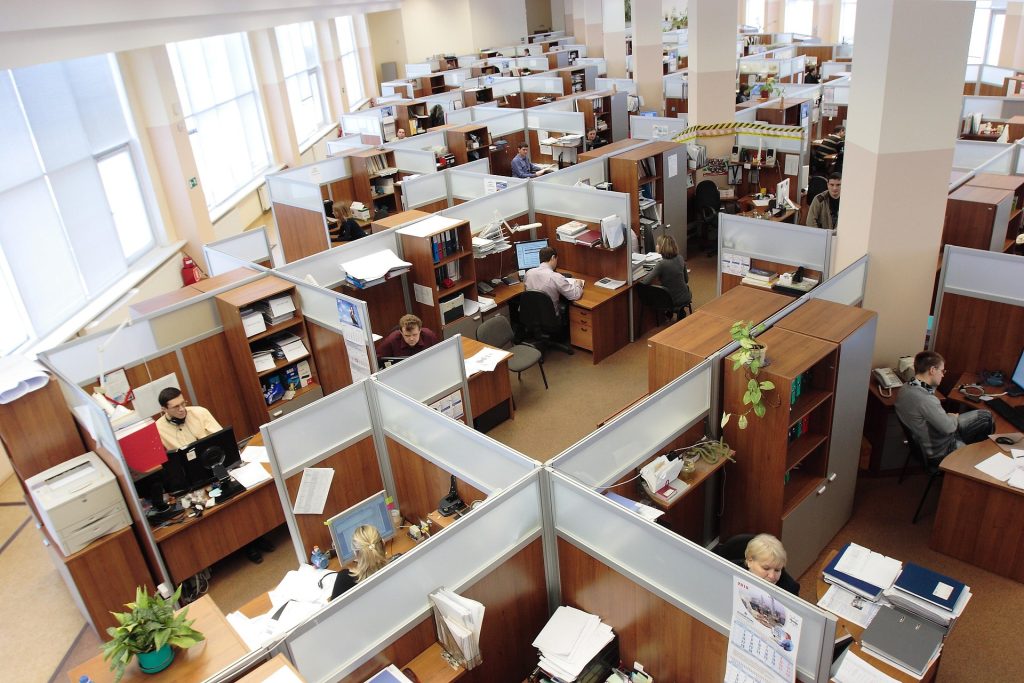
office 95311 1920 | Vox | Is the future of work remote, hybrid, or both?

Instead, all employees could work remotely, and your company might simply hire meeting rooms or co-working space as and when needed.

If an office premises is owned by a company, selling it outright could put money back into the organisation.

Where to From Here?

We believe the future of work for skilled employees will continue to embrace both hybrid models and fully remote opportunities, with these options being driven by modern technology, increased flexibility, cost savings, a desire for an improved work-life balance, and being able to hire people from a global talent pool.

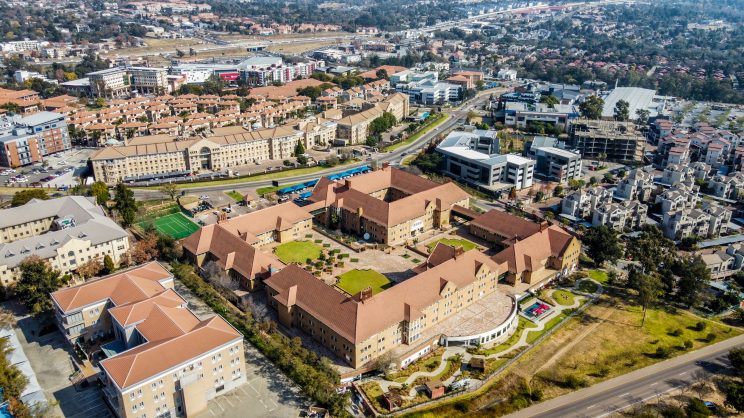
The Covid-19 pandemic first turned people’s homes into their offices. Now, the aftermath can drive a movement in which unused offices can be turned into homes. Around the world, including in South Africa, property developers are looking at ways to turn empty office buildings into housing solutions. While not every empty office building is suitable for conversion, it offers interesting possibilities.
Africrest Prop Atlas Apollo Sunninghil 744x418 1 | Vox | Is the future of work remote, hybrid, or both?
The Atlas in Sunninghill, the largest office park conversion to a residential complex in SA, according to Africrest Properties.

And so, if your organisation is going to embrace a fully or partially remote solution, do you have a building to sell? It could be an added bonus.

On the Couch or in a Different Country: Unlocking the Future of Work

Companies can at last dip their toes into a truly global talent pool without necessarily having to ask a potential new employee to change cities or countries.


While the office premises will always be a feature of working life for most companies, it seems now that the future of work has arrived and is with us today. Work is no longer something that can only – or mostly – take place in a traditional office space.

Advancements in technology, combined with more flexible attitudes, mean that remote and hybrid work models are being offered by many more organisations today, giving employees greater independence and control over their work environments.

And as with most things in life, these new parameters bring their own sets of challenges and advantages.


On the Positive Side

Remote and hybrid work models allow organisations to tap into a significantly broader talent pool. When remote and / or hybrid arrangements are put on the table, companies can employ people who live a significant distance away from the office – even in another part of the country or the world.

This type of flexible employer/employee relationship was much scarcer in the past, and arguably even impossible for most companies.

So you want to employ an expert in their field who lives in the UK, or the UAE, or even Upington, but your head office is in Sandton? No problem – the time zones here are all similar, so it’s all Under Control. Remote working means it’s possible to hire in the person you really want to strengthen your team.

Looking at people in the US and Australia – Down Under – is of course a different story when it comes to time zones, but depending on the type of work required, tapping into a truly global office is no longer impossible – it just takes organisational skills and a flexible outlook.

Companies can at last dip their toes into a truly global talent pool without necessarily having to ask a potential new employee to change cities or countries.

From the employees’ perspective, they can avoid arduous daily commutes to and from work, and gain back more quality time for their personal lives, as well as working in a more flexible home space than occurs in your average office (the couch springs to mind).

And for the employer, once again, happy employees tend to be more productive employees who are more inclined to stay with a company that is more flexible – so this means less employee turnover.

There are many ways in which these positives feed into a virtuous cycle: employees who are happy because they have a flexible work arrangement tend to work harder and are more productive. This in turn pleases the employer, who is then more inclined to continue with flexible arrangements. On the surface, it seems like a great recipe for success.


Disadvantages to Remote or Hybrid Work

However, there are also challenges to contend with. Communication and collaboration can become more complex in remote and hybrid settings, especially when team members are scattered across different locations and time zones.

In addition, building and maintaining a solid company culture in a virtual environment can be difficult without regular face-to-face interaction.

It also needs to be noted that not everyone wants to work from home, at least all the time: some employees may struggle with feelings of isolation, which can actually lower their levels of engagement and productivity. Alternatively, there might be too many distractions at home preventing them from doing their best work (other people, a noisy environment outside the home, easy access to their favourite shows – there’s the couch again…).

In South Africa, of course, we also have regular load shedding to contend with, which can add in further permutations around working from home for employees – not everyone can afford a UPS to keep their devices switched on and connected when the power goes off.


Being Proactive

To thrive in this new reality, organisations are well-advised to prioritise their employees’ work experience. This has always been common sense for any company that wants to avoid a high staff turnover, but as the UK and the US found out after Covid during the ‘Great Resignation’ period, many employees got used to working from home, and then voted with their boots when they were given ultimatums to return to the office.

As noted in this online HR article: ‘The pandemic changed many people’s expectations of work – and many were prepared to quit if their employer wasn’t ready to meet those expectations.’

In South Africa, of course, we have different scenarios playing out, including the ever-present threat of load shedding as well as high unemployment rates, and so perhaps we didn’t experience the Great Resignation quite as much as in other parts of the globe. By and large, we could assume that the so-called Great Resignation in South Africa is ‘ring-fenced in the professional and specialist roles that are scarce skills in the market’.

But it still provides food for thought: namely, that keeping your employees happy – or at least showing that you are trying to listen to their concerns – can help to keep your staff numbers stable. This would involve trying to address the specific needs and preferences of remote and hybrid workers, while also ensuring that they feel valued and connected to the organisation’s mission and culture. A proactive approach to communication, performance assessment and technology is vital.

From a technology perspective, Vox can help with your connectivity and power requirements, through our vast range of solutions including fibre, voice, failover and UPS offerings.

As the future of work continues to evolve in the present, Long Live Working From The Couch.

At least sometimes.