Decoding the Weather and Following Her Dream

Meet our Experts: Spotlight on Michelle du Plessis

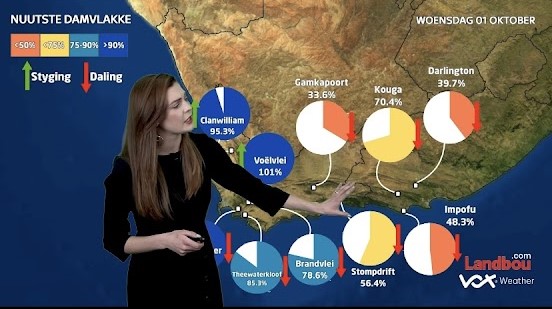
At Vox, we value, support and actively engage people with the levels of expertise that we require to keep us moving forward as a company. In this edition of ‘Meet our Experts’, we find out more about Michelle du Plessis, who works for Vox Weather as a Meteorologist. She plays a key role in bringing local audiences our vital, regular weather forecasts. 

Michelle regards meteorology as being a balance and blend of science and storytelling. And certainly it’s come a long way, from ancient civilisations observing celestial patterns or monitoring the movements of birds and animals, to the modern-day usage of advanced technology and complicated maths.

Michelle – who is one half of the acclaimed Vox Weather duo, together with colleague and mentor Annette Botha – shares details about her daily working life, as well as some of her challenges and aspirations.

We also find out more on how hard she has worked to follow her dream.
3 | Vox | Decoding the Weather and Following Her Dream
 

Inspiration During High School

Michelle’s future career as a meteorologist began in high school, where she loved Geography and was also good at Maths. She explains: “My Geography teacher, Mrs Esther Fourie, was simply amazing and truly inspirational. I became interested in pursuing Geography at the tertiary education level, but I wasn’t too sure initially of what was available to me in the field.”

Here she smiles: “I wasn’t that keen on looking at rocks, for instance! But I really liked the weather component of Geography. So I did some research and decided to study meteorology.  Once at university, I found the course to be very scientific and also mathematical, and in fact more challenging than I’d expected, but always very enjoyable.”

8 6 | Vox | Decoding the Weather and Following Her Dream

Michelle studied for a BSc Meteorology at the University of Pretoria, which is currently the only university in South Africa to offer the course, and she then went on to complete her Honours degree, graduating Cum Laude and at the top of her class. It wasn’t always plain sailing though: financial and COVID-linked challenges were looming.

Grit and Determination

Having been granted a bursary during her undergraduate years, Michelle had to start paying for her studies in full during her final Honours year. “It was financially challenging,” she says, “but I managed to get through by juggling a couple of jobs while I was still studying. I found different work for myself, doing a bookkeeping job as well as some tutoring work. Fortunately, I do like both Maths AND children – if I hadn’t become a meteorologist I could easily have become a teacher!”

Another significant challenge came about because of the COVID-19 pandemic. Michelle explains: “I was doing my Honours degree during the COVID period, and it ultimately had a very negative impact on job opportunities in the broader meteorology arena. This was largely because most graduate meteorologists would traditionally be absorbed by the South African Weather Service (SAWS) after they had finished their studies.

“However, one of the main incomes for SAWS is the production of forecasts relating to the aviation industry, and obviously COVID caused global flights to be cut back severely. The end result was that, in the year after I’d finished my Honours degree, SAWS wasn’t able to hire in any of the meteorology graduates from my year, which was a serious blow for all of us at the time.”

transport 5207942 1280 | Vox | Decoding the Weather and Following Her Dream

However, Michelle is both determined and resourceful, and so to support herself, she continued with her previous bookkeeping and tutoring jobs for about another year or so – something which, she says, taught her continued resilience and perseverance, even while her dream job wasn’t immediately within reach.

“I definitely had some tough moments along the way,” she admits, “but I also learned that hard work and staying positive can eventually pay off. I don’t like dwelling too much on the past – I believe that everyone faces their own challenges.”

Her chance to finally work in her chosen field came when she was able to join Annette at Vox Weather from February 2023 as a Junior Meteorologist.

5 3 | Vox | Decoding the Weather and Following Her Dream

“It’s really fulfilling to be working today in the field that I studied for,” she says. “I’m so grateful for the opportunity to be working now as a meteorologist and gaining exposure to a truly interesting and satisfying working life.”

It’s also clear that her formative challenges have helped to shape her impressive work ethic.

A Day in the Life…

So what does a day in the life of a meteorologist look like?

Michelle says a typical week involves analysing weather models and trends, preparing the daily forecasts, and switching into content creation and filming to produce material across different platforms, from short TikTok clips to the main daily show that goes live at 18:00. In short, forecasting requires scientific modelling work, after which content must be created for different audiences and formats.

She explains: “Basically I forecast and present the weather, but that’s not all. We also do quite a lot of interviews with newspapers and radio stations. Then besides that, we additionally plan field trips, including for our ‘Beyond the Forecast’ episodes, where we go a bit deeper into how weather can impact on other experiences. So it’s a lot of science, and then quite a bit of fun as well!”

Her field work is an important and much‑loved part of the job, including snow chases, Namaqualand flower shoots, and even hot‑air balloon and paragliding experiences – all in the name of finding out more about the local weather and its effects.

4 1 2 | Vox | Decoding the Weather and Following Her Dream

Says Michelle: “So much of my field work has already become what you could call ‘bucket list’ types of experiences. Having grown up in Pretoria and then relocated to the Western Cape for Vox Weather, I hadn’t previously experienced snow until we went snow chasing for work last year, which was amazing and today is one of my favourite memories!”

And staying with the idea of ‘snow angels’, Michelle adds that she “likes to think of the Vox Weather meteorologists as being South Africa’s Weather Fairies…!”

It’s a fun thought, because fairies traditionally help to make good things happen, and Michelle and Annette together do just that, using modern technology for both the initial weather forecasting as well as sharing their information and analyses via the Internet.

5 1 | Vox | Decoding the Weather and Following Her Dream

When discussing the audience differences across various social media platforms, Michelle notes that TikTok attracts a younger audience, while Facebook often brings older and more seasoned followers.

“Geographically, Vox Weather’s biggest engagement comes from the major urban centres, including Gauteng, Cape Town, Durban, Port Elizabeth and Bloemfontein,” she outlines, “while the audience engagement can also vary by season and region. For example, people in Gauteng often react strongly to cold snaps and hail, while Western Cape viewers are more used to rain and winter patterns.

“In general though, it’s safe to say that engagement tends to spike during extreme or unusual weather events. Our Vox Weather community is overwhelmingly positive and appreciative, with only the odd negative comment that we don’t dwell on.”

Challenges and Resilience

Being in the public eye can be challenging,” Michelle confirms, “and there are obviously times when we get negative comments – we do sometimes get the forecast wrong! People can be quite harsh on us if we predicted rain that then didn’t happen, for example.

“My response then is to ask people to remember that the atmosphere overall is quite complex, and that a small change can make a big difference. We always say: ‘It’s just the forecast – it’s not a promise!”

Michelle Nov 2023 036 | Vox | Decoding the Weather and Following Her Dream

She notes that another challenge includes presenting in English, which isn’t her home language (Michelle comes from an Afrikaans upbringing originally), but she continues working on her linguistic skills.

To counteract these occasional work challenges, Michelle is grateful that the team at Vox Weather is friendly and supportive, with Annette being a kind and flexible mentor: “I’ve been allowed to work with a significant amount of creative and professional freedom while developing my own presentation style, wardrobe choices and the planning of shoots,” she says.

“I also have tremendous support from my husband, Renaldo, and I’m really enjoying married life – I’m finding it an absolute joy. I’m so lucky to be married to someone who supports me wholeheartedly – he’s my calm in the chaos! While I do miss some key family members and friends, moving to Cape Town together has opened up a meaningful new chapter for us.”

7 2 | Vox | Decoding the Weather and Following Her Dream

Into the future, Michelle would like to continue with her academic studies at some point by doing a master’s degree, possibly with a focus on changes to rainfall patterns under a warming climate. She’s also interested in growing further within Vox Weather and having her own future role in mentoring other meteorologists going forward.

“I’m very proud to be part of Vox Weather,” says Michelle. “We’ve built a brand that people trust, and we’ve worked really hard to get there. I also love the fact that every day is different, whether we’re forecasting and standing in front of the camera, or out in the field.

“I’m very grateful for the job I have, and I love every day of it. And just know, when you see me on the screen having fun during a snow chase, that it probably took three weather models, two coffees and one very determined fellow meteorologist to get me there!” she concludes.

The Real Cost of a Data Breach for Individuals

Another day, another data breach.

It seems like every other week that some big company announces they’ve been hacked (seriously, hospitals – heard of a firewall?). Entire databases of private, confidential information are sent into the digital wild more frequently than Trump changes his mind. And, the sad part is, the individuals who’ve been compromised often suffer as much as the entities who let it happen.

A good PR campaign and said company can get back on their feet. Know who can’t? The affected parties who now must recover financially, emotionally, and socially.


Financial Impact: Immediate and Hidden Costs

credit card 1591492 1280 | Vox | The Real Cost of a Data Breach for Individuals

When people think about breaches, the first implication they consider is financial – rightfully so, as the immediate effect is usually on your pocket.

Fraud, loans and damaged credit:

Criminals don’t even need actual money to run wild – just your card details are enough of a launching pad. How so? Here are some ways:

  • They may start fraudulently purchasing gift items, electronics, or crypto before you’re even aware of it.
  • Many criminals take out excessive loans linked to another account using stolen identities. The victim only finds out once collection is due.
  • On a smaller scale, quick cash-outs via e-wallet, ride sharing, and even food delivery accounts are also small ways victims have been hit.


Think it’s not relevant? Let’s look at the history:

An Equifax breach exposed the personal information of 147 MILLION people in 2017. Most of these victims later reported fake loan approvals and fraudulent credit card applications within a matter of days. And, even if the matter is eventually resolved, you can’t put a price on the stress, hours lost waiting on hold, or any residual damage to your credit score.

Identity theft — a long‑term risk:

cybersecurity 6949298 1280 | Vox | The Real Cost of a Data Breach for Individuals

Unlike a wallet, you can’t just “get a new” digital identity. Once your data is compromised, criminals can use it for decades. Think credit fraud, tax fraud, or even medical identity theft for prescription drugs.

The knock-on effect of these breaches is immense. They can impact on your ability to rent, apply for loans, and in some cases even find jobs.

The human cost — stress, relationships and reputation:

Everyone talks about Data breaches numerically, but what the victims go through is often overlooked. Many victims have to live with the daunting reality of:

  • Mounting anxiety as they log in and out of their banking app. Repeatedly.
  • The uncertainty of not knowing whether your info has been stolen.
  • The pain of repeatedly explaining your situation to strangers.


Think sleepless nights, relationship stress, and a never-ending daunting feeling. Cybercrime steals more than data – it takes away peace of mind.

Privacy harms that money can’t fix:

Many breaches expose extremely sensitive information. Think dating apps, health records, or your browser history (shudder).

And, unlike credit cards, your bank can’t (eventually) undo this one.

  • Ever heard of Ashley Madison? They were Tinder before Tinder. Until, one day, users were blackmailed with threats to expose their private activity. You can imagine how this went down.
  • Or spare a second to think about health-related breaches – and how stigmatised patients can feel when their conditions become public.


Some impacts transcend monetary value – they can damage reputations, careers, respect and relationships.

The problem with a breach is often the delayed effect. Cybercrime has a long tail, and slow burning effect. Once your Data is sold on the dark web, it stays there. In fact, it can even be resold, and repeat issues emerge for multiple years.

internet 4894814 1280 | Vox | The Real Cost of a Data Breach for Individuals


What to do right now if your data’s been breached

But enough fearmongering, what can we do if we find ourselves compromised? Here’s an easy guide:

  1. Change your passwords. Immediately. ALL of them.
  2. Enable your multifactor authentication (MFA).
  3. Verify whether your email has also been leaked (use sites like “have I been pwnd” – you can even do it now).
  4. Monitor your bank accounts (and notify your bank).
  5. Temporarily freeze your credit file.
  6. Double-check any calls, emails, or texts asking for information.

You can’t simply measure the true cost of a Data breach via a spreadsheet. The price you pay is intangible, and how do you quantify a lifetime of looking over your shoulder?


Act now – protect your data

Companies can move on – but victims carry the burden even once the headlines fade. This is why taking your cybersecurity seriously is no longer optional. It’s necessary. Because, in today’s digital world, your bank account isn’t your most valuable asset – your data is.

You can’t undo every breach, but you can limit the damage. Change passwords, enable MFA, keep an eye on your accounts and use reputable security tools. Treat data protection as essential because your information is often more valuable than the cash in your account.

Get immediate protection with Norton from Vox.


FAQs

What immediate steps should I take after a breach?
Change passwords, enable MFA, check Have I Been Pwned, notify your bank, and consider freezing your credit.

How long can identity theft affect me?
It can last years. Stolen data can be resold and reused, so ongoing monitoring is essential.

Will my bank always refund fraud losses?
Not always. Many banks will help, but you still face time spent on disputes and potential credit impacts. Report fraud immediately.

Can consumer security software really help?
Yes. Reputable suites (like Norton 360 offered through Vox) reduce your risk of phishing, smishing and device compromise and include privacy tools and 24/7 support.

Proactive MDR: Safeguarding Your Business

Enjoy Round-the-Clock Protection with Vox and Sophos Managed Detection and Response

In South Africa, we are unfortunately used to home invasions, and certainly there is evidence that the presence of a security company can go a long way towards keeping homes, businesses and neighbourhoods safer.

What about the online version of a break-in – how do you protect your business?

Hackers are constantly putting out feelers for companies that don’t have adequate safety and security measures to protect themselves. Some organisations try to take care of their cybersecurity themselves, which can be a bit like a homeowner relying solely on an electric fence: it might offer some protection, but is definitely not infallible all the time.

Cybercriminals – like their real-world counterparts – choose targets with a simple goal of maximising their reward while minimising their risks. As a case in point: 88% of ransomware attacks on organisations occur outside normal business hours.

security 5043368 640 | Vox | Proactive MDR: Safeguarding Your Business

So why not call in the experts and get a Managed Detection and Response (MDR) service for your business? Think of it as being like a cyber version of a security service for your company – always on guard for you, and ready to act around the clock.


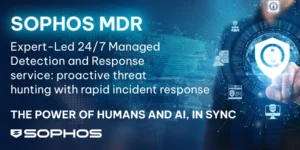
Expert-Led 24/7 Managed Detection and Response Service

Vox has partnered with global cybersecurity experts, Sophos, to offer advanced protection solutions, including managed Detection and Response services.

Powered by its global threat intelligence team, Sophos provides cloud-native, AI-enhanced security to protect organisations of all sizes from modern cyber threats like ransomware, phishing and malware.

Sophos MDR is a comprehensive security-as-a-service solution that provides continuous, expert-led protection against today’s advanced cyberthreats. It’s designed for organisations of all sizes and is an ideal choice for businesses lacking in-house security resources, or those needing to enhance their existing capabilities.

Sophos MDR service gives your business a dedicated, professional team that proactively hunts for and neutralises threats, around the clock. In addition, Sophos MDR seamlessly integrates with over 350 of your existing third-party security tools. This unique approach allows you to realise significant cost savings while maximising the return on your existing technology investments.

sophos central managed security services.png | Vox | Proactive MDR: Safeguarding Your Business

By combining human expertise with advanced AI, Sophos MDR from Vox detects and responds to sophisticated attacks that technology alone might miss. Ultimately, Sophos MDR provides comprehensive, round-the-clock protection without the immense complexity or expense of building your own in-house security operations centre.


24 /7 Cybersecurity Monitoring

Sophos MDR from Vox includes the following benefits: round-the-clock threat monitoring, where continuous protection against attacks, even outside business hours, reduces risk; expert-led threat hunting, in which people are involved in proactively uncovering and eliminating evasive threats that tools can miss; and full-scale incident response and root cause analysis, including recommendations to prevent recurrence.

In addition, Sophos MDR from Vox also provides flexible response modes, with which you decide how the MDR team operates, at the level that suits your organisation; and compatibility with third-party tools that integrate with your existing security stack; eliminating the need to ‘rip and replace’.

As a final sweetener and proof of confidence in its solution, Sophos provides a breach protection warranty, offering your business financial protection against the costs associated with a breach.

Sophos MDR Mobile WebBanner 1 | Vox | Proactive MDR: Safeguarding Your Business

The message is clear: no one is safe from being a target, and there are times when the best-case scenario to protect your valuable business assets and data is to call in the experts.

Your business deserves the best possible protection.

Enjoy optimised performance and keep your organisation running safely without the threat of cyberattacks with Vox and Sophos – contact us for more information.


FAQs

What is Managed Detection and Response (MDR)?
MDR is a security service that combines continuous monitoring, expert threat hunting and incident response to detect and neutralise advanced cyber threats on behalf of your business.

How does Sophos MDR differ from standard anti-malware?
Sophos MDR pairs AI-enhanced detection with a dedicated human team that actively hunts for evasive threats and provides full incident response, going beyond signature-based tools.

Can Sophos MDR work with our existing security tools?
Yes, Sophos MDR integrates with hundreds of third‑party security tools so you can retain your current stack and improve overall protection without replacing systems.

Is MDR suitable for small businesses?
Yes, MDR is particularly valuable for SMEs that lack in-house security resources but need enterprise-grade monitoring and response.

What is a breach protection warranty?
It’s a financial assurance provided by Sophos for qualifying breaches, designed to help cover certain breach-related costs — giving additional assurance to customers.

Protect Your Older Parents Online with Norton from Vox

No, Mom – DON’T click on that link! 

I know an elderly lady who is dignified and respectable, with grown-up children and grandchildren. She is, as they say, a ‘pillar of her community’. She also, rather startlingly, has some, shall we say, unfortunate images on her phone at the moment, involving various anatomical closeups of naked people.

But this is not an article about a seemingly-sweet old lady who is at the helm of a mafia-style criminal empire – no, that’s not it at all, because she actually has NO IDEA that these images are currently on her phone (and her family members haven’t yet had the courage to tell her).

Vox has teamed up with global cybersecurity expert company Norton™ to offer comprehensive protection for your devices and online privacy, for the whole family, all in one solution. Traditionally, people have worried about their own online safety as well as their children’s, but there is no reason why your older parents can’t benefit also.

In this article, we look at how so many older people today have absolutely no idea of the perils that lurk online. We discuss how to protect people of an older generation who didn’t grow up with technology at their fingertips.

And we look at how acquiring the right software can take away the stress of having to keep saying: “NO, Mom – DON’T click on that link!”

Elderly Exploitation | Vox | Protect Your Older Parents Online with Norton from Vox


Why Older People Are Especially Vulnerable Online

Criminals have always seen older people as being a soft target, and today’s digital world simply presents long-existing criminal tendencies in a brand-new wrapping. When the goal is to scam older people out of their hard-earned savings, the Internet, online banking and social media all just make it easier for cyber criminals, because many older people are just not that comfortable with today’s technology.

This is largely because, in contrast to younger generations, older citizens had to learn to use information technology when they were already adults. It’s something that was initially entirely new to them.

And so the relationship that today’s senior citizens have with technology can be an uneasy or uncomfortable one, as shown in this clip from the popular and acclaimed Netflix sitcom, ‘Grace and Frankie’.

In the video clip, we see clearly just how some of the older generation think about technology – Frankie is deeply afraid of it at first. (Grace, as a retired former CEO, does at least know how to boot up a new laptop.)

Take a look for a bit of show, not tell!

fc69f28d b309 4d37 9f05 288f37f7e25a screenshot | Vox | Protect Your Older Parents Online with Norton from Vox

The video clip raises another point: if so many of today’s older generation are uncomfortable simply with acquiring new technology, you can imagine that they’re even more vulnerable once they’re finally online.

Senior citizens can be particularly vulnerable to cybercriminals who use social engineering – deception intended to manipulate people into sharing confidential or personal information – to lure their victims into handing over valuable personal details.


Why The Older Generation Is Vulnerable Online

Online criminals prey on qualities shared by many older users, including a fear of technology that they don’t fully understand, loneliness as their children grow up and leave home, an ingrained respect for authority and institutions, and an increasing need to feel financially secure as they get older.

If this is all sounding just a bit too familiar and close to the bone, the good news is that there are ways in which you can help protect your older parent or relative against would-be online scammers.


Keep It Simple — Three Rules to Teach Your Parent

Firstly, share the following information with your older parent to try to help them recognise when a criminal is trying to steal their bank account information, passwords or credit card numbers, or otherwise trying to separate them from their money.

  • Trust no one: never click links or open attachments from unexpected senders.
  • Ask first: establish a rule — “Call or text me before you act.”
  • Don’t share security details: never send PINs, passwords or banking details by message or phone.


These short, repeatable rules are easier to remember than long lectures. Think of them as being the digital equivalent of “Don’t open the door to strangers.”

In summary: ‘Don’t click on every link that looks like fun or promises you a great bargain.’ It’s the Internet version of ‘If it looks too good to be true, it probably is.’

Things that Make It Difficult for Older Adults to Use Technology 1 | Vox | Protect Your Older Parents Online with Norton from Vox


How Norton from Vox helps — Straightforward, Family-Wide Protection

You can try to teach all the rules in the world, but intuitive software makes prevention easier. Stop the malware from getting in by blocking those seductive ‘Click here’ messages before they even reach your parent’s phone, tablet or laptop with their exotic and interesting click-bait messaging.

Norton’s software safeguards your entire family’s PCs, Macs®, tablets and smartphones from viruses, ransomware, phishing and other cyber threats while you bank, shop and browse online.

Norton 360 family protection provides multiple layers of defence against viruses, malware, ransomware and phishing, which are the common tools criminals use to target seniors. Key benefits for elderly parents:

  • Blocks malicious links and phishing attempts before they land.
  • Protects PCs, Macs, Android and iOS devices with one app.
  • Simplifies security for non‑tech users — automatic updates and background protection.
  • Centralised family protection so you can check that your parent’s devices are safe.


Buying Norton via Vox gives you a local, reliable channel to purchase and manage the licence, which is one less thing to worry about.


Practical steps for immediate protection

  • Install Norton on every device your parent uses and enable automatic updates.
  • Turn on email and web protection to block suspicious links.
  • Set up one shared contact (you) who your parent must call before sharing money or details.
  • Back up important files so ransomware can’t hold photos or documents hostage.


Norton from Vox  offers robust, all-in-one protection against viruses, malware, ransomware and online threats – for the whole family, including your elderly parents. It’s Internet safety for the elderly – like the virtual equivalent of a home security guard, refusing to allow the criminal over the threshold while your mom or dad are blissfully unaware and watching their favourite show or match on TV.

And if your elderly family members aren’t downloading dodgy links, you don’t have to spend precious time cleaning up their phones at a later stage.


Frequently Asked Questions

How do I start a sensitive conversation with my ageing parent?

  • Choose a calm moment, be honest but respectful, ask open questions and listen to their priorities


How can I suggest home-safety changes without upsetting them?

  • Frame changes as ways to keep them independent, offer choices and involve them in decision-making.

Secure Your Connectivity with our Fibre Plus Firewall Bundle October Special

Secure connectivity is about speed and protection.


South African networks face multiple threats on a daily basis. Recent reporting shows that Interpol detected roughly 230 million cyber threats in South Africa, which is a clear signal that homes and businesses must harden their borders.

Secure connectivity prevents unauthorised access, data loss and downtime, helping you to keep operations and productivity running smoothly within your business.


Sophos Firewalls with Vox

Vox has partnered with Sophos to offer next-generation firewalls to help you better protect your network, quickly and efficiently.

Sophos Gold Partner 1 | Vox | Secure Your Connectivity with our Fibre Plus Firewall Bundle October Special

With Sophos firewalls from Vox, you can enjoy no hidden costs – just great security, and you will find that it’s easy to use, even if you’re not technical.

The advanced threat protection blocks viruses, ransomware and hackers, leaving you with peace of mind. You can also block websites and non-work apps so that your employees’ efficiency is boosted, allowing you to boost security and productivity at the same time.

The solution is designed to promote a fast and secure network that continues running at high speed, which serves as another productivity value-add.


Why A Fibre Plus Firewall Bundle Is Crucial

Vox’s Fibre Plus Firewall bundle gives you both speed AND protection.

Our October 2025 special offer combines resilient Vox Fibre with next‑gen Sophos Firewall protection, allowing you to protect your devices, data and productivity with a single, easy solution.


Firewalls: Your First Line of Defence

Optimised SophosXGSSeries Web ValueAdd Banner V2 | Vox | Secure Your Connectivity with our Fibre Plus Firewall Bundle October Special

A Firewall monitors and filters incoming and outgoing traffic based on set rules, creating a perimeter between your trusted network and the internet. Modern, next‑generation Firewalls also:

  • Detect and block intrusions and malware (IDS/IPS).
  • Support VPNs for secure remote access.
  • Log activity for rapid incident response.
  • Block malicious websites and non‑work apps to protect users and increase productivity.


Why Pairing Fibre with a Firewall is a Great Idea

Fibre delivers fast, symmetrical bandwidth essential for cloud apps, video conferencing and backups. Pairing that connectivity with a dedicated Firewall ensures high performance isn’t offset by exposure to threats. The Fibre plus Firewall bundle gives you:

  • Speed and security in one purchase.
  • Simpler billing and deployment with Vox.
  • Managed support to keep both connectivity and protection performing.


Sophos Firewalls with Vox: What You Get

The key benefits include the following:

  • Advanced threat protection against viruses, ransomware and hackers.
  • VPN support for secure remote workers and branch offices.
  • Centralised logging and reporting for faster incident handling.
  • Options to block websites and non‑work apps to boost staff productivity.
  • Backed by Vox 24/7 support and clear pricing with no hidden costs.


October special: Fibre plus Firewall bundle

This October, Vox is running a limited‑time Fibre plus Firewall bundle special. It’s an ideal time to:

  • Move to faster Fibre connectivity;
  • Add enterprise‑grade Sophos Firewall protection; and
  • Consolidate services and simplify billing.


Enquire early to reserve bundle availability and special pricing.


How To Get Started

Assess your needs in terms of the required bandwidth, number of users and remote access requirements. Then:

  1. Choose a Vox Fibre package and Sophos Firewall level.
  2. Book installation and configuration with Vox support.
  3. Activate monitoring and policies with assistance from Vox 24/7 support.


Protect Your Network with Vox and Sophos

By protecting your sensitive data, devices and systems from threats like malware, hackers, denial of service attacks and malicious software, firewalls are a fundamental component of any network security strategy.

Contact us today to find out more on how you can implement a firewall to protect your network.


Frequently Asked Questions

What is a Fibre plus Firewall bundle?

A Fibre plus Firewall bundle combines Vox Fibre internet connectivity with a managed next‑generation Sophos Firewall, to deliver both high performance and network security in a single package.

Why should I buy a Firewall if I already have Fibre?

Fibre gives you speed; a Firewall protects that connection. Without a Firewall, your fast connection can make attacks more damaging. A combined solution ensures both performance and protection.

What protection do Sophos Firewalls provide?

Sophos Firewalls include intrusion detection and prevention, anti‑malware and ransomware protection, VPN support, web and app control, and central logging for incident response.

Who is the Fibre plus Firewall bundle suitable for?

The bundle is ideal for small businesses and larger organisations that need reliable Fibre speeds with enterprise‑grade security and managed support.

When is the Vox October special available?

Vox will run the Fibre plus Firewall bundle special in October 2025 – contact us to confirm availability, exact pricing and terms.

Can Vox manage the Firewall for me?

Yes. Vox offers managed services and 24/7 support to help configure, monitor and maintain your Firewall and connectivity.

Will a Firewall slow down my Fibre connection?

Properly configured next‑gen Firewalls are designed to protect without significant performance impact. Vox matches Firewall capacity to your Fibre speed to preserve throughput.

How do I enquire about the October bundle?

Click here on the Vox website to request details and a tailored quote.

The Quiet Hero of Service Delivery

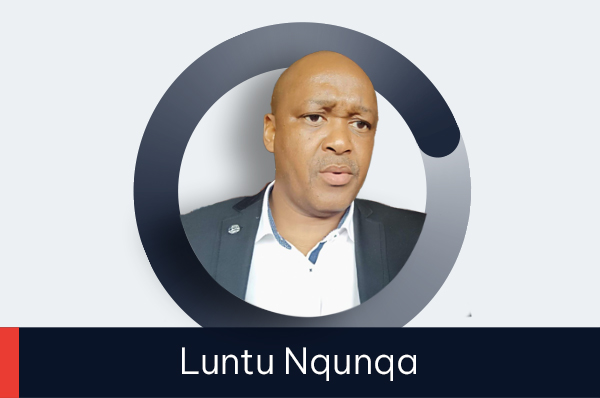
Meet our Experts: Spotlight on Luntu Nqunqa

At Vox, we value, support and actively engage people with the levels of expertise that we require to keep us moving forward as a company. In this edition of ‘Meet our Experts’, we find out more about Luntu Nqunqa, who is  Vox’s Service Delivery Manager for Eastern Cape and the Garden Route. This is the story of a Quiet Hero – someone who doesn’t look for the spotlight, but is nonetheless a leader and an inspiration to many.

Luntu is a modest and humble man, with an inspirational tale to share of perseverance, long-term loyalty and leading through mentorship. He was born in rural Baziya Village in the Eastern Cape, relatively close to Mthatha, and went to school in his home province.

After school, Luntu studied in Johannesburg and later found work in both the Eastern Cape as well as Gauteng, before eventually returning to the Eastern Cape a few years ago.

Today, he is happily based with his family in Gqeberha (Port Elizabeth). Luntu recently celebrated his 20th anniversary working for Vox, on the first of June this year, a milestone of which he’s immensely – and justifiably – proud of.

Let’s find out more about another of our Vox heroes.

anniversary 2673508 1280 | Vox | The Quiet Hero of Service Delivery


Keeping Vox Processes Running Smoothly

As part of the countrywide Service Delivery team, Luntu is one of the cogs in the engine that efficiently manages the installation and on-site support of Vox products and services to our customers. When we break it down, it’s a lot of diverse work and responsibilities, and a very busy life!

He explains: “In essence, the Service Delivery teams are the people who ensure that a new Vox customer actually gets their product sorted out and operational, including additional support after the installation has been completed.

“The Service Delivery department is divided into three silos, namely the Service Desk, Installations and On-Site Support. In our region, I oversee all three of these operational silos and the employees who work in each division; and I also manage and carry out regular visits to the three regional offices, namely Port Elizabeth, East London and George.”

port elizabeth za | Vox | The Quiet Hero of Service Delivery
Luntu’s job involves significant travelling across a widespread area

It’s a busy life with a lot of spinning plates and travel, to ensure that all aspects of the three Service Delivery divisions are covered – and still, that’s not all Luntu does every month!

He adds: “I’m involved in planning and sometimes carrying out site meetings, and I take care of customer relationships. I also have responsibilities around facilities management and the occupational health and safety of our employees, and I ensure that the fleet of vehicles that we use is in good running order – safety is of paramount importance. I’m also directly responsible for the development and certification of all the technicians in my area.”

Luntu today is known as a dependable and hands-on Manager looking after a key region of the company, but his light was already shining brightly early on during his time at Vox.


How His Career Began

After completing high school, Luntu studied Electrical & Electronics at Johannesburg Technical and Vocational College. He later completed an Operations Management Certificate from University of Cape Town and Prince 2 Foundation he was then able to find work in various technical roles.

These included work as a temporary technician assistant maintaining towers at the former Capital Radio 604, based in Mthatha and Durban, followed by a sawmill Electrical apprenticeship in the Eastern Cape, involving three years electrical training in a forestry environment, and finally as a Telkom employee, working as a technician installing and maintaining PBX and telecom systems in Queenstown in the Eastern Cape, and later in Johannesburg. During his final Telkom months, he was referred to Orion (later to become part of Vox) during some site work.

“I had the opportunity to join Orion on 1 June 2005 as a junior technician,” he says, “and I worked as a technician in Joburg from 2005 to 2010, when I was promoted to Team Leader. In this capacity, I managed Johannesburg Central and South and the surrounding regions.

“I then had the opportunity to relocate back to the Eastern Cape in 2014 , when I was tasked with building new teams in East London, Port Elizabeth and later George. From 2015 until today, I’ve been the Service Delivery Manager for Eastern Cape and the Garden Route.”


The Pursuit of Excellence

Since his return to the Eastern Cape in 2014, and his promotion to Service Delivery Manager, Luntu has built up the Eastern Cape and Garden Route teams from very few employees to a healthy number of trained and competent engineers, thereby allowing Vox’s business in the region to grow significantly due to increased employee capacity with the guidance from his Executive Head.

“My preferred strategy when I was building up the team initially was to hire in young and relatively inexperienced new employees, partly to give them a chance at employment and also so that I could mentor and teach them,” he explains.

“My personal philosophy includes valuing a person’s attitude and their approach to discipline over their raw skills. I believe that skills can be taught, but that a poor attitude, left unchanged, can undermine a team.”

Since then, he’s mentored many interns and junior employees, a number of whom have since advanced further within Vox.

“One of my proudest work moments,” he says, “was when, together with my team, I was able to defy the odds and lead a very challenging municipality installation, incorporating six PBXs and 400 extensions, to completion in just three days, instead of the anticipated week and a half. In doing so, we exceeded expectations and were able to make the seemingly impossible something that was in fact achieved!”

And it’s not going to stop there.

“I would like to develop specialist engineers in key Vox products within my team,” he says, “and continue uplifting interns and graduates with the opportunities to grow further within the company. I intend to maintain high operational standards across the Eastern Cape and the Garden Route region, making us a force to be admired across the organisation. I am grateful to enjoy excellent support from senior management, including my Executive Head – Operations, Frans Hoffman, and our CEO, Jacques du Toit.”

WhatsApp Image 2025 10 08 at 16.51.28 2fefb949 | Vox | The Quiet Hero of Service Delivery
Photo of Luntu from a Service Delivery Management Strategy and Team Building conference


Developing a Personal Brand

Luntu clarifies that he had some challenges along the way: “One of the periods that was difficult for me involved my time working at the sawmill. I struggled with the cold, wet nature of my working environment. But my time there was to ultimately form a positive part of my life overall, as it helped me to move forward in my career.

“In addition, my transition from Telkom to Orion/Vox brought some initial moments of self-doubt and cultural adjustment – I really wondered if I would be able to fulfil the mandate sometimes. I found Orion to be a more corporate, polished environment than I was used to, and I worried at first that I might not be able to fit in the way I wanted to.”

To overcome his feelings of self-doubt, Luntu set about maximising his learning opportunities. He explains: “I found mentors at work to model myself on, while embracing Vox’s customer-first and brand-conscious culture.

“I developed my own personal philosophy and decided to ‘Carry myself as a brand’, meaning that I took pains to ensure that I operated with professional humility, accountability and consistency. I want to leave a positive mark wherever I can.”

Today, Luntu’s colleagues and line managers would all agree that he has an amazing personal brand, which is founded on perseverance, kindness, respect and hard work – as well as a ‘Never-say-die!’ attitude.


A Dedicated Family Man

WhatsApp Image 2025 10 10 at 11.48.36 702d894e | Vox | The Quiet Hero of Service Delivery
Luntu’s wife Phiwa

Away from work, Luntu is happily married to his wife, Nokuphiwa (‘Phiwa’), and they have three children, namely their eldest son, Lwethu, who is 19 and studying at university; their only daughter Live, in grade 10, and their youngest son Lunako, who is 13 and starting high school in 2026.

Luntu and Phiwa were overjoyed recently when Lunako was awarded a prestigious full scholarship to start studying at St Andrew’s College in Grahamstown / Makhanda.

“By the grace of God,” says Luntu, “my boy had the opportunity to sit for the scholarship exams, and he then came in first place. We are so pleased that he has this opportunity, starting from next year, to complete his high school tuition at St Andrews College, with all expenses paid.”

Luntu takes great pleasure in supporting his kids in their endeavours, both academically and on the sports field, and is always present at school rugby and soccer matches when they are playing.

“I’ve always been a lifelong soccer fan, but I didn’t follow rugby – or even properly understand the game! – before my boys introduced me to it. Now when they are playing, I’m always there at school – I don’t miss a game!” he says enthusiastically.

“My oldest son, in fact, was the school’s first team rugby captain, and so that was another big thing for our family. It gave me great pride to see him learning the required managerial skills as well as being good at actually playing the game.”


Into the Future

Luntu’s journey from his birthplace in the rural Eastern Cape to Service Delivery Manager in his home province embodies abundant learning and personal growth, an ongoing sense of responsibility and pride in his work, and an overarching commitment to Vox’s values of caring for others, together with service and professionalism. It was not  an easy journey at all.

“Vox is distinguished by our strong brand and marketing identity, and our emphasis on maintaining professional standards, for example in our service quality, the way we dress and how we maintain our fleet of service vehicles. I’m enormously proud to say that I work for Vox,” he says.

Luntu believes Vox’s success can be attributed to its respect for customers, responsiveness and strong leadership.

“I see customers having exceptional access to assistance within the company,” he notes, “and clients are easily able to escalate issues directly to senior leadership – we really do have an open-door culture this way. I have also noticed that we show a consistent approach to our customers, regardless of their size or location, which I think is very admirable.

“After 20 years at Vox, every day for me is still different and varied, and I still have ambitions to see where and how we can improve. My goal is to turn my area of responsibility into a centre of excellence, where anyone across the company can call on us for any required expertise or problem-solving, at any time,” he concludes.
Protect Your Kids from Online Predators

Some practical thoughts to guide parents and grandparents

It can’t happen in my home… can it?

Just because your children are playing online games in the safety of your home doesn’t mean that they are safe from perverts.

This is the reality of today’s digital world.

It’s hard to believe, but every parent’s worst worry is now partly digital: how to protect kids from online predators who can reach children through games, apps and social networks in the safety of your own home. This guide discusses online grooming, practical steps you can take at home, and how tools from Vox and Norton™ can help you keep children safer online.

[Editor’s note: This article comes with a sensitivity warning, particularly for parents, grandparents and other concerned family and friends.]

According to the United Nations Children’s Fund (UNICEF), in South Africa, according to its ‘SA Kids Online Study’, one-third of children in the country are at risk of online violence, exploitation and abuse.

  • One-quarter (25%) of those surveyed confirmed that they had added people whom they’d never met face-to-face to their friends or contacts list.
  • Similarly, nearly one-fifth (18%) of those surveyed had sent a photo or video of themselves to someone they had never met in real life.


These stats also confirm just how naïve and vulnerable children can be – and why parents and guardians need to protect them.

Protect kids from online grooming_1

And so, when we read about the pervasiveness of online grooming, your first response as a parent might be: ‘It can’t happen in my home – can it?’ but your second response should be: ‘How can I make absolutely sure that it doesn’t?”

With Vox and global cybersecurity expert company Norton™, parents can exert real parental control by setting up tools to help your kids explore the Internet more safely.


Unpacking Online Grooming

In decades past, parents and caregivers worried about ‘flashers’ – perverts lurking around schools in long coats, who waited to suddenly give their young victims an eyeful that they weren’t expecting.

Today, the perverts are looking for the reveal to be the other way around – and the effects can be far more lingering and devastating.

Online grooming

Norton™ warns that, as part of the attempted grooming process: ‘…predators may spend months steadily getting to know their potential victims. They might start this process by contacting children as they play popular online games such as Fortnite or Minecraft.

‘…Once predators gain the trust of their victims, they will then steer conversations more often toward sexual topics and will eventually ask children to engage in sexual conversations, send explicit photos, or meet them in real life.’

Reports have also surfaced of cyber predators infiltrating another online game popular with kids, namely Roblox.

But there ARE ways to fight back – and in the Vox family, we’re definitely here to help.


The Danger Lurking Behind Everyday Apps

Vox has teamed up with Norton™, which provides industry-leading antivirus and security software for PC, Mac and mobile devices.

According to Norton, children today gravitate toward social media apps that allow them to connect easily with their friends. But these social networking apps and websites are also favoured by predators who use them to communicate with their intended victims.
Norton says that, in addition to online games, some of the apps that predators may use to communicate with children include WhatsApp, Snapchat, TikTok, Kik, Monkey, Whisper and Chat Avenue.

For any parent, it’s frightening to think about the multiple ways that predators can use technology to find and target their victims.

So let the experts take care of it for you.

child 1073638 1920 | Vox | Protect Your Kids from Online Predators


What Norton and Vox can do for you 

Vox has partnered with Norton to make industry-standard protections readily available to families with Norton Family and Norton 360 providing one app for many devices.

These tools don’t replace conversations, but they give you clear alerts, activity reports and the ability to set safe boundaries.

Smart monitoring allows parents to monitor search terms, videos and app downloads; receive alerts for unsafe behaviour; and get detailed activity reports.

In addition, options such as location tracking allow you to define safe zones for your children and receive real-time alerts if those boundaries are crossed. Children can share their location through the mobile app.

All of these safety features – and many more – are available from Norton’s comprehensive protection for your devices and online privacy.


Protect Kids from Online Predators at Home

UNICEF says that keeping children safe online also relies on parents and caregivers maintaining open communication; using technology to protect children; spending time with them online; and encouraging healthy online habits

  • Talk regularly and openly: Start conversations about online life the same way you’d talk about who your child plays with in the street. Ask gentle questions: who are your friends online? What games do you play? What apps do you use?
  • Agree house rules: Device-free zones (dinner table, bedrooms at night), time limits for play, and rules about sharing photos or personal information.
  • Use parental controls: Industry tools such as Norton Family and Norton 360 offer activity monitoring, content filtering, screen-time limits, location supervision and alerts for risky behaviour. These tools help you set boundaries while still allowing kids to explore.
  • Co-play and co-view: Sit with younger children while they play online and encourage older children to show you new apps and settings. This builds trust and gives you a live view of who they interact with.
  • Check privacy and friend lists: Make sure profiles are set to private, review followers and friends together, and remind children never to share addresses or phone numbers in chats.
  • Watch for signs: Increased secrecy, sudden changes in behaviour, new devices or new online friends that appear overnight are all red flags.


Balancing Safety and Privacy

Monitoring doesn’t mean spying. Explain to your child why you’re using parental controls and that the aim is safety, not punishment. As children grow, shift from more direct monitoring to regular check-ins and shared agreements about responsible online behaviour.

Quick checklist for parents and grandparents (bullet list for snippet targeting)

  • Have an open conversation about online risks this week.
  • Set simple house rules for devices and sharing.
  • Install parental controls and review activity reports weekly.
  • Make social profiles private and review friend lists together.
  • Know how to report abuse to the app/platform and to local authorities.
  • Keep devices in communal spaces for younger children.


Before our world became as digital as it is today, parents only had to worry about their children’s safety in the physical environment. Today, we have to be concerned about online predators that can access our homes through our digital devices.

This is all a lot to think about, so why not let Vox and Norton take care of it for you with our comprehensive and proactive suite of solutions?

We’re here to help you keep your children safe in the online world for as long as possible without becoming another statistic.  Please click here for more information.


“Making the decision to have a child is momentous. It is to decide forever to have your heart go walking around outside your body.” ~Elizabeth Stone, author

mother 2935723 1280 | Vox | Protect Your Kids from Online Predators


Frequently Asked Questions

How can I tell if my child is being groomed online?
Look for signs such as secrecy around devices, sudden new friendships, unexplained gifts, changes in mood or sleep, or attempts to isolate the child from family. If a child is using private messaging apps or deleting chat histories, take note and ask open, non-judgemental questions.

What do Norton parental controls actually do?
Norton Family and Norton 360 provide content filtering, web and search supervision, screen-time controls, social media monitoring, location supervision and alerts for unsafe behaviour. They produce activity reports so you can spot potential problems early.

Will parental controls invade my child’s privacy?
Used thoughtfully, parental controls are a safety tool. Be transparent: explain why you’re using them, involve your child in setting the rules, and gradually reduce monitoring as your child demonstrates responsible behaviour.

At what age should I set up parental controls?
Start young, because even pre-schoolers benefit from basic content filtering and supervised access. For older children, combine tools with conversation and digital literacy lessons so they understand safe behaviour.

What should I do immediately if I suspect grooming?
Stay calm, listen to the child, preserve any evidence (screenshots, chat logs), report the account to the platform, and contact local authorities or child-protection organisations for guidance.

Where can I get help in South Africa if I need to report abuse?
Report serious threats to the police (SAPS) and the platform where it occurred. Seek support from child-protection organisations and trusted local counselling services.


Real Risks of Critical Infrastructure Cyber Attacks

No longer only in the movies…

There are very real cyberthreats lurking today, including critical infrastructure cyber attacks, and all organisations need to protect themselves. We tune into the movies and TV shows for entertainment – sometimes because we need a serious dose of escaping reality to forget about our challenges for a while.

And if we’re watching a thriller, when the film is over, we breathe a sigh of relief that what happened in it was much too far-fetched to have any actual connection to reality.

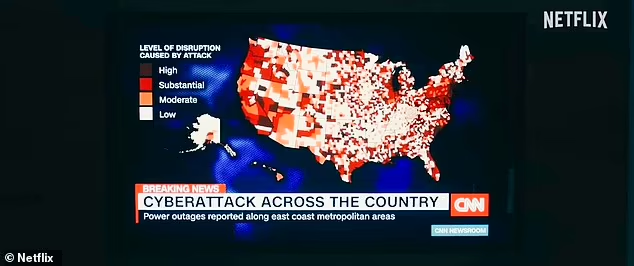
Perhaps viewers a couple of years ago were comfortable, while watching the 2023 American apocalyptic thriller ‘Leave the World Behind’, to think that they would be returning safely to reality when the credits finally rolled, because….

[Editor’s note: If you haven’t seen the movie, here comes a spoiler alert!]

cyber attack leave the world behind | Vox | Real Risks of Critical Infrastructure Cyber Attacks

…because a war was NOT actually being started outside the cinema by sinister forces who began by first destroying communication networks and critical infrastructure through a highly targeted cyber attack.

(If you haven’t seen the movie and want to know more, here’s a quick sneak peek at the trailer. The movie stars Julia Roberts, Mahershala Ali, Ethan Hawke and Kevin Bacon.)

Except that… attacks on infrastructure ARE becoming more commonplace in the real world, as Information Technology (IT) and Operational Technology (OT) systems become increasingly intertwined.

Let’s look at some real-life examples.


Why It’s real: IT and OT Convergence 

large Colonial Pipeline | Vox | Real Risks of Critical Infrastructure Cyber Attacks

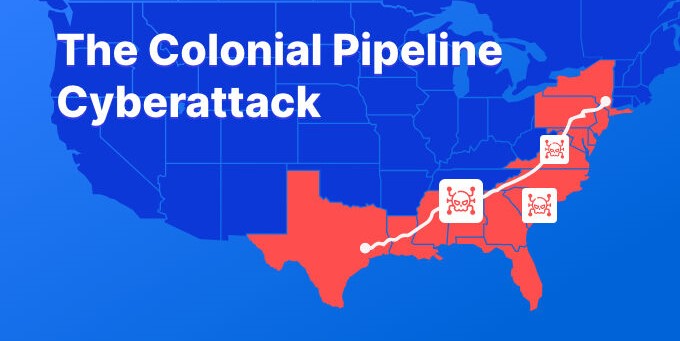
One of the largest oil pipelines in the United States, the Colonial Pipeline in the eastern USA, went down in May 2021 for a few days because of a massive cyber-attack. It caused fuel shortages, panic buying and a temporary spike in gasoline prices.

The attack, from a Ransomware-as-a-Service (RaaS) operation named DarkSide, caused a four-day shutdown of the pipeline, after DarkSide’s operators had accessed the company’s IT network, stolen 100 gigabytes of data and encrypted several critical systems. A significant section of the eastern part of the country was affected, and Colonial Pipeline paid the hackers nearly $5 million as a ransom to finally regain control of their systems.

The Colonial Pipeline ransomware attack is considered to be one of the most significant attacks on critical national infrastructure in history.

So perhaps the moral of this particular story is this: Taking down critical infrastructure is not so far-fetched after all!

digital 4683519 1920 Infrastructure threat resized | Vox | Real Risks of Critical Infrastructure Cyber Attacks

As for communications networks, cyber-attacks on telecommunications companies (telcos) can have far-reaching consequences. The nature of the information held on customers can put their personal safety at risk if it’s breached.

American telco giant AT&T has had its systems breached more than once. System breaches have also taken place on Tangerine in Australia, Kyivstar in Ukraine, Alphalink in France, Bharat Sanchar Nigam Limited in India… the list of international telcos that have been attacked just goes on.

Data breaches and service failures undermine customer trust and have a negative impact on reputations. The result is companies being hit with recovery expenses as well as a potential loss of future customer revenue.


Closer to Home: South African Incidents

South Africa has not gone unscathed as far as significant cyber attacks are concerned.

michael geiger JJPqavJBy k unsplash resized | Vox | Real Risks of Critical Infrastructure Cyber Attacks

  • Transnet Attack: In July 2021, South Africa’s state-owned logistics firm, Transet, suffered a major ransomware attack that disrupted operations at ports and significantly affected the supply chain, demonstrating how ransomware can affect national economic activities. You could perhaps regard this as being SA’s own version of the Colonial Pipeline major critical infrastructure attack, because the results were also severe and far-reaching – in fact, Transnet declared a ‘Force Majeure’, meaning an event that cannot be reasonably anticipated or controlled.
  • Experian South Africa: In August 2020, this renowned consumer, business and credit information services agency experienced a data breach where a fraudster gained unauthorised access to the personal information of approximately 24 million South Africans and almost 800,000 (793,749) businesses. The exposed data included contact information and employment details.
  • National Health Laboratory Service (NHLS): When the IT systems of the NHLS were targeted by ransomware in 2024, all files on the affected computers and servers became inaccessible, leading to a halt in NHLS operations. In addition, 1.2 terabytes of data was stolen during the attack, including the sensitive medical information of millions of patients.
  • South African Weather Service (SAWS): In January 2025, the SAWS disclosed that its ICT-base systems were disrupted by an attack led by ransomware-as-a-service group RansomHub.


These are just a few examples of local cyber breaches in South Africa. Knowing the cause, impact and response to past data breaches can help businesses protect their own data – and bottom-line – by ensuring that they avoid the same pitfalls and mistakes.


Practical, Non-technical Actions Organisations Can Take

You don’t need to be a security expert to take sensible steps that reduce risk. Recommended actions include:

  • Develop and exercise an incident response plan and communications strategy so you can act fast when an event occurs.
  • Classify and prioritise critical assets and data to focus protection and recovery efforts where they matter most.
  • Conduct regular tabletop exercises with leadership, legal and communications teams to test decision-making under pressure.
  • Strengthen supplier and vendor oversight — downstream vendors can introduce supply-chain risk.
  • Train staff to recognise phishing and social engineering, the most common initial vectors for ransomware attack.
  • Consider cyber insurance and ensure coverage aligns with your operational risk profile.


It’s important to understand that kidnapping today is no longer only the domain of Somali pirates operating off the coast of Northeast Africa, using speedboats and machine guns to take over lucrative international cargo ships. Cybercriminals – like the Colonial Oil attackers – now ‘kidnap’ data, holding systems and companies to ransom until significant sums of money are paid.

No organisation wants to be in the media spotlight for the wrong reasons. Being aware of cyber attacks suffered by other companies can help your business to learn from these pitfalls and stay safe moving forward. Let’s go back to the movies to ponder that one a bit more closely:

Leave the world behind | Vox | Real Risks of Critical Infrastructure Cyber Attacks

“In my line of work, you have to understand the patterns that govern the world. It can help you see your future. And I knew something was coming.” – George H Scott, ‘Leave the World Behind’

Any business can be a victim of cybercrime. If you need help with cyber protection for your organisation, please contact Vox to see how we can be of assistance.


FAQs

What are critical infrastructure cyberattacks?
Critical infrastructure cyberattacks target systems that support essential services — such as energy, transport, health and communications — and can disrupt services, harm the economy and endanger the public.

How can I tell if my organisation is being targeted?
Common signs include unexplained system slowdowns, unusual login patterns, unexpected file encryption, or ransom notes. Prompt investigation and containment are vital.

What’s the difference between a ransomware attack and a data breach?
A ransomware attack encrypts and locks systems to demand payment; a data breach involves unauthorised access and exfiltration of sensitive information. Both can occur together.

How can smaller businesses protect themselves against these threats?
Smaller businesses should focus on basics: backups, an incident response plan, staff training, and assessing third-party risks — these steps significantly reduce exposure.

Does cyber insurance replace preparedness?
No. Cyber insurance can help with financial recovery, but it does not replace proactive measures like planning, training and asset prioritisation.

Cyber Attacks on Small Businesses

Cyber attacks on small businesses are on the rise – why SMEs are more vulnerable to cyberattacks, and how to stay safe

When we think of cyberattacks, we often picture a giant corporation with hackers trying to break into a billion-dollar cyberdeck (we blame the movies). The truth, however, lies on the opposite end of the spectrum – cyberattacks on small businesses are rising.

Thi is mainly because many SMEs have limited budgets, outdated systems and minimal staff training. Put simply: attackers go where the doors are easiest to open.

Think of it like this: large corporates invest heavily in security teams and layers of protection. Smaller businesses are often leaner, making them attractive targets for opportunistic hackers. Below we explain why, and give practical, affordable steps you can implement right away.


business 3639565 1280 | Vox | Cyber Attacks on Small Businesses


Why small businesses are vulnerable to cyber attacks

Limited budget = limited defence: Large firms can afford dedicated security teams, regular audits and enterprise-grade tools. Most SMEs operate on tight margins, so security is often deferred. That can mean unpatched systems, basic antivirus only and no 24/7 monitoring — an invitation to attackers.

A false sense of security: Many small business owners assume they’re “too small to matter”. In reality, cyber criminals treat SMEs as low-effort, high-reward targets. Simple breaches multiplied across dozens of businesses still pay off.

Human error and lack of training: All it takes is a click. Yup. Just one innocent click from a person who doesn’t know better can take down an entire organisation. Employees without regular training often can’t spot scams, dangerous links, or social engineering tricks. Good habits are the frontline defence.

Weak Passwords  and Outdated Systems: Is your team still using the hand-me-down PC that needed replacing about 4 years ago? And when was the last time anyone – ANYONE – updated their software? Nothing screams entry point like an unpatched system. Combine this with weak or recycled passwords, and you’ve basically left the front door open. Attackers scan for known vulnerabilities — if your systems aren’t updated, you’re presenting an easy route in.


Practical Steps Every SME Can Take Today

You don’t need a military-grade budget to reduce risk. Adopt these practical measures and you’ll significantly lower your exposure to cyberattacks on small businesses.

data privacy 9611620 1280 | Vox | Cyber Attacks on Small Businesses

Maintain cyber hygiene

  • Keep operating systems and applications up to date.
  • Apply security patches promptly.
  • Use a password manager and enforce strong, unique passwords.
  • Enable multi-factor authentication (MFA) for all critical accounts.


Train your people regularly

  • Run short, frequent sessions on spotting phishing emails, suspicious links and safe browsing.
  • Make cybersecurity part of employee onboarding and monthly refreshers.


Backup and test backups

  • Use both cloud and offline backups for critical data.
  • Test restores regularly so you know your backups work when you need them.


Invest sensibly

  • Move beyond free antivirus. Affordable endpoint protection, email filtering and a good firewall make a big difference.
  • Consider managed security services if you don’t have in-house expertise — they can be cost-efficient for SMEs.


Have an incident response plan

  • Know who to call and what steps to take if you detect a breach.
  • Assign responsibilities, contact details and a communication plan to minimise disruption.


Quick Checklist — Low-Cost Steps to Reduce Risk Now

  • Update all systems and software this week
  • Enable MFA on business email and admin accounts
  • Start monthly phishing-awareness emails/trainings
  • Implement a password manager and roll out strong passwords
  • Schedule automatic daily backups and test restores monthly
  • Put an incident response contact list where staff can find it


It’s not that small businesses don’t face the same threats as larger ones, but rather they face them with far fewer defences – which is exactly what makes them such attractive targets. However, by combining the correct mindset with easy, practical steps, you can go a long way to reducing this vulnerability.

You don’t need to build Fort Knox – you just have to make sure your doors are locked in order to sleep at night.

Stay safe, stay secure, and stay cyber smart.

Vox has partnered with global cybersecurity experts Sophos for cybersecurity solutions and we are easily able to cater to the needs of SMEs – contact us to find out more.


Some Frequently Asked Questions

Are small businesses at greater risk of cyberattacks?
Yes. Many small businesses have fewer security resources and less training, making them easier targets. Attackers often target SMEs for the same reasons they target larger firms: for data, money or to use compromised systems as launch points.

What types of cyberattacks target SMEs?
Common attacks include phishing emails, ransomware, credential theft, business email compromise (BEC) and unpatched software exploits. Phishing and ransomware are particularly damaging for small businesses.

How much should an SME spend on cybersecurity?
There’s no one-size-fits-all number. Start with basic protections (patching, backups, MFA, endpoint security) and scale from there. Many affordable solutions and managed services are tailored to SME budgets.

How often should employees be trained?
Short, regular sessions (quarterly or monthly refreshers) are ideal. Frequent reminders, simulated phishing tests and clear reporting steps help keep awareness high.

What should I do immediately after a cyberattack?
Disconnect affected systems if safe to do so, preserve logs where possible, notify your IT/security provider and follow your incident response plan. Report significant breaches to relevant authorities and affected parties as required.

Are backups enough to protect my business?
Backups are essential but not sufficient on their own. They protect your data from loss and ransomware, but you also need preventive measures (patching, MFA, endpoint protection) and an incident response plan.

How To Manage Your Digital Footprint

Protect your personal data – how much key information are you really exposing?

Wherever there are people, there are those who decide to prey on them – this is true for the digital world just as much as the physical. And so, before you take the fun-looking quiz that popped up in your social media feed, think twice – and learn how to manage your digital footprint!

Do you really need to know what your ‘spooky Halloween’, ‘Harry Potter alter ego’ or ‘professional wrestler’ names are, based on a combination of – let’s say – your birth month, the first letter of your name, your street address details and the name of your pets / children?

It’s clear how easy it is to start building up personal information about you based on some of those details.

Most of us have had these seemingly innocent quizzes popping up on our social media feeds at some point. But the software program that’s going to send back the amusing ‘answer’ based on the personal information you shared… might just be a hacker.

Individual pieces of data may seem harmless, but when collected, they can tell a detailed story about your habits, preferences and even personal details like your birthday or location, which allows cybercriminals to go deeper into your online profile for their own personal gain.

Let’s look at ‘digital footprints’ and how much personal information you are actually exposing to the underworld.


Footprints Across the World Wide Web

Manage your digital footprint
Learn how to manage your digital footprint!

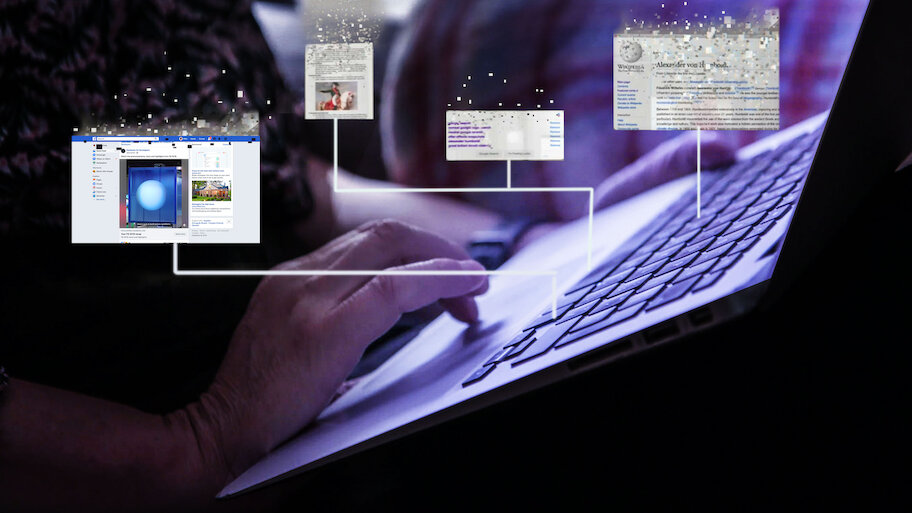
 A digital footprint means the trail of data you leave when using the Internet, and it can be used to track a person’s online activities and devices. Internet users create their digital footprint either actively or passively, through everyday activities that create it such as social media, browsing, shopping, apps and location services.

The types of data being exposed includes personally identifiable information (PII) such as a phone number or ID number, your financial data, browsing and shopping habits, location tracking, and metadata, including information about your device, your IP address and cookies. Your digital footprint can be used legitimately enough for targeted advertising, when companies use your data to categorise you and show you personalised ads; as well as for data analysis, when companies use technology to collect and analyse this data to build profiles about you – let’s say to offer you better service as a customer.

More sinisterly, though, a comprehensive footprint makes you an attractive target for hackers and scammers and puts you at risk of identity theft and scams. And everyone should be aware that your reputation and potential employment can also be affected, because your online activity can be seen by potential employers.

We look at how to reduce your online footprint.


Active Versus Passive

laptop 614213 1280 | Vox | How To Manage Your Digital Footprint

Active digital footprints take place when the Internet user has deliberately shared information about themselves. They include:

    • Social media posts, comments and messages;
    • Emails and newsletters you send and receive;
    • Online purchases and shopping history; and
    • Website content you upload or download.


Passive digital footprints are created when information is collected about the user without them being aware that this is happening. They include:

    • Internet browsing and search history;
    • Location data from your phone or devices;
    • Data collected by cookies on websites; and
    • Information from apps and wearable devices.


Online Privacy Tips to Protect Your Personal Data and Reduce Your Online Footprint

shield 9553555 1280 | Vox | How To Manage Your Digital Footprint

Here are some tips for protecting your personal data and help you to manage your digital footprint.

  • Double-check your privacy settings on social media to control who sees your posts.
  • Use search engines to check your digital footprint: You could contact the site administrator to see if information about you that you find can be removed. You could also set up Google alerts to keep an eye on your name.
  • Avoid oversharing on social media: Think twice before revealing your location or travel plans, or other personal information like your phone number or email address.
  • Avoid unsafe websites: Make sure you’re transacting with a secure website – the URL should start with https:// rather than http:// – the ‘s’ stands for ‘secure’ and indicates that the site has a security certificate. There should also be a padlock icon to the left of the address bar.
  • Don’t send personal information on public Wi-Fi: A public Wi-Fi network is less secure than your personal one.
  • Delete old accounts: This reduces your exposure to potential data breaches.
  • Create strong passwords and use a password manager: Using a password manager will help generate, store and manage all your passwords in one secure online account.
  • Don’t log in with Facebook: Every time you sign into a third-party website using your Facebook credentials, you give that company permission to mine your Facebook user data.
  • Keep software up to date: Cybercriminals can access a victim’s devices and data by exploiting vulnerabilities in software. You can help prevent this by keeping your software up to date.
  • Review your mobile use: Set a passcode for your mobile device, and when installing an app, read the user agreement. Is the app possibly going to mine personal data like your email, location and online activities?
  • Act fast after a breach: If a financial loss is involved, contact your bank or credit card provider. Change passwords that might have been exposed.
  • Use a VPN: Using a virtual private network, or VPN, can help safeguard your digital footprint. This is because VPNs mask your IP address which makes your online actions virtually untraceable.


Digital footprints matter because cybercriminals can exploit your digital footprint, for example using it for phishing for account access, or creating false identities based on your data. You can’t erase your digital footprint entirely, but you can control its visibility.

Why not use the steps outlined here to look at your online presence today and see how you can make your digital footprint more manageable, to better protect your online privacy and yourself?

Keeping your digital privacy in South Africa (and around the globe) safer and more secure will help to keep your banking and other details private and therefore safer, in turn bringing you increased peace of mind.

The message is clear: no more funny quizzes to find out your Harry Potter alter ego, because there’s nothing at all magical about being hacked.

Vox has teamed up with Norton to help individuals and also families to stay safe online – you can block hackers from accessing your devices, keep your online activity private and better protect your identity.


Frequently Asked Questions

What is a digital footprint?
A digital footprint is the trail of information you leave online from actions like social posts, searches, purchases and app use. It includes active data you deliberately share and passive data collected about your device, location and browsing habits.

Why does my digital footprint matter?
Your digital footprint can be used for personalised services and ads, but it also makes you a target for scams, identity theft and reputation risks — for example, employers or fraudsters may view or use that information.

How can I check what’s in my digital footprint?
Start by Googling your name, checking social profiles, and using Google Alerts for your name. Review privacy settings on social sites and request removal from sites or directories that publish your personal details.

What simple steps help manage your digital footprint?
Limit what you share on social media, tighten privacy settings, delete old accounts, use strong unique passwords with a password manager, and avoid logging into third‑party sites with Facebook or Google where possible.

Are online quizzes and personality apps safe?
Many quizzes ask for pieces of personal data that, when combined, can be exploited. Treat them sceptically — don’t give out real birthdates, ID numbers, addresses or your mother’s maiden name for a bit of fun.

How can I protect personal data on my mobile device and apps?
Set a passcode or biometric lock, check app permissions before installing (location, contacts, microphone), update apps and the OS regularly, and avoid using public Wi‑Fi for sensitive transactions unless you use a trusted VPN.

What should I do if my personal data is exposed in a breach?
Act quickly: change passwords, notify your bank or card provider if financial details were involved, enable two‑factor authentication, and monitor accounts for unauthorised activity or identity fraud.

Will a VPN and password manager improve my digital privacy?
Yes. A reputable VPN masks your IP and helps protect activity on public networks, while a password manager generates and stores strong unique passwords — together they significantly reduce your exposure when managing your digital footprint.