The future of unified communications starts today

By Tim Wood, Executive Head – IS & IT at Vox

The strides made in our industry over the past few years have drastically changed what is possible for business communication, but have also changed what’s expected as a baseline to remain competitive and efficient. Unified communications as a service (UCaaS) and the technology underpinning it has made the changes to how business is conducted – forced to a large extent by the pandemic – easier, but they also provide businesses with the opportunity to dream about a super-efficient future. For those brave enough, that future starts today.

The immediate future of unified communications makes real-time collaboration and highly efficient customer service easier than ever before. Contact centre as a service (CCaaS), specifically, allows businesses to reduce IT, integration and support costs while giving up no functionality. Because it is software-defined and run by a vendor that’s an expert in the field, companies stand to gain flexibility and functionality that was just not possible previously.

Tools, such as real-time language translation, voice-to-text apps and chatbots powered by artificial intelligence (AI) can drastically alter customer experience and team collaboration across geographies. In terms of speed of deployment, advancements in developing bots and interactive voice response systems means that solutions can be created without the need for new or bespoke coding. Internet of Things (IoT) integration into unified communications tools brings the theory of real-time connectedness into real-life practice as devices and sensors constantly enrich the collaboration tapestry.

Software-defined wide area networks (SD-WAN) virtualise wide company networks that join teams and can extend over vast geographical networks. This is vital and a non-negotiable for a modern business. SD-WAN networks are evolving and performance has improved drastically, but perhaps the most important innovation is how security has been improved, which is vital given the sharp increase in cyber-attacks and more vulnerable attack surfaces because of hybrid and remote working.

All of these innovations are being spoken about in C-Suites already because soon a company that’s not on board this train will be left behind. On the other hand, brave companies are already including the metaverse into their strategic plans.

There’s certainly more to be gained from early adoption of the metaverse than the gamification of virtual interactions. Strapping on virtual reality (VR) headsets make collaboration far more immersive and akin to what we are used to as humans. The bravest among us are meeting up in Africa’s very own Metaverse, Africarare. Have you popped into Ubuntuland for a visit yet?

Companies with a forward-looking orientation will want to have a look at collaboration platforms and tools such as Gather, Spatial, Branch, Wonder, Decentraland and Nowhere. The talk of the metaverse won’t disappear because the biggest players in the tech industry have bet their futures on it.

Facebook has shape-shifted into Meta and leads the race with the Horizon VR environment and VR headsets. Microsoft has hit the ground running in the business application race and Microsoft’s Mesh is being positioned as the future of immersive business VR collaboration.

What does this business collaboration look like? This year, Microsoft Teams will allow 3D avatars to replace actual participants in live meetings. The potential for expression and engagement hasn’t even been scratched. Soon we will be able to interact with 3D renditions of participants in virtual meetings through holoportation using HoloLens technology.

The older among us might fear that we have entered a 1980s SciFi movie, but truth is stranger than fiction. Soon we will be overlaying the metaverse on business applications such as Dynamics 365 connected spaces and we will be collaborating, playing games, working on whiteboard solutions, training, and interacting virtually across the world in real-world applications.

This future didn’t start today. It didn’t start yesterday, or the year before. It has been evolving as the cloud, AI and machine learning have come into their own. It requires certain fundamentals to be in place and a partner that helps a business find the best solution for individual company needs. Remember, technology for the sake of technology doesn’t mean much, but technology to solve real problems and improve efficiency and competitiveness is worth its weight in gold. In this world and the metaverse.

PoPIA Compliance – Making It Work For Business

Thanks to digital transformation, we’re living in the golden age of personal data.

Never before have we been able to record, store and access so much information about so many different people and entities all at once. But, with this power comes a huge amount of responsibility. Especially for businesses that rely on personal information for day-to-day operations.

Make PoPIA a Priority

PoPIA (Protection of Personal Information Act) officially came into effect in South Africa on 1 July 2021. It aligns our privacy laws with international standards – holding all of us accountable for data management and security.

The regulation gives individuals increased control over how their personal data is collected and used. There are also strict requirements on how that data is safeguarded and used by third parties who are given permission to capture it.

There’s no greater currency than trust. A failure to respect people’s privacy or ensure the security of their data can severely damage a company’s brand and influence consumer buying decisions. Besides the potential for reputational damage, with PoPIA now in effect, businesses also face the possibility of crippling fines, jail time or both for failure to comply. The penalties include up to R10 million in fines and up to 10 years in prison for guilty parties. Organisations also face the risk of class action lawsuits under PoPIA.

It’s not all doom and gloom. When given the right amount of care and consideration, PoPIA is a business’ greatest asset. PoPIA compliance allows you to build trust and forge stronger relationships with customers and suppliers. Not only does compliance make your business more risk-aware and transparent to regulators, but, when done right, it allows you to reduce operational costs.

PoPIA compliance is a great opportunity to not only overhaul your data policies, but your company’s entire approach to data security. A more robust Cyber Security solution literally pays for itself when you take the impact and costs of a data breach into consideration.

It’s Time to Comply

There’s a lot to keep track of when it comes to PoPIA compliance. That’s why the first thing to consider is appointing an information officer. After that, it’s up to you to draft a privacy policy and raise awareness of the importance of PoPIA among all your employees.

Once you’ve had time to review your data collection and storage policies, as well as report any data breaches, you can embark on the necessary journey of making your company more data savvy. Including educating everyone to only share personal information when they’re allowed to by law.

PoPIA compliance also includes several minimum security requirements for the lawful processing of data, such as documentation, security, and confidentiality.

Customers and employees should always have the ability to access, update or delete previously collected data when needed.

Training employees to understand and recognise the processes and procedures that that help your company identify a potential incident and mitigate its impact is invaluable.

Up Your Cyber Security Game

It doesn’t matter how big or small your business is. If it’s online and collects data, it’s a target. In addition to protecting their own data from a breach, thanks to PoPIA, it’s essential that companies adopt and implement a strong Cyber Security approach.

Globally, the total average cost of a breach increased by 10% from 2020 to 2021, with companies affected shelling out an average of $4.24 million (or R64 million).

Locally, the IBM 2019 Cost of Data study puts the average total cost of a data breach at just over R43 million. Which is almost just as pricey as the global average.

One cyber-attack can literally put a small to medium-sized company out of business. It’s never been more critical for businesses of all sizes to move rapidly to secure their key IT systems, company, and customer information.

Data compliance and security is a continuous process, not a once-off event. Here’s the good news: Armata is here to help.

We’re perfectly positioned to assess your business processes and identify any gaps and issues. We’ll also provide a Security Awareness portal to equip your employees with the knowledge needed to spot and avoid data breaches.

We’ll also add a comprehensive, managed Firewall, endpoint security and Anti-Virus software to your arsenal to ensure every compliance and security need is met. It’s what we do best.

With Email, it Pays to Go Paid

When it comes to choosing between a paid vs free email service, first ask yourself why you wouldn’t put a price on privacy.

It’s been said before, but it’s worth saying again: where would we be without email? It gives us the ability to send detailed messages and communicate with anyone. Anywhere in the world. In seconds.

In fact, it’s almost impossible to remember a time before email. And that might be part of the problem. We’re so conditioned to having email as a necessary part of our lives, when presented with the option of a free email service, we don’t even question it. If there’s one thing we’re learning in the age of information, there’s no such thing as ‘free’ when it comes to signing up for a service.

Privacy is Worth Paying For

When it first launched in 2004, Gmail caused a sensation. It offered users the opportunity to create and access their own email accounts, from anywhere. For free! Once smartphones entered the picture, this kind of email accessibility became invaluable. It gave us all more freedom away from our desks. And desktops.

Where Gmail led, other free email services, like Yahoo and Hotmail, followed. But, 18 years later, Gmail still reigns supreme with a staggering 1.5 billion active users globally.

That’s a lot of valuable data to mine and sell back to advertisers. Which was Gmail’s business model until 2017. If you download and install any free third party plugins, they’re also given access to scan your email data for targeted advertising too.

When you pay for an email service, one of the most important things you’re paying for is your privacy.

With Vox Webmail, accessing your email safely and securely from any platform without having your mail scanned by bots can cost as little as R10.50 per month. You can’t even buy a decent cup of coffee for that. What? It’s true. Don’t even talk to us about petrol.

You Are Your Email

The right impression is everything. This is especially true when it comes to business. Not only does a paid email service give you greater control over your data, it also allows for crucial customisation.

Sending email from your business domain strengthens the integrity of your brand. It signals a higher level of professionalism than sending emails from a generic free service does. It also saves your emails from landing in the spam folder. A branded email address allows your customers to feel comfortable not only receiving information but sending personal information back to you as well. A value exchange is automatically created between your company and the customers it serves. That’s something infinitely more valuable than the perceived costs a free email service can save.

If you’re a small business looking to scale, a paid email service should be at the top of your list of priorities. Vox Cloud Mail makes the journey to paid email even easier. Offering a secure, enterprise-class email solution with unlimited email addresses and only billing for the storage used.

Paid Email Offers Added Value

If enhanced privacy, brand awareness and security with paid email weren’t enough, choosing to partner with the right service provider can also give you access to value adds.

Like email branding. At last count, it was estimated the average person received about 121 emails per day. It’s a great way to get your voice heard, but you’ll also need to cut through the clutter. This is where something as like Vox Email Branding – which automatically transforms a standard email signature into a mini branded campaign – will help you stand out.

If you need a service that allows you to access years’ worth of email history for reporting purposes, or you’re just the cautious type, Vox Email Archiving will help you sleep soundly at night. The locally-hosted cloud service allows you to save, search and retrieve 10 years’ worth of email quickly and easily, keeping your email data integrity fully intact. Not to mention compliant with the South African Email Communication Regulation. Yes, that’s a thing. It exists.

With email, just like everything in life, you get what you pay for. But with Vox, it won’t break the bank or your inbox.

Cloud cost optimisation key for business success

The large cloud Hyperscalers have built their business on the ability to provision resources on-demand. For corporate customers, this provides the opportunity to scale as needed. The risk with this comes in when in-house IT teams do not decommission cloud resources when they are done with it, resulting in a massive bill shock.

The pattern is clear. A business sets a budget for its cloud spend, but having active services not being used over the course of several weeks can easily see a 30% spike in costs not allocated for. Invariably, this has seen more local companies embracing the move to a consumptive business model where the focus is on only paying for the resources that are used. This mitigates against the risk of organisations provisioning for resources that they do not require.

Beyond traditional MSP

Given developments of the past two years, numerous managed service providers (MSPs) have emerged in South Africa to help take care of the cloud and software-as-a-services strategies of businesses. However, the one ingredient that has often been lacking is that of cost management.

Those MSPs that will inject this offering into their value proposition will be the ones that will be most successful as we head into 2022 and beyond. The future of the cloud is very much one where companies will look at identifying more ways of only being charged for what they use.

This could be especially significant for small businesses in the country that have not yet made the transition to a cloud environment. Their concerns still mainly centre on a lack of trust and even an understanding of how to effectively use the cloud in their day-to-day operations.

Going hybrid

Contrary to popular belief, the cloud is not necessarily right for all business applications. There are many mission-critical solutions that must be closer to users and remain on-premise. A hybrid approach will therefore become preferred where certain apps will be cloud-based while others will be hosted in the local data centre.

Of course, this will require stringent service level agreements to be put in place with MSPs to ensure that those applications are managed correctly. This creates the potential for organisations to take up the option to have baseline resources sitting idle in the cloud inexpensively and activate them in case of an emergency. Once done, they can shut those services down and resume operations as normal. It provides a more economically feasible way for especially smaller companies to start using the cloud.

But it all comes down to cost management and getting the processes in place to create more of an enabling environment for those businesses that want to go the hybrid route. Cloud computing has moved beyond simply providing computing resources for hosting applications as a utility. Today, it is a business enabler that facilitates growth, innovation, and data analysis at a scale previously unheard of. And while the temptation is there to become more reliant on these environments in a digital landscape, decision-makers must remain cognisant of putting in place the relevant cost control measures to balance adoption, resource use, and expenses.


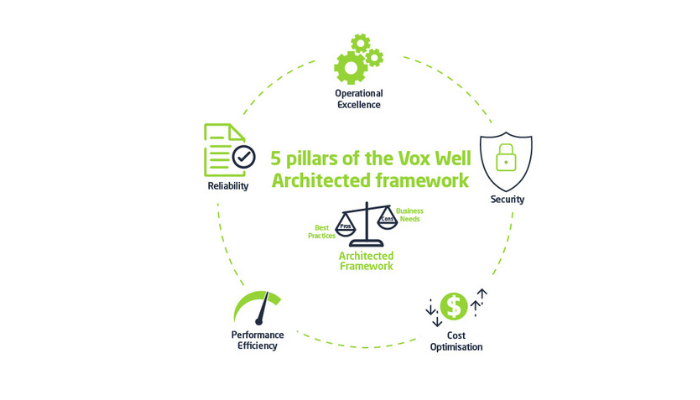
The 5 pillars of a well-architected framework

Regardless of the individual technologies, cloud strategies, or data-driven insights that have become key for today’s organisational success, a well-architected framework is the foundation on which any IT environment must be built. Consisting of five pillars, this entails looking at a company’s business processes to gain an understanding of how it works and consumes technology. Only then can an IT strategy be developed to harness the growth potential of a market.

A company cannot ensure the effectiveness of the cloud or on-premises systems critical for the modern business environment without these pillars in place – operational excellence; security; reliability; performance efficiency; and cost optimisation. Business and technology leaders must consider the pillars as a golden thread that unlocks all the components of their IT real estate.

Building the foundation for IT excellence

  • The operational excellence pillar entails how a business runs, manages, and monitors workloads in the cloud. It is about continually adapting and being flexible to what circumstances require. In a traditional environment, this could translate to adding more memory modules and hard drives to an on-premise server. But in the cloud, this means being able to scale by adding more resources.


  • Secondly, there is security. This encompasses Identity Access Management on all the platforms the company and its people work on. Most employees consume technology but do not know what the security aspects are behind them. For instance, they might be operating out of Microsoft Teams without even knowing that it has Active Directory in the background.


  • The next pillar is reliability which also includes resilience. For instance, all the cloud servers might fall within the borders of South Africa to conform to the regulatory environment here. Think of it in the same way that a service level agreement would be in place for laptops. If a company laptop breaks, it will be replaced by a new one the next day. The same applies to the cloud, but with a level of resilience and reliability that extends beyond just having data duplicated.


  • Following from here is the performance efficiency pillar. Essentially, does the environment perform as it should? For example, each employee might want a laptop with the best specifications. But will they use the machine optimally? In this pillar, attention is on how equipment should look based on job requirements, or the resources needed to achieve business goals. It also translates to the cloud, where a company only uses the resources that it needs.


  • Finally, it all comes down to costs. People over calculate costs drastically. The lift and shift model has contributed to this and results in companies not running optimally. But once they apply performance efficiencies, they can manage the cost of the environment more effectively by trimming it down and planning properly. For instance, does the business need an Opex or Capex model? In the case of the cloud, should it buy forward for a year or stick with a month-to-month agreement?


Understanding their importance

Even though these pillars might sound logical, it is surprising how many companies pay them little attention. And while they are technical, a business must adhere to this well-architected framework to understand how it uses technology.

It begins with a view of how it uses technology and processes daily. Once done, the technology underpinning the business can be examined as well as how these impacts data and systems. The framework also provides insights into whether the technology architecture is designed correctly and whether data flows logically and securely.

This security layer must be cognisant of both the user perspective (think multi-factor authentication and usernames and passwords) and the system perspective (for instance, firewalls, backups, and other security systems). Finally, tying all this together is the governance aspect and whether the organisation complies and conforms to the policies governing its specific industry sector.

Of course, this framework is not a once-off process. It is something that must be repeated continually to ensure the business remains relevant for the market requirements it seeks to meet.

Welcome to the new world of cyber risk

With more people connecting to digital platforms given the events of the past two years, breaches on social networking sites like LinkedIn, Facebook, and Instagram have become commonplace. Social engineering and password hacks are increasingly sophisticated with any individual or company, regardless of size, country, or industry sector, now a target.

Fortunately, consumers are starting to become more cybersecurity savvy. Recent memes highlighting the risk of sharing information like your first dog, car, celebrity crush, and so on, which hackers can use to build up a profile of their intended victim have certainly helped in this regard. But even so, people are still falling prey to social engineering attacks based on what they share on LinkedIn, Facebook, and Instagram.

Social media dangers

It has become too easy for people to live public lives using social media. They share photographs of their kids on their first day of school; they share location-based info on where they are currently vacationing, and they make their profiles public to anyone who can search for their names on a social site.

This either means that most people have innocent mindsets or simply do not care about what they share online. But this is no longer good enough. For instance, consumers must start creating circles of trusted friends on Facebook with whom they share information. They must also start thinking more about what they post online. A great way to test this is for a person to think about their content from a hacker’s mindset. Most of us will be in for a rude awakening.

For their part, organisations must start profiling their senior executives for social engineering and see what information they have made publicly available online.

Rethink passwords

And while most people know that it is important to use different passwords for different sites, very few do so. Furthermore, how many people can honestly say they log out from their social accounts or log off from their computer when they are done using them?

Good password hygiene includes creating difficult passwords with 16 characters or more. People should also not use common words in a row and can swap out vowels for numbers. Add in a few special characters and encrypt the password for good measure.

This is where password managers are great tools in this regard. These can automatically create sufficiently advanced passwords for each site. The user simply needs to remember the master password to access the solution.

But even that is not sufficient. If the files on a hard drive are not encrypted, a hacker can simply rip the drive out, and plug it into another machine to bypass all passwords, pins, and biometric access controls.

Verify yourself

We will start seeing biometrics becoming more accepted as the means to safeguard devices and data. Combine that with a Zero Trust approach where people will not trust anyone until they can prove they are who they say they are, and the environment will automatically become more secure.

Artificial intelligence and machine learning will also be used to build up patterns of user behaviour to protect systems. For example, if you are logging in to your online banking profile in Johannesburg and twenty minutes later a login request from Russia takes place, access will automatically be blocked.

Multi-factor authentication and one-time passwords, while frustrating to some as they create additional steps in the process, will also become more prevalent. Ultimately, the password landscape of the future will be one where a combination of tools and strategies will be used to protect people and companies.

Of course, for this to work, users must also learn how to best manage the content they post online for all to see. Rethink your Cyber stance, use different passwords for different sites, think zero trust – and don’t become a victim of yours or someone else’s mistakes.

The Future of Video Games Unpacked…

Today, the video game industry is a behemoth, bringing in billions (yes, billions) of dollars in revenue each year. In 2019 alone, the gaming and interactive media market roped in a staggering excess of $120 billion, of which mobile games alone generated more than half of this.

This doesn’t even take into factor that shortly after 2019, the entire civilized world was forced to sit indoors and occupy themselves, resulting in more consoles, more time online and, naturally, more gaming – about 35% of the world’s population (or 7 billion people) as of 2020. It’s little wonder, then, that industry titans such as Sony, Xbox, Nintendo, and Microsoft continue to pioneer advances and innovation within the gaming space. It’s a lucrative and rapidly growing avenue, one on only an upward trajectory in terms of popularity and, to any sane developer, an industry which deserves attention and respect.

But what can we expect in years to come? Well, here’s our two cents…

Today, we see technologies such as AR, virtual reality (VR), 3D graphics and trends such as streaming services and mobile gaming continue to transform the future of video games. Other drivers include innovative game consoles, mobile devices, and technologies such as facial and voice recognition, gesture control, high-definition displays, and wearable tech.

Needless to say, gaming as a whole has evolved from something you did in isolation or at an arcade into an all-encompassing, wholly immersive experience – and the introduction of online multiplayer functionality has served only to enhance this. In fact, many developers have found their entire business model revitalized by the mere introduction of an online platform (we’re looking at you, EA), while some have sprung seemingly out of nowhere and reached the pinnacle of Pop Culture status (this one’s for you, Fortnite). Gaming has come a long way, but it’s only headed in one direction – up.

So, let’s look at trends within the industry which are currently driving innovation:

From triple-A big budget titles to crowdfunded indie games, successful developers follow trends to learn what audiences are looking for and anticipate future video game development trends.

  1. Cloud Gaming and Streaming

Increased smartphone use, faster Wi-Fi and internet service, more reliable mobile networks, and larger hardware storage capacities in mobile devices have been primary drivers of people’s consumption of more digital content. Typically, in 2021, users download games to their devices in their spare time, with concerted effort being made to sit down and start up their consoles.

With an internet connection, gamers can then interact with others anywhere in the world as they play, but the games are still running locally from their devices. The problem is that, over time, this can impact the performance of a player’s device. We foresee an increased emphasis on Cloud gaming and streaming, which allow users play games from their devices, whilst the games actually live somewhere else (such as in a data center).

  1. Digital Distribution

Companies such as Netflix and Amazon have upended the home video market, and the video game industry is headed in the same direction. Whilst, in truth, game revenues are up, conventional brick-and-mortar video game stores are in decline – thanks to lower sales of physical games.

Digital distribution of games via services such as Steam complements the marketing strategies of publishers, allowing companies to deliver continuous messages to users, consistently introducing new features, updates, and games and, in doing so, usher in a new era in retailer to consumer interactions.

  1. New Business Models

Business models making their mark on the industry include free to play and gaming as a service (GaaS). The free-to-play model allows players to play games for no initial charge. These games, typically available on mobile devices and gaming PCs, then introduce opportunities for monetization at a later stage (again, we’re looking at you, EA). For example, players can purchase credits to remove ads (we’ve all wanted to at some stage), interact with other gamers, or get unobstructed play.

GaaS is primarily a subscription-based, on-demand streaming service that enables users to play games on the hosting servers of a video game publisher. GaaS, combined with additional monetization opportunities, helps expand a game’s lifespan over the long term.

  1. Increased Diversity

The idea that gamers are strictly young males is a very outdated, highly incorrect myth (just ask Tech Girl). According to Gamify, 17% of men and 10% of women ages 18-35 in the U.S. play video games. Among those 50 and older, 13% of both men and women play. Additionally, with the rise of cloud gaming and similar trends, the video game market continues to become more diverse. For example, users with lower income can participate without buying high-end gaming PCs or consoles, according to a Deloitte Insights report.

  1. Mobile Gaming

Mobile is becoming the go-to platform for consumers looking for new ways to stay entertained – especially on-the-go. With more than 2 billion people worldwide playing mobile games, according to Deloitte, mobile is the largest driver of growth in the video game industry. Amid COVID-19 lockdowns, mobile gaming surged because it offered users increased accessibility to video games. The mobile game user population in the U.S. and Canada has increased by 12% since 2019, according to a Deconstructing Mobile & Tablet Gaming report.

  1. Next-Generation Consoles

Gaming has reached a lot of new audiences, thanks to trends such as mobile game users, distribution digital models, and cloud gaming. In response, the primary game console manufacturers have embraced that change by introducing next-generation consoles that enable players to use physical and digital games. For example, Xbox Series X provides subscribers with access to a constantly updated library of hundreds of games. With state-of-the-art graphics, lightning-fast load times, and easy access to new games, next-generation consoles will continue to push the envelope in the video game industry.

So let’s sum it up, because this is getting pretty long. The gaming industry as a whole has progressed at a previously unforeseen pace within the last two decades alone. Thanks to technological advancements such as 3D Graphics, VR and improved AI, the user experience is continuously evolving and ever expanding. We predict that as developers continue to innovate, players will in turn discover more realistic and, in time, wholly immersive simulations along with better connection between worldwide audiences. Keep an eye on AI and VR in particular but, ultimately, our takeaway is that the future of gaming will essentially be shaped by societies desire to create awe-inspiring experiences, ones which increase our opportunities to escape, relax, unwind and engage.

Let’s talk SD-WAN

It may sound like a barcode or a Wi-Fi password gone wrong, but SD-WAN is a lot more complex, intricate and most of all useful than many people realise.

We’ll be honest, when we started at Vox, we hadn’t heard of SD-WAN before (and we ignored all blog topics around it for a good few months). It sounded complicated, technical and cryptic – not a good combination for blog writing (which we painstakingly tried explaining to our manager). A few months in, however, and our perception couldn’t be more different. Not only is SD-WAN such a simple yet effective solution, we wish we could give it to the Licensing Department, but we’ve come to learn that it’s a sure-fire way to accelerate business growth (and make you sound smart while explaining it to your colleagues).

So, without further ado, let’s break down the Dummies Guide to Understanding SD-WAN.

Well, SD-WAN is basically redefining the concept of efficient connectivity. Let’s face it – things are going hybrid (and we don’t mean the skoro-skoro cars who take up the fast lane). The workplace is modernising, and new technology is being adopted faster than Angelina Jolie, and businesses across the board are moving from legacy solutions to more modern alternatives – normally within The Cloud (everyone, it seems, except any Government department).

These transitions naturally place a high demand on your network and applications. Whereas before, the Internet was used for browsing (or sitting on Facebook when you heard your boss’s office door closed), it’s now a fundamental aspect of communication. Storage, video calling, accessing your systems – it’s enough to put pressure on any network, and when this happens, speed, productivity and reliability all drop. Which isn’t a good look unless you work in Licensing.

The modern (and modernised) business needs a solution which can handle these demands without giving their accounting department an aneurism. Said solutions need to be flexible, secure and capable of handling an advanced workload without compromising network quality. Sounds like an impossible wish-list? Nope, it’s just SD-WAN.

It stands for “Software Defined, Wide Area Network”, and is a solution which allows your business to leverage any combination of last-mile services to – wait, this is getting technical. SD-WAN takes away the need for expensive routing and provides you with flexible, Multi-Cloud Solutions. In its simplest form, it establishes the best route required for you to get optimal Internet connectivity. Network overloaded? No worries – SD-WAN will analyse, assess and determine a less fragmented path between your organisation and the fastest, most reliable connection.

You can define priority traffic to improve your performance and speed – there’s even backup connections which can drastically improve your bandwidth.

So, it makes my Internet faster – that’s it?

Not quite. Nobody likes loading time and delays (or staff mucking around while on the clock). SD-WAN steers high-bandwidth applications to allow your employees to access their Data and files quicker and with less loading time. The downside of things being stored in the Cloud is that they present a built-in excuse come time to retrieve them – SD-WAN offers faster performing applications which, of course, mean your team can move more efficiently.

It also offers more security (because, believe us, your business is always at risk) without dropping your performance.

All SD-WAN solutions come with built-in, next generation Firewalls to ensure that those hackers won’t stand a chance.

What about a struggle we South African’s know too well – downtime? Well, with SD-WAN, it doesn’t exist (insert Mean Girls reference). Should a link fail, SD-WAN will find the next available alternative, meaning no lost revenue or turning customers away.

You can migrate to the Cloud (if you haven’t already) quite seamlessly and easily deploy new branches or implement changes. Manage your network centrally and, best of all, reduce your monthly spend so you can order the large chips at Nando’s instead.

Those are the benefits – but what’s the hook?

Well, if you’re still reading, we’re still pitching. Let’s look at what SD-WAN does in a nutshell (and why it can prevent your business from mimicking Home Affairs).

  • Reduced costs? Check.
  • Better speed? Check.
  • Improved performance? Check.
  • Safer, more reliable, no downtime? Triple check.

When we say checkmate, we aren’t referencing Queen’s Gambit – SD-WAN is really a gateway to smarter, better business operations and an affordable way to circumnavigate the challenges of being a South African business. Now that you know what it does, what it’s about and why your business can’t afford not to look into it, the only question left is why you’re still on the Content Hub and not looking at purchasing it (spoiler alert – click here).

Why Not Wireless?

Shop Wireless Deals

It’s just as fast as Fibre, and more widely available. Your business could be sleeping on an incredible connectivity solution…

Thanks to specialised equipment, wireless or microwave Internet delivers carrier-grade connectivity via encrypted high frequency radio waves over the ‘last mile’. Allowing you to enjoy Fibre-like speeds without the need for a Fibre line. It’s a pretty great alternative to what we consider the best broadband available. Especially as Wireless can have you up and running in almost half the time. We’re talking anywhere from two to eight weeks. Done.

It all starts with a Fibre connection at a PoP (Point of Presence). Specialised devices then beam out this encrypted Internet signal via a high-capacity radio link to its intended destination (your business) where it’s decrypted and instantly made available for use.

No cables, no trenching, no fuss.

There’s just one catch – for this solution to work properly, a clear line of sight is needed between both points to ensure connectivity. It’ll be up to the professionals installing the service to make that call before installation can happen, so there’s really nothing to lose.

It’s Faster and More Reliable Than Fibre

Here’s the thing about Wireless, or Vox Wireless. It never goes down. Well, almost never. With a 99.5% guaranteed uptime SLA (Service Level Agreement), you’re pretty much assured high-speed, reliable Internet all the time. It’s the dream. And now it’s real.

As brilliant as Fibre is – let’s face it, we wouldn’t have great Wireless without it – it relies on cables underground. Cables made from thousands of delicate strands of glass, vulnerable to damage by roadworks, neglect, or good old fashioned theft. Sure, Fibre cables aren’t highly sought after, but copper cables are… And all those cables basically look the same from the outside until someone mercilessly chops through one.

So, if your Fibre were to go down, this is definitely the best choice for a backup plan for giving you all the same functionality in an instant – but more on that later.

Let’s talk speed. How can Wireless be faster than Fibre? It comes down to latency. Wireless has a little bit lower latency than Fibre. Sending data over radio waves is slightly faster than sending it through cables. Often because it’s able to travel directly through air and over shorter distances. If time is money – and, when it comes to business, it is – then this lower latency could make all the difference.

It’s Not All Created Equal

Let’s just say, there’s wireless, and then there’s Vox Wireless. Our offering features duplex, allowing you to transmit and receive data simultaneously, effectively doubling your speed. Now that’s efficient. All of our Wireless data is symmetrical – which means you can send data as quickly as you receive it. Which is another massive time saver.

Our scoping and deployment are also key to ensuring you receive the absolute best experience from your solution. Depending on your needs and budget, we also offer the choice between Licensed Spectrum and ISM services, either via broadband (shared) or dedicated formats. We give you the choice of sharing your radio band or keeping it all to yourself.

But You Can Have It All

And you should. Vox Wireless offers more than just reliable, high-speed connectivity. Because this is the perfect medium for VoIP (Voice over Internet Protocol), our solutions are bundled with a free 2Mbps VLAN (Virtual Local Area Network) for optimal routing of your Vox Voice connections. It all comes down to that low latency. Which, when you’re using the Internet to make and receive important calls, is a game changer.

Depending on the package you choose, you could also enjoy free uncapped Vox Voice along with your high-speed connectivity too.

Like Fibre, Wireless is easily scalable and able to grow as your business needs do, with an upgrade no more than a phone call away. For all the reasons listed above, Wireless is also the perfect complement to an SD-WAN network, and, when combined with Fibre, offers the best redundancy solution for critical application delivery. Which is to say, with Wireless and SD-WAN, you can still work from anywhere without having to sacrifice on must-haves, like Internet speed, crystal clear Voice calls and availability.

It doesn’t get much better than that.

LTE, getting you over the fail…

So, no-one told you Internet was gonna be this way? Eskom’s a joke, you’re broke, your Fibre’s DOA.

It’s like your ISP’s stuck in second gear.

But if your connectivity won’t work, won’t start, don’t stress, LTE is here…

See, LTE will be there for you when your Fibre starts to fall. We mean it.

Cool songs and ‘Friends’ references aside, any South African worth his salt knows the importance of having a backup plan. We’ve redefined generators (watch this space!), made beer out of pineapples and even taken plonking a keyboard to new heights while calling it “Amapiano”. If there’s one thing we know how to do, it’s make lemonade out of life’s lemons (or alcohol out of local fruit) – which is why a Failover solution should have everyone’s ears prickling and heads turning in anticipation.

So, let’s talk LTE, which you should know by now is one of the fastest, most reliable, affordable and convenient solutions out there.

For many Internet users (particularly those at home), Fibre can seem as attainable as a Gucci sneaker (the real one, not the China Mall spec) or, if you’re in an area where there’s no availability, as realistic as speedy service while renewing your Passport. Many users give up on the concept of home Wi-Fi altogether as a result of this, instead choosing a constant back and forth with the strict sounding “no airtime” lady from MTN over a viable solution. Fact is, when it comes to speed, when it comes to connectivity, when it comes to a Fibre-like experience with no compromise on quality, LTE is as proficient as a South African scientist who just discovered a new strain of Covid.

Your service provider could be the best in the world and, 99 days out of 100, provide flawless Connectivity which never drops. But, as Murphy’s Law would have it, there’s always that one day (or week, or month, or even a year!) where your connectivity drops without warning; and no amount of switching the router on and off again seems to do the trick. This is usually just before an all-important work call, 10 minutes before an assignment deadline or just as the money shot is about to hit (we’re talking about Gaming here – mind out the gutter!). As you watch that little grey Dinosaur in sheer frustration or try to frantically Hotspot off your phone while waving goodbye to your Mobile Data, all of us have been in a position where we wished we had a Plan B.

Drumroll…

Your LTE Router (although a perfect leading man) can also double as a Failover Solution during the times you need it most.

Yup, if life was a movie, LTE would take home the Oscar for best supporting cast faster than Heath Ledger’s Joker. But, as always, there’s a tech side to things – so let’s talk the reasons you (or your business) need a Failover.

Think paying for a Plan B is costly? Network outages cost even more. Ask anyone running a business from home or trying to be a diligent employee – time spent offline is money down the drain. You can’t complete projects, use your software appropriately, connect with your network or effectively communicate. In fact, we asked a few programmers and developers what Internet downtime was like, and they rated it “a kick in the crown jewels by Leonidas” on the pain scale.

As an organisation, why would you leave your business in the hands of idle employees? The cost of potential sales, lack of work being done, and reputational damage far outweighs the small monthly outlay required to have something up your sleeve, making it far less expensive to keep yourself connected than to afford the alternative.

Think we’re being more dramatic than Somizi on a bad hair day? Here are all the 2022 office solutions which require connectivity to fully operate:

  • Emails
  • Printers
  • Cloud Computing Solutions (and Apps)
  • VPNS
  • Firewalls
  • Inventory Management Systems
  • All Communication Solutions (think Teams)
  • File-Sharing/Project Management Software
  • Your Sanity

With an LTE failover, your backup router links your devices to the functioning network without a noticeable service disruption. In simple English? You switch from Wi-Fi to LTE automatically, meaning instead of watching dinosaurs jump over a cactus, you can keep moving without losing signal. Better yet, major outages are usually caused by damaged lines (or, in SA, someone on a copper hunt or an overly zealous man with a jackhammer), meaning wireless failover won’t be affected by similar external issues.

Like Batman needs Robin, or Captain America needs looser pants, your business needs a Failover Solution to keep it in the game when worst comes to worst. You may not always use it, you may not even know it’s there, but for all intents and purposes, an LTE Failover is both the hero you want AND the hero you deserve.