Audrey van der Wath – Girl power pioneer at Vox

“When you’re the only woman in a male dominated environment, you have to work a bit harder to prove yourself,” says Audrey van der Wath, Lead Engineer for Vox Vobi and IP Centrex.

She joined Vox in 2010 and has over 10 years’ experience in the ICT world. “I gunned for a position in RND (research and development) and was first woman in the department,” Audrey recalls.

“I worked hard to get a position in building the Voice product at Vox. I shot way above my qualifications, but I did my research and sold myself well.

I outperformed the others and I got the job.

“I was the first woman in Voice and I wanted to be the first woman in Core Voice, so I pushed myself even harder,” she says. “It took me six years to reach my goal. I now manage two of the biggest voice products at Vox, Vobi and IP Centrex. Vox gave me the opportunities I needed to show my daughter the girl power every woman has.”

Audrey is driven to set a great example to her daughter. “I want her to know that a woman can do anything a man can,” she says.

#HumansofVox

#WomenofVox

Understanding the intricacies of working from home

Working from home will remain an integral part of the organisation post-lockdown. It has already transformed many traditional business processes to put in place the foundation of a more agile workforce.

Just a few months ago, working from home (WFH) was in many cases, considered a luxury only reserved for a few executives. Apart from sales teams, most employees were required to be office-bound for managers to consider them as being productive.

However, the COVID-19 pandemic and the enforcement of social distancing as a critical health response to the virus have radically changed this traditional approach.

Irrespective of how long the global lockdown will remain in effect in different countries, the reality is that many executives believe WFH will become a permanent fixture wherever it is possible and practical to do so.

Download the whitepaper by Vox CEO Jacques du Toit on understanding the intricacies of working from home.

Vox now offers its full range of services over Vodacom’s Fibre network

Vox has announced that it is now offering Internet service provider (ISP) services on Vodacom’s Fibre network countrywide, with these home customers now being able to select from a wide range of internet packages, software, hardware and IT support services.

“We have had a longstanding relationship with Vodacom and are excited to build on it by onboarding them as one of our infrastructure partners. They are a key fibre network operator, and this agreement allows us to offer our wide range of products and services to an additional 100 000 homes countrywide,” says Claire Williamson, Senior Product Manager for FTTH at Vox.

Vodacom has networks built in all provinces with a strong focus on residential estates and complexes, and little overlap with other infrastructure providers.  Vox also considers how it would fit in with their business model, and how easy it is to integrate with their IT systems and take advantage of automation, which is vital to providing customers with a seamless ordering and delivery experience.

Related: Vox adds uncapped FTTH offerings

“At this stage, there are fewer ISPs offering their services on Vodacom’s Fibre network, compared to many other established open access networks, that have over 80 ISPs. We see this as a huge opportunity for Vox, as we are able to leverage our own nationwide on the ground presence, as well as our business and channel partners, to reach out to these customers,” adds Williamson.

With copper Internet lines coming to end of life as early as 1 September in many areas around the country,  customers should be actively considering shifting to Fibre, and Williamson says that this agreement further gives Vox the ability to more easily migrate their existing ADSL customers within the Vodacom coverage area to Fibre connections.

Related: The death of local ADSL: What’s the best alternative?

“More than just an internet connection, Vox can provide customers with a one stop shop for a wide range of hardware, software, online productivity applications and tools, cybersecurity solutions and even remote tech support services – be it just for regular home use, or to ensure that they have a reliable, secure and efficient work from home environment,” says Williamson.

Related: A total approach needed for home cybersecurity

Vox & LinkAfrica bring Fibre connectivity to KZN, Gauteng

Vox has partnered with LinkAfrica, one of South Africa’s fastest-growing Fibre network operators, to deliver high-speed and affordable Fibre connectivity to consumer and business users in KwaZulu-Natal (KZN) and Gauteng.

“LinkAfrica provides Vox with an ideal platform to strengthen its presence in KZN and build on its existing market in Gauteng. For us, it is about reaching new customers that have yet to experience the benefits of Fibre.

“During this time where the focus is on effectively working from home, this partnership will introduce more people to the reliability of Fibre that has become a critical enabler to access today’s digitally-driven services,” says Claire Williamson, Senior Product Manager – FTTH at Vox.

KZN residents now have access to affordable Fibre solutions.

These solution deliver value to both the business experience and home connectivity.

As part of its initial wave, LinkAfrica has identified 80 000 homes in KZN and Gauteng for a Fibre rollout. Of those, 60% are in KZN, providing massive opportunities for both organisations to reach a previously untapped market. The strong reputation of Vox as a high-quality service provider enables us to more aggressively target these potential customers.

With go-to-market pricing starting at R599 for a 10/10 symmetrical line, the partnership sees the availability of one of the most cost-effective Fibre packages in the KZN area. Additionally, Vox has an established sales and support team in place in the province to deliver a high-quality customer experience.

Related: The death of local ADSL: What’s the best alternative?

“What differentiates Vox is that the company is that it delivers a range of value-added solutions designed to benefit both the home and business market segments. This includes providing laptop rentals (ideal for work from home), Microsoft 365 seats, WiFi extenders, and UPS backup solutions, to name just a few.

“Vox is focused on providing customers with intelligent solutions that connect them as cost-effectively as possible while not compromising on quality,” says Williamson.

The strong Vox brand coupled with its extensive on the ground support in KZN and Gauteng made the company the logical choice for LinkAfrica to partner with.

Related: Vox introduces Microsoft TeamsVOICE for complete unified communication

LinkAfrica has steadily been growing its network and is currently sitting with 29 ISPs and all the major mobile network operators. Over the past six months, the business has been growing at approximately 400 connections a month. There are also massive opportunities to be had in the informal settlements of KZN to help them bridge the digital connectivity divide.

“Link Africa owns and operates a nation-wide open-access Fibre-optic network in the major regions across South Africa. The ISPs use the LinkAfrica network to provide business and residential services to their customers in these regions.

We’re delighted to have Vox as our newest partner providing business and residential end-user ICT services.

We’re proud to be associated with the Vox brand, which is nationally recognised and superbly serviced through Vox’s direct and indirect channels,” says Craig Carthy, CEO of LinkAfrica.

Related: ICT services are essential – especially during lockdown

LinkAfrica has also recently acquired 400 nodes across the country to further build on its Fibre to the business (FTTB) value proposition.

“Our KZN team is excited by the potential of the consumer and business markets and the opportunity to position the company for strong growth. And while the additional nodes mean we can build on the FTTB market segment, it also enables both ourselves and LinkAfrica to introduce Fibre to complexes as well.

“This partnership will truly bring a massive change to Fibre in those areas especially as ADSL is reaching the end of life,” concludes Williamson.

Related: Fibre helps drive SA economy during COVID-19 pandemic

Work from Home just got simpler, with Vox and Kyocera

Office-grade equipment at home doesn’t have to break the bank while working remotely. 

As the world faces unprecedented situations thanks to COVID-19, a new era has emerged when it comes to working patterns in the business world.  

 The pandemic has increased need for flexibility that bridges the gap between home and traditional office workspaces as work from home (WFH) becomes more of a survival strategy than an option. 

 recent Harvard Business Review (HBR) study of a 700-person corporate headquarters revealed that 82% of employees would like to retain a work-from-home option when things return to normal.  

 Related: Vox, enabling a digital work environment 

 Company leaders also recognise the potential benefits, and many agree that some degree of remote working will likely remain as a long-term part of their workplace strategies,” according to HBR.  

 Challenges for the remote worker 

Working and studying at home means printing at home too and according to Deloitte, when we ‘turn the page’ on the pandemic, the ‘flipside’ will be a world where home printers matter more than they used to.  

 However, the home printer market solutions available from retail today present challenges for the remote worker, including:  

  • Low cost to buy, but high costs for toner when worked out as a cost per page that make operational costs exorbitant 
  • One-year warranty with limited support which means problems translate into days of downtime 
  • Support requires physically taking the hardware to a repair centre and waiting in queues 
  • Limited functionality that doesn’t allow for scanning and copying  

 “While a lower upfront cost makes entry level devices an attractive option for printing a few pages now and then, it is clear that they are not sustainable for an efficient home office environment,” says Craig Freer, Executive Head of Cloud and Managed Services at Vox. 

 An intelligent solution 

Deloitte Global predicts that home printers are unlikely to be used as heavily post pandemic as they are when both parents and kids are stuck at home. However, it’s likely that people will spend more days per year working and learning from home.  

 Related: Get your employees working from home

 “And sometimes, they will want hard copies, with associated ongoing demand for ink, paper, service and replacement/upgraded printers. They might not print daily, but weekly or monthly seems probable,” according to Deloitte. 

The Vox Kyocera Print Solution now brings all the benefits of an office solution at consumer pricing levels. We have built an exciting solution that will disrupt the market, including: 

  • Flexible payment models of 12- and 24-months rental options 
  • Three-year warranty backed by a National Footprint of Kyocera warranty repair centers 
  • Automatic low toner alerts with option to replenish via the Vox website 
  • Remote support and fault resolution within hours not days 
  • Optional next business day on site support 

Kyocera multifunction printers are aimed at bringing reliable, corporate-level printing, copying, scanning and faxing capability at a price point that is affordable for the home user.  

 “Our new printer rental offering provides customers with a choice of three Kyocera models that meet their home-based printing, copying and scanning needs,” says Freer.These black and white or colour multifunctional laser printers (MFPs) are available as a once off purchase, or a rental model.” 


How the Internet of Things can drive industry growth in the post-pandemic world

The global outbreak of the novel coronavirus has forcing industry leaders to rethink traditional human capital deployment and the use of manual labour.

The result is emerging technologies such as the Internet of Things (IoT), 5G and automation coming into sharper focus.

By radically reducing the need for labour-intensive and repetitive physical work, new technology can potentially eliminate the many health risks associated with large groups of workers on a factory floor, for example – while simultaneously increasing the speed of decision-making and cutting down on high operational costs.

Moreover, with many governments and operators driving the development and adoption of 5G infrastructure, it is becoming increasingly viable (and attractive) for key industries to embrace IoT solutions and shift to a far more digitally-driven and seamlessly automated operational model.

Related: Vox enhances IoT offering with Activate partnership

Without doubt, COVID-19 has already accelerated the automation of certain industrial and enterprise tasks, and savvy industry leaders will embrace this momentum to implement smart IoT solutions and reap both the short and long-term benefits.

 From (IoT) evolution to revolution

As businesses and industries begin to realise the immense value of real-time data and its impact on rapid decision-making, interest in emerging IoT solutions is rising quickly. In part, this interest is being fuelled by the increasing availability of 5G (fifth-generation wireless technology) infrastructure – which provides a range of benefits to IoT which are not available with 4G or other technologies.

Over the past few years, we have seen significant operator and governmental investment in 5G technology, spectrum and infrastructure around the world, along with the implementation of global standards (CCS Insight, for example, has forecasted that there will be as many as one billion 5G customers by 2023).

Related: IoT’s value proposition to South African businesses

Importantly, 5G has the ability to support a vast number of static and mobile IoT devices (which have a wide range of speed, bandwidth and quality of service requirements). Moreover, the low latency capability of 5G will open up many valuable use cases such as remote crane or forklift operations, for example, with the ability to send key diagnostics to personnel in real-time.

A window of opportunity for SA industry

At a time when many South African industries and sectors are being forced to rethink operational costs, find new efficiencies, and also adhere to the new COVID-19 health guidelines, emerging IoT solutions and process automation can be enormously valuable in finding a sustainable path forward.

We believe that IoT should be viewed as a key enabler in the new world of work and industry, and although it is unknown territory for many, choosing the right technology partner can quickly open up many new and accessible opportunities.

Simply put, these opportunities are about leveraging process automation – and getting a device to make instantaneous, emotionless decisions which drive business outcomes.

Leaders simply have to articulate a business challenge or barrier, and there will mostly likely be an IoT sensor (and solution) that can automate this process. Here, the magic or the problem-solving ‘alchemy’, so to speak, lies in the data…and what you do with the data.

Again, the right technology partner will guide you through the process of consolidating your data, and driving what we term ‘actionable intelligence’ through IoT platforms and operational support systems. Notably, IoT solutions are very light on their infrastructure requirements – and are fairly inexpensive and quick to deploy. This is making it an important, and increasingly valuable technology offering for both government and the private sector.

Thriving in the post-pandemic world

As mentioned above, the use cases are endless and are already becoming evident across manufacturing, healthcare, and even financial services. Today, given the health crisis, healthcare and medicine are of particular interest – and we are already exploring innovations in the smart telecare space (from smart deliveries of medicine to utilising technology to care for the elderly….and ultimately changing the way frail patients are monitored).

Related: Vox IoT solutions to take tracking to the next level

Across every industry and sector, smart sensors will reduce the need for manual work and physical travel, while freeing up human resources for other more strategic, highly skilled or creative work. Given the fast-changing economic realities, industry leaders and decision-makers who can quickly implement and realise the benefits of IoT solutions will arguably be far better positioned to adapt – and thrive – in the post-pandemic world.

Women of Vox: Shirley Cross

This National Women’s Month, we’re shining a light on the fabulous females at Vox who have worked their way up in the company, despite still being a minority in corporate South Africa. 

“I’m very inspired by female leaders who have a positive impact on people, ensuring they invest time in their staff to make them successful. Women that can juggle between their work and personal life, who can stand up for themselves, fight for what they believe in, do not take abuse, while staying humble and not arrogant.” – Shirley Cross, National Manager – PMO, Vox 

Shirley joined Vox in 1995, as one of only 15 staff members. “I started as an office administratordoing just about anything that was thrown my way, to make sure we see this company grow,” she says. 

As a young girl, I spent my weekends working for my cousin who was a lawyerI wanted to be like him, but as I got out of school, I felt that this path wasn’t me. Fighting for a living was something I couldn’t see myself doing, but at this stage I didn’t really know what I wanted to do. 

Shirley studied part-time, just to find a job to start off, while she decided on her career, and at 19, got her first job as a data capturer 

That was all I did from 8am to 5pm, and six months later I realised I was brave enough to venture out. I started to love this corporate world, that’s when I realised this was going to be my path,” she says. My dad, who was my hero, always said:

Do what you do with passion and make sure you make a difference. Don’t change jobs for the sake of it. 

Taking his advice, Shirley stayed at the company, exploring different departments for seven years,  until something even better came along. I moved to a company called Newsnet, who then became Orion and then due a merger, became Vox – 25 years later I find myself still at Vox,” she shares. 

Some of Shirley’s passions include events co-ordination, particularly planning themed parties, and nature “I enjoy visiting game parks, gardens and hikes. 

#HumansofVox #WomenofVox 


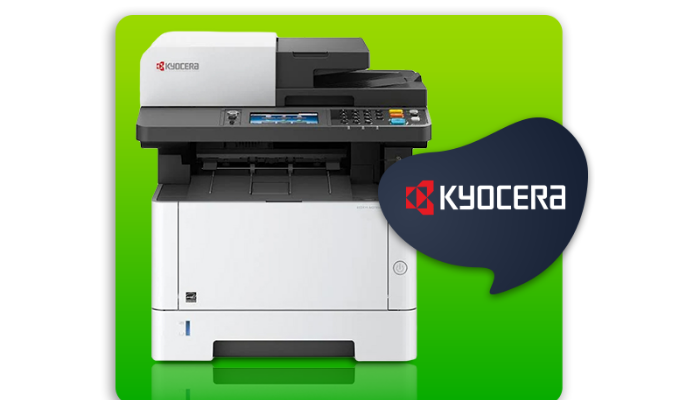
Vox adds Kyocera multifunction printers for home workers

Integrated ICT and infrastructure provider Vox, is further enabling remote workers with connectivity, hardware, software and managed services, with the latest offering being Kyocera multifunction printers that are aimed at bringing reliable, corporate-level printing, copying, scanning and faxing capability at a price point that is affordable for the home user.

According to Craig Freer, Executive Head of Cloud and Managed Services at Vox, the company partnered with Kyocera Document Solutions South Africa as they have a strong portfolio of printers and multifunction printers (MFPs) for all markets ranging from the Small Office/Home Office, to large corporates.

“Many of our work from home clients have come to learn, after a few months of working from home, that they spend disproportionate amounts on printer ink per month for their inkjet devices, only because they bought the cheapest printer they could find not fully considering the cost of replacement ink cartridges. In some instances two new ink cartridges cost more than the original printer did.

“While a lower upfront cost makes entry level devices an attractive option for printing a few pages now and then, it is clear that they are not sustainable for an efficient home office environment,” says Freer.

“Our new printer rental offering provides customers with a choice of three Kyocera models that meet their home-based printing, copying and scanning needs. These black and white or colour multifunctional laser printers (MFPs) are available as a once off purchase, or a rental model.

As part of the rental offering, Vox will also provide free frontline support service, a three-year warranty and remote troubleshooting support – enabled by Kyocera’s onboard software – to ensure longevity of the devices.

Freer adds that an enhanced warranty is also available, where technicians are sent out to the customer to solve any issues that cannot be resolved remotely, as well as optional Managed IT support which customers can request for general IT assistance at the click of the button – available for a monthly fixed fee or on a pay per transaction basis.

According to Nancy Meyer, Business Development Director, Kyocera Document Solutions South Africa, the company has a strong history of excellence in South Africa having attained first place in southern Africa market share for A4 copier/MFPs in the office print segment for the last two years.

Kyocera has predominantly played in the business-to-business (B2B) space until now, and this partnership extends the brand’s offering to the business-to-consumer (B2C) market, affording us the ability to service all sectors of the market.

These multifunctional laser printers are available for purchase or on a rental option for between one and three years. Visit the product page on the Vox website for more information.

Unlocking value in the SA enterprise sector with smart 5G solutions

So, what’s the big fuss about 5G? It’s all about latency and the fact that this technology will enable us to make close to instant decisions.

Although many South Africans view 5G as just a faster way to download videos and rich multimedia to their smartphones, it is enterprises and the industrial sector that have the most to gain from this fast-developing cellular network standard.

At the time of its global commercial launch last year, at least 20 operators were deploying 5G (fifth-generation wireless technology) networks in almost 300 locations around the world. According to some estimates, 5G will support more than 10% of global mobile connections by 2023.

The average speed of these will be 575 megabits per second, 13 times faster than the current average.

South African consumers have been able to access 5G services since November 2019, and while coverage is still limited, it will only expand as demand for high-speed mobile access drive operators to continue to grow their networks.

But contrary to popular belief, 5G does not provide compelling benefits for consumers just quite yet. The sort of speeds that sound like science fiction are still years away. Additionally, people are only now starting to tap into the potential of 4G and the experiential improvements it delivers to their digital lifestyles.

Related: When can we expect 5G in South Africa?

Moreover, smartphones that support 5G are still prohibitively expensive for the bulk of the consumer market, further limiting its adoption in the short-term. And with data prices coming down, the status quo certainly presents a better value proposition than expensive (and limited) 5G.

Driving rapid decision-making with real-time data

On the other hand, for businesses and industrial users, 5G represents a potential pathway into highly valuable and emerging new use cases. Importantly, for companies and industry players that have both the infrastructure and the right technology partners, there are numerous value-adding enterprise and industrial applications that can rapidly offset the initial high cost of embracing the technology.

A recent Nokia study, for example, has found that video is the most immediate use case from a corporate perspective. Video monitoring is already extensively used in enterprise and industrial environments. Notably, what 5G does (and can do) is to unlock higher-value opportunities in this sphere.

For example, combining video with real-time analytics to recognise faces and identify risks in sensitive environments can mean the difference between life and death. The same study has noted that energy and manufacturing companies are looking to leverage 5G for things such as infrastructure maintenance, remote machine control, and even Cloud robotics.

Greatly improved service delivery

Additionally, another emerging area whereby 5G can deliver significant returns is with IoT devices. These are now able to deliver more sophisticated diagnoses on infrastructure performance in areas that are too dangerous – or laborious –  for people to continually monitor. And when it comes to IoT devices that are typically found at the edge of computing, the increased capacity of 5G means data can be analysed in real-time at the point of origin.

For instance, machines in a manufacturing environment can be optimised to scale according to the capacity required. This can also enable proactive maintenance to take place by identifying potential breakdowns before they occur.

Looking ahead, 5G can also become instrumental in enabling companies to create multiple virtual networks using just one physical system.

This introduces an integrated networking, computing, and storage environment previously impossible to do with 4G. As more countries, including South Africa, push the smart city agenda, 5G can facilitate comprehensive smart grids to manage demand-side electricity requirements. So, even something as routine as managing traffic congestion at peak times through 5G-enabled robots (that automatically adapt to usage patterns) can greatly improve service delivery.

Spectrum: the lifeblood of 5G

For South Africa’s business and industry players to fully embrace and realise the benefits of 5G connectivity, local operators have to gain access to key spectrum bands – a process which is currently shrouded in policy uncertainty. Yet without access to spectrum, SA industry will not get out of the starting blocks when it comes to 5G usage – and will arguably be left behind global competitors who are embracing technological development in the fast-growing digital economy.

Prior to the health crisis, the Independent Communications Authority of South Africa (ICASA) was in the process of planning for the assignment of high-demand spectrum by auction. Yet in March, ICASA turned its attention to a spectrum relief plan to meet the sudden high demand placed on networks during the national lockdown.

Related: 5G: an enabler of future tech, but challenges remain

More recently, the regulator stated that it will slightly delay the publication of the invitation to apply (ITA) for the wholesale open-access network and International Mobile Telecommunications spectrum (commonly known as high-demand spectrum).

Disappointingly, this statement came despite the regulator’s briefing to Parliament’s Portfolio Committee on Communications that the ITAs would be published “very soon”. The ITA is for licences for spectrum in the 700MHz, 800MHz, 2.3GHz, 2.6GHz and 3.5GHz bands, which the regulator has committed to auction by December.

A new period of economic vitality

This uncertainty and prolonged delay (resulting in the fact that operators are still not sure which spectrum blocks they will be able to gain access to come the auction process in December) is arguably inhibiting the country’s technological competitiveness and by extension, economic growth.

Given the fact that many of SA’s operators and telecommunications players are both highly innovative and committed to world-class service delivery, unlocking access to spectrum – and access to the transformative benefits of 5G – can propel the country into a new period of economic vitality and dynamic business growth.

Related: Enablers of the smart world

Women of Vox: Fagmidah Eksteen

This National Women’s Month, we’re shining a light on the fabulous females at Vox who have worked their way up in the company, despite still being a minority in corporate South Africa.

“My motto is that if you enjoy what you do, you will always do your best. I have been with Vox for 19 years and during that time I have learned a lot and gained a lot of experiences in the different roles that I played. This industry that we are in are ever changing, you learn something new every day and because of that I really enjoy what I do as well as be part of a company that is growing tremendously and that move with time.” – Fagmidah Eksteen, Sales Administrator, Vox.

I guess if I think back my actual dream and aspiration was to become a physiotherapist. To help athletes with any injuries etc., says Fagmidah, who is a former athlete herself. 

 During my school days, I was an athlete who specialised in 100m, 200m and long jump and received both Western Province and South African colours for this. 

Her other passion is what she does at Vox, which all started with the Business Administration course she enrolled in at Cape Peninsular University of Technology. “I think that is where I got my passion for doing administration work.”

I think my career chose me.

Fagmidah joined Vox in 2001 as a Registrations clerk and swiftly moved up the ranks within the department to Special Projects team leader and eventually the Registrations Team Leader.   

In 2017 I decided to join the KAM sales team as a Sales Administrator and use my knowledge that I gained in the Registrations team to assist the KAMs with their clients regarding billing queries, contract queries etc. 

I am a fun-loving person, who loves spending time with family and friends. I enjoy spending time outdoors like hiking and to keep fit by running. As much as I enjoy being outdoors, I also enjoy some me time indoors, like being at home either watching Netflix or just enjoying a good book. 

#HumansofVox #WomenofVox