It’s Time to Up your Endpoint Security Game

A combination of cyber smarts and a comprehensive Endpoint security solution is the key to keeping safe from cybercrime.

Data. It’s such a small word for something considered one of the most valuable resources in the world. Let’s not kid, it’s not actually more valuable than oil, but it’s pretty important all the same. And yet, our data is at risk every day in increasingly elaborate ways while most of us continue to ignore the threats until they literally become our problem.

The connected devices we use and truly rely on to function in the 21st century continue to be the easiest targets for cyberattacks – whether it’s your laptop, tablet, smart phone or watch. Sadly, the reason is mostly down to us – the end-users.

We are the weakest link

With work from home now becoming the norm, increasing our awareness around cybersecurity and the presence of online threats is more important than ever. We’re not only responsible for the integrity of our personal devices and data, but of the data and devices of the companies that employ us too.

From the email attachments we casually open to the websites we innocently browse and pop-ups we click on, the threat of cyberattack is ever-present and only growing more savvy.

And while we may try to stay vigilant, there’s only so much we can do, especially when we have so many connected devices – especially ones belonging to our kids – to worry about at the same time.

Know your (fiercest) Endpoint enemies

Just when it seems safe to enter the Internet waters, a new threat inevitably emerges. With hackers taking advantage of everyone’s fear and panic during the height of COVID-19, ransomware attacks reportedly rose by 148% globally in March last year. Mostly targeted at companies, ransomware is a type of malware (malicious software) that hijacks a network’s data/files and denies its users access until a ransom is paid.

Malware in general continues to be the most worrisome form of cyberattack for home users, as most of us won’t even be aware our computers, laptops, smartphones or tablets are infected until it’s too late – your device is ruined or your data is breached, all with a simple click on the wrong link. With the rise in mobile banking, smartphones are particularly vulnerable to malware attacks as they’re one of the last devices we often consider protecting.

Related: What Are the Top Threats in Cybersecurity Today?

You can mitigate your risk by making sure your operating system is continuously updated and you’re not opening or downloading anything from an unknown source, but ultimately, the best defence will always include an Endpoint security solution – which literally means protecting your all devices/endpoints from malicious attacks, as any device connected to your network is an Endpoint.

Do it all in one

While you can hopefully rely on your company to have put Endpoint security protocols in place to protect their network integrity from afar (if not, tell them to check out our Cybersecurity Portal or IT Security Toolbox ), when it comes to the multitude of devices you have at home, it’s possible to simplify the threat of multiple types of attacks on various devices with a single solution.

Our Endpoint Security solutions not only include anti-virus and anti-ransomware, data encryption and parental controls, it can cover a range of connected devices in your home simultaneously, providing comprehensive protection for your PC, laptop, tablet and smartphone as well as your gaming console. Don’t you feel safer already?

CRM24: A Cloud-Based Solution Built Around the Customer Experience

Customer relationship management (CRM) has become one of the most important strategic areas in business today. The pandemic, challenging economic conditions, and an increased focus on digital solutions mean organisations are rethinking their approach to these systems.

“COVID-19 has overwhelmed lives and livelihoods around the globe. For vulnerable individuals and the customer teams that serve them, it has also forced a rethink of what customer care means. Suddenly, examinations of customer journeys and satisfaction metrics to inform product and service direction have given way to an acute urgency to address what the immediate needs are,” says Nishie Sewpersadh, Product Manager: Microsoft CSP at Braintree, the consulting and integration division of Vox.

For instance, digital sales have grown by 18% in the first quarter of 2020 over the comparative period the year before. Furthermore, the share of traffic coming from social media increased to 8% in Q1 2020 as opposed to the 6% of 2019. This is highlighting the importance of being able to serve customers better in newer, more agile ways than pre-pandemic.

As such, there has been a spate of CRM solutions that use existing enterprise-level technology that has been repurposed in a rapid deployment methodology. Typically associated with a template-based approach, these are designed to be rolled out quickly and ‘plug in’ to existing processes with the least amount of disruption.

However, product differentiation is virtually non-existent with little to choose from between what is available. As such, Braintree has taken a different approach with its CRM24 cloud-based solution.

Coming from 25 years’ experience as a Microsoft partner, Braintree has injected the traditional rapid deployment approach with a focus on customer experience to ensure the solution is built around the needs of the client and not the other way around.

“The template is just a component of what CRM24 delivers. Affordability is a key focus and, as such, we have made the offering available on a 24-month subscription basis. This means that instead of making a significant upfront financial investment, our customers can more affordably implement a high-level solution that unlocks the high-performance computing capabilities of the cloud,” adds Sewpersadh.

Additionally, Braintree has included 12 support incidents as part of the monthly subscription fee which can be used over the 24-month period as the customer sees fit. Whether the problem resolution takes five minutes or five days, it will still count as one support incident further differentiating it from competitor solutions.

Although CRM24 is cloud-based, Braintree has bundled an independent 250GB off-site backup as a further value-add. This gives the customer complete control and flexibility over their business continuity and how quickly they can restore data without going the cloud route.

“For us, it is about delivering intrinsic value to the customer beyond just giving them an off-the-shelf application. In our experience, companies limit the amount of new functionality they explore in their cloud-based solutions. To this end, after six months, we will optimise the CRM24 environment for free to ensure they get the most value out of the system. This helps deliver a richer customer experience,” concludes Sewpersadh.

Vox UPS: Powering up a Darkened South Africa

We’ve all been there, we’ve all done that.

Some countries experience outages, but in SA, we’ve embraced them like Bheki Cele embraces a new hat.

One minute you’re minding your own business, enjoying the bliss of a light-filled world. You could be laying on the couch or enjoying some alone time on the can (where else can parents get a minute of peace?), when, suddenly, darkness strikes.

There goes the universe, right? You feel your hopes and dreams getting drained away as fast as the power switch, you curse everyone from Voldemort to the Knights of the Old Republic, and you’re destined to spend the next few hours staring into the ether as you ponder the ending of the last episode of Firefly lane (although technically, they’re all cliffhangers).  Aside from your sanity, one of the first things that trips is your connectivity. Which can be an issue if you’re like us and need to work during normal business hours. Deadlines, projects, meetings and beyond all come to a complete standstill- which may be fine if you work at Home Affairs, but to the everyday employee, it can have damning consequences.

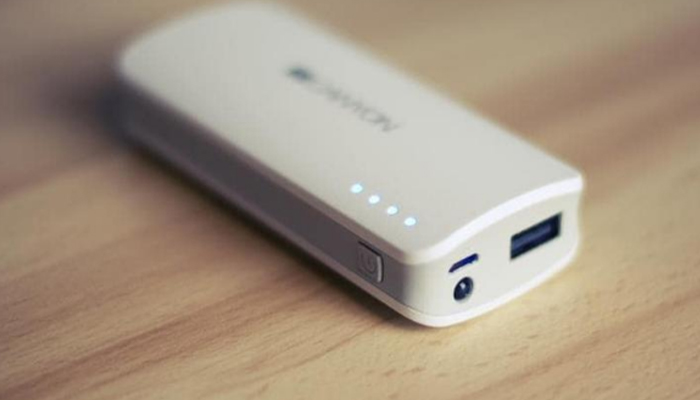
Enter Vox UPS, which may not be able to restore your power, but it will definitely keep your Fibre or LTE Router connected for up to four hours during a shortage (if only we could send one to Eskom). And, while we’d love to complain about outages until they go away for good, it wouldn’t be a product blog without some features.

How about four hours of uptime and automatic activation? Or a small, compact device with plug and play installation and 24/7 support? How does the thought of keeping your business running while your competitors are crawling strike you? Or, if that’s not enough, the ability to Netflix and chill as your neighbours acquaint themselves with darkness, their old friend?

Gone are the days of coming home after work and missing out on your evening relaxation time, or the absolute nightmare that is trying to meet a deadline with a looming power cut. Working from home can continue with ease, and you never have to fear draining your Data needlessly again. You’re paying for your Internet, and you deserve to make full use of it- what use is a monthly retainer if you can’t spend 3 hours a night deciding what to watch on Netflix?

At Vox, we understand our consumer needs, which is why our products aim to address relevant challenges.

We know how tough it is running a business, particularly one that requires remote connection, and we’d never want to leave you stranded. As such, The Vox UPS is created for customers and small businesses with 20 employees or less, but truth be told it’s perfect for everyone during these tough times. They told us to stay at home, and then they left us in the dark- but let’s light up our lives with continuous, uninterrupted streaming no matter what Stage we’re in.

Wanna hear more about surviving these tough times? Check out this podcast on Work from Home vs Loadshedding

What’s the Deal with Fixed LTE?

There are three guarantees in life: death, taxes, and a need for reliable Internet. We’ll be honest, we can’t do much about the first two, but we think we know a thing about the third.

The reality is that, in today’s difficult socio-economic climate, price is king. Now, while that may sound like a pitch, it’s not- people are truly feeling a pinch after Covid-19 and affordability is, to many, as appealing as a load-shedding free South Africa. The concept of uninterrupted power may seem mythical, but dependable connectivity (which is cheaper than cigarettes in Level 5) is actually a reality. Too good to be true? It’s not. We’re here to present a viable, cost-effective Internet solution that’s feasible for everyone.

Working from home is as ingrained in our DNA as sanitiser, social distancing and “wear your mask”. Initially, our early challenges ranged from remembering to wear pants in client meetings to convincing our cat not to nap on top of our keyboard. Now that most of us have acclimatised, however, our main priority is fast, reliable connectivity that serves its purpose both during working hours and in the evenings.

Like a Kardashian or Thor, Fibre is an ideal for everyone, but unattainable to many. It could be the price-point, unavailability in the area, or no desire to wait until a line comes through. It could be a deterrent to sign an extended contract when you’re trying to budget for the future. It could be any one of a variety of reasons, but for many, Fibre isn’t as easy as picking up the phone and getting connected.

With Fixed-LTE, however, it’s really that easy.

From Home Affairs to a State of Nation address, very few things in South Africa are simple- except for plug-and-play. We’ve come a long way from “please call me” and call-per-second billing, and Data has replaced airtime as the most valuable commodity in any modern household. At entry level alone, you can buy 25GB for R100 (which is cheaper than a meal for one at a certain chicken franchise- but then again, most things are), while heavier users can enjoy up to 500GB Data Bundles.

So, what’s the difference between LTE and Fibre?

Glad you asked. Not only is LTE available instantly (or as soon as yours is delivered and you’ve excitedly opened the box like a kid on Christmas morning), but Data bundles are available anytime. You’ll still be zooming like Schumacher in his prime, but you don’t need to stress about on or off-peak periods, as your Data is yours whenever your heart desires.

Contracts are on a month to month basis and, should you later install Fibre, you can always keep your router for as a failsafe backup option (or as a private stash for when the kids are on holiday and Fortnight is dividing the family)

In a nutshell, Vox and MTN have joined forces to bring you a solution that’s versatile, affordable and a feasible alternative that doesn’t break the bank. 2020 was tough, and 2021 isn’t letting up, but sometimes it’s the smallest solutions that make the biggest differences.

To find out more about our LTE solutions and get your business up and running in an instant, check out our website!

Modern Enterprise Resource Planning in 2021 and Beyond

Flexible, cloud-based accounting solutions and a focus on financial forecasting will continue to dominate in Enterprise Resource Planning.

If the last 12 months have taught us anything, it’s that the ability to adapt quickly and easily to whatever the world might throw at us next is something every industry should always focus on. ERP (Enterprise Resource Planning) is no exception.

Looking ahead, it’s pretty clear that cloud-based solutions will continue to provide the accounting industry with game-changing innovation and technology like automation and artificial intelligence (AI) for data analytics, allowing accountants to provide their clients with more than just accurate financial records, but proactive financial solutions too.

Work from anywhere

Thanks to cloud-based software solutions, accountants can work securely from anywhere, at any time, from any device with an Internet connection.

Access to crucial data in real time allows accountants to make the most informed decisions to push the business forward, saving valuable time and, yes, money, in the process.

Braintree’s BC Xpress goes one step further by offering rapid deployment for an almost seamless move into the cloud. The product is designed to get you up and running with your cloud-based accounting software in as little as eight days. Microsoft supplies everything needed – from secure servers to automatic software updates – to keep things running smoothly.

Automate the admin

Cloud-based technology will continue to make the lives of accountants and financial professionals even easier by automating time-consuming and user-error prone practices like invoice generation and payroll admin. By automating these types tasks, accountants are free to focus on creating more efficient workflow practices with in-depth data analysis.

Related: Accounting reinvented for the digital age

BC Xpress provides crucial information – like payment notifications for vendors and the appearance of fraudulent purchases – automatically thanks to its approval workflows. With BC Xpress’ Financial Management, accountants have the power to make informed decisions, while improving their closing and reporting capabilities. Not to mention keep track of receivables, payables, inventory levels, audit trails as well as manage and reconcile multiple bank accounts across multiple currencies.

Predict the (financial) future

With almost half of the most time-consuming accounting necessities taken care of, more accountants and financial professionals will find themselves able to analyse crucial data and create more accurate forecasting models to guide their clients and their companies towards the best decisions possible. This allows accountants to bring value and insight to the numbers and plan with confidence about where to go next to maximise profitability, increase sales or opportunities for growth.

BC Xpress is designed to quickly deploy the core financial and operational business solution functionality available in Microsoft Dynamics 365 Business Central. It connects all the most important decision makers to a single, unified solution to analyse and share data with ease. Access to the most current and accurate data will propel your business forward from anywhere at any time.

Ditch That Wi-Fi Repeater – There’s a Better Way

Mesh Wi-Fi allows you to create a healthy, reliable home Wi-Fi network quickly and easily. Say hello to your new Wi-Fi MVP.

There’s nothing quite as frustrating as a home Wi-Fi network filled with dead zones and slow speeds. When you discover, even after lifting your devices to the heavens Lion King-style, that a single router just isn’t going to cut it, the next step on the DIY Wi-Fi route usually involves adding a repeater to the mix and hoping for the best.

As convenient as repeaters are – they’re relatively affordable and offer the opportunity to increase the range of your network by simply plugging a device in – as anyone who’s used a repeater will tell you, there are a couple of downsides too.

Desperate times, desperate measures

As detailed in our video below, repeaters are a great way to increase the range of your network in an instant. But, because repeaters work by receiving your Wi-Fi signal and rebroadcasting it, while they may extend the range of your network throughout your home and eliminate dead zones, the speed of your network suffers as a result – sometimes by about as much as half…

Related: When Wi-Fi becomes WHOA-FI: Surviving Poor Connection

Single band repeaters (ones that operate on the 2.4 GHz frequency only instead of 2.4 GHz and 5 GHz) are the worst offenders here, as they must receive and retransmit data using the same radio on the same channel, cutting down your bandwidth in the process.

A new Wi-Fi home frontier

This is where mesh Wi-Fi comes in. Mesh Wi-Fi not only extends the range of your network, it doesn’t sacrifice as much speed as a repeater would to do it either. Oh, and it creates a single network while doing so, which means you can enjoy a seamless Wi-Fi experience throughout your home.

You’ll need at least two mesh APs (access points) to get started – it just so happens we sell two-packs – this is because the mesh devices act as ‘nodes’ throughout your home to create a seamless Wi-Fi system.

One unit will act as the primary access point, connecting directly to your router, while the others can be placed around the home where coverage is needed.

Related: Take your home Wi-Fi network to the next level

As the solution is scalable, you can start small and add more units as you go. These nodes also communicate with one another to determine the fastest band for your devices and re-route the traffic accordingly. If one of the nodes goes down, you don’t lose your network along with it – it simply re-routes the traffic to the next available node.

To avoid any loss in performance due to meshing wirelessly, mesh access points can even be connected via network cabling. Although it may seem counterintuitive to add cabling to your “wireless” network, this will improve performance and your Wi-Fi experience.

Yes, the buy-in for mesh is slightly more than for your average repeater, but we have a rental solution to suit your budget there too. So, what are you waiting for?

Vox ICE: Saving the Lives of South Africa’s Elderly with Digital Innovation

South Africa’s growing elderly population (people aged 60 and over) is putting the spotlight on finding better ways to care for a demographic that numbers more than 9% of the country’s citizens. With 55% of respondents in a recent survey stating that they cannot afford to save towards retirement and living in a care facility, attention must turn to leveraging cost-effective and user-friendly technological innovations to unlock the potential for telecare.

Telecare can be defined as the continuous, automatic, and remote monitoring of real-time emergencies and lifestyle changes over time to manage the risks associated with independent living. In layman’s terms it enables vulnerable, elderly, and even disabled people to live longer on their own at home through remote monitoring and emergency alarms.

Of course, the amount of care required differs significantly from person to person. Typically, this would require a caregiver to be available when it comes to the potential for accidents and other events that can happen while the elderly person is on their own. This can include everything from an accidental fall, unexpected illness resulting in being unable to get out of bed, forgetting to perform routine tasks (such as closing and locking doors), and leaving the property without any form of communication.

Significantly, research has found that after road traffic injuries, falls are the second leading cause of accidental injury and deaths worldwide. It’s especially the elderly who are at risk, suffering the greatest number of fatal falls with more than 80% of these occurring in low- and middle-income countries.

Unfortunately, the high cost of full-time care makes it unaffordable for most South Africans to have a live-in caregiver. Also, the limited amount of frail care facilities in the country cannot meet the high demand. This means relatives and close friends are relied on to check in on the elderly living alone at home. But if there is an emergency, these visits come too late to provide the immediate assistance required. It is especially the case for those living in rural areas where there is no immediate access to healthcare services. Up to now, those individuals could not simply press a button and have immediate help available to them.

Technology making a difference

In partnership with a global provider of a leading telecare and monitoring system, Vox is bringing even more innovation to its customer base that not only changes lives but saves them as well.

In recent years, Vox has evolved from being a connectivity provider to a company that brings solutions to market that can positively impact on South Africans from all walks of life.

To this end, Vox ICE (In Case of Emergency) is a first of its kind in the country. It sees the international best practice combined with the local expertise and insights of Vox to deliver an affordable and user-friendly solution that addresses the problem of monitoring the elderly who live independently at home in a non-intrusive manner.

Designed and developed by several professionals from the medical, paramedical, and social sectors, Vox ICE consists of motion sensors installed at strategic places inside the house and a wearable alert pendant. This non-invasive solution runs movement data captured by the sensors through a deep learning engine that builds trends and events around the elderly person living on their own. Once an event outside the norm takes place, for example a fall or not locking the back door after a certain amount of time, an alert is sent to a predefined list of emergency contacts. This can either be the next of kin, a neighbour, a caregiver, a control centre (in the case of a frail care facility), or even emergency response.

Essentially, Vox ICE learns the habits and behaviours of the person it monitors and flags any potential issues in real-time before they become catastrophic. As this is a life-saving solution, it has built-in battery power and relies on the Sigfox global network dedicated to the Internet of Things based on low power, long range, and small data packets. This means no existing internet connectivity is required on site as it is a completely self-contained offering with everything built in to deliver a complete plug-and-play experience.

The pendant doubles as a panic button but can also send an alert if the person moves outside a specified area. It features an accelerometer that detects rapid movements based on complex algorithms to detect when a person falls outside the home.

Vox ICE is a completely modular subscription service that can be customised to the unique requirements of each individual customer. The data collected complies with local and international regulatory requirements giving people the peace of mind that their information remains safe.

It is the perfect non-invasive solution that provides telecare to South Africans irrespective of their physical location. With Vox, it is about saving lives and delivering innovation that solves a significant human challenge through technology.

Download our detailed and informative Vox ICE White Paper

Accounting Reinvented for the Digital Age

Customer-centricity at the core of BC Xpress accounting solution

Building on the purely template-driven, rapid deployment approach that has become commonplace in the market, Braintree (the consulting and integration division of Vox) has introduced BC Xpress, a pre-configured, cloud-based accounting system that is designed with customer-centricity at its core.

Targeting small and medium businesses requiring a cost-effective and customised Microsoft Dynamics 365 Business Central environment, Braintree BC Xpress is available through a monthly subscription that includes additional support and business intelligence functionality.

“While BC Xpress incorporates rapid deployment, our focus on customer-centricity is something that is lacking in other template-based solutions available today. Braintree is a proudly South African company with more than 25 years’ experience as a Microsoft Gold partner ensuring the organisation has a unique understanding of what local small and medium businesses are looking for from their ERP solutions,” says Neville Levinthal, Head of Business Development at Braintree.

New deployments often start with the basics with companies not realising the full potential of the system they now have in place.

They tend to focus on just keeping the system running to do the fundamentals of what is required.

“However, once the initial ‘new car’ feel of the solution wears off, we come in to assist and tailor the offering even further. Braintree believes it is about building a ubiquitous customer experience for an integrated value proposition. With BC Xpress, ERP is now reinvented for the digital age,” says Levinthal.

The challenging economic environment means cash flow is tight for many SMBs who cannot invest upfront for new deployments. BC Xpress is available on an affordable monthly subscription basis with only R10 000 needed for provisioning fees. This makes the power and innovation of an enterprise-level solution like D365 Business Central accessible to more organisations across industry sectors.

While the issue of cost is addressed through this subscription model, many smaller companies are also concerned about incident support. Typically, there would be a Service Level Agreement (SLA) in place where a company will invest in a certain number of support hours per month, regardless of whether they use it or not.

“Braintree has taken a fundamentally different approach. To this end, 12 support incidents are included in the monthly subscription price which companies can use as they see fit over the 24-month contract period. So, whether it takes five minutes, five hours, or five days to resolve an issue, we work on an incident until it is fixed. There is also the option of purchasing additional support should that be required,” adds Levinthal.

Another differentiator of BC Xpress is that Braintree has also included business intelligence in the offering. This means that the SMB customer will also receive a Microsoft Power BI licence and a free two-day training course with Braintree for one candidate as part of the solution.

“Braintree looks holistically at the customer experience. Cloud-based accounting systems are an essential part of the modern business. But if a customer needs to restore data then it invariably entails a complex process with the service provider. BC Xpress includes 250GB of independent backup meaning the customer is in full control of the restoration process. It comes down to giving our customers everything they are looking for from both technology, business continuity, cost, and accessibility.”

What Happens to the Data You Leave at an Estate Gate?

Vox says the second wave of COVID-19 infections and the imminent enforcement of the Protection of Personal Information Act (POPIA) on 1 July has put business and residential estate visitor management under the spotlight from both a health and a data privacy perspective.

“Many companies and residential estates still require people to manually fill in a visitor book. But not only is the handling of pens and paper unhygienic, but there is also no way to guarantee the safety of the information contained in these registers that can include everything from ID numbers to home addresses,” says Rudi Potgieter, Executive Head – Guardian Eye at Vox.

Just consider the amount of structured data in those logbooks and the potential for abuse. Of course, that is assuming visitors are filling in the correct information in the first place. The former puts the onus on the organisation or the residential estate to be responsible for the data and appoint someone in charge of maintaining its integrity. This adds to the cost and complexity of an already cumbersome process. And when it comes to the latter, not having the correct data is bad for both the business and the residential estate especially in the age of COVID-19. Not being able to accurately track and trace people if an infection occurs can result in significant financial fines not to mention the potential loss of life.

Logbooks also make it difficult for businesses to have a real-time view of how many people are inside their premises – a critical requirement during lockdown conditions. Furthermore, the surge in remote working has resulted in suppliers and other business contacts visiting employees at home. Residential estates must therefore find more sophisticated ways of managing the influx of people.

“Unannounced visitors at an estate can significantly slow down the entry process as the guards would need to get confirmation from the resident whether they are expecting guests. Depending on the system used, this could involve a lengthy process of sending a temporary SMS shortcode to the visitor to gain entry or some other steps. If this happens in ‘peak’ traffic at the gate, the frustration of other visitors could impact negatively on the reputation of the estate,” adds Potgieter.

The modular, cloud-based Vox Visitor Management System (VMS) addresses these requirements by providing a more secure, digital alternative to traditional logbooks and SMS-driven systems. Designed as a subscription-based service, there is a hardware rental fee for the handheld devices and a license fee that depends on whether the customer selects the ‘Standard’ or ‘Advanced’ options. Using a mobile app, people living in residential estates can in real-time send a temporary access code to unannounced visitors to avoid any delays with entry.

“COVID and POPI necessitate a digitalised visitor management approach. In addition to the health benefits, this is a more secure way to mitigate against the risk of people going through logbooks or security guards being bribed to sell ID numbers. It is a user-friendly scan process when a visitor arrives (typically using a driver’s licence) with the VMS managing everything automatically. It stores data safely in the cloud eliminating the need for having dedicated on-premise servers,” adds Potgieter.

For residential estates, going the cloud route means significantly reducing the costs of on-premise systems.

No longer does it require to have dedicated servers set up at the guardhouse and have an IT person on call to deal with any technical issues. All this is managed in the cloud through the handheld device used by the guards and the application residents install on their smartphones. Furthermore, the system will automatically verify if a car’s licence disc is expired ensuring the business or residential estate denies entry. This ensures that should an accident happen inside the estate, the estate can avoid the liability for costs that can easily amount to millions of rands.

VMS ensures POPI compliance when it comes to visitor management data and becomes a key step in digitising the business and residential estate giving all stakeholders the peace of mind that this critical element is taken care of.

Private APNs: Not Dead Just Yet

Companies have until 30 June 2021 to comply with the Protection of Personal Information Act (POPIA) or risk significant financial fines or even jail time for their executives. Much focus will therefore be on data compliance during the first half of 2021, a task made more challenging given the increase in remote working. But this is where private Access Point Name (APN) solutions become an effective tool to mitigate the potential risk of data exposure resulting from a distributed work environment.

Already, there are more telecommunication operators entering the fray with an array of private APN solutions. Combine the looming ‘threat’ of POPI with a challenging economic environment, you have a situation where organisations are looking to reduce costs. Despite the affordability of LTE data or consumer data contracts, companies cannot afford to compromise on data protection and should give serious consideration to the advantages private APNs have to offer. This requires decision-makers to focus on technology that is secure by design to safeguard company resources regardless of where people are accessing mission-critical data or whether they are reliant on mobile connections to do so.

The financial services industry has led the charge for private APNs to deliver secure, mobile access to a decentralised workforce. But the benefits extend to even SMEs who need better management of their mobile data. These private APNs give the peace of mind that the network will remain as secure as possible.

Beyond MPLS

A private APN delivers a comprehensive range of services that extend beyond the Rands and Cents argument typically associated with mobile data. Instead, the focus turns to the importance of data compliance, its integrity, and the security of accessing the corporate network using a mobile device whether that of the business or an employee’s personal one.

By specifying the data path between the SIM card and the destination network, and ensuring the resources accessible by the SIM’s user are strictly defined, a whole remote workforce can be tunnelled to a single server or single IP address over the mobile network (if that is what a company wished to accomplish) illustrating the control a private APN can offer.

Without traversing the unsecured public Internet, a private APN enables staff to access the intranet from anywhere via a mobile connection. Additionally, employees can break out from the intranet via the company’s firewall to ensure the team is always connected. Essentially, the private APN contributes to a more secure connection, the monitoring of connections, and control of those who have access to the connection.

Mobile workforce

With the unexpected surge in remote working that started in March 2020, Vox saw customer data consumption increasing by up to 10 times. This contributed to an environment where people needed to access company resources while still ensuring compliance with governance protocols and the privacy of data is maintained.

And despite the increasing availability of fibre, there are still areas in the country where it is not economically feasible to roll out this connectivity yet. This is where reliance on mobile is all-important. But accessing sensitive information ‘over the air’ is something that should fill most organisations with dread given the rise in cyberattacks targeting remote workers. Private APNs address this regardless of the mobile network used.

Customised control

Beyond the security aspect of private APNs, companies can use Vox’s Insight Portal to create usage policies and set data limits at an individual employee level. Add on a managed firewall with clear cut rules to limit unwarranted traffic types or websites which aren’t quite for work, you empower organisations to have access to managed policies that deliver better control of how employees use company mobile data and ensure it is only used for work-specific functions as opposed to streaming YouTube videos or chatting on social media for instance.

In theory, the private APN acts as an extension of the LAN, giving corporations the peace of mind that they can manage data as if the user were sitting at the office. And because the private APN is dependent on a SIM card that can only connect to the corporate network, there is no way to abuse the system. This makes it an ideal solution to help prepare organisations for POPI.