Harnessing Technology’s Power to Transform Lives

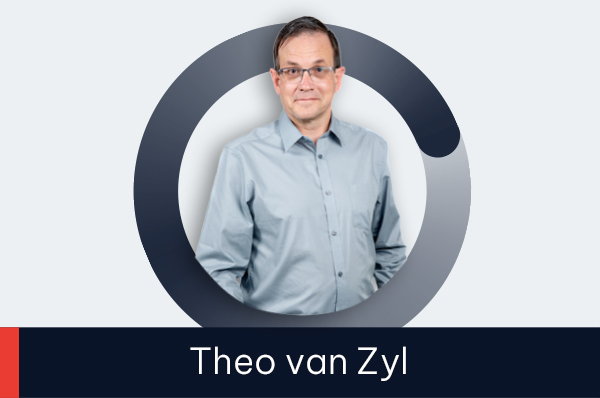
Meet our Experts: Spotlight on Theo van Zyl

At Vox, we value, support and actively engage people with the levels of expertise that we require to keep us moving forward as a company. In this edition of ‘Meet our Experts’, we find out more about Theo van Zyl, who heads up the Wireless Department. Theo reflects on a lifelong relationship with communications technology, his journey into product leadership and his ambitions for extending connectivity across South Africa.


“The thing was called ‘fire’, and it was brought back to the cave by Og the inventor, who said he found it eating a tree. You had to keep it in a little cage of stones, he said.” ~ From ‘How It All Began…’ by Terry Pratchett

Question: What do Theo van Zyl, Head of Wireless at Vox, and Og the Inventor, also known as ‘the first caveman to cultivate fire’ and brought to us by author Terry Pratchett, both have in common?

Answer: They are both obsessed with the latest technology of the day, and how it can be used to help people and improve their lives.

fire 925573 640 1 | Vox | Harnessing Technology’s Power to Transform Lives

(Editor’s note: You can read the short story of Og and his lifelong quest to master early technology here. Be warned: you will probably laugh out loud.)

Moving onto a more serious note…

People have been fascinated by the technology of the day for as long as we’ve been human, and for Theo, a life-long and highly practical love of technology began when he was still a child. Today, as Vox’s Head of Wireless, he is focused on building nimble teams and customer-first products, as well as bringing affordable connectivity to South Africa’s citizens, no matter where they are in the country.

We speak to Theo and find out more about how technology is front and centre in his life, both at work and at home, on a daily basis.


Telecomms in His Veins

Theo was still in primary school when his passion for electronics and communication began, and he describes fixing radios and building circuits as a child.

How and Why Wonder Books 1 | Vox | Harnessing Technology’s Power to Transform Lives

“My interest started with the ‘How and Why’ book range, especially electronics,” he explains. “As a child, I built electronic projects that did actually work, and I was always dismantling electronic equipment to understand the underlying processes. As a teenager, I made pocket money by repairing and building electronic circuit boards.”

That early curiosity matured into technical depth across analogue telephony, telex, data modems and later fibre, LTE and satellite. He also studied e‑commerce at Unisa and was involved in early online billing and payment gateway projects. His breadth of experience shows through in his product approach: he is comfortable with legacy systems and keen on combining them with modern ideas.


A Multi-Disciplinary and Empowering Team Leader

With more than three decades’ experience, including some 15 years heading up another ISP, Theo is a veteran of the telecommunications industry.

He explains: “From running around fixing analogue data copper line services, I have also spent time as a lecturer in data communications, mathematics and electronics. I then moved into practical roles in electronic data interchange, IP network design and product management across multiple disciplines – which is what I love the most, and where I’ve now been for around 25 years.”

He says: “Today, my job focus includes defining product strategies and managing the life cycles of products, leading the Wireless product team members, and ensuring that company strategic and financial goals are met. A key piece of the puzzle in delivering an end-to-end product portfolio includes cross-functional collaboration with areas across the business, including systems, marketing, PR, sales, channels, finance, networks and service delivery.”

Theo aims to keep his team at a manageable size so he can stay engaged with each area without losing control. He leads a compact team, organised around specialist areas, as follows: “Craig oversees Wi‑Fi for both consumer and enterprise; Chris and Kaylee look after LTE, 5G and APN products; Kathleen manages satellite services; Nikita handles microwave wireless; and Kolofelo manages manual feasibilities and operational tickets.”


Theo Craig Kathleen CROPPED | Vox | Harnessing Technology’s Power to Transform Lives
L to R: Craig, Theo, Hendrik (Q-Kon account manager for Vox Satellite) and Kathleen


Theo and Chris Boshoff CROPPED 2 | Vox | Harnessing Technology’s Power to Transform Lives
L to R: Chris and Theo

Daily work for Theo is very collaborative. He coaches and empowers his team, preferring to avoid micromanagement, and values bringing the broader team together to get multiple perspectives on a problem: “Micromanagement kills creativity,” he says. “I prefer to give people the freedom to try, possibly fail, and learn. I actively support piloting and experimentation, provided it doesn’t breach regulatory or company policy!”


Vox and Theo: The Perfect Fit

download 1 | Vox | Harnessing Technology’s Power to Transform Lives

With Theo’s leadership characterised by empowerment, rapid decision‑making and a tolerance for well‑informed risk, he was understandably drawn to Vox’s culture and strategy, which embraces being nimble and cultivating a low‑red‑tape environment that gets things done quickly.

“Here at Vox, if the boss says do it, then you do it because you know you have the go-ahead!” he notes, contrasting Vox with organisations that can take 18 months to bring a product to market.

“This ability to act rapidly, combined with a collaborative culture where colleagues readily help each other, is what I value most. At Vox, things happen fast. I believe we are better positioned than many competitors because we can move quickly, learn speedily from experiments that don’t work, and then try another approach if need be.”

IMG 20250730 093846 | Vox | Harnessing Technology’s Power to Transform Lives

Theo positions product management as an end‑to‑end responsibility: “As our esteemed CEO, Jacques du Toit, is known to clarify, ‘You need to be the CEO of your own product’, meaning end to end, across every cost, every vendor, every customer interaction.

“This means being hands-on across finances, marketing, vendor relationships, costing, sales enablement and customer experience. Customer experience is also a priority: if internal processes let customers down, product teams must own the problem, resolve a customer’s issues, and implement improvements into future workflows.”


Affordable LEO Connectivity for Wider Access

“Technology is teaching us to be human again… the ability to witness and experience the lives of others anywhere around the world, often in real-time, awakens in us our innate empathy for each other.” ~Simon Mainwaring, businessman and author

Theo has a vision of being part of the rollout of affordable connectivity to rural and underserved communities through Low Earth Orbit (LEO) Satellite services. He describes this as being a major personal and professional ambition: getting low‑cost, operational LEO services into South Africa so that rural citizens can access connectivity comparable to urban Fibre or LTE users.

Untitled design 2023 12 06T151826.790 1 | Vox | Harnessing Technology’s Power to Transform Lives

“I believe Vox is uniquely positioned to pursue this and capable of delivering services, with the success of GEO services bearing testimony to this. I am confident that Vox can achieve our goal of bringing connectivity to all rural citizens over time,” he says.

“I am passionate about the amazing possibilities that LEO satellite services could bring to the people of South Africa, bringing excellent connectivity to anyone across the country, no matter how remote they might be. My ambition is to launch an affordable LEO service so that rural South Africans can access connectivity the same way people in towns do.”


Hobbies and Hacking (You Can’t Make This Stuff Up…)

Away from work, Theo is an enthusiastic electronics hobbyist and home automation enthusiast. In the past, he’s also embraced amateur radio activity: he holds a ZR licence and recalls sending data between computers over radio long before dial‑up became widespread.

He has spent the last decade building smart home systems that incorporate voice‑enabled control for gates, lights, pool pumps, alarms and energy monitoring using remote cloud management, and is proficient at integrating different ecosystems such as Alexa and Google. For Theo, it’s not just a hobby but shows his passion for telecommunications in the workplace now brought into the home environment: “Home automation is not a gimmick for me – it’s about integrating ecosystems to make life easier and more efficient.”

smart home 2769210 640 1 | Vox | Harnessing Technology’s Power to Transform Lives

He’s walking the talk, in other words. He’s also been known to carry out at least one ethical hack in his time….

Theo once accessed a public Wi‑Fi system that was not secure when he was eating out at a restaurant in Brooklyn, Pretoria. Realising that their Wi-Fi was vulnerable, and being a regular at the restaurant, he quickly hacked into their system while browsing through the menu: “I printed a warning on the restaurant’s printer and alerted the waiter at my table about the need to separate their guest and internal networks…”

(Editor’s note: So, not your average customer when waiting tables then!)

professional caterer writing clients orders notepad bill 1 | Vox | Harnessing Technology’s Power to Transform Lives
“Excuse me, but I think you just said that you hacked the restaurant’s Wi-Fi system, did I hear you correctly?”

The astonished waiter alerted the manager on duty and needless to say, the next time Theo went to eat there, the Wi-Fi network was significantly upgraded and stronger – although knowing Theo, he could probably have got in again if he’d really wanted to…

The incident underscores his practical focus on security and the real risks of poorly configured public Wi‑Fi.

It also underscores the fact that Theo really does know what he’s talking about – he combines deep technical knowledge with a pragmatic, people‑centred and fundamentally caring approach to launching and scaling services in a rapidly evolving connectivity landscape.

“I am grateful that my experience in the industry, starting with analogue telephones, telex machines, data modems and growing into today’s technology gave me exposure to areas that I never thought I would ever be involved in,” he says. “At Vox I can leverage on that experience and influence and create products that are customer centric and deliver real value, to help change and improve people’s lives.”

And just like the short story mentioned at the beginning: Isn’t technology and progress amazing?! Here at Vox, we are grateful for people like Theo who help us to keep moving forward. Never change, Theo!

“…several up-and-coming young apemen had got the idea and they invented Civilisation – eventually. The village grew. Some of the open plain was turned into fields. Pretty soon hunters like Hal were beginning to look a bit foolish. That’s how it all began.” ~ From ‘How It All Began…’ by Terry Pratchett


ai generated 8811270 640 2 | Vox | Harnessing Technology’s Power to Transform Lives

Working to Identify and Protect SA’s Heritage Resources

Vox partnered with the South African Heritage Resources Agency (SAHRA) to deliver an integrated programme of connectivity, voice and network security, demonstrating how SAHRA connectivity and SD‑WAN for heritage sites can safeguard archives, improve communication and reduce costs. SAHRA requires a modern, secure and resilient IT environment to protect national heritage records and support remote working.

SAHRA connectivity and SD WAN for heritage sites

Planning SAHRA’s Connectivity and SD-WAN for SA’s Heritage Sites

The South African Heritage Resources Agency (SAHRA) is an agency of the Department of Sport, Arts and Culture – formerly known until 2000 as the National Monuments Council – which is tasked with an overall legislative mandate to identify, assess, manage, protect and promote heritage resources in South Africa, and to protect them for future generations.

National heritage sites need to be protected and safeguarded from damage or alteration, and it’s important to prevent development that could endanger their existence. As a national agency with additional provincial authorities, SAHRA works with local communities to identify heritage resources and record their oral and living histories, as well as increase public involvement in the preservation of heritage resources.

“South Africa has a very rich heritage,” says Stephen Muller, SAHRA ICT Manager, “and SAHRA works across a number of business units – including Heritage Properties, Burial Grounds and Graves, the Built Environment and Heritage Protection – to identify and protect heritage resources in South Africa.

3 1080 3 1080x720 1 | Vox | Working to Identify and Protect SA's Heritage Resources


“We have a very valuable registry in the form of our internal archives, encompassing a vast amount of heritage documents including old papers, plans, maps, information about graves…. information from the past that it’s important to protect and preserve.

“Overall, our outlook for the future is to become significantly more digitalised, including with our registry and archives, and also as an organisation overall. The work done by SAHRA is valuable and it’s important that it’s assisted in the digital realm, to protect South Africa’s Heritage Sites in the physical realm.”

South Africa has eight World Heritage Sites, as follows: Robben Island (Western Cape), iSimangaliso Wetland Park (formerly known as the Greater St Lucia Wetland Park in Kwa-Zulu/Natal); the Cradle of Humankind (Gauteng), Maloti Drakensberg Park (Kwa-Zulu/Natal), Mapungubwe Heritage Site (in Limpopo province, located at the border of South Africa, Zimbabwe and Botswana), the Cape Floral Kingdom (Western Cape), the Richtersveld Cultural and Botanical Landscape (in the Northern Cape, along the Orange River border with Namibia) and the Vredefort Dome (Free State).

In addition, there are also several heritage sites declared by SAHRA, which include the Castle of Good Hope, the Bushmanskloof Rock Painting Landscape, the Daljosafat Cultural Landscape, the SS Mendi Memorial, the South African Astronomical Observatory, Liliesleaf Farm and the West Coast Fossil Park, among others.

4 1080 5 1080x720 1 | Vox | Working to Identify and Protect SA's Heritage Resources
SS Mendi Memorial


The Business Challenge

“It’s our intention to have a proper electronic document records management system in place so that we can get all our information, including our records and administrative systems, more digital,” explains Muller.

“We are moving forward in this regard; for example we have a YouTube channel and we use it to broadcast on pertinent issues, including a webinar in September – which is Heritage Month in South Africa – which is geared towards allowing the public to share in the conversation. I like to say that even though we’re a heritage organisation, it doesn’t mean that our technology or infrastructure needs to be heritage as well!”

In the quest to keep SAHRA’s digital processes and communications systems modern and not ‘vintage’, the organisation has carried out a significant number of implementations or upgrades in the past 10 years or so. These include such important technology elements as:

  • Business Fibre connectivity;
  • Voice and Telephony solutions;
  • Backup of data;
  • Foundational network security; and
  • The implementation of an SD-WAN solution.


Some of these implementations have been carried out at SAHRA’s head office in the Western Cape, and others have been at regional offices. SAHRA operates across four sites around the country. Muller clarifies that there have been some challenges previously with getting all the sites connected with fast connectivity, including the use of a slow ADSL line at one of the regional offices.

“Our concerns were around data security and service continuity, as well as site integrations that were required to interlink all our colleagues and allow them to interact and integrate with our existing systems and offices. Vox was able to address these requirements through well detailed bids,” he explains.


The Business Solution

As a government entity, SAHRA is required to follow strict bidding / tender procedures each time a new project or upgrade over a particular Rand value is required. Muller explains: “Being a government entity, we have to follow a formal public procurement process and that’s always done by a means of competitive bidding. SAHRA’s relationship with Vox began when we had to shift our existing voice solution, and then we also added in the Internet connectivity as well. Later on, we found the need to include managed firewall services and most recently we have had a requirement for an SD-WAN solution.

“On each of these occasions, Vox has submitted separate tender documentation in response to the advertised tenders. In summary, Vox has helped SAHRA to improve on our operational efficiency, including the enhancement of our remote working capabilities. Additionally, Vox has helped us to strengthen our cybersecurity posture, while also reducing infrastructure costs over time.”

Vox was the successful winner of a number of tender processes for SAHRA in recent years, as follows:

2018/2019: Hosted Digital Communication System

  • Fibre connectivity
  • Verto Hosted PBX and Yealink handsets
  • Uncapped Voice
  • Communications Manager (TMS)
  • Network Cabling
  • Chrome Air (Voice over LTE)
  • Number porting


2020: Poly Studio VC Solution


2021: Veeam Backup & Replication Enterprise Plus


2022: Connectivity and Voice and Network security

  • Primary and failover connectivity at five sites
    • Consists of fibre, wireless and LTE
  • Moved from Verto Supreme to 3CX Cloud for PBX, Unified Communication and mobility services
  • Uncapped Voice
  • Fortigate Firewall at five sites


2024: Connectivity and Voice and Network security / SD-WAN

  • Provision of two stand-alone internet links at four sites
    • Consists of fibre, wireless and LTE
  • Moved from Verto Supreme to 3CX Cloud for PBX, Unified Communication and mobility services
  • Uncapped Voice
  • Fortigate Firewall at five sites with SD-WAN for WAN resiliency


René Minnie, Key Account Manager at Vox, clarifies that the most recent 2024 upgrades are of particular interest and significance for SAHRA, involving upgrades to the entity’s connectivity, voice and network security. She says: “When we look at the migration from Verto Supreme to 3CX Cloud, we see that Vox is providing SAHRA with a solution that is future-proof and rich in functionality, and which allows more control. With regards to the implementation of an SD-WAN solution, it is important to note that Vox has provisioned for the ability to use both links at each site.

“As for the benefits of SD-WAN, it’s a modern networking solution that simplifies the management and operation of a wide area network (WAN) by decoupling the network hardware from its control mechanism, with key benefits including improved network performance, cost efficiency, enhanced security, simplified management, and scalability and flexibility.”

More details on the benefits of SD-WAN are as follows:

  • Improved Performance: SD-WAN intelligently routes traffic across the most efficient paths, reducing latency and improving application performance, especially for cloud-based services.
  • Cost Efficiency: SD-WAN allows businesses to use lower-cost internet connections (like broadband) alongside or instead of expensive MPLS links, significantly reducing WAN costs.
  • Enhanced Security: Built-in encryption, firewall capabilities and centralised security policies help protect data across all network endpoints.
  • Simplified Management: Centralised control makes it easier to configure, monitor and manage the network, reducing the need for manual intervention and on-site IT support.
  • Scalability and Flexibility: SD-WAN supports rapid deployment across multiple locations and adapts easily to changing business needs, making it ideal for growing organisations.


A Strategic Partner Towards the SAHRA IT Unit

Muller says he has been very happy with both the service and the products received from Vox overall, and enjoys an extremely positive relationship with Vox. He clarifies: “The service levels have always been consistently high, and in fact have always exceeded what we at SAHRA have requested. We also very much appreciate the scalability of the available offerings.

“You could say that Vox has essentially become a strategic partner towards the SAHRA IT unit, and as a company, its employees and divisions are very good at communicating the available offerings, both for a present requirement as well as for future possibilities and planning – I find Vox to be well-structured and transparent.”

Muller also praises the quality of Vox’s tender documents, which, he says, are unfailingly of a high quality and provide all the information – and sometimes more – than actually required.

“Usually, we look to see that the potential service providers are able to meet or even exceed our minimum requirements,” he explains. “Then we look at proven reliability and uptime, scalability, security and compliance. Cost-effectiveness plays a vital role as well, and we also look at strong support and after-sales service.

“Vox scores consistently highly across all these categories, including with excellent service and competitive pricing across all its products. The type of bid received from Vox overall is always excellent. No matter big or small, there’s always enough information. If it’s a specific brand or model mentioned, there will be a specification sheet that paints a clear picture.”

Minnie adds that the interactions with Muller and the rest of his team at SAHRA have always been most pleasant: “As a company, people across a number of divisions at Vox appreciate SAHRA’s business relationship, which is based on mutual politeness and respect. Our two companies work extremely well together, and we look forward to continuing to be of assistance to SAHRA for many years into the future,” she says.

“I believe that in Vox, SAHRA has found an excellent partner and over the years, we have met regularly and enjoyed smooth operations overall. And so if I could sum it up, Vox’s offerings are a clear commitment to a partnership with long-term value overall, because of the scalability and expansions that are offered by Vox,” concludes Muller.

FAQs

What is SD‑WAN and why is it important for heritage institutions?
SD‑WAN is a modern WAN architecture that intelligently routes traffic across multiple links. It improves performance, resilience and security, which is critical for institutions needing reliable access to cloud archives and remote collaboration.

Which Vox products were implemented at SAHRA?
Vox implemented Business Fibre, voice platforms (Verto Hosted PBX historically and migration to 3CX Cloud), Yealink handsets, Fortigate firewalls, Veeam backup and Poly Studio VC, plus wireless/LTE failover.

How does SD‑WAN improve security?
SD‑WAN supports centralised security policies, encryption of WAN links and integration with managed firewalls, reducing exposure for distributed sites and sensitive data.

Can SD‑WAN reduce costs for government agencies?
Yes. By enabling the use of lower‑cost broadband and LTE alongside fibre, SD‑WAN can lower WAN expenses while maintaining performance and resilience.

How did Vox ensure compliance with SAHRA’s procurement rules?
All implementations were awarded through formal competitive tenders, with Vox submitting detailed, compliant bid documents for each procurement phase.

Will SD‑WAN help with disaster recovery and backups?
SD‑WAN improves connectivity resilience which supports replication and backup workflows. Combined with solutions like Veeam, it strengthens overall data protection and recovery capabilities.

Is 3CX Cloud suitable for public sector organisations?
3CX Cloud provides unified communications, mobility and scalability, making it suitable for public sector needs when paired with secure network infrastructure and managed services.

How can heritage organisations begin modernising their IT?
Start with a connectivity assessment, define continuity and security requirements, and procure resilient links, firewall protection and a future‑proof voice platform. Consider a phased tendered approach similar to SAHRA’s.

Your Company’s Telephony Needs: the Right Choice

Considering the differences between traditional and hosted PBX

Even in today’s digital business world, Voice remains a key element in the overall communications offering, and so it’s important to make the right choice for your company’s telephony requirements. This includes whether to choose traditional on-premises PBX or hosted PBX (in other words, cloud solutions).

Being able to speak to a person – rather than engaging with a chatbot or following text-based or voice-activated instructions – allows both a customer and the organisation’s representative the chance to convey the right tone of voice, which sometimes means the difference between a successful sale or retained customer, or lost possibilities. Talking over the phone can also help to build good customer relationships.

In this article, we consider the differences between traditional PBX and hosted Voice. Both options can provide effective and reliable company phone systems that offer different benefits, and each have pros and cons for different business scenarios.

Before we go into more detail on the different telephony systems, let’s look at different factors to take into consideration.


Questions to Consider for your Business

Phone with hand resized | Vox | Your Company’s Telephony Needs: the Right Choice

When it comes to choosing your Voice communications platform, there are many things to factor in, such as the size of your business, existing infrastructure, budget constraints, the number of remote offices, the level of your technical expertise, your tolerance for being dependent on service providers, and more.

And so, when trying to decide between traditional PBX or hosted Voice, you could ask yourself the following questions:

  • Budget: How much money is available and what’s your preferred purchasing model?
  • Maintenance and upgrades: Does your business require full control of your business phone system or will a managed service model be workable?
  • Scalability: Do you foresee significant changes in your number of employees in the future?
  • Security and compliance: Are your IT staff capable of maintaining the system?
  • Features and futureproofing: Does the system of choice offer modern features, or can it adapt to emerging technologies to ensure long-term relevance?


Bearing these issues in mind, we next discuss on-site (traditional) PBX versus hosted PBX options.


On-site PBX: Where It All Began

Alcatel Lucent | Vox | Your Company’s Telephony Needs: the Right Choice

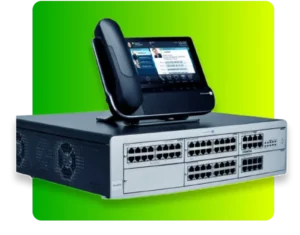
Private Branch Exchange (PBX) has been used for decades between employees and customers, with the PBX hardware installed on-site. The business purchases and owns the phone system hardware, networking and server equipment, and your IT staff take care of all the updates and maintenance regarding the system. The calls are routed through traditional phone lines as well as SIP trunking[1].

  • Budget: On-premises PBX systems usually require a higher initial investment in equipment and installation costs, and maintenance and upgrades will also need to have costs factored in.
  • Maintenance and upgrades: On-premises PBX systems require on-site technical support. This can lead to operational disruptions and additional labour and parts fees.
  • Scalability: Expanding an on-premises PBX can often require physical hardware or licensing additions, which could lead to incompatibility issues between the current PBX version and the latest software updates, resulting in costly, unplanned upgrades or system downtime.
  • Security and compliance: On-premises PBX systems allow companies to directly manage the security policies of their hardware but are more susceptible to data breaches if these policies are not managed correctly. This includes risks from outdated software and weak passwords. On-premises PBXs also require physical security measures to protect them from unauthorised access. This would include secure rooms, surveillance and restricted access, which in turn could be more costly and complex to manage.


Key takeaways: On-premises PBX systems can be more suitable for larger corporations with big budgets and space to host the physical hardware, as well as having the resources to manage and maintain the system. Housing the PBX system on-site brings an organisation maximum control over business communications, which might be a better fit for companies with complex and / or secure communication needs.


Hosted PBX

PBX Featured resized | Vox | Your Company’s Telephony Needs: the Right Choice

A Hosted PBX solution is a telephony solution where the PBX infrastructure is hosted in the service provider’s Cloud or network. Instead of using traditional phone lines, it relies on internet connectivity, more commonly known as VoIP (Voice Over Internet Protocol).

  • Budget: Cloud PBX generally involves a lower initial setup cost because it needs minimal physical infrastructure. Due to economies of scale, providers can offer Cloud PBX services at a nominal monthly fee, making it cost-effective for businesses with limited capital, and easy to budget for with a predictable monthly fee. A reliable Internet connection is a critical core cost factor.
  • Maintenance and upgrades: A cloud-based PBX system is maintained and upgraded by the service provider, and this remote management makes sure your cloud solution is always up to date with the latest features and security patches, with minimal downtime for the business.
  • Scalability: A hosted PBX solution allows businesses to add or remove services as needed, providing greater flexibility and cost savings without software compatibility issues or platform limitations.
  • Security and compliance: With cloud PBX solutions, it’s the responsibility of the vendor to ensure that the systems adhere to the latest security standards and compliance regulations, including the Protection of Personal Information (POPI) Act. Most cloud PBX providers implement advanced security measures to protect the data and prevent intrusions.
  • Redundancy: With the PBX in the cloud, a reputable vendor will implement multiple layers of redundancy, which are not available with on-site PBX systems. These include platform replication across geographically distributed data centres, redundant network paths between data centres, automatic failover mechanisms, and continuous system monitoring to aid in ensuring high availability and minimising the risk of service disruption.


Key takeaways: Due to ongoing advancements in Cloud technology, Cloud PBXs offer more advanced features than traditional PBXs, without the complexity of on-site installation and maintenance. They provide higher cost savings, minimal hardware requirements, and a wide range of useful functionalities. Cloud phone systems also allow your employees to work remotely, enabling employees to stay connected from anywhere they have internet access.


Your Business Communications and Vox

When it comes to the choice between traditional on-premises versus cloud PBX systems, there are many things to factor in, such as the size of your business, your organisation’s technical expertise levels, the number of remote offices, your preference for in-house or managed service providers, and more.

Whatever your preferences and requirements, Vox has a solution geared to assist your company, and its present and future needs. We look forward to hearing from you for more information on choosing the best PBX offering for your organisation.

[1] Session Initiation Protocol (SIP) trunking is a digital method of making and receiving phone calls and other digital communication over an Internet connection.

AI and Enterprise Wi-Fi: New Frontiers of Possibility

Artificial intelligence (AI) makes it possible for machines to learn from experience, adjust to new inputs and perform human-like tasks.

Using technologies such as deep learning and natural language processing, computers can be trained to accomplish specific tasks by processing large amounts of data and recognising patterns in the data. The Wi-Fi arena is no different in that AI can also make the processing of tasks speedier and more efficient – we are now in the era of AI-driven networking.

AI Wi-Fi refers to wireless networks that make use of artificial intelligence to optimise connectivity, performance, connected user experience and security. This technology uses machine learning (ML) algorithms to analyse network hardware, traffic, user behaviour and environmental factors in real-time. The AI initiates closed loop automation to adjust the network settings, such as resource allocation, to improve performance.

This article discusses how AI can be used in Enterprise Wi-Fi networks, and how AI is benefitting Vox and our Wi-Fi customers.


AI-Driven Business Intelligence for Enterprise Networks

android 7711290 1920 resized | Vox | AI and Enterprise Wi-Fi: New Frontiers of Possibility

Artificial intelligence in Wi-Fi networks today can assist significantly with the configuration of the network, as well as with support thereafter, including being able to spot issues before they become a serious problem.

Vox has partnered with Wi-Fi networking equipment specialist, Ruckus Networks, for approximately the last decade, and within our partnership we proudly offer its AI Managed Wi-Fi offering for enterprise networks, which presents AI-driven business intelligence for enterprise networks.

As a cloud-based service for network intelligence and service assurance, Ruckus AI Managed Wi-Fi with Analytics is powered by machine learning (ML) and artificial intelligence (AI). This in turn helps customers get the most from their network, for example by identifying network assurance incidents, classifying them by severity, tracing root causes and making specific AI recommendations for remediation. It automatically monitors network health relative to configurable thresholds.


Benefits of AI-Driven Enterprise Wi-Fi

ai generated 8310945 1280 resized | Vox | AI and Enterprise Wi-Fi: New Frontiers of Possibility

AI can dynamically adjust Wi-Fi parameters like channel selection and contention window size to optimise network performance, ensuring smooth and efficient data transmission. In addition, it simplifies life for IT departments and technicians, as AI dramatically reduces the time to resolution for service incidents.

It can also eliminate some Help Desk tickets by addressing issues before they affect users, allowing the organisation to be proactive in this regard and solve problems before they arise. Additionally, by addressing the root cause for one incident, organisations can avoid other incidents that might arise from that cause.

Most importantly, it alleviates the need for an organisation’s IT department to manage the Wi-Fi network – Vox will manage this. Organisations can view real-time dashboards and, if required log tickets via the Vox enterprise support desk, because Vox has comprehensive visibility into network operations, which accelerates troubleshooting.

By proactively addressing issues and optimising network performance, AI can contribute to a better overall user experience, with faster speeds, reduced buffering, and fewer connection problems. In addition, AI can simplify network management, by automating many of the tasks associated with managing a complex Wi-Fi network, thereby reducing the burden on IT staff.


Faster Feature Updates Due to Cloud-Based Licences

globe 2679754 1920 resized | Vox | AI and Enterprise Wi-Fi: New Frontiers of Possibility

A question that might spring to mind is the following: ‘How does South Africa compare to the developed world with regards to our access to AI within the Wi-Fi arena?’ and the answer may surprise you on the upside.

In essence, because today we have the option of moving to a cloud-based licence, all users globally are able to benefit from feature updates to cloud platforms, as they could all be on the same version due to simultaneous software updates. In this regard, South African companies will not necessarily be running behind users in other parts of the world, thanks to the cloud.

Vox is very pleased to be able to bring our customers the latest Wi-Fi networking feature updates as soon as they are made available to us from our upstream providers and placed onto the relevant platforms. Because Vox is accessing features as they are rolled out by the supplier, this means in turn that our customers benefit as and when new features and updates become available.

Knowing that we are able to offer our clients first-world AI-enabled Wi-Fi technology, in partnership with Ruckus Networks, is something of which we are truly proud.

What’s a 3CX – And What Does Titanium Status Actually Mean?

In an IT world full of acronyms, we unpack this brilliant technology


3CX is an open-standard[1], software-based business phone system that delivers advanced telephony functionality and is super easy to use, manage and install. 3CX is an Enterprise-grade communications platform that is primarily targeted at the SME market due to its affordability – and yet, in an interesting twist, many enterprise businesses are also adopting 3CX, as they take note of its benefits.

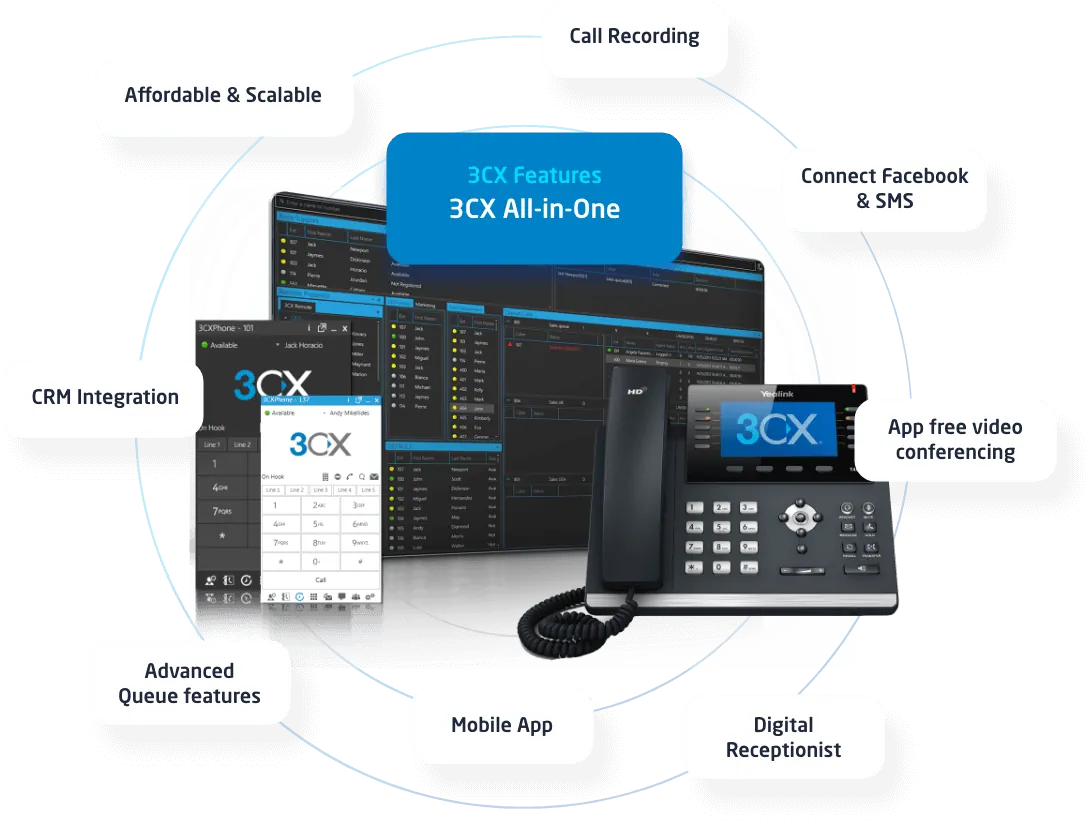
3CX offers very competitive pricing, as well as feature-rich Unified Communication functionality, which includes instant messaging or chat; Voice; video conferencing and data sharing; email, voicemail and SMS; and out-of-the-box integrations into popular CRMs.

Vox is a 3CX Titanium Partner – we operate at the highest 3CX partnership level, to the tremendous benefit of our customers. We are also one of a select few Titanium partners in South Africa, the highest level that a 3CX partner can achieve, and awarded only to 3CX’s most successful and experienced partners.


3CX features 1 1 | Vox | What's a 3CX - And What Does Titanium Status Actually Mean? 

Benefits for Vox Clients

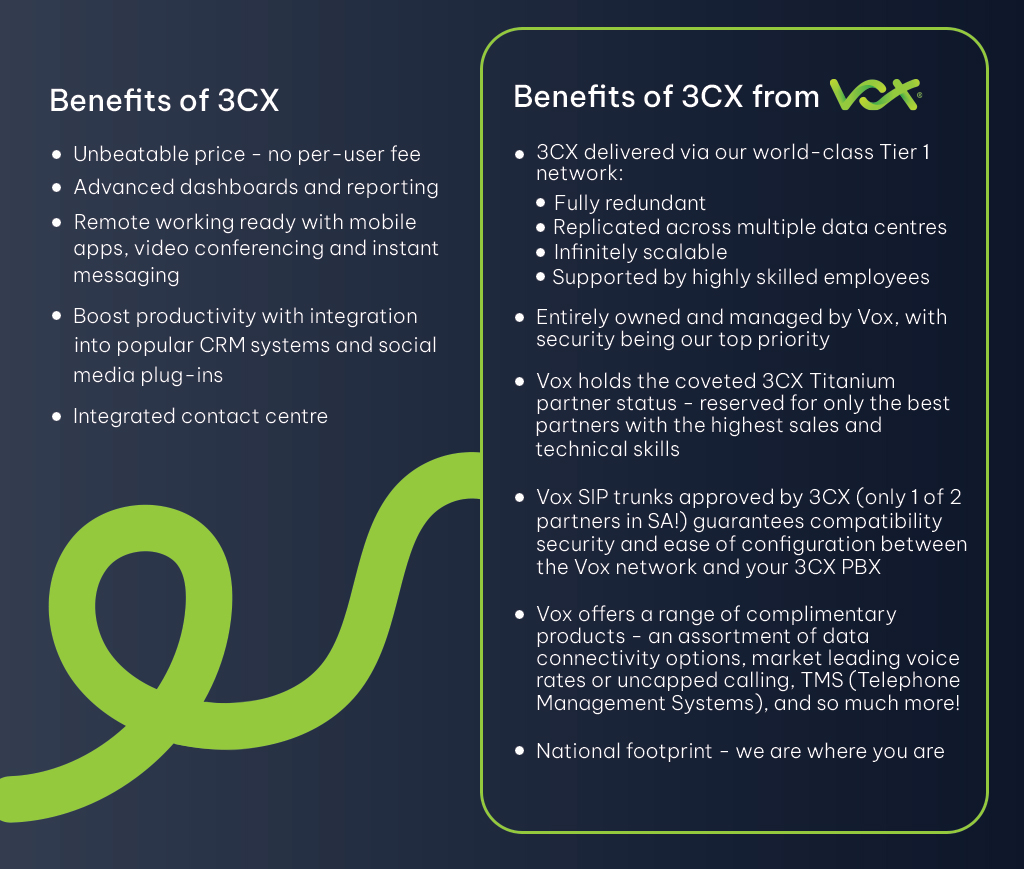
Titanium partner status is reserved for true 3CX all-stars! This, together with our Advanced Technical Certification, guarantees our customers excellent service and support.  In addition, Titanium partner status ensures we get the best price from 3CX, which allows us to offer an enterprise grade product at pricing all customers can afford.

We are also Certified as a Preferred 3CX SIP Trunk provider[2] (one of only two in South Africa), which gives customers additional peace of mind that our network is compatible with any 3CX deployment. We have been thoroughly tested with 3CX to ensure no manual configurations, which means you can simply plug and play your PBX with our SIP trunks.


How the Vox-3CX Partnership Began

Before onboarding 3CX, Vox was selling a combination of open-sourced, on-premises and cloud-based solutions, which provided very basic PBX functionality.  Although it satisfied the requirement for thousands of customers, we knew that we needed to expand our portfolio to be more relevant with our offerings and technology.

Simply put, we needed a product that would carry us into the future.

Before 2020, on-premises solutions were becoming less relevant, and our customer demands for UC&C[3] were increasing significantly – which our solutions at the time did not offer.  When we were faced with the pandemic in 2020, it became clear that we required UC&C offerings to cater to our customers’ work from home communication requirements.

Becoming a 3CX partner for Vox was a very seamless process, but it did take drive, dedication and ambition to take this further and achieve Titanium status.  Vox is an agile business, and so we are able to make decisions and change direction very quickly to ensure that our customers have the products and services they need.

In the quest to present the best solution possible, we spent significant time in our R&D labs running tests, documenting our installation best practices and automating many of our provisioning processes. The end result was being able to go to market confidently with a working solution, and without any hiccups.  This was a critical step, as it cemented our long-term relationship with our customers.

Our engineers flew through the technical certification process and managed to achieve Advanced Technical certification within the first two months of becoming a 3CX partner.

Our team of sales specialists, who are dedicated to anything PBX, also completed their technical certifications, which gave them the ability to confidently design and sell 3CX solutions to prospective customers.

3CX made it easy for Vox to become technically certified with their free on-line training and assessments.


Along the Way

Together with the certification for Technicians and Sales Specialists, we also upskilled all our direct and indirect sales force employees, equipping them to understand the value of 3CX and uncover opportunities with customers. Overall, our comprehensive training programme included everyone from sales, pre-sales, installations engineers, support engineers, and core engineers.

We moved through the partner status ranks in record time – starting at Bronze, we worked our way up to Titanium status in less than one year (Bronze, Silver, Gold, Platinum, Titanium) – a feat of which we’re very proud, as it shows our ability to adapt, and our willingness to do more.

It wasn’t very long after launching that we realised we had hit the jackpot – our customers loved 3CX, our sales staff loved 3CX and our engineers loved 3CX!  This was a recipe for success and before we knew it, we were hitting the lights out.


Moving forward

Vox is able to support all types and sizes of customers – we have 3CX customers ranging from two or three extensions to customers with thousands of extensions.

Cloud PBX | Vox | What's a 3CX - And What Does Titanium Status Actually Mean?

And in addition to this, we don’t only sell 3CX – Vox offers a complete suite of complementary products: from last mile connectivity and market leading uncapped or rated calling plans, world-class data infrastructure to host customers 3CX services, to telephone expense management reporting.  We are proud to add this to our 3CX achievements over the last three to four years.

The journey to Titanium Partner status demands a high level of technical skill, dedication to customer satisfaction, and a proven track record in implementing 3CX solutions.

Becoming a 3CX Titanium Partner marked a significant achievement for Vox, and we are very proud to be able to let our clients know that we have achieved this milestone in supporting and maintaining their 3CX systems.


[1] An open standard is a standard that is freely available for adoption, implementation and updates. Examples include XML, SQL and HTML Businesses within an industry share open standards because this allows them to bring value to both themselves and to customers.


[2] SIP Trunks are virtual phone lines that are delivered over the internet, replacing the need for physical telephone lines.


[3] Unified Communications and Collaboration (UC&C) integrates diverse communication tools, such as Voice, IP Telephony Calling, Instant Messaging, Desktop Sharing, Presence, and Web Conferencing, Audio Conferencing, and Video Conferencing, to interact together in a virtually seamless way.

On-Premises or in the Cloud: Which PBX Works Best for Your Business?

People still need to be able to talk voice to voice for best results

In a world with abundant business communication channels – emails, texting, website dropdown platforms and chatbots – speaking to an actual person through a voice solution is still a hugely important element of the overall communication suite. Texting or chatbots alone can’t replace the personal touch.

Having the option of speaking to a person in real time enables a more intimate connection, helping to develop strong relationships and trust between your customers and your company.

In this article, we’ll compare on-premises PBX with cloud solutions – which one is best for your business?


Outlining Your PBX Options


AdobeStock 116119162 | Vox | On-Premises or in the Cloud: Which PBX Works Best for Your Business?


“Hold on please while I put you through…”

Is there any customer out there who has never yet heard these words? Probably not – it comes with the traditional PBX and customer service territory.

PBX, or Private Branch Exchange, is a well-known element of any organisation’s communications systems between employees and customers. The technology provides telephony functionality such as call transferring, conference calling and voice mail.

The traditional PBX, which has been used for decades, is a business phone system that connects all office desk phones within an organisation on the same network, relying on copper landlines, with the PBX hardware installed on-site.

Over the last decade, we’ve seen a rise in hosted PBX solutions, which are cloud-based alternatives offered by VoIP (Voice over Internet Protocol) providers. Cloud PBX offers many of the same features as traditional PBX, with less complicated on-site installation and maintenance, potential cost savings, a number of useful features and minimal hardware requirements. 


Differences Between On-Premises and Cloud PBX Systems

Different aspects of each system provide insights into how each one could align with your different business needs and environments.


Costs

  • On-premises PBX systems usually require a higher initial investment in equipment and installation costs. There are likely to be costs associated with maintenance and upgrades.  
  • Cloud PBX generally involves a lower initial setup cost because it needs minimal physical infrastructure. Due to economies of scale, providers can offer Cloud PBX services at a nominal monthly fee, making it cost-effective for businesses with limited capital. A reliable Internet connection is a critical core cost factor, but with advancements in technology, high-speed internet is becoming more accessible and affordable. This allows customers to maximise their investment into quality data connections for their Cloud PBX services   


Scalability

  • Expanding an on-premises PBX can be expensive, often requiring physical hardware or licensing additions.
  • In contrast, a hosted PBX solution allows businesses to add or remove services as needed, providing greater flexibility and cost savings. 


Maintenance and Upgrades

  • On-premises PBX systems require on-site technical support for maintenance and hardware upgrades. This can lead to operational disruptions and additional labour and parts fees. Furthermore, when parts become obsolete, businesses may face significant challenges in sourcing replacements, leading to unnecessary downtime and further expenses. 
  • A cloud-based PBX system is maintained and upgraded by the service provider, and this remote management makes sure your cloud solution is always up to date with the latest features and security patches, with minimal downtime for the business.


Security and Compliance

  • On-premises PBX systems allow companies to directly manage the security policies of their hardware but are more susceptible to data breaches if these policies are not managed correctly. This includes risks from outdated software and weak passwords. On-premises PBXs also require physical security measures to protect them from unauthorised access. This would include secure rooms, surveillance and restricted access, which in turn could be more costly and complex to manage.
  • With cloud PBX solutions, it’s the responsibility of the vendor to ensure that the systems adhere to the latest security standards and compliance regulations, including the Protection of Personal Information (POPI) Act. Most cloud PBX providers implement advanced security measures to protect the data and prevent intrusions.


Reliability and Performance

  • On-premises PBX systems are vulnerable to issues such as wear and tear and power outages, because they use traditional phone lines to transfer phone calls. The costs to implement a Disaster Recovery (DR) strategy for on-premises PBX systems can add further expenses for a business.
  • The reliability of your cloud PBX system requires an excellent Internet connection. It’s useful to implement an Internet failover solution to ensure your internet connection remains up during any disruptions. The cloud PBX vendor should ensure the cloud PBX platform has sufficient redundancy built into it to provide continuous services for customers.


Vox and Your Business Communications: Key Takeaways

julian hochgesang Dkn8 zPIbwo unsplash | Vox | On-Premises or in the Cloud: Which PBX Works Best for Your Business?


Each of the offerings discussed has its own set of advantages and challenges to consider. 

  • Cloud phone systems, particularly hosted PBX systems, are fast gaining popularity as the preferred modern telephone solution for many businesses throughout South Africa. They are suited for companies looking for a minimal initial investment, and their flexibility is perfect for growing businesses or those with fluctuating needs. Furthermore, businesses can enjoy the benefits of a fully managed service where the service provider takes care of the support and maintenance.
  • On the other hand, on-premises PBX systems are generally more suitable for larger corporations with big budgets and space to host the physical hardware, as well as having the resources to manage and maintain the system.


Choosing between on-premises or cloud PBX must be based on careful assessment of a business’s specific communication needs, growth expectations and budget constraints.

The decision of which offering to take up lies with your business. The ability to offer the best of each possibility lies with Vox – with superb offerings such as our multiple PBX offerings, both on-premises and cloud, and including 3CX (Vox is a Titanium 3CX partner, the highest ranking that can be achieved).

Contact us for more information on choosing the best PBX offering for your business, and keep those voice-to-voice communications enriching your organisation’s customer experience on a daily basis.

Good Things Come in 3s

The days of on-site PBX systems connected via theft-prone, vulnerable copper cables are gone.

Even in today’s digital era, every organisation still needs to make and receive telephone calls. And with as many as 28.2% of American employees working in a hybrid manner, and up to 16% of companies fully remote[1], businesses have found that Cloud-based phone systems have helped employees – and therefore the companies they work for – to remain productive.

3CX is a leading global, software-based Cloud PBX provider that uses Voice over Internet Protocols (VOIP). This innovative brand has made the business world sit up and take notice.

3CX is accessible via the Cloud over any means of data connection, and empowers organisations to embrace hybrid working without sacrificing the essential features and functions needed for their business. In South Africa, according to the BrandMapp 2023 annual survey, 53% of employed adults earning R10,000+ per month are working remotely or according to a hybrid work model[2].

Embrace the Future of Communications

The days of on-site PBX systems connected via theft-prone, vulnerable copper cables are gone.

As a hosted phone system – meaning a Private Branch Exchange (PBX) – using VoIP, 3CX eliminates the need for legacy infrastructure.  Instead of relying on traditional copper lines, your business can make calls over the Internet and have access to a wide range of advanced features, such as video calling, instant messaging, an integrated call centre, mobile applications and more.

3CX was founded in 2005, when VoIP was still an emerging technology, and since then, it has gone on to establish itself as a global leader in business communications. Today, the company is a Cloud PBX leader empowering more than 600,000 customers across 190 countries.

You could think of 3CX as being the pioneers in the Cloud PBX space: the Cloud PBX provider that dared to dream beyond traditional boundaries, making communication smoother, smarter and more efficient. And as one of the largest 3CX partners in South Africa, Vox is proud to carry a 3CX Titanium partner status – 3CX’s highest partner tier, reserved only for 3CX all-stars – and offers tailored solutions for businesses of all sizes. Our Advanced Technical Certification guarantees you excellent service and support.

How Can 3CX Help Your Business?

Many people still want to be able to contact a business through a voice call, as they feel more comfortable talking to a person, instead of sending emails into the ether that may or may not be read – let alone receive a reply. Combine this with the new world order in which people work from home at least some of the time, and 3CX is a winning choice.

With 3CX, you can ensure that your business operates smoothly, while also keeping the costs of communication down. Because the company uses the Internet to transmit and receive calls, 3CX provides more features while allowing for better flexibility.

With one unified system, your team is able to work efficiently from anywhere at no extra cost – so there is no need to purchase any add-ons for web conferencing, mobile apps, live chat, business text messaging and Facebook integration, because they are all included in the annual cost. Employees can easily make inbound and outbound calls in or outside the office.


V055.2.6.1 Good Things Come In 3s Table 1024x869 250624 RESIZED | Vox | Good Things Come in 3s


As a hosted phone system, 3CX offers great functionality and reliability across desktop and mobile devices, and can also be used with conventional SIP phone handsets.

At Vox, we work with respected SIP phone providers like Yealink, SNOM and Gigaset.  3CX has evolved from its roots as a PBX phone system to a complete communications platform, offering customers a simple, flexible and affordable solution to call, video and live chat. Your business will be enabled to increase productivity and enhance customer experiences, while cutting costs and giving management something to smile about.

And with 3CX and Vox, there’s a lot to get excited about, because this partnership is not just about phone calls – it’s about transforming the way you do business with 24 / 7 support when you need it.


As a Titanium 3CX partner, let Vox help your business to keep growing, without outgrowing your phone system.


[1] Info obtained from Forbes report: Remote Work Statistics & Trends In (2024) – Forbes Advisor

[2] https://www.linkedin.com/posts/whyfive_hybridwork-brandmapp-newinsights-activity-7159136052845129729-tQ7i/