Reinventing Email for a Digital World

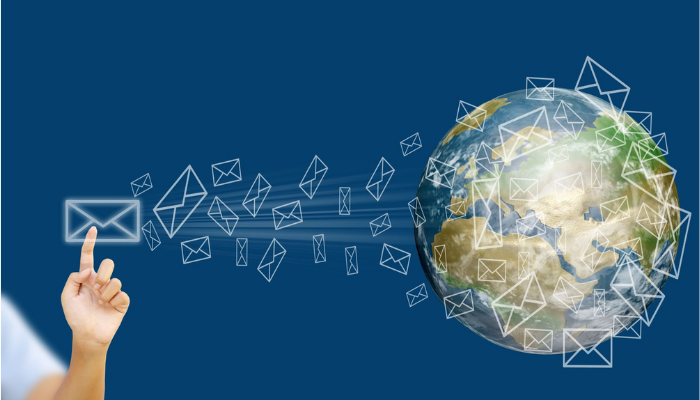
With more than four billion email users globally, there is no arguing the fact that this is still the most pervasive form of electronic communication out there. Whether you are an SME or a large corporate, having email is the cornerstone to engaging with your customers. But as technology has evolved, the way this platform can be leveraged to build a brand has also changed.

Branding lost

One of the mistakes many organisations make is to view email in isolation. Yes, it is a communication tool, but it is also responsible for setting your professional and corporate identity. Given how tight budgets have become, many businesses are tempted to select one of the many free email services available as their primary means of customer contact. And yet, this is probably one of the biggest mistakes they can make.

A generic email domain not only takes away from the brand name of the company but also conveys less of a professional image.

With people becoming increasingly security conscious around scams, fly-by-nights, and even malicious attacks, sending a business email from a free account will not attract significant interest. And when your competitors have a personalised domain, chances are you will lose out to them especially when it comes to people’s perceptions of your brand.

The devil is in the details

In fact, with email, branding is essential as it enables the business to optimise how it works with its target audiences. After all, sending an email means the company knows who it is engaging with. This means email signatures and banners can be used to put specials in place that are relevant to those individual customers.

By including such a banner, a company does not have to reinvent the wheel but simply create awareness of a product or campaign that will likely attract interest from that specific user. It is such a small detail but one that many companies neglect.

Security-focused

Given the changing regulatory environment and the arrival of the Protection of Personal Information Act (PoPIA), companies would do well to ensure the security and integrity of their data. This is more so the case when it comes to email and how it uses customer data to provide tailored communication.

This is where working with a trusted and experienced partner can make all the difference. Using a free service means the organisation has no control over the policies and security measures that are put in place. It is this lack of control that can become the biggest challenge at an organisation. However, an environment managed by a local partner means the organisation can put the necessary policies in place to protect data from leaking.

For instance, a policy can be put in place to make it impossible for an employee to email credit card information and other sensitive customer data. This can even extend to controlling the language contained in emails. Things like swear words, emoticons, and even slang can negatively impact on the professional image the organisation wants to maintain.

And from a security perspective, being able to manage the defensive measures in place can address how email has become one of the main entry points into an organisation. As attacks become more sophisticated, the security mechanisms of freely available email platforms might not be able to adequately protect users from receiving suspicious messages.

Keeping it safe

Of course, no environment is completely hacker-proof. This is where your local partner must provide the necessary disaster recovery and business continuity features that keep your emails safe and quickly recoverable from compromise.

After all, you want to remain focused on your core business priorities and not spend time managing all the complexities around email. Having access to locally-developed solutions that are priced at the correct value proposition for the market makes a massive difference in this regard.

With email becoming the first line of engagement your business has to the outside world, can you really afford not to have it convey a professional image while delivering you the security and business continuity features you need.

Take Control of Your Data

Estimated Reading Time: 3 Minutes

We can all agree – when it comes to the safety and security of one of your most valuable assets, there’s no such thing as overkill in data protection.

Data makes the world go around. A data breach doesn’t just have devastating consequences for businesses, the effects can ripple out and ruin the lives of regular people too.

Just look at the chaos that ensued in the United States recently when a prominent pipeline operator on the East Coast fell victim to a ransomware attack and had to go offline for six days before it could contain the threat. This sent almost everyone in 17 states on the Eastern seaboard into panic-buying pandemonium, filling up everything from multiple cannisters, barrels and mini tankers to, yes, cardboard boxes, with gas and depleting gas station reserves on the entire East Coast as a result.

Even if you’re not worried about the threat of cybercrime (honestly though, who isn’t?), your data is still at risk thanks to hardware/system failures and human error.

There’s no better time than now to take control.

Tick all the boxes

The 3-2-1 backup strategy has long (well, 11 years and counting) been considered best practice by IT professionals when it comes to data protection. Essentially, it boils down to this: you should have at least three copies of your data (one in use, the second for failover and a third for additional comfort) stored on two different mediums (i.e. disk and the cloud) with at least one of those options stored safely offsite – preferably in the cloud.

Related: We’ve Got Your Back(up)

If you opt to store your data in the cloud, don’t be afraid to ask the tough questions to find out if your data centre of choice has protocols in place for fire suppression and a back-up power supply for redundancy, because there are other threats to your data besides cybercrime.

It’s also worth storing your data in an ISO 27001 certified data centre, as this means it meets the international standards for the overall management of information security. It’s not exactly a walk in the park for data centres to achieve this kind of certification either and once a certificate is awarded, the certification body continues to perform surveillance audits to ensure best practices are not only maintained but improved upon.

Frequent backups and multiple copies of your data are important, but it’s the recovery portion of your data protection strategy you should really be focusing on.

How fast you recover from a data disaster could mean the difference between keeping your company running or shutting up shop forever.

Choose fool-proof failover

The financial impact of a data breach will depend on the severity of the attack as well as how long it takes for you to bounce back from it, which sometimes results in tens of thousands of rands lost per hour. In fact, by our calculations, 70% of SMEs that suffer a ransomware attack go out of business six months later.

In addition to robust security protocols, your data protection plan should include the assurance that not only is your data being backed up, it’s being monitored constantly to make sure your backup data is not only error- and virus-free, but instantly accessible if disaster strikes.

Vox Backup is powered by Veeam, meaning you get the benefit of powerful and reliable, market-leading backup and replication software. If you opt in for Managed Backup, our skilled engineers will supply detailed monthly reports of your backup and recovery strategy to keep you in the loop.

Cybercriminals are annoyingly determined, and even with the most robust security protocols in place, you might still find yourself falling victim to ransomware. Should the actual worst happen, your managed backup and data recovery plan will literally save the day.

The Perfect Multifunction Printer for Small Businesses

Is one that allows you to scale back your printing costs without sacrificing productivity and fits neatly on a desktop.

The way we work may have changed slightly, but one thing remains constant for businesses big or small: the office printer is still king. There is a lot to be said for going paperless at work (honestly, over the last five years or so, a lot has been said about it), yet there’s really no substitute for holding warm, freshly printed documents in our hands and filing them safely away for future reference, to be copied, scanned or emailed again at a later date.

Just because your business needs an MFP (multifunction printer), it doesn’t necessarily need the hulking behemoth of offices past (and by past, we mean 2020). There’s a better way, we promise.

Reassess your printing needs

Chances are your printing needs may have dropped dramatically in the last year or so, but that doesn’t mean you have to scale back completely or be unprepared should your printing needs suddenly pick up.

Luckily, it’s possible to find compact desktop MFPs with high-page yields that won’t cripple your annual budget – especially if you opt to rent instead of buy.

Not only will your printing needs be sorted, but you’ll have access to scanning to email, copying and faxing capabilities in a single, compact offering. Scanning most documents to PDF can dramatically cut down on your printing costs, while emailing those documents directly from your device will save time and increase productivity.

Related: Vox adds Kyocera Multifunction Printers for Home Workers

Because your MFP is a laser printer, you’ll benefit from a lower cost per page yield and also rest easy knowing that when there is a lull in printing needs, your toner won’t dry up or mysteriously disappear like ink does in an inkjet printer…

Enjoy enhanced functionality

There’s no denying it – printer management and configuration is never easy (even for most seasoned IT pros), so it helps if you choose an MFP with built-in management software that allows experts to remotely troubleshoot key maintenance tasks and firmware upgrades. Wi-Fi enabled MFPs also allow you to print from your smartphone or tablet with ease, saving time and frustration in the process.

While we’re about saving time and frustration, wouldn’t it be great if your MFP sent you a timely notification to let you know when to order more toner before you ran out? Better still, what if that notification included a direct link to purchase the correct toner for your printer? You know it. That’s why we’ve included it as part of our Managed Print offering as well as a next-business day onsite support program for true peace of mind.

Console Upgrades with Vox

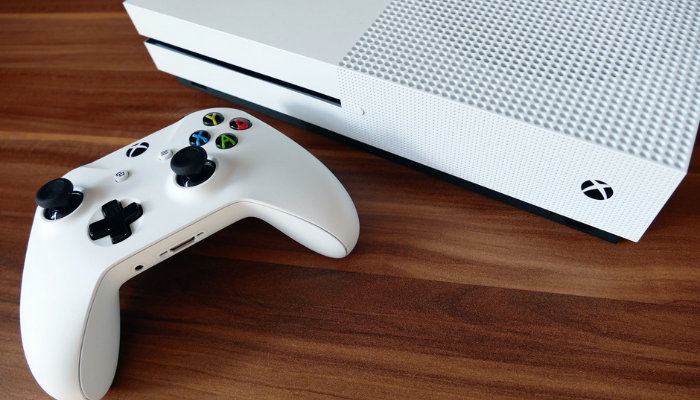
Raise your controller if your console is so old, it emits sawdust on startup.

Raise your controller if your console is so old. the last time you played a new release a little Italian was still in plumbing school.

Raise your controller if you’ve struggled with lag due to poor connection, a jammy “X” button, frayed wires or graphics so bad, the human shapes are still stick figures.

Any gamer, seasoned or casual, can tell you how important it is to keep your console up to date.

Like phones or cars, but definitely not life partners, the newest model in gaming is always the best option. In some cases, it’s a step up in terms of graphics. In others it’s better performance and the latest releases. In all cases, however, few things frustrate like a console that just doesn’t cut it.

You can’t deny that the newest model has the best benefits, but you’re probably wondering, “my old jalopy works just fine- why tamper with something that’s not broken?”

Well, you may not know what you’re missing out on just yet, but here are some of the reasons you should kick your relic to the curb.

  1. New Games and Exclusives.

If your hardened soldiers are still hitting each other with sticks, chances are your RPG may be outdated.

Seriously, we know some guys playing FIFA with Pele breaking through the ranks- the ball is solid leather and everything. The whole point of gaming is, well, the actual game. Newer consoles have the advantage of having access to the latest releases and exclusive downloadable content, meaning your oldie is as “with it” as those aunties on the Golden Girls.

We’ve also noticed that developers tend to focus more on what’s new than what’s already out there. DLC’s in particular regularly get pushed out for the latest releases, meaning if you’re not up to date with what’s hot, chances are you’re getting left behind. In fact, many of said DLC’s completely enhance your experience by adding gameplay time, new characters, missions, stories- whole days and upgrades on games that were already great to start with.

By sticking with what you know, you inadvertently miss out on a whole world of possibilities. The old days were cool, we’ll admit it, but unless you’re a Jonas Brother, the early 2000’s weren’t as good as it gets.

  1. The Best Gaming Experience.

With a newer console comes better speeds and, of course, more amazing specs. Why wouldn’t you want to enjoy better visuals, enhanced graphics and bask in the glory of an overall visual experience? It seems like each release of something new has us thinking “wow, that’s realistic” until the next one comes around, promptly making their predecessor look like as real as a Fast and Furious Movie.

Newer consoles also present higher framerates, offering a glimpse into the pinnacle of innovation while making sure your gaming experience is less playing games, more making memories.

  1. Spec Savers.

Like a car, a TV or even a fridge (we’ve seen some crazy fridges), sometimes it’s the features that count. Now, we’re not talking cosmetic things that nobody uses like photo storage and Internet capabilities. No, we’re talking the stuff that matters, which is often the difference between Old Yeller and Beethoven.

Aside from better aesthetics, most consoles are purpose driven and designed to eradicate previous errors. Controllers are more ergonomic, the basic functions are smoother and the actual device is easier on the ears.

Then there are advanced components such as your RAM, Storage and GPU- all the things you don’t see which play a big part in your experience. Remember the days of blowing into your memory card and hoping it works? There’s a reason kids today don’t have to do that- and it’s all hidden in the device.

  1. It’s Just Better.

At the end of the day, no gamer wants to feel isolated. To us, gaming is a means of escapism, of all-conquering, swashbuckling fun that cuts through the monotony of everyday life to allow us, just for a few hours at a time, to feel like we can conquer the world.

And let’s face it, that’s a bit hard to do when you’re riddled with lag induced errors and graphics like a restored painting in Borja.

That’s why we advocate for the latest consoles and the best releases. We know the power of gaming and we want our family to experience it in full force. But we also understand that sometimes consoles can be unaffordable- which is why our rental model exists. Now you, your kid at Christmas or your loved one with an adventurous inner-child can experience gaming to the full extent without having to save up or putting yourself in difficulty.

Just be sure to dust your fingers off before you touch the new one- we don’t want your old consoles Smallpox germs damaging our Start button.

Vox Gaming and Fibre Bundles!

In today’s world, connectivity is key.

Business. Devices. Accounts. Even people. We live in a global village where everyone and everything is seemingly intertwined.

Think of that device in your hand. Bank, shop, chat, browse, talk to the world or do whatever you need to in private (we don’t judge). In fact, our reality is so digitally and remotely connected that to be disconnected is to live with blinkers on.

The same goes for Gaming.

Playing with friends used to be an adventure. You’d call one or two mates around and, after much haggling between parents, eventually pull off the perfect score. Two of you would be seated in anticipation while the other complained about being left out. The game would start, chaos would ensue and spectators would provide a never-ending stream of commentary until eventually you’d fall asleep, a disgruntled parent came to kill the vibe or somebody had a meltdown.

Needless to say, gaming today is vastly different- we’d say for the better.

While the last year has indeed made us appreciate human interaction, it’s also underlined the importance of keeping a safe distance. We get it, hugging and kissing and chatting to others is cool, but gone are the days when anyone could just waltz in your home and make themselves comfortable. Although to be fair, if someone did that even before the pandemic, we’d ask our spouse some serious questions.

Gaming has its benefits, which we’ve covered in detail, but what we haven’t truly explored is its propensity to connect and ability to bring people together.

The reality is that gaming has become a multi-billion-dollar industry, and a large part is down to the interconnected reality that is online. In 2019 alone, the industry was valued at a whopping $151.9 billion alone, with 2.725 billion players worldwide. There’s a reason that developers have embraced this revolution, and it’s the realisation that people crave a social experience. FIFA, Call of Duty, Star Wars, even Grand Theft Auto (which was previously strictly single player) now have thriving, vibrant digital communities. Developers have focused on entire content and storylines revolving around the experience and with good reason- online multi-player is not the future, it’s the here and now.

It’s not just teenage boys, however, as the average age of a gamer is 34 years old, with 45% of this constituting a female fan base. 70% of these consider gaming an important part of their life, with over 50% of players worldwide having their purchase decisions is influenced by online compatibility- next to graphics, price, story and series. The best part? 55% of gamers worldwide say that playing online has helped them stay close to and connect with friends.

A big component of Online Gaming, however, is being online. And as any kid with a WFH parent will tell you, the home Wi-Fi is a precious resource only respected by the person using it first. Which can make connectivity a little tricky, to say the least. Plus, there are some people out there who don’t have a console and, as any expert can tell you, you can’t play Xbox on the Internet without an Xbox. Or Internet.

What if there were a way to kill two birds with one stone (metaphorically) while having your (also metaphorical) cake and eating it? What if you could sort out your Internet and gaming needs at once without needing to feel like you’re in line to renew your license? We’re optimised to bring you safety mixed with convenience, which is why our Xbox and FTTH bundles are here to get you running without breaking bank.

It’s not just Internet, however, it’s high-speed Internet. We can’t claim that your soccer players will run faster or your reload speed will improve, but we can assure you that the risk of controller-smashing, lag-induced rage will be substantially lower. An unrivalled service designed with gamers in mind, you can save on your Xbox Series X or S console rental by combining it with a bundle solution that matches your gaming needs.

Prices start at R1 293pm for a console and a 50/50 uncapped, low latency Fibre line. Yeah, that’s right, Fibre and a console for the price of one meal at local chicken franchise (you know the one, it starts with N). These aren’t separate rates, this isn’t a weak console and that Fibre speed is no joke- it’s a seriously all-in-one solution for the hardcore and casual gamer alike.

In fact, it’s our love of games that lets us cater for players exact needs, which is why we’re confident in saying our Fibre and Xbox bundles are for gamers, by gamers- now let’s play!


We’ve Got Your Back(up)

Don’t wait until disaster strikes to consider a data backup and recovery plan. Data protection is so much more than just Plan B.

Data is the backbone of every business

More than just the necessary information you rely on to run your business each day (although, let’s not kid, that’s still a biggie), data is crucial for accurately predicting growth opportunities and business success in the future too. If used properly, it allows you to understand the needs of your customers, employees and strategic business partners on a deeper level, all while maximising opportunities for productivity, efficiency and earnings. Pretty great, right?

Now for the scary news. Without your data, your business wouldn’t just be lost, it would come to a grinding halt, with a gaping money pit opening below and only growing deeper the longer it takes to get operations securely back online.

No wonder ransomware attacks are on the rise and only becoming more difficult to spot, especially as crafty hackers have mostly stopped using generic, automated ransomware attacks in favour of a more targeted, hands-on approach.

Even though ransomware hackers typically ask for money in exchange for the safe return of your data, it’s not always a guarantee – you’re not exactly dealing with the nicest or most trustworthy people here. It also sucks having to pay an outrageous amount for something you already own.

The risks go beyond ransomware

If it’s not clear by now: your business data is all-important. Even if you’ve chosen to store your data safely and securely off-site in the cloud, that doesn’t necessarily guarantee you’re risk-free. Ransomware hackers might have a harder time breaching those security protocols, but disaster can strike at any time, from anywhere.

Just ask any one of the many businesses affected by the devastating fire at a data hosting company in France at the beginning of March. A fire that saw one of their data centres destroyed, a second damaged and all four offline until the fire could be put out.

Not only did this result in a lot of costly downtime for most companies hosted there, for those without a data backup and recovery plan, their data became a permanent casualty too.

The calls could also be coming from inside the house. As strong as your data security protocols may be, they won’t protect you from the actions of disgruntled or frustratingly negligent employees who might share or transfer important data to third parties, either intentionally or by accident, leaving you vulnerable to a devastating data breach.

The best defense

At Vox, we like to believe it’s best to have all your bases covered. When it comes to true data security, including a backup and recovery plan with Backup as a Service is a guaranteed home run. Let’s face it, if we’ve learned anything from the past year and a half, it’s that anything can and will happen.

As a Veeam Gold Partner, we offer the opportunity to create a copy of your data to be stored safely and securely in a separate location, with instant access for when you need it most to limit any downtime should the unthinkable occur.

Simple to deploy and easy-to-use, our backup and recovery solution not only protects your data from ransomware threats and loss, it also offers an opportunity to reduce the costs of long-term data archiving and retention.

A trusted leader in the data protection space, Veeam provides backup, recovery and replication for critical workloads, like VMware, AWS, Microsoft Azure, SQL Server, Oracle, Windows, Linux and NAS, across physical, virtual and cloud platforms, in a single offering.

You’ll sleep soundly knowing your data is always in your hands.

Are You Making the Most of Your Email?

Estimated Reading Time: 2 Minutes 38 Seconds

Often taken for granted, email remains one of the most important communications tools in the world today and, really, that’s just scratching the surface.

Be it ever so humble, it’s hard to imagine how we ever lived without email. Fast, convenient and adaptable, for almost 40 years, email has remained the go-to communications medium for the modern world.

There might have been a brief moment when it looked like social media and direct messaging apps would steal email’s crown, but with a reported four billion users globally in 2020 sending an average of 309 billion mails daily throughout the year, it’s pretty clear this solution isn’t going anywhere any time soon.

The medium is the message

Like all great origin stories, no one can really agree as to who actually sent the first email, but seeing as how this guy’s name pops up the most, it’s safe to assume US computer programmer Ray Tomlinson deserves the honour. Even though, back in the 70s, you had to print a mail before you could read it.

Post late 90s and You’ve Got Mail, it seemed as though email itself would stay exactly the same as the rest of technology evolved around it. Thankfully, while email remains as user-friendly as ever, now it also incorporates a range of tools to increase efficiency, add value and keep everything in check. Email offers a convenient way to not only send and receive important messages, but also store and search valuable data like your bank statements, receipts and crucial documents.

Unlike other communications tools, email still offers users the opportunity to maintain boundaries by opening and responding to messages in their own time, no blue ticks in sight.

Basically, when it comes to email, we should all be thinking BIGGER.

Email as an ecosystem

*David Attenborough voice* Welcome to the email ecosystem. We like to think of it as a thriving environment where every element works together to create a harmonious balance. We can’t promise you’ll achieve the frustratingly elusive inbox zero, but we can offer the tools to help you get there.

At the centre is Cloud Mail. More than just an email solution, Vox Cloud Mail offers SMEs the opportunity to cut down on their email costs by only paying for the storage their employees use. It also includes time-saving features like Chat, Calendar and Tasks, to help you manage your schedule and collaborate with colleagues with ease, from wherever you happen to be working from.

When you add in Email Archiving, you’ll be able to rest easy knowing you’ll have access to 10 years’ worth of digital correspondence at your fingertips in an easy-to-search and secure cloud environment no matter what disasters befall your inbox.

Email Branding allows you to get the most out of your multiple daily correspondences with the addition of customisable email signatures and clickable banners to turn an ordinary mail into something far more interactive and memorable.

Last, but definitely not least, our Email Security offering provides a necessary defence against increasingly hostile malware, ransomware, spam and spear-phishing attacks. With over 90% of ransomware attacks reportedly originating from email, you really can’t be too careful here.

It’s a lot more than just a message, really.

Fixed LTE a Viable Connectivity Option for South Africans

By Theolin Moodley, Senior Product Manager: Carrier & Connectivity

In recent years, Fibre has taken preference over traditional fixed connectivity mediums in many South African homes due to reliable download and upload speeds with uncapped offerings. However, LTE and LTE-Advanced technologies are becoming more widely available and can potentially cater for virtually any budget, this has started to change.

According to ICASA’s ICT Sector Report, almost nine out of every 10 households in South Africa are now relying on cell phones as their means of communication. Following the hard lockdown of last year and the resultant financial pressures it placed on people, Fixed LTE has become an alternative to Fibre, especially in the R100 to R500 per month price bracket. The variety of packages on offer mean households have a broad selection of connectivity options open to them.

And while Fibre is still being rolled out in many communities, Fixed LTE coverage throughout South Africa is rapidly growing.

Unlike Fibre, which requires trenches to be dug and CPE units to be installed at homes, a person can get a SIM and Fixed LTE router within a week of placing an order. Its plug-and-play functionality ensures families can get up and running quickly.

Many South Africans have been impacted negatively due to the COVID-19 pandemic from an income perspective and, therefore, tightening their budget to spend on essential items has become a reality. Basic connectivity is now seen as an essential item as part of our daily lives, and giving consumers choices based on affordability coupled with flexible monthly options will be a key factor in the consumer buying process. We are expecting the next wave of infections to hit in the months to come, making access to reliable connectivity crucial to productivity, especially while working from home.

Of course, LTE is not limited to an either/or approach. Consumers can still use both LTE and Fibre. Fixed LTE can be a viable backup option should the Fibre line go down. This ensures households can remain connected even in the event of loadshedding if they have a mini-UPS to power their router.

Providing value-adds

While many service providers are using price as a differentiator on their LTE offerings, this should not be the only focus. Attention must also turn to creating a superior customer experience by providing complementary services to create a one-stop-shop. This simplifies the process for the consumer and starts building brand loyalty.

For instance, a service provider that delivers a one-stop-shop will be more compelling than one that only offers connectivity. This can include Internet security, cloud-based applications, UPS devices, laptops, and other hardware rentals to turn your home into the ultimate workplace.

The normalisation of remote work means reliable and fast Internet access must be in place at home. For those South Africans looking to remain connected despite the economic uncertainty of recent months, Fixed LTE proves a viable alternative to Fibre, from both an affordability and an availability perspective.


MTN Fixed LTE-A: A Review

First things first: we love ourselves some Fibre.

In fact, as far as we’re concerned, Fibre will always be our golden child, and why not? It’s the Ferrari of connectivity but, sadly, not everyone can drive a Ferrari. To some, it’s too costly, to others it’s inaccessible. Some just want to get from A to B without expensive overheads, and others just want to drive, full stop.

Whatever your reasoning, everyone deserves the thrill of amazing speed and best-in-class technology. Everyone should have a solution for their specific needs and, if you’re not a Ferrari person, why not try a Porsche?

If Fibre is a Ferrari, then a Porsche is exactly what LTE-A is.

Similar speeds, equal innovation, but a lot more affordable than the crème-de-la-crème. At least, that’s what they claim, which is why we decided to put a router to the test.

Our experience with LTE-A:

Within three days of ordering, our delivery guy was outside. Best. Feeling. Ever.

Truth be told though, we weren’t sure what to expect, as our only previous Router experience came from Modems and Fibre. To us, LTE was a bit WTF. Besides, what’s the deal with that SIM card thing? However, we barely had time to scratch our heads before noticing a distinct green Vox logo on a concise setup guide.

Four steps, each clearly outlined – watch out IKEA, you’ve got some serious competition.

Jokes aside, each box contains:

  • The router itself. Naturally.
  • A cable to connect to your PC.
  • A power cable.
  • SIM Card.
  • A more comprehensive guide- sort of like a service book.

You know the feeling- you open a new box, it smells like fresh plastic mixed with hope, and suddenly you’re a kid on Christmas morning. The router itself is big enough to say “I’m here” but not obtrusive in any way. The design is sleek and streamlined, with only a single wire connecting it to a power source and no antenna or randomly protruding limbs threatening to poke our cat’s eye.

All we had to do was insert SIM, power up, wait a few hours to connect and “bazinga”, we were online.

But what about the actual Internet?

Within the first three hours, we set a new track record on our Wi-Fi speed test and downloaded the box set of Game of Thrones. At least, that’s what most service providers would have you believe, but while our Internet is fast, we still had reasonable expectations.

For comparisons sake, we put it to the test next to a Fibre router and experienced absolutely no difference in speed. Over the course of a week, the LTE-A router seamlessly handled our work, streaming and even gaming needs with no interruption or delay. We tested it during odd hours of the day (and night) and are pleased to say it passed with flying colours- not bad for a Porsche!

Although our time together was short, and we handed back our Router with a heavy heart, we eventually ended up placing an order for a device of our own as a backup to our Fibre line. We’ve noticed that when the whole family is online, our connectivity can delay a bit, and a Fixed LTE-A Router is that perfect stopgap for pushing one last Email over the finish line or just getting through a peak hour meeting.

Ultimately, Fibre remains king of the Internet track (at least until the conspiracy theorists stop destroying 5G towers). However, there are times when you need a backup, or when the overheads of connecting to the very top just aren’t feasible.

If you’re after a failsafe or a viable alternative that compromises on nothing at all, you’re good to go with Fixed LTE-A.

And what more could you want from your Internet, really? It’s not a car after all.

Working Towards the Next Normal with Managed Services

Managed Services, especially hardware rentals and IT support, will help your company remain flexible and adaptable, no matter the work environment.

Hello hybrid

Before 2020, many of us always assumed remote work to be a productivity killer. But, it turns out, we’re all a lot more adaptable than we thought. Especially if it involves ditching soul-destroying rush hour traffic jams and air-con wars with colleagues for the sanctity of individual work spaces only a few steps away from our bedrooms.

Despite an increase in personal comfort with WFH (work from home), there’s a lot to be said for the importance of face-to-face social interaction and networking at the office to share ideas and collaborate, not to mention avoid suffering from digital exhaustion.

According to Microsoft’s 2021 Work Trend Index: Annual Report, while over 70% of their 30 000 respondents from across the globe would like flexible remote work options to stay, there is a strong demand from 65% of respondents to bring back in-person contact and communication with colleagues.

Thanks to advancements in technology and a year spent working remotely, we now know it’s possible to have our cake and eat it too. In the not-too-distant future, this utopia will be called hybrid work.

Keep your options open

The ideal hybrid work environment is one that gives employees the tools to work where and when they choose – and having or maintaining access their to cloud email, productivity apps and the latest tech are all good places to start.

That said, IT is expensive. Worse still, hardware and software also come with expiration dates. As technology continues to advance at a rapid pace, trying to keep up with these necessary improvements will absolutely take its toll on your budget. It will be even more taxing to factor in outfitting staff for WFH as well as the office – and to be successful in a hybrid work environment, it’ll be necessary to do both.

This is where Managed Services makes the most sense. Not only does it allow you to rent exactly what you need, when you need it, but you’re also able to budget for a fixed amount in a set term without having to worry about any costly surprise upgrades or equipment replacements throwing a spanner in the works.

A rental solution is also scalable and flexible, allowing you to add more devices as and when needed with minimal downtime.

Ensuring everyone has access to the latest hardware and software will also aid in protecting your company from the threat of hackers and cybercrime as the latest protocols will always be in place.

By renting your hardware and returning it after your rental period, you’ll also be saving yourself from having to deal with storerooms full of obsolete tech and the pressure to dispose of it properly. This approach is also a lot more environmentally friendly, as the tech you return will either be rented again – allowing another company to avoid having to buy hardware of their own and create more waste – or correctly recycled without you having to break a sweat. It’s a win for us all.